How Much Space is Needed around a Wood Burning Stove: Essential Guide
Are you considering adding a wood burning stove to your home for that cozy, warm ambiance? If so, it’s crucial to know how much space you need around it.
This isn’t just about safety; it’s about optimizing your living space while ensuring maximum efficiency and comfort. Imagine sitting by the fire, enjoying the warm glow, without worrying about any hazards. In this guide, you’ll discover the perfect balance between style and safety, so you can enjoy your wood burning stove with peace of mind.
Keep reading to find out how to create a safe and inviting space that turns any room into your favorite retreat.
Safety Regulations
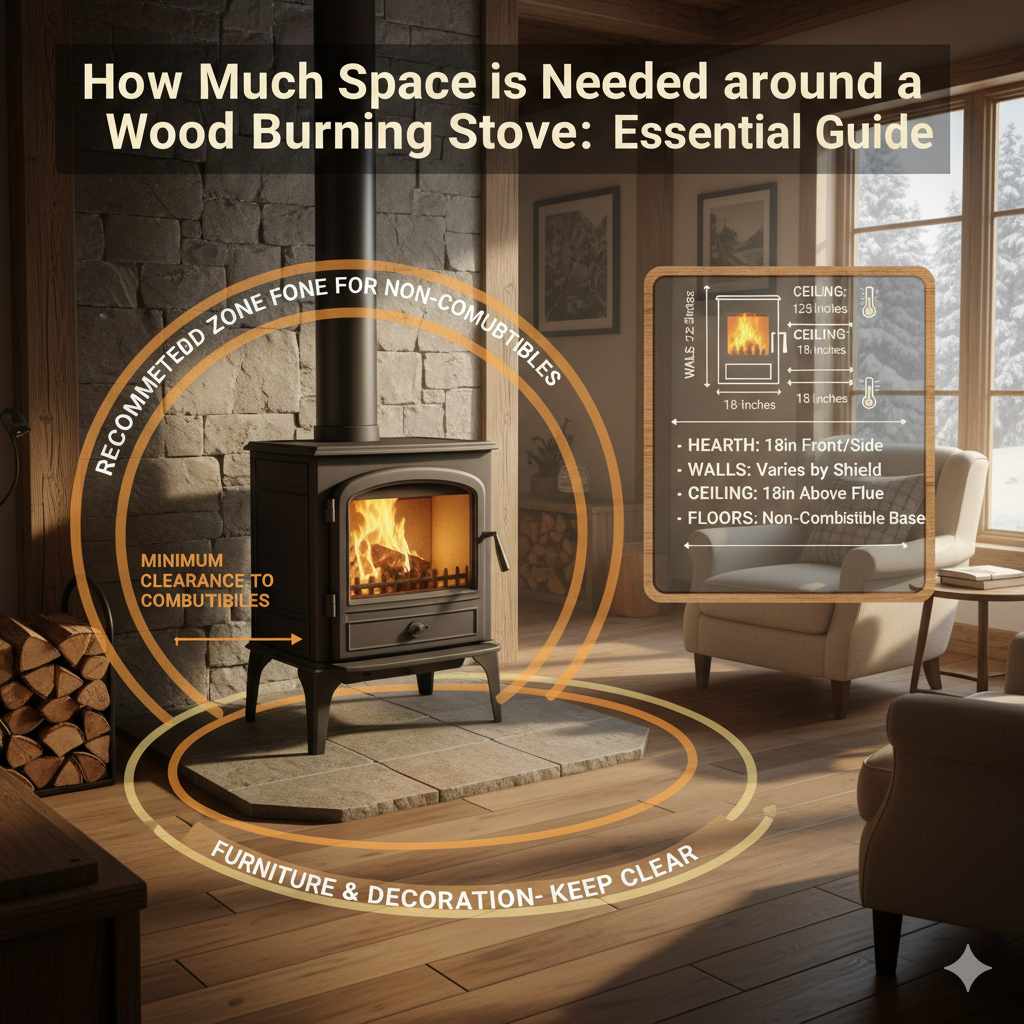
Wood stoves need enough space around them. This keeps everyone safe. Furniture should be 36 inches away. This stops heat damage. Walls need protection too. Use heat shields on walls. They keep walls safe from heat. Floors need special care. Use a fire-resistant mat under the stove. It stops sparks from burning the floor.
Chimneys should be clean. They help smoke escape. Ceilings need space too. Keep 18 inches clear above the stove. This stops heat from hurting the ceiling. Check local rules for more safety tips. They help keep everyone safe. Follow these rules always. Safety comes first.
Clearance Requirements
A wood burning stove needs space on each side. Keep 36 inches of space between the stove and walls. This helps to keep your home safe. Objects near the stove can catch fire. Always clear away any flammable items. Safety comes first.
The back of the stove also needs space. Leave 18 inches between the stove and the wall. This distance stops heat from building up. Walls can get hot and dangerous. Make sure the area stays clear. A small step to ensure safety.
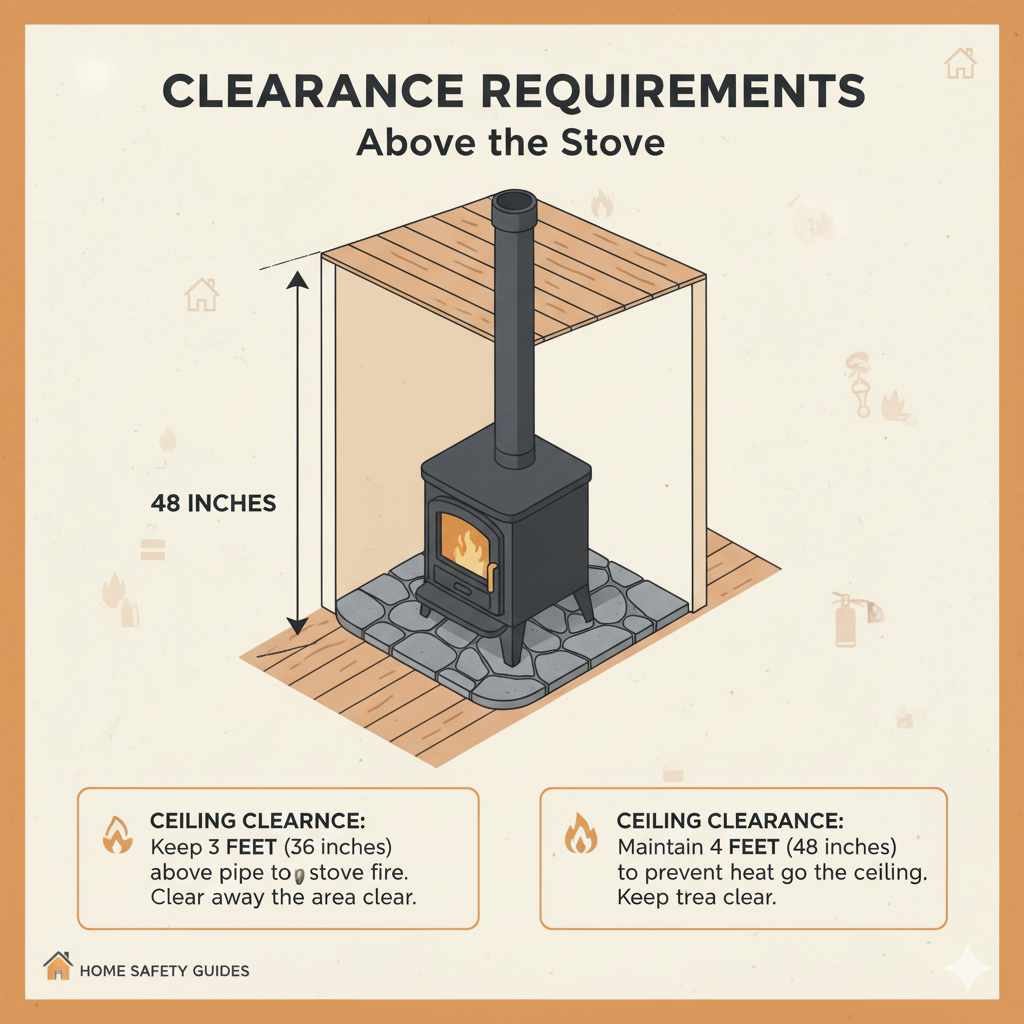
Space above the stove is very important too. At least 48 inches is needed above. This prevents heat damage to the ceiling. A safe distance keeps your home protected. Watch for any signs of heat issues. Keep the top area clear.
Floor Protection
Choosing the right floor protection is very important. Non-combustible materials are the best choice. Tiles, stone, and cement are safe options. These materials prevent heat from reaching the floor. They keep the area fire-safe. Metal sheets can also work well. Different materials offer different benefits. Consider how they fit your home style. Durability is key. You want something that lasts. Simple design often works best. It should cover a good area around the stove.
Every stove needs space around it. Safety is the main concern. At least 18 inches is needed at the sides. 24 inches in front is also recommended. These spaces keep heat from spreading. Check your stove’s manual for exact sizes. Manufacturers provide guidelines. They know what’s best. Room size affects these measurements too. Larger rooms may need more space. Always keep safety in mind. Proper spacing helps avoid accidents.
Wall And Ceiling Protection
Heat shieldsare important for safety. They block heat from reaching walls. Shields keep the area safe from fire. They are made of special materials. These materials do not burn easily. Shields should be placed between the stove and the wall. This helps in reducing the risk of fire. Make sure the shield covers a wide area. This way, heat is directed away from walls.
Fire-resistant materialsare vital around wood stoves. They help protect walls and ceilings. These materials resist catching fire. Stone and brick are good choices. Metal can also be used as a barrier. These materials help in keeping the area safe. Always check the quality of these materials. They should meet safety standards. This ensures maximum protection against fire.
Ventilation Needs
Good airflowis important for a wood burning stove. Fresh air helps the fire burn well. Open spaces around the stove help air move easily. Rooms should not feel stuffy.
Windows should be easy to open. This helps let in fresh air. A simple fan can also help air move.
Chimneysneed to be clean and clear. Smoke should go out easily. A blocked chimney can be dangerous.
The stove should have space around it. Air needs room to flow. Keep furniture away from the stove.
A good chimney is very important. It should be tall and straight. This helps smoke go out fast.
The chimney should be checked often. Make sure it is not blocked. A blocked chimney can cause smoke inside.
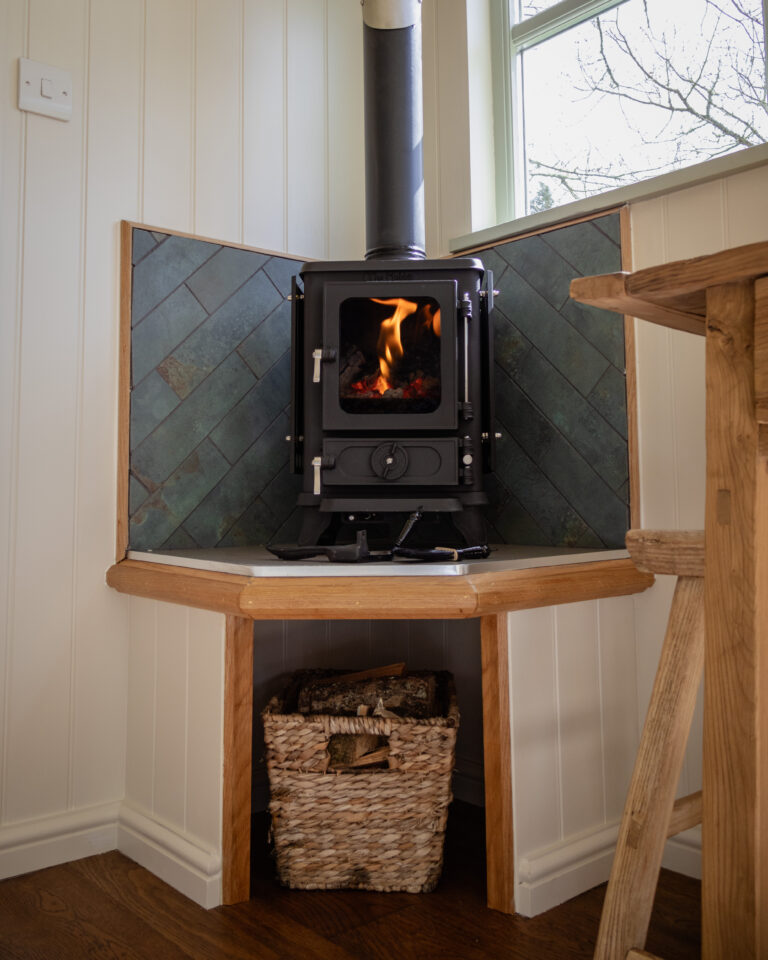
Credit: salamanderstoves.com
Room Size Considerations
A wood burning stove can be very efficient. The heat output depends on the stove’s size and design. Larger rooms need stronger stoves to heat well. Smaller rooms may need less powerful stoves. Too much heat can make a room uncomfortable. It’s important to match stove strength with room size.
Furniture must be placed safely around the stove. Heat can affect furniture. It can cause damage if too close. Safety zones are needed for proper placement. This keeps furniture safe and room cozy. Plan furniture layout before installing a stove. Space around the stove is important for comfort and safety.
Installation Tips
Installing a wood burning stove needs careful planning. Professional installation ensures safety and compliance. Experts know the right clearances for walls and floors. They can handle tricky situations with ease. DIY enthusiasts can save money but must follow guidelines closely. Mistakes can lead to fires or smoke issues. It’s crucial to read manuals and understand local codes. Professional help might be best for beginners.
Many people forget to check local regulations before installing. This can lead to penalties and safety risks. Another error is using improper materials around the stove. Only use heat-resistant materials. Ignoring clearances can cause fires. Make sure there’s enough space around the stove. Never install without a carbon monoxide detector nearby. Safety should always come first.
Frequently Asked Questions
What Is The Minimum Clearance Around A Wood Burning Stove?
The minimum clearance around a wood burning stove is typically 36 inches. Always check the manufacturer’s guidelines for specific requirements. Proper clearance ensures safety and optimal performance. Use heat-resistant materials and barriers if needed. Regularly inspect for compliance with safety standards.
How Close Can I Put A Wood Stove To A Wall?
Place a wood stove at least 36 inches away from a combustible wall. Use a heat shield to reduce clearance to 12 inches. Ensure proper installation for safety and efficiency. Always check local building codes and manufacturer guidelines for specific clearance requirements.
What Is The Code For A Wood Burning Stove?
The code for a wood burning stove varies by region. In the U. S. , it’s typically governed by the NFPA 211 standard, which sets guidelines for installation, clearance, and venting. Always check local building codes and regulations for compliance.
Consult professionals for safe installation and operation.
How Close Can A Wood Stove Be To A Block Wall?
A wood stove should be at least 12 inches away from a block wall. This distance ensures safety and allows for proper heat circulation. Always check local building codes and manufacturer guidelines for specific requirements. Using a heat shield can reduce this clearance.
Conclusion
Ensuring proper space around your wood stove is vital. It keeps your home safe. Follow safety guidelines and manufacturer instructions. Measure the area carefully. Use non-combustible materials nearby. This prevents fire risks. Regularly check for any issues. A well-placed stove provides warmth and comfort.
Enjoy a cozy, safe environment. Safety should always be a top priority. Proper spacing ensures peace of mind. With careful planning, you can relax by the fire. Your home remains secure and inviting.