Cheap Wood-Burning Fire Pit: Best Budget Picks Under $200
A cheap wood-burning fire pit runs $90-$200 for a 22-30″ steel bowl that will last 5-8 years with basic care — cast iron and thicker-gauge steel cost more but resist warping longer. Skimp on placement instead of the pit itself: fire code sets recreational fire clearance at 25 feet from any structure, far more than the “10 feet” figure many budget guides repeat. This guide covers what actually separates a durable $100 pit from a rusted-out one, the real clearance rules, and four tested-affordable picks.
Quick Answer
A good cheap wood-burning fire pit is 22-30″ steel or cast iron, priced $90-$200, with a spark screen and drainage or a weatherproof cover. Sunnydaze and similar budget brands cover this range. Set it up at least 25 feet from your house per fire code (some local ordinances allow less for a fully enclosed, contained pit — always confirm with your local fire department first).
What Counts as a “Cheap” Wood-Burning Fire Pit?
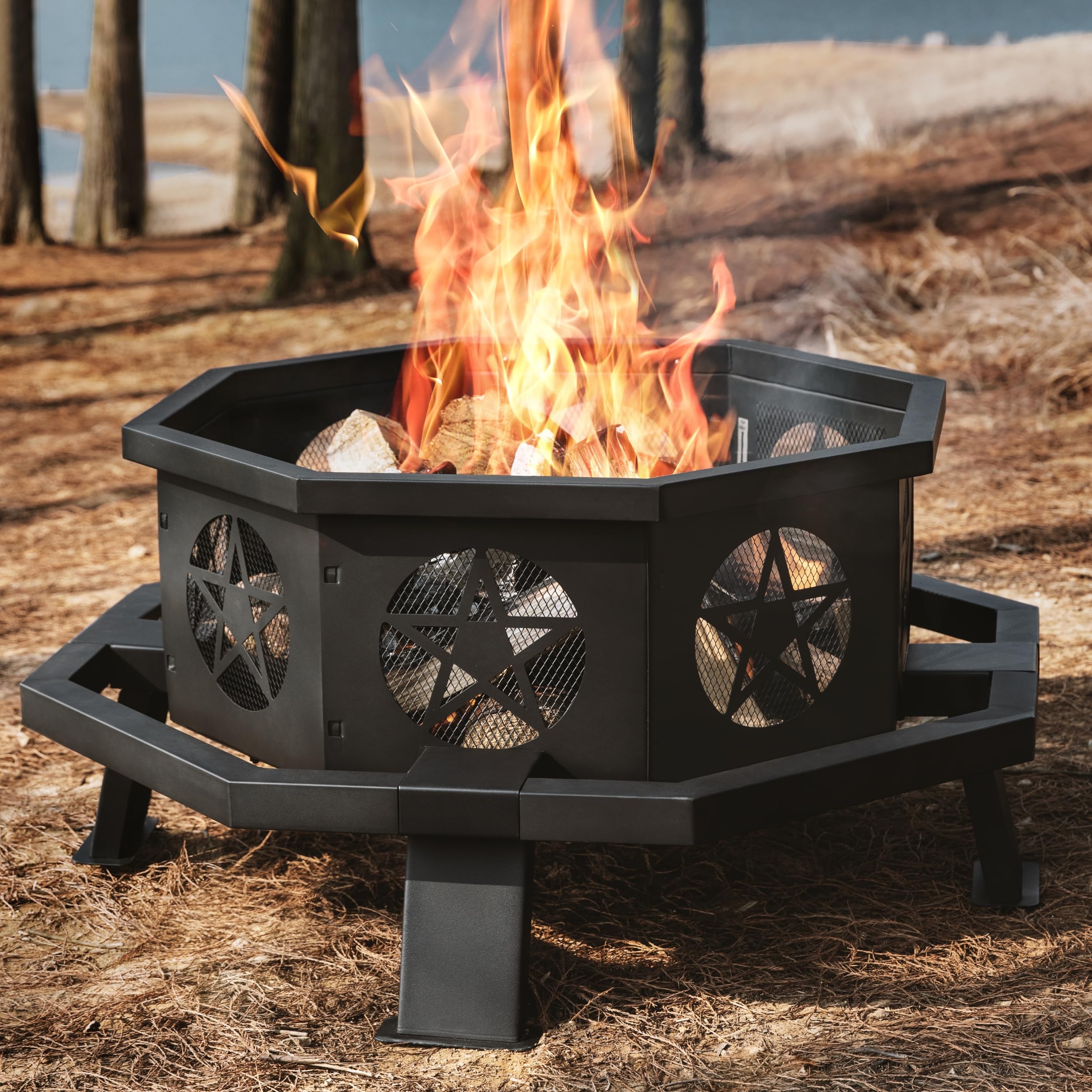
Best Overall Budget Pick
Sunnydaze Rustic Affinity 24-Inch Patio Fire Pit
A 24-inch steel bowl with an oxidized finish that hides surface rust cosmetically while the bowl itself holds up under regular use.
- Best for: A first fire pit for a small-to-medium patio
- Why we picked it: Near the bottom of the price range without dropping below 22-gauge steel
- Main drawback: No included cover — buy one separately or the finish streaks in rain
Compare more cheap wood-burning fire pit options
 Option 1 Sunnydaze 23-Inch Portable Fire Pit Bowl
|
 Option 2 STBoo Smokeless Portable Fire Pit
|
 Option 3 Sunnydaze Crossweave 36-Inch Fire Pit
|
As an Amazon Associate we earn from qualifying purchases.
A cheap wood-burning fire pit is a portable or semi-permanent outdoor fire bowl, typically 22-36 inches wide, made from 22-24 gauge steel or cast iron and priced under $200. The lower price comes from thinner metal and simpler construction, not necessarily worse safety features — most budget models still include a spark screen, log grate, and a fitted cover. What separates a genuinely good budget pit from a disposable one is metal thickness (look for 22-gauge steel or heavier) and whether it drains rainwater, since standing water is what rusts a cheap steel bowl out in a single season. It sits within our broader wood burning solutions coverage alongside stove and firewood guidance.
Materials, Sizes, and What They Cost
Steel is the most common budget material — lightweight, widely available, and the cheapest to manufacture, but it rusts fastest without a cover. Cast iron holds heat longer and resists warping under repeated high heat, but weighs more and costs more per inch of diameter. Copper and stainless steel exist at the top of the “affordable” range but usually push a pit over $250. For a first fire pit, a 22-24 gauge steel bowl in the 22-24″ range covers most patios and 2-4 person gatherings without becoming a storage problem in the off-season.
| Size | Typical Price | Best For |
|---|---|---|
| 22-24 in | $90-$130 | Patios, 2-4 people, easiest to store |
| 30-36 in | $150-$220 | Larger gatherings, 6-8 people |
| Portable/collapsible | $100-$150 | Camping, renters, small yards |
Best Affordable Wood-Burning Fire Pits
These four picks stay under $200 while covering the three most common use cases: a mid-size all-rounder, a compact portable bowl, a low-smoke design, and a larger pit for bigger groups. Prices and availability change with Amazon inventory — check the live listing before buying.
How Far Should a Fire Pit Be From Your House?
The International Fire Code (adopted by most U.S. jurisdictions, and the basis for NFPA 1’s recreational-fire rules) sets the baseline: a recreational fire — defined as a fuel pile 3 feet or less in diameter and 2 feet or less high — must stay at least 25 feet from any structure or combustible material. That is a stricter number than the “10 feet” figure that circulates on a lot of fire pit sites, and it’s worth knowing the code number even if your local ordinance ends up allowing less.
Many cities and counties amend that base rule for contained, approved fire pits — a metal bowl with a spark screen sitting on a fire-safe pad is treated differently than an open bonfire, and local ordinances commonly permit 10-15 feet for that kind of contained unit. That gap between code and common local practice is exactly why the rule everyone repeats is “check with your local fire department” — it is not boilerplate, the actual legal distance genuinely varies by city.
| Fire type | Minimum clearance from structures |
|---|---|
| Contained fire pit (spark screen, on a pad) — typical local allowance | 10-15 ft |
| Recreational fire (IFC/NFPA 1 baseline, ≤3 ft dia., ≤2 ft high) | 25 ft |
| Bonfire | 50 ft |
A wood-burning pit throws sparks and embers that a gas pit doesn’t, so never place one directly on a wood deck — set it on a fire-rated pad, pavers, gravel, or bare soil instead, and keep at least 3 feet of clear space around the pit itself on top of the structure clearance above. Never use a wood-burning fire pit on a covered porch or under low branches; the 8 feet of vertical clearance most fire-safe pads are rated for assumes open sky above the flame.
Setting Up and Maintaining Your Fire Pit
- Choose a level, cleared spot: bare soil, gravel, pavers, or a fire-rated pad — never a wood deck or dry grass.
- Clear a 3-foot radius: rake away leaves, twigs, and mulch, then confirm the structure clearance above (10-25 ft depending on local rules).
- Keep water or sand within reach: a filled bucket next to the pit puts out flare-ups faster than running for a hose — see our guide to choosing the right fire extinguisher for wood fires for a more serious backup.
- Use the spark screen every time: it’s the single easiest step people skip, and it’s what actually stops embers from landing on nearby grass.
- Never leave it unattended: a wood fire can reignite from coals hours after the last flame is visible.
- Empty ash and check for rust after each use: wet ash sitting in a steel bowl is the #1 cause of a budget fire pit rusting through in one season.
Most 22-24 gauge steel bowls last 5-8 years if you cover them between uses and dump standing water after rain; skip the cover and a cheap steel pit can visibly rust within a single wet season. Cast iron models run longer, typically 10+ years, at the cost of more weight and a higher price.
DIY Fire Pit: When Building Beats Buying
A DIY stone or brick fire pit can cost less than a store-bought bowl if you already have materials, but it takes more setup time and doesn’t move once it’s built. Stack fire-rated bricks or stones in a circle on level, cleared ground, leaving small gaps for airflow so the fire draws well. Line the base with sand or gravel, keep a metal ring or liner inside if you want to reuse the same spot long-term, and apply the same 25-foot structure clearance and 3-foot clear-radius rules covered above — a DIY pit isn’t exempt from fire code just because it’s homemade.
Reclaimed brick, leftover pavers, and community-swap materials keep the cost near zero, but check with your local building or fire department before digging — some jurisdictions require a permit for any permanent, in-ground fire feature even when a portable store-bought pit needs none. For more layout ideas, see our wood burning fire pit design ideas guide.
Frequently Asked Questions
How far should a fire pit be from a house?
Fire code (IFC/NFPA 1) sets the baseline recreational-fire clearance at 25 feet from any structure or combustible material. Many local ordinances allow a contained, approved fire pit closer — commonly 10-15 feet — but that’s a local amendment, not the national code default. Always confirm the actual number with your city or county fire department before placing a pit.
Can you put a wood-burning fire pit on a deck?
Not on a bare wood deck. Wood-burning fire pits throw sparks and embers that gas or propane pits don’t, and a wood deck is combustible. If you must use a deck, place the pit on a certified fire-rated pad rated for at least 1,100°F and keep several feet of clearance on every side — but a patio, pavers, or bare soil is the safer choice for a wood-burning pit.
How long do cheap fire pits last?
A budget 22-24 gauge steel fire pit typically lasts 5-8 years with a cover and regular ash removal, since standing rainwater in an uncovered steel bowl is what causes rust-through. Cast iron models last longer, often 10+ years, but cost more and weigh significantly more.
What is the cheapest material for a fire pit?
Thin-gauge steel is the cheapest fire pit material, which is why nearly every fire pit under $150 is steel. Cast iron and copper cost more per inch of diameter but resist warping and hold heat longer. For a budget pit, prioritize 22-gauge steel or heavier over anything thinner — the price difference is small but the rust resistance difference is not.
Also see our guides to a Home Depot wood-burning fire pit if you’d rather buy in-store, and a full portable wood-burning fire pit setup walkthrough if portability matters more than price.
Conclusion
A cheap wood-burning fire pit doesn’t mean a corner-cut one — a $90-$200 steel or cast iron bowl with a spark screen and cover will hold up for years if you place it correctly and keep ash out of it. Placement is the part budget guides get wrong most often: plan for 25 feet from any structure per fire code, confirm your local ordinance’s actual allowance for contained pits, and keep 3 feet of clear ground on every side. Get that right and the rest — size, material, style — comes down to what fits your patio and your budget.
Sponsored / affiliate links. As an Amazon Associate I earn from qualifying purchases. I may earn additional commission from eligible campaigns.