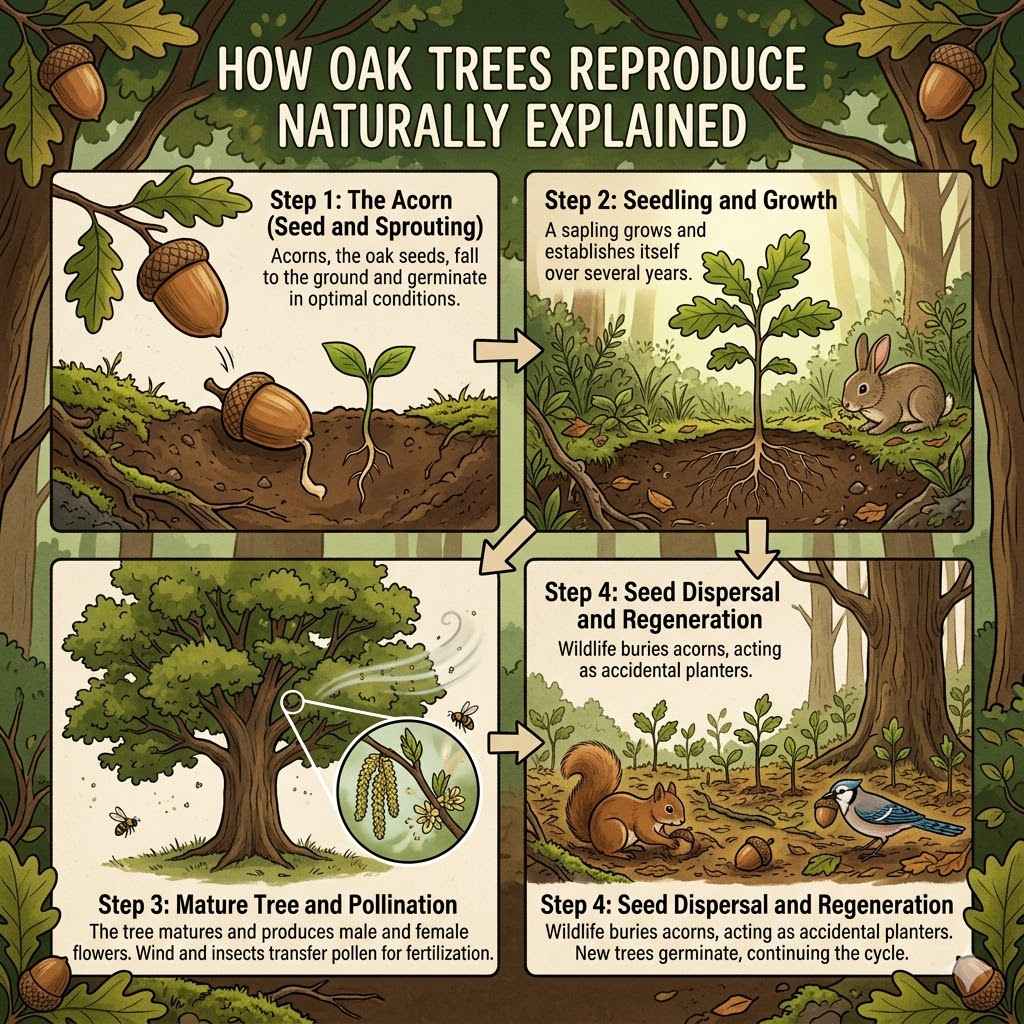
How Oak Trees Reproduce Naturally Explained
Many people wonder about How Do Oak Trees Reproduce Naturally? It can seem a bit tricky at first, especially if you’re new to gardening or just curious about nature. You might see acorns falling and wonder what happens next. Don’t worry, it’s not as complicated as it sounds.
We’ll break it down into simple steps so you can see exactly how these magnificent trees create new life all on their own. Get ready to learn about the amazing process of oak tree reproduction.
The Life Cycle of Oak Trees
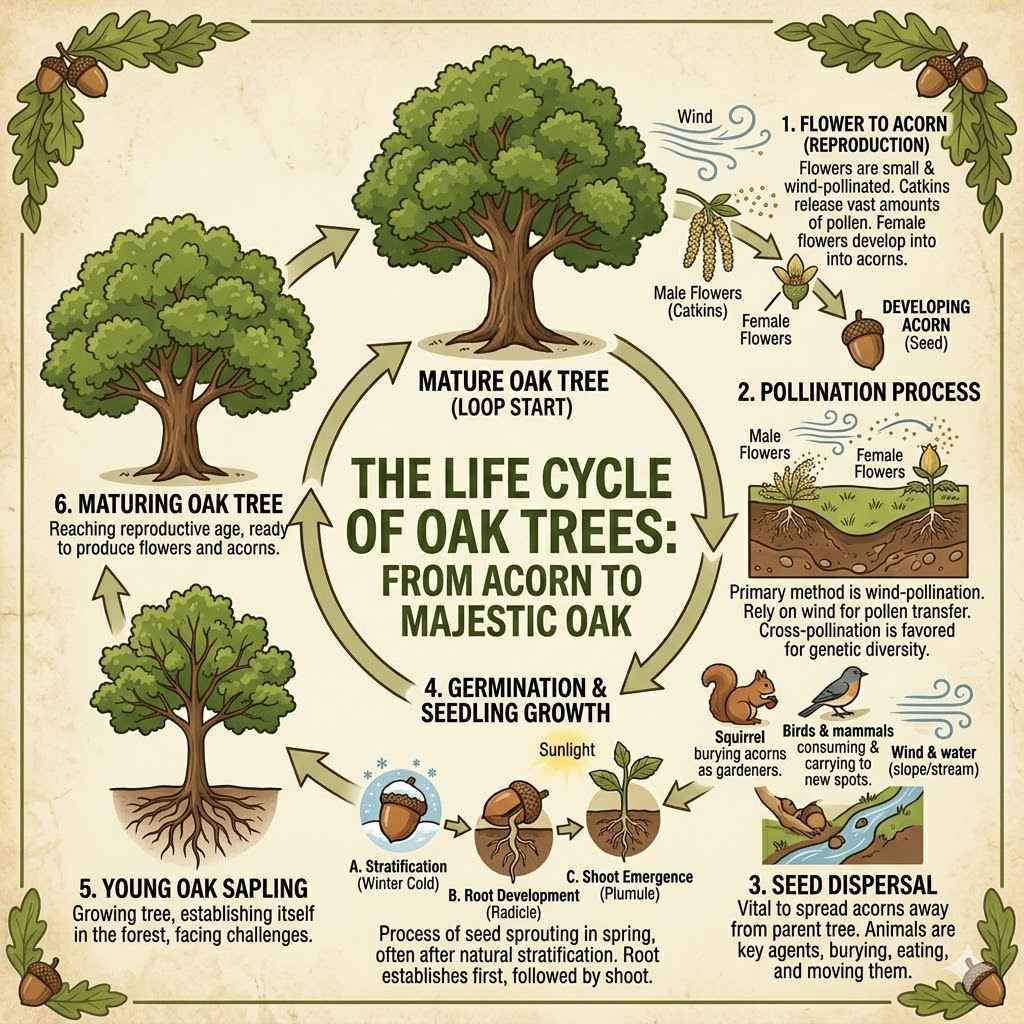
Understanding how oak trees reproduce naturally starts with knowing their life cycle. This cycle is a continuous loop of growth, reproduction, and renewal. It’s a process that has sustained oak populations for thousands of years.
Observing this cycle gives us great insight into the resilience and beauty of nature. It shows us how a tiny acorn can grow into a giant, majestic tree.
From Flower to Acorn
Oak trees have a life cycle that begins with flowers, though they might not look like the colorful flowers we often imagine. These flowers are typically small and wind-pollinated. Male flowers, called catkins, hang down and release pollen.
Female flowers are usually at the top of the same tree or on a different tree. When pollen lands on a female flower, it can lead to fertilization.
After fertilization, the female flower develops into an acorn. The acorn is essentially a seed enclosed in a cup. This cup helps protect the developing seed.
The acorn contains all the necessary parts to grow into a new oak tree. It stores energy and nutrients needed for the initial growth of a seedling.
Pollination Process
Pollination is a critical step for oak reproduction. Oak trees are primarily wind-pollinated. This means they rely on the wind to carry their pollen from one flower to another.
Male flowers (catkins) release vast amounts of light pollen into the air. This pollen drifts on the wind, hoping to land on the sticky stigmas of female flowers.
There are two main ways oak trees can be pollinated. The first is self-pollination, where pollen from male flowers on a tree fertilizes female flowers on the same tree. The second is cross-pollination, where pollen from one tree fertilizes flowers on a different oak tree.
Cross-pollination often leads to stronger, more diverse offspring.
The success of pollination depends on several factors. Wind speed and direction play a big role. The timing of when male and female flowers are receptive is also important.
Different oak species have different flowering times, which can influence their ability to cross-pollinate with other oaks. It’s a delicate balance that nature manages.
Seed Dispersal
Once acorns are mature, they need to be dispersed away from the parent tree. This is vital for reducing competition for resources like sunlight, water, and nutrients. If acorns all fell right under the parent tree, none would likely grow into healthy, mature trees.
Nature has several clever ways to spread these seeds.
Animals are the main agents of seed dispersal for oak trees. Squirrels are famous for burying acorns as a food source. They often forget where they hide some of these acorns, which then have a chance to sprout.
Birds, deer, and other wildlife also eat acorns and can carry them to new locations before they are digested or dropped.
This dispersal mechanism is not just about spreading seeds. It also helps in genetic diversity. When animals move acorns from different parent trees, they mix genes.
This leads to stronger, more adaptable new oak trees. It’s a partnership between the trees and the animals that benefits both.
Squirrels Burying Acorns
Squirrels are like nature’s gardeners for oak trees. They gather acorns in the fall and bury them in many different spots to save for later. Many of these buried acorns are never dug up again.
The ones left behind in suitable soil conditions can then germinate and grow into new oak seedlings. This provides a significant boost to oak tree populations.
Bird and Mammal Consumption
Birds and larger mammals, like deer and jays, also consume acorns. While some acorns are digested and lost, others can pass through the digestive system intact and be deposited in new areas through droppings. This broadens the reach of oak seed dispersal beyond just what squirrels manage.
Different animals contribute in unique ways.
Wind and Water
While less significant than animal dispersal, wind and water can also play a role, especially for acorns that fall near streams or on slopes. Acorns might be carried short distances by wind gusts or washed downstream during heavy rains. This is a secondary method of dispersal, but it still contributes to spreading the oaks.
Germination and Seedling Growth
For an acorn to become a new oak tree, it needs to germinate. Germination is the process where the seed begins to sprout and grow. This usually happens in the spring, after the acorn has experienced a period of cold weather, a process called stratification.
When conditions are right – with adequate moisture, warmth, and soil – the acorn’s seed coat cracks open. A root emerges first, anchoring the young plant and seeking water and nutrients. Soon after, a shoot emerges, reaching for sunlight.
This new growth is called a seedling.
The seedling is very vulnerable in its early stages. It depends on stored energy from the acorn and soon needs sunlight and nutrients from the soil to survive and grow. Many seedlings do not make it.
They face challenges like drought, disease, being eaten by animals, or being outcompeted by other plants.
Stratification Requirement
Most oak species require a period of cold to break dormancy. This natural chilling process, known as stratification, is essential for the seed’s embryo to develop properly and become ready to germinate. Acorns gathered in the fall and left exposed to winter temperatures naturally undergo this process.
It ensures that germination happens when conditions are favorable, typically in spring.
Root Development
The first part of a germinating acorn to emerge is the radicle, which develops into the primary root. This strong taproot grows downwards, seeking stability and essential water and minerals in the soil. Its early development is crucial for the seedling’s survival, providing a lifeline even before the shoot appears above ground.
Shoot Emergence
Following the root’s establishment, the plumule, which becomes the shoot and leaves, grows upwards towards the light. This shoot will develop into the stem and leaves of the young oak tree. The seedling relies on photosynthesis from these leaves to create its own food and continue growing.
Natural Reproduction Methods
Oak trees primarily reproduce naturally through seeds, which we’ve touched upon. However, there are also less common methods that contribute to their spread and survival. These alternative methods can be important, especially in certain environments or after disturbances.
Understanding these various methods helps us appreciate the full strategy oak trees employ to ensure their lineage continues. It’s a testament to their adaptability and enduring presence in ecosystems.
Sexual Reproduction Via Acorns
The most common and significant way oak trees reproduce naturally is through sexual reproduction. This process involves the fusion of male and female gametes, leading to the production of acorns, which are the seeds. This is the cornerstone of how oak populations are established and maintained.
Sexual reproduction is vital for genetic diversity. It allows for new combinations of genes from parent trees, leading to offspring that are potentially better adapted to changing environmental conditions. This is why oaks can thrive in a wide range of climates and soils across different regions.
The entire process, from flowering and pollination to acorn development and dispersal, is a complex but beautiful display of natural engineering. It highlights the interconnectedness of plants, animals, and the environment.
Masting Behavior
One fascinating aspect of oak reproduction is masting. Masting is the synchronized, heavy production of seeds by oak trees across a region in a particular year. In other years, seed production might be very low or almost non-existent.
This strategy has several benefits. When there are many acorns produced, it can overwhelm seed predators like insects and rodents, meaning a larger proportion of acorns survive. This also ensures ample food for wildlife, which in turn helps with seed dispersal.
The triggers for masting are not fully understood but are thought to involve environmental factors like weather patterns, such as rainfall and temperature, during critical developmental stages. This synchronization ensures that acorns are produced in large quantities when conditions are favorable, maximizing the chances of successful reproduction.
A study published in the journal “Ecology Letters” noted that masting in oaks is linked to resource accumulation and potential predator satiation, suggesting it’s an evolutionary strategy to ensure reproductive success. The resource accumulation theory suggests that trees store resources for years to produce a large crop. Predator satiation happens when the sheer number of acorns overwhelms the animals that eat them, so a greater percentage of seeds survive.
Asexual Reproduction
While less common than seed production, some oak species can also reproduce asexually. This means they can create new individuals from parts of the parent plant without the involvement of seeds or pollination. This method can be useful for rapid colonization in suitable conditions.
Asexual reproduction results in offspring that are genetically identical to the parent plant. This can be advantageous if the parent tree is well-adapted to its environment. However, it also means less genetic variation, making the population more susceptible to diseases or environmental changes.
Root Suckering
One form of asexual reproduction in oaks is root suckering. This occurs when the roots of a mature oak tree send up new shoots that grow into independent saplings. This typically happens after the parent tree has been damaged or cut down, or sometimes as a natural part of the tree’s growth process.
The new shoots draw energy and nutrients from the established root system of the parent tree. This gives them a significant advantage, allowing them to grow more quickly and survive better than seedlings. Root suckering can lead to the formation of clonal stands of oak trees, where several trees are essentially genetically the same individual.
This method is more prevalent in certain oak species and can contribute to the density of oak forests in specific areas. It’s a way for a successful lineage to expand its territory and establish a strong presence.
Natural Grafting
In some cases, oak trees can reproduce through a process akin to natural grafting. This happens when the roots or low-lying branches of two different oak trees grow into contact with each other and fuse. This fusion allows for the sharing of nutrients and water between the trees.
While not a direct method of creating new individuals, natural grafting can help support the survival and vigor of connected trees. If one tree is struggling, the connected one can provide some assistance. It’s a remarkable example of cooperation in nature, though its direct role in reproduction is indirect.
This fusion can occur between the roots of young saplings that grow very close together. The vascular tissues of the roots merge, allowing for resource exchange. This can help weaker saplings survive in less-than-ideal conditions, contributing to a denser stand over time.
Factors Affecting Oak Reproduction
Several factors influence the success of oak tree reproduction. These elements can either promote or hinder the process, shaping the distribution and abundance of oak forests.
Environmental conditions, the presence of other organisms, and even human activities all play a part. Understanding these influences helps us appreciate the challenges and opportunities oak trees face in their ongoing cycle of life.
Environmental Conditions
Environmental conditions are paramount for oak reproduction. The availability of water, suitable temperatures, and light are all critical for germination and seedling survival.
Too little rain can cause acorns to dry out before they can sprout, or kill delicate seedlings. Excessive drought can prevent pollination or lead to acorn drop before maturity. Conversely, too much moisture can lead to fungal diseases that rot acorns or damage seedlings.
Temperature also plays a key role. Acorns need a period of cold (stratification) to germinate properly. Extreme heat can desiccate seeds and young plants.
The right balance of these elements is crucial for a successful reproductive season.
Light availability is important for seedlings once they emerge. While some shade can protect young trees from harsh sun, too much shade from competing vegetation will stunt their growth and reduce their chances of survival. Openings in the canopy created by falling trees or natural clearing are beneficial.
Predators and Diseases
Oak reproduction faces significant challenges from predators and diseases. Animals that eat acorns, insects that bore into them, and various pathogens can all reduce the number of acorns that successfully mature and germinate.
Squirrels, jays, and other animals are natural predators of acorns. While they also help with dispersal, they consume a vast number of seeds. Insect pests, such as the acorn weevil, can lay eggs inside developing acorns, rendering them non-viable.
Diseases caused by fungi and bacteria can affect acorns, flowers, and seedlings. Oak wilt is a devastating disease that can kill mature oak trees quickly. Various root rots and leaf spot diseases can weaken or kill young oak seedlings, making it harder for them to establish themselves.
The interplay between trees, predators, and diseases is a constant evolutionary battle. Trees that are more resistant to diseases or produce more seeds have a better chance of survival. This dynamic shapes the health and composition of oak forests.
Human Impact
Human activities have a profound impact on oak reproduction. Forest management practices, land use changes, and pollution can all affect oak populations.
Clearcutting forests can initially remove many mature oaks, but it can also create openings that allow sunlight to reach the forest floor, potentially benefiting oak seedlings. However, if regeneration plans don’t favor oaks, other species might take over.
Urbanization and development often lead to the loss of oak habitats. Pollution, such as acid rain or air pollution, can weaken trees and make them more susceptible to diseases and pests. Changes in fire regimes, with less frequent natural fires, can also alter oak forest dynamics, as some oak species rely on periodic fires.
Conversely, conservation efforts, such as planting oak saplings or managing forests to promote oak regeneration, can help bolster oak populations. Understanding these impacts is key to ensuring the future of these iconic trees.
Optimizing Oak Reproduction Naturally
While nature does a remarkable job of reproducing oak trees, certain conditions and actions can help optimize this natural process. These are not about artificial intervention but about supporting what nature already does.
By understanding the oak’s needs, we can foster environments where they are more likely to thrive and reproduce successfully. This involves a mindful approach to land management and a deep appreciation for ecological balance.
Creating Favorable Conditions
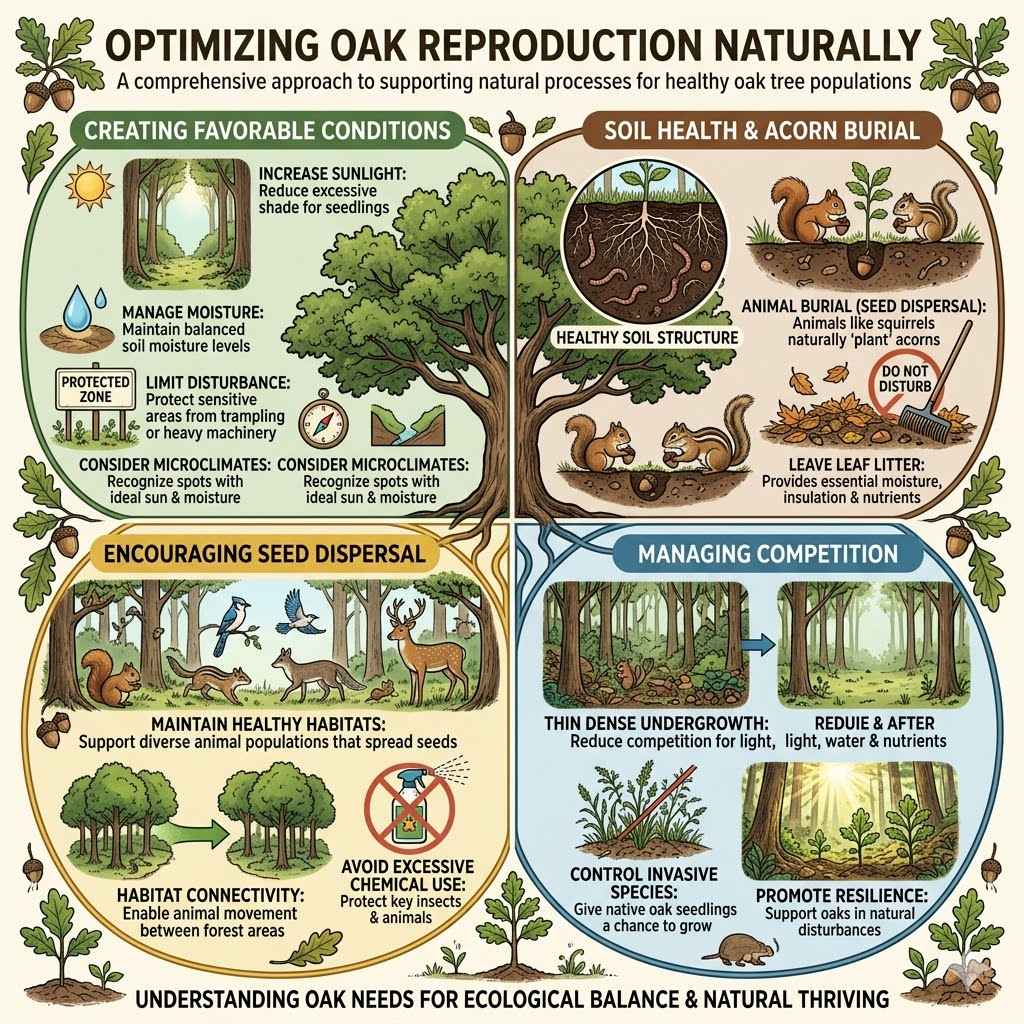
Creating favorable conditions is the most effective way to support natural oak reproduction. This means ensuring that the environment provides what acorns and seedlings need to survive and grow.
This can involve managing competing vegetation that might shade out young oak seedlings. Allowing sunlight to reach the forest floor is important. It also means managing water levels to prevent excessive dryness or waterlogging.
Protecting areas from excessive disturbance can also help. This gives seedlings a better chance to establish themselves without being trampled or damaged. Thinking about the microclimates within a forest can help identify the best spots for acorns to germinate.
Soil Health and Acorn Burial
Good soil health is foundational for oak reproduction. Healthy soil provides the necessary nutrients and structure for roots to grow. It also supports the organisms, like fungi, that help trees access nutrients.
The role of animals in burying acorns is also critical. When squirrels and other animals cache acorns, they naturally plant them in the soil. This process, often called seed predation and dispersal, is a vital part of oak regeneration.
Ensuring healthy populations of these animals indirectly supports oak reproduction.
A common mistake is thinking that raking up all fallen leaves and acorns is beneficial. However, the leaf litter provides insulation and moisture for acorns, and the acorns themselves are part of a natural cycle. Leaving them undisturbed in appropriate areas is usually best.
Encouraging Seed Dispersal
Encouraging natural seed dispersal means supporting the animals that carry acorns. This involves maintaining healthy habitats that support diverse wildlife populations.
Protecting forests and natural areas from fragmentation is important. This allows animals to move freely and continue their dispersal activities. Providing water sources and food in natural settings can also help maintain healthy wildlife populations.
Avoiding excessive use of pesticides or herbicides in areas where oaks grow is also key. These chemicals can harm the insects and animals that play a role in seed dispersal and pollination.
For example, maintaining corridors of trees between larger forest patches allows squirrels to travel and spread acorns more effectively. This is often referred to as habitat connectivity. It’s a simple yet powerful way to assist natural processes.
Managing Competition
Managing competition is essential for ensuring young oak seedlings can thrive. Other plants often compete with oak seedlings for sunlight, water, and nutrients.
In natural settings, this competition can be influenced by factors like historical land use or changes in disturbance regimes. For instance, if a forest has not experienced natural disturbances like fires or windstorms for a long time, dense undergrowth can outcompete young oaks.
In managed forests, thinning out dense stands of competing trees or removing invasive plant species can create better conditions for oak regeneration. This is a practice often employed in forestry to promote specific tree species.
The goal is not to eliminate all competition but to reduce it enough so that oak seedlings have a fair chance to grow and develop into mature trees. It’s about creating a balance that favors the establishment of new oaks.
Frequently Asked Questions
Question: How long does it take for an acorn to grow into a mature oak tree?
Answer: It can take many decades, often 20 to 50 years or even more, for an oak tree to become mature and start producing a significant number of acorns itself. The exact time depends on the species and growing conditions.
Question: Do oak trees need another oak tree to reproduce?
Answer: While cross-pollination between different oak trees generally leads to stronger offspring, many oak species can self-pollinate, meaning they can reproduce with pollen from their own flowers. However, having other oaks nearby usually increases the chances of successful reproduction.
Question: What is the best time of year for acorns to germinate?
Answer: Acorns typically germinate in the spring. They need to experience a period of cold weather during the winter (stratification) before they can sprout when the temperatures warm up and moisture is available.
Question: Can oak trees reproduce from just a branch cutting?
Answer: While some plants can be grown from cuttings, oaks are generally very difficult to propagate this way. Their primary natural reproduction methods are through acorns and, to a lesser extent, root suckering.
Question: Why do some years have many acorns and other years have very few?
Answer: This phenomenon is called masting. Oak trees produce a large crop of acorns in some years (mast years) and very few in others. This is thought to be an evolutionary strategy to overwhelm seed predators and ensure survival of a greater proportion of seeds.
Conclusion
Understanding How Do Oak Trees Reproduce Naturally? reveals a beautiful, complex process. Oaks primarily use sexual reproduction, relying on wind for pollination to create acorns. Animals then help disperse these acorns, with many germinating in the spring after a winter chill.
While less common, root suckering also contributes to their spread. Environmental factors, predators, and human impact all play roles, but creating favorable conditions, supporting seed dispersal, and managing competition can foster successful oak regeneration. These trees ensure their legacy continues through these remarkable natural methods.