Beech Wood vs Oak: Hardness, Color, and Which to Use (2026)
Beech and oak are closer in hardness than most people expect, and the hardness number is not what should decide your project. American beech rates 1,300 lbf on the Janka scale, European beech 1,450 lbf, red oak 1,220 lbf and white oak 1,350 lbf. The real differences are rot resistance, seasonal movement, grain and cost. This guide gives the full numbers side by side, then matches each wood to furniture, flooring, cabinets, steam bending and outdoor use.
Beech vs Oak in One Minute
Best Wood Movement Check Pick | |
 |
General Tools MMD4E Pin-Type Moisture Meter, $32.03 Beech and oak both move with humidity, and beech moves more. A pin meter tells you whether a board has acclimated before you cut joinery, which is the check this guide recommends for either wood.
|
As an Amazon Associate we earn from qualifying purchases.
Pick white oak if the piece will see moisture, sit outdoors or needs the most stable choice of the three. Pick red oak for the cheapest classic oak look indoors. Pick beech when you want a pale, tight-grained wood that turns, bends and finishes cleanly and the piece will live in a dry, heated room. Beech is the one to keep away from damp locations, because it is rated non-durable and is attacked by insects.
The word “oak” hides a big split. White oak and red oak are different woods with different rot behavior, so “beech vs oak” really means beech against two separate options. The table below keeps them apart.
Beech vs Oak: Side-by-Side Numbers
| Property | American beech | European beech | Red oak | White oak |
|---|---|---|---|---|
| Janka hardness | 1,300 lbf | 1,450 lbf | 1,220 lbf | 1,350 lbf |
| Bending strength (MOR) | 14,900 psi | 15,970 psi | 14,380 psi | 14,830 psi |
| Stiffness (MOE) | 1,720,000 psi | 2,075,000 psi | 1,761,000 psi | 1,762,000 psi |
| Crushing strength | 7,410 psi | 8,270 psi | 6,780 psi | 7,370 psi |
| Dried weight | 45.0 lb/ft3 | 44.3 lb/ft3 | 43.8 lb/ft3 | 47.0 lb/ft3 |
| Tangential shrinkage | 11.9% | 11.7% | 8.6% | 10.5% |
| Radial shrinkage | 5.5% | 5.8% | 4.0% | 5.6% |
| Rot resistance | Non-durable | Non-durable | Non-durable | Very durable |
Figures are Wood Database values for the species named, dried wood. Sources: American beech, European beech, red oak and white oak.
Is Beech Harder Than Oak? The Honest Answer
Usually, but by a margin you would struggle to feel. American beech at 1,300 lbf is about 7 percent harder than red oak at 1,220 lbf and about 4 percent softer than white oak at 1,350 lbf. European beech at 1,450 lbf is roughly 19 percent harder than red oak and about 7 percent harder than white oak. Charts from different sources shift these figures by a few dozen lbf, so treat a gap that small as a tie.
That is the myth worth correcting. People compare a single “beech” figure with a single “oak” figure and declare a winner. In practice you are comparing two beeches and two oaks, and the species you actually buy decides the answer. If you are shopping in North America you will most likely meet American beech and red oak, the 1,300 versus 1,220 pair. For a deeper look at beech alone, see how hard beech wood really is.
Strength tells the same story. Beech and white oak sit within a few percent of each other in bending strength and crushing strength, and European beech edges ahead on both. Neither wood is a weak choice for chair rails, table legs or workbench tops.
Seasonal Movement: The Difference Hardness Hides
Here is the gap most comparisons skip. Beech shrinks 11.7 to 11.9 percent tangentially from green to dry, against 8.6 percent for red oak and 10.5 percent for white oak. Working from those numbers, beech moves about 36 to 38 percent more than red oak across the growth rings and about 11 to 13 percent more than white oak. The Wood Database also notes that American beech shows a large amount of movement in service.
What this means at the bench:
- Wide panels: a glued-up beech tabletop will cup or open at the ends more readily than red oak if it sees humidity swings. Use breadboard ends or figure-eight fasteners that let the top slide.
- Flooring: beech floors need tighter humidity control and proper expansion gaps. Oak is the more forgiving choice for a house without a humidifier.
- Quartersawn stock: cutting radially gives much less movement in either species, because radial shrinkage is only 4.0 to 5.8 percent.
- Acclimation: let boards sit in the room for days and check them with a meter until readings stop falling before you cut joints.
Dust care also deserves a mention. The Wood Database reports European beech as a sensitizer that can cause eye, skin and respiratory irritation, so wear a fitted respirator when sanding it, as you should with any hardwood.
Color and Grain: How to Tell Them Apart
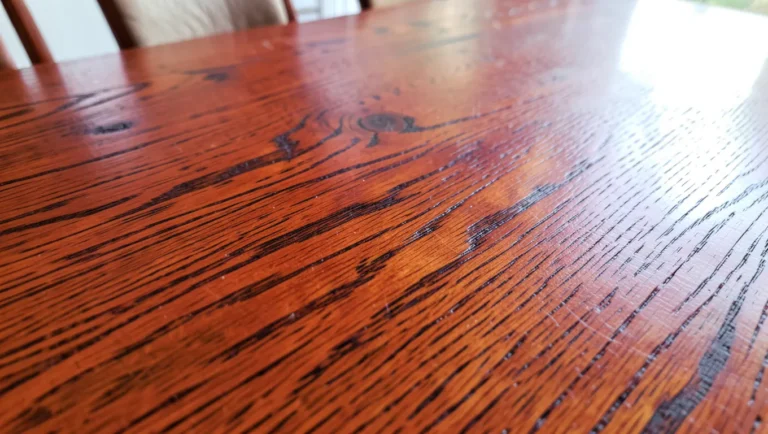
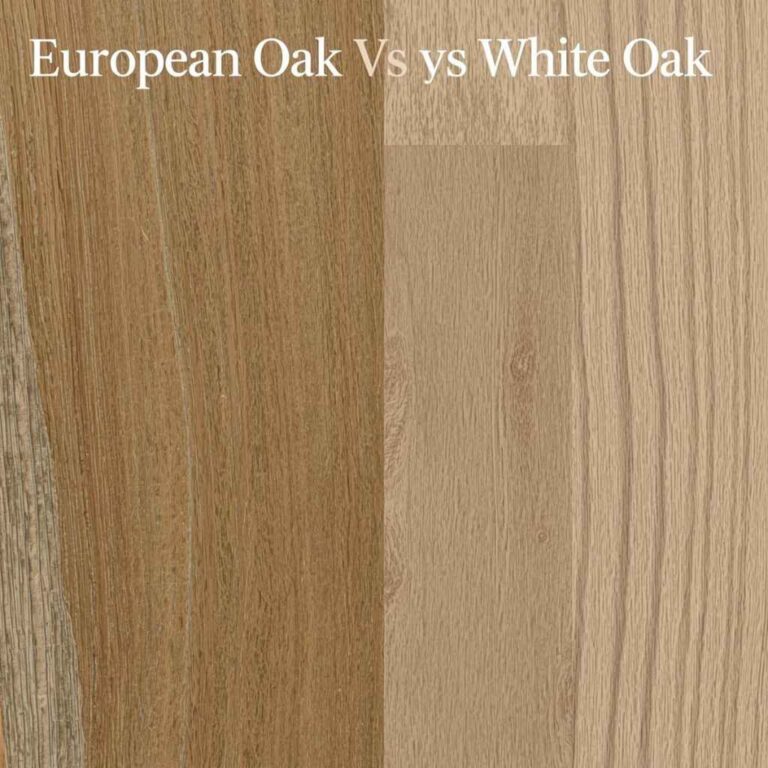
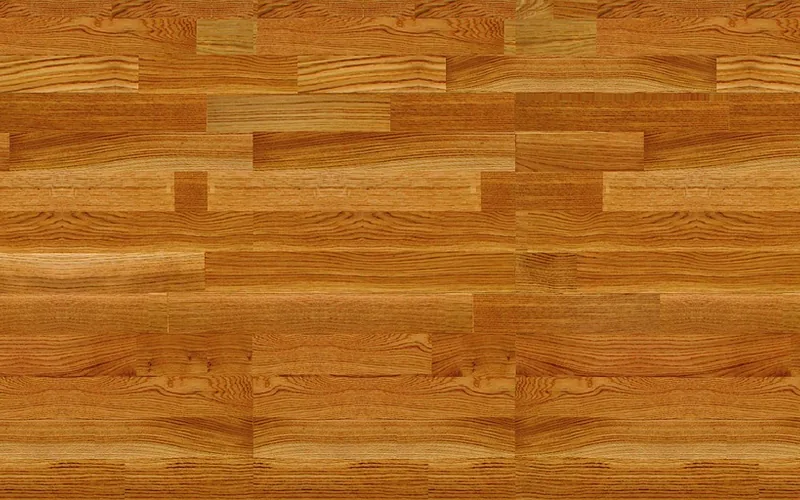
Beech is pale cream to light pinkish brown with a fine, even grain and small, scattered flecks. Oak is usually darker, with a bold, open grain and, in the quartersawn cut, the shimmering ray flecks that people link to craftsman furniture. If you want a closer look at beech tones and how they change with light, see what colour beech wood is.
The practical test is the grain. Run a fingernail across a finished edge. Oak has visible open pores that you can feel. Beech feels closed and smooth, which is why it takes paint and clear coats evenly.
| Look | Beech | Red oak | White oak |
|---|---|---|---|
| Base color | Cream to light pink-brown | Light brown with a reddish cast | Light to medium tan-brown |
| Grain | Fine, even, subtle | Bold, open, wavy | Bold, open, straighter |
| Best finish look | Natural, white wash, paint | Warm stain tones | Natural, gray or dark stain |
These color and grain descriptions are general lumberyard observations, not measured values, and individual boards vary a lot.
Workability and Finishing
Both woods machine and glue well. Beech turns and takes steam bending superbly according to the Wood Database, which is why it appears in chair components and turned parts. White oak also steam bends well, and both oaks are rated as giving good results with hand and machine tools. Expect to use sharp blades on either wood and to pre-drill screw holes near edges, since both are dense.
Finishing is where they behave differently in the shop. Oak’s open pores drink up stain and benefit from grain filler if you want a glass-smooth topcoat. Beech has no open pores to fill, so a clear coat goes on smoothly, but dark stains on tight-grained woods like beech can look uneven, so test on an offcut and consider a conditioner or a gel stain. That finishing advice is general shop practice rather than a figure from the sources above. For stain behavior on oak specifically, see whether red oak stains well.
Cost and Availability
Beech is the budget option in its home markets. The Wood Database calls it readily available and affordable in the United States, even a possible cheaper alternative to hard maple, and very economically priced across Europe. Red oak is described as moderately priced and usually slightly less expensive than white oak. In many lumberyards red oak is easier to find in thick, wide stock, while beech can require a special order outside hardwood specialists. Prices change by region and grade, so get a local quote before you commit to a large project.
If cabinets are the goal, remember that finish and labor often cost more than the board itself. Our breakdown of white oak cabinet costs shows where the money goes.
Which Wood Should You Use for Your Project?
Furniture
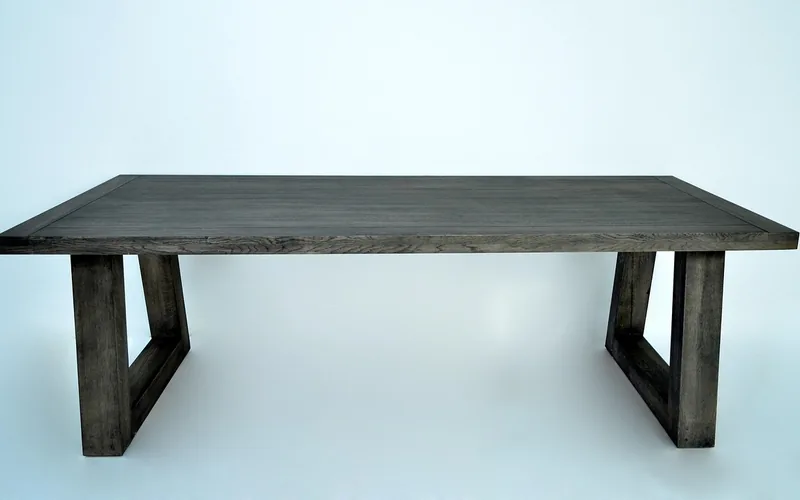
Beech suits chairs, stools, kids’ furniture and workbenches where a pale, strong, closed-grain wood is wanted. Oak suits dining tables and case pieces where the bold grain is part of the look. For a wide tabletop in a house with big humidity swings, oak is the safer choice.
Flooring
Oak is the standard for a reason: it moves less and has a long track record. Beech flooring is sold, especially in Europe, but plan for tighter humidity control and proper expansion gaps. Treat beech as a dry, heated interior wood.
Kitchen cabinets
Both work. Oak is more forgiving in a kitchen with steam and spills, and white oak adds rot resistance. Beech gives a clean paint-grade or natural look when the finish is well sealed. Keep cabinet care simple with a guide like cleaning oak cabinets without stripping the finish.
Outdoor and wet locations
White oak is the only one of the four listed as very durable, which is why it shows up in boatbuilding and barrels. Beech and red oak are rated non-durable, so keep them indoors or under a serious, maintained finish. If you are curious about other oaks for lumber, read whether pin oak is good lumber.
Steam bending and turning
Beech is a top pick for steam bending and turning thanks to its even grain and strong response to steam. White oak is the classic bending wood for boat ribs and rustic chairs.
Other Beech Comparisons
If oak is not your only option, these side-by-side guides cover the other common matchups: beech vs birch (and the furniture angle on birch vs beech), ash vs beech, and European beech properties. To confirm that beech counts as a true hardwood, see what beech wood is.
Frequently Asked Questions About Beech Wood vs Oak
Is beech wood as strong as oak?
Yes, for most purposes. Beech has bending strength of 14,900 to 15,970 psi, against 14,380 psi for red oak and 14,830 psi for white oak, and its crushing strength is equal or higher. Strength is not the reason to choose one over the other.
Is beech harder than oak?
Slightly, in most comparisons. American beech is rated 1,300 lbf and European beech 1,450 lbf, against 1,220 lbf for red oak and 1,350 lbf for white oak, so beech beats red oak but only European beech beats white oak.
Is beech good for outdoor use?
No. Beech is rated non-durable and is susceptible to insect attack, so it should stay indoors or under a well-maintained finish. White oak is the better outdoor choice because it is rated very durable.
Which is cheaper, beech or oak?
Beech is usually the cheaper wood where it grows, and red oak is usually cheaper than white oak. Local supply and grade matter more than species, so compare quotes from nearby yards.
Which is better for flooring, beech or oak?
Oak is the safer pick. Beech shrinks about 36 to 38 percent more than red oak across the grain, so it is more sensitive to humidity changes and needs tighter climate control.
Beech and oak are both excellent hardwoods, so the winner depends on where the piece will live. Use oak, and white oak in particular, for damp or outdoor spots and for wide panels that must stay flat. Use beech for dry interior furniture, turned parts and bent components where its pale, even grain is an asset. Check any board with a meter before joinery, and let it settle in the room first.
Sponsored / affiliate links. As an Amazon Associate I earn from qualifying purchases. I may earn additional commission from eligible campaigns.