How to Finish Purple Heart Wood Without It Turning Brown
Purple heart wood turns brown not from a bad finish, but from photo-oxidation — UV light breaking down the same pigment that took days of air exposure to develop in the first place. Skip UV protection and even a flawless glossy topcoat will look muddy brown within a year or two near a sunlit window. This guide covers which finishes actually block UV, when to seal the wood for peak color, and how to revive purple heart that’s already gone brown.
Why Purple Heart Turns Brown (Even Under a Good Finish)
Best UV-Blocking Finish Pick
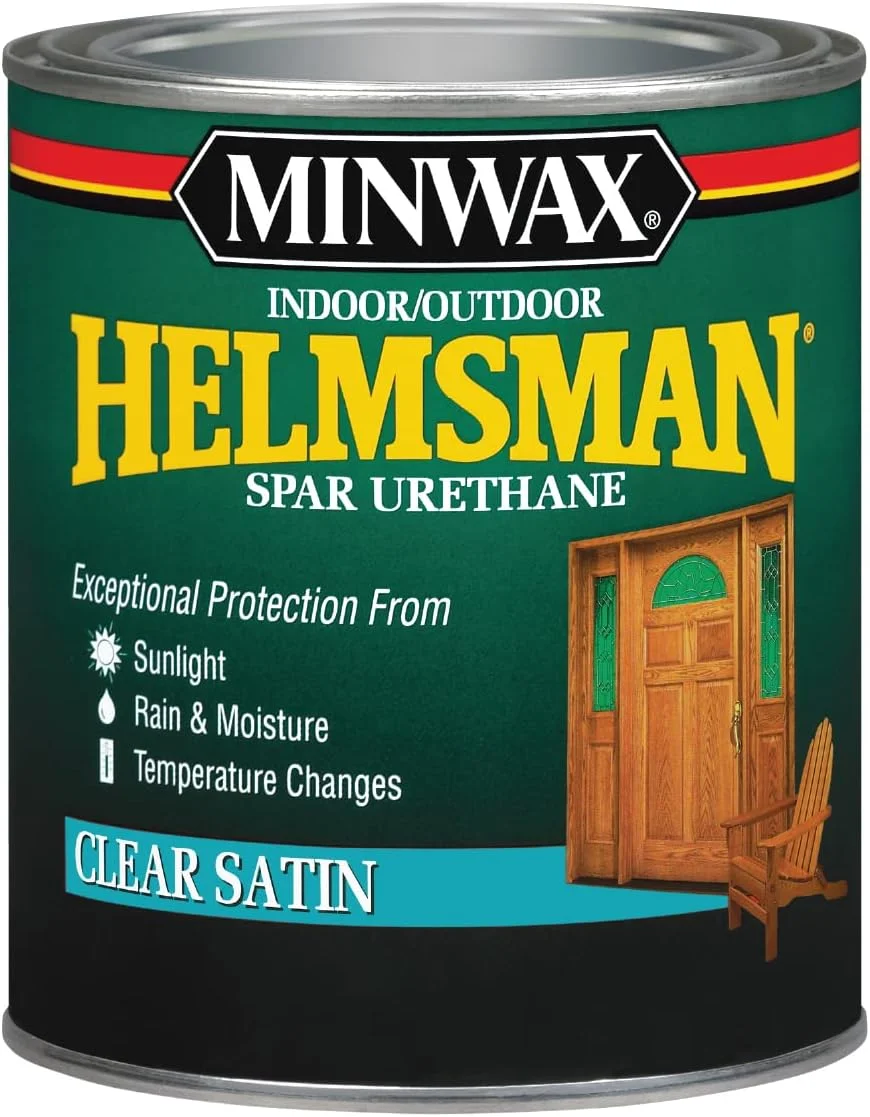 |
Minwax Helmsman Indoor/Outdoor Spar Urethane, Satin Quart – $23.49 Formulated with UV blockers originally for marine brightwork, which is exactly the ongoing photo-oxidation protection this guide recommends for keeping purple heart from browning.
|
Freshly cut purple heart looks like a dull, mousy gray-brown — the vivid violet only appears after the wood’s natural pigments react with air and light, usually reaching peak color within a few days of milling. That same photo-oxidation reaction doesn’t stop once the color peaks. Left under UV exposure, it keeps running, and over one to three years the surface color drifts from violet toward a darker, brownish-eggplant tone — the wood isn’t “fading,” the pigment is continuing to chemically change.
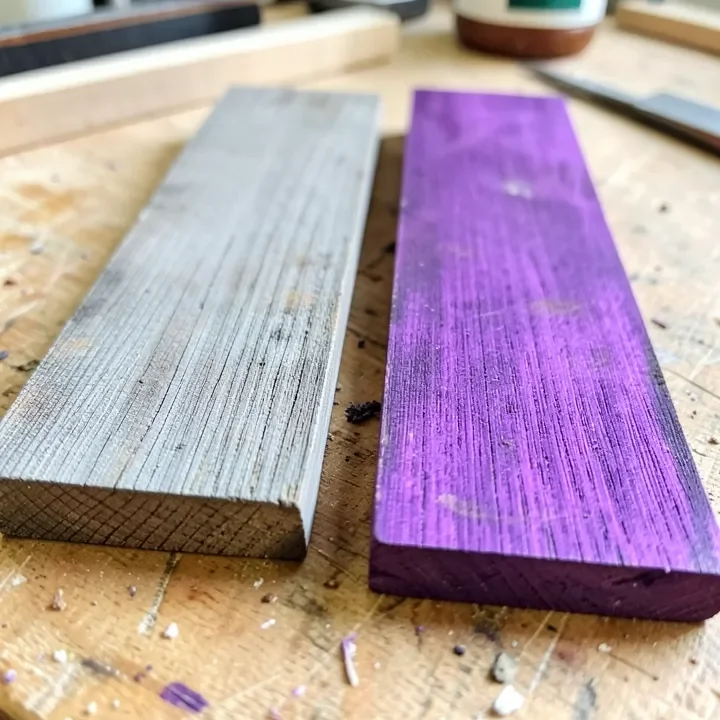
📊 The violet pigment isn’t destroyed by UV exposure — it remains intact just beneath the surface layer. Sanding off the UV-damaged top layer and refinishing with a UV-blocking topcoat restores the purple on wood that’s already turned brown. Source: Exotic Wood Zone, purple heart color research
Best Finishes for Keeping Purple Heart Purple
Not every clear coat protects against UV the same way. Water-based UV-inhibiting polyurethane generally holds the true violet longest, since it doesn’t amber with age the way oil-based finishes can. A UV-blocking spar urethane — originally formulated for marine brightwork that sits in direct sun all day — is the most widely available option and works well on purple heart whether you use the water-based or oil-based version, though oil-based will amber slightly over many years.
Timing: When to Apply the Finish for Peak Color
Sand and finish purple heart as soon as possible after your final cuts, or let it oxidize for just a few days to reach peak violet before sealing it in. Waiting weeks between sanding and finishing gives UV exposure a head start on shifting the color before any protective topcoat is in place — by the time you finally seal it, some of that color drift has already happened and can’t be undone without re-sanding.
Sanding and Preparing the Wood
- Coarse pass (80-grit): Remove saw marks, mill marks, and rough spots, always sanding with the grain.
- Medium pass (120-grit): Smooth out the scratches left by the 80-grit pass.
- Fine pass (220-grit): Sand until the surface feels silky, which also gives the finish a more even surface to bond to.
- Remove all dust: Wipe with a tack cloth or vacuum thoroughly — trapped dust under a UV-blocking topcoat creates cloudy spots that dull the color.
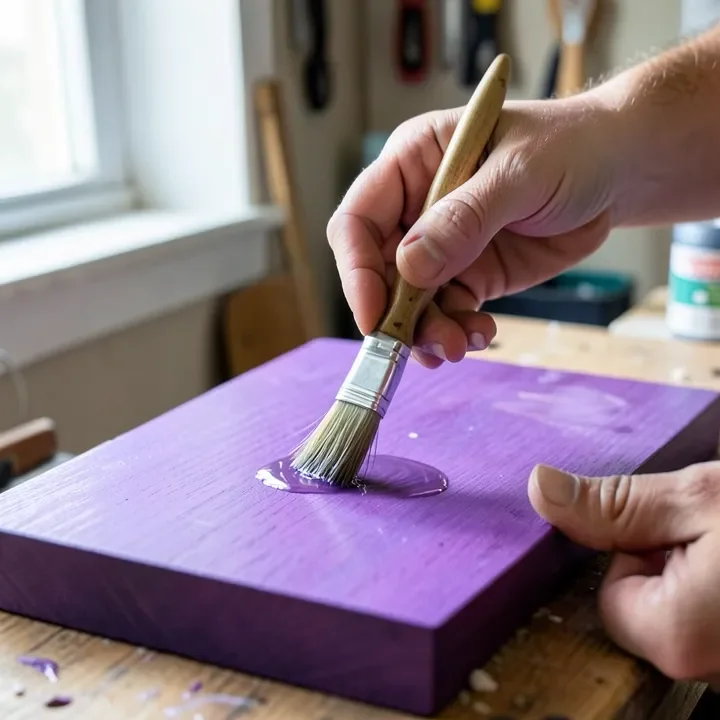
“The purple heart projects that stay purple are almost always the ones finished within days of the final sanding — the ones left bare on a shelf for a few weeks before finishing are already noticeably duller by the time the topcoat goes on.”
Can You Restore Purple Heart That’s Already Turned Brown?
In most cases, yes. Because the original violet pigment sits just below the UV-damaged surface, light sanding to remove that top layer — followed by a fresh coat of UV-blocking finish — typically brings the purple back. This works best on solid pieces with enough material to safely sand back; thin veneers may not have enough depth for a second pass.
Frequently Asked Questions
Why Does Purple Heart Wood Turn Brown After Finishing?
Purple heart’s violet color comes from pigments that oxidize on contact with air and UV light — the same reaction keeps going after you finish it. Without a UV-blocking topcoat, sunlight continues breaking down those pigments, and the surface shifts from violet toward a brownish-eggplant tone over one to three years, even under a glossy finish.
Can Purple Heart Wood Be Used Outdoors?
Yes. Purple heart is naturally resistant to rot, decay, and insect damage, which makes it suitable for outdoor furniture and decking. Outdoor UV exposure is more intense, though, so it needs a UV-inhibiting spar urethane and periodic recoating to hold its color outdoors.
Is Water-Based or Oil-Based Finish Better for Purple Heart?
Water-based UV-blocking polyurethane generally holds the purple truer than oil-based finishes, which can amber slightly and pull the color back toward brown over time. A UV-inhibiting oil-based spar urethane is still a solid, widely available choice if a water-based version isn’t on hand.
Can You Restore Purple Heart Wood That’s Already Turned Brown?
Yes, in most cases. The violet pigment isn’t destroyed — it’s still present just below the UV-damaged surface layer. Sanding off that top layer and re-applying a UV-blocking finish typically brings the purple back.
How Do You Finish Purple Heart Wood Step by Step?
Sand progressively from 80- to 120- to 220-grit, wipe off all dust, then apply a UV-inhibiting spar urethane in thin coats while the wood is still near its peak violet color. Waiting too long after sanding lets photo-oxidation start shifting the color before the topcoat can lock it in.
Conclusion
Purple heart doesn’t lose its color from a weak finish — it loses it to ongoing UV photo-oxidation that keeps working after the topcoat goes on. Sand progressively, finish soon after sanding while the color is at its peak, and choose a UV-blocking spar urethane over a plain clear coat. If a piece has already gone brown, a light sanding and refinish will usually bring the violet back, since the pigment was never actually gone.
Sponsored / affiliate links. As an Amazon Associate I earn from qualifying purchases. I may earn additional commission from eligible campaigns.