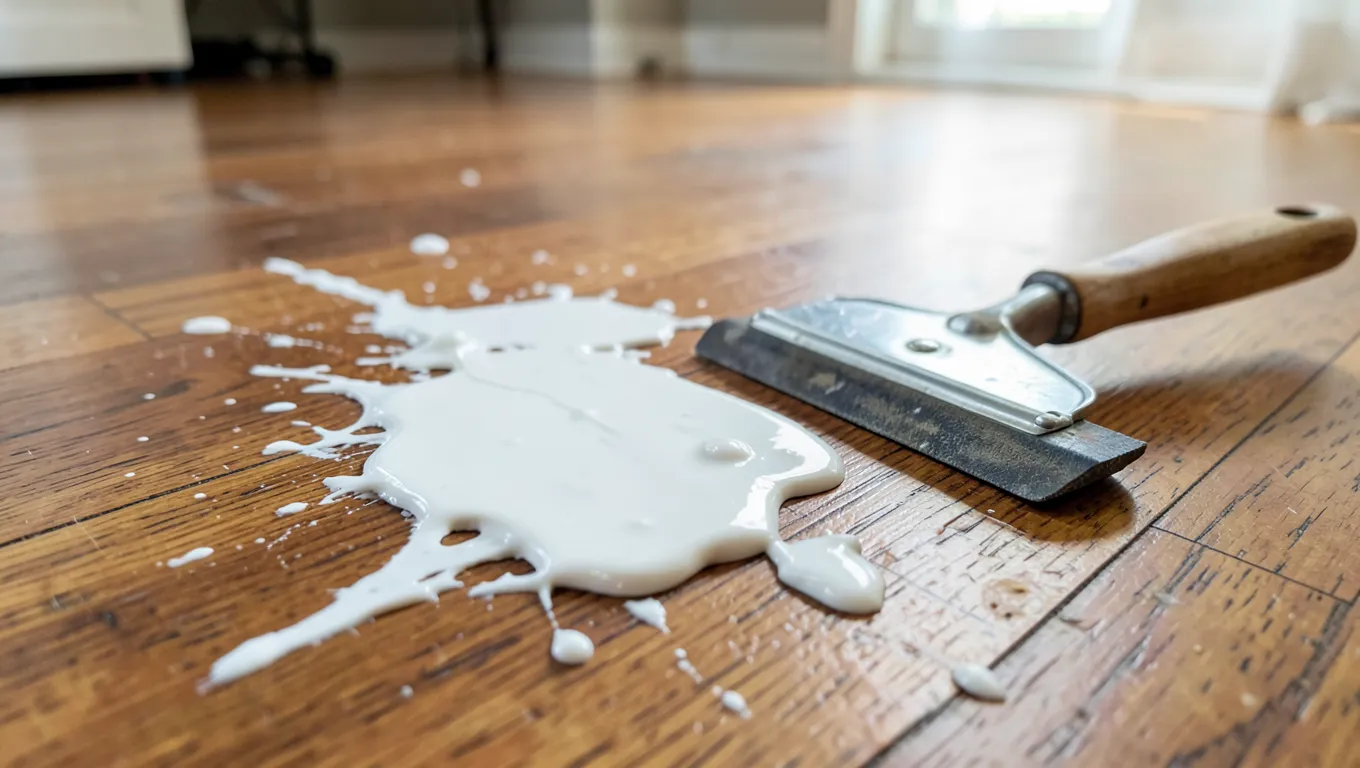
How to Get Paint Off Hardwood Floors (Without Damaging Them)
The fastest safe way to get paint off hardwood floors is a plastic scraper for fresh spills, or a heat gun plus a plastic putty knife for anything already dried. Metal tools and harsh solvents are the two things most likely to turn a paint spill into a much bigger repair – a metal scraper gouges the wood, and the wrong solvent can strip or discolor the finish underneath the paint you’re trying to remove.
Before you start on an older floor, there’s one safety step worth taking seriously: if your home was built before 1978, the paint could contain lead. Sanding or heat-gunning old lead paint releases toxic dust and fumes, so test an old paint spot with a lead-check swab (sold at any hardware store) before you sand or apply heat to it. If it tests positive, this is a job for a lead-safe certified contractor, not a weekend DIY project.
Preparing The Area
Best For Stubborn Dried Paint
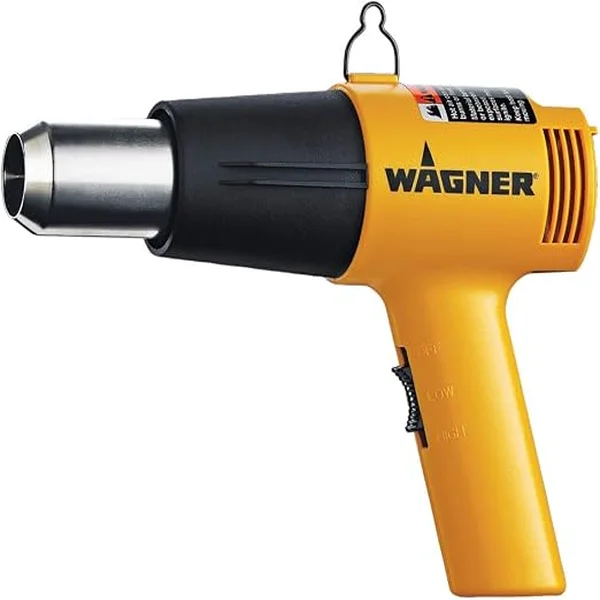 |
Wagner HT1000 Dual-Temperature Heat Gun – $24.99 Softening dried paint with controlled heat before scraping is faster and gentler on the wood than sanding it all off.
|
Getting the workspace ready first keeps a small paint spill from turning into a bigger cleanup.
Gather The Necessary Supplies
Have these on hand before you start:
- Protective gloves
- Eye goggles
- Plastic paint scraper or putty knife (never metal on a finished floor)
- Soft cloth or sponge
- Plastic drop cloths or tarps
- Painter’s tape
- Mineral spirits, rubbing alcohol, or a commercial paint remover
- Clean water
Clear The Room
Move furniture, rugs, and anything else out of the work area both to give yourself room and to protect them from splatter. Roll up and store nearby rugs, secure curtains or blinds out of the way with painter’s tape, and cover anything too heavy to move with a drop cloth taped down at the edges so it doesn’t shift mid-job.
Testing The Paint
A quick test before you commit to a method saves you from discovering a problem in the middle of the real job.
Identify The Type Of Paint Used
Water-based and oil-based paint respond differently to solvents, so it’s worth knowing which one you’re dealing with. Water-based paint tends to feel softer and more flexible; oil-based is harder and more solvent-resistant. If you can’t tell by feel, dab a cotton swab in denatured alcohol and rub a hidden spot – paint that softens or dissolves is water-based, paint that doesn’t react is almost certainly oil-based.
Perform A Patch Test
Pick an inconspicuous spot – a corner or a spot that will sit under furniture – and try your intended removal method there first. Apply it exactly as you plan to for the full job, wait the recommended time, then check for discoloration, fading, or any damage to the finish before scaling up. If the test spot comes out clean, proceed with confidence; if it shows damage, switch methods before you touch the rest of the floor.
Removing Fresh Paint
Fresh, still-wet paint is dramatically easier to remove than paint that’s had time to cure, so speed matters here more than technique.
Act Quickly
The moment you spot a fresh spill, get your tools and start – the longer wet paint sits, the deeper it works into the finish and the harder it becomes to lift cleanly.
Use a Plastic Scraper or Putty Knife
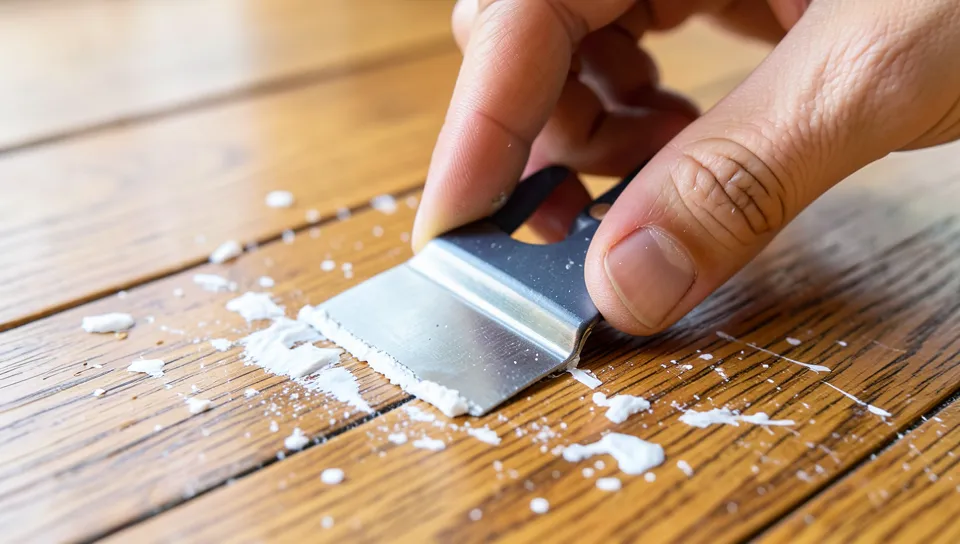
Gather a plastic scraper, clean rags, and a gentle cleaner rated for hardwood. Test a small area first with your chosen cleaner to confirm it won’t discolor the finish. Hold the scraper at a shallow angle and use light, even pressure moving with the grain – a plastic blade won’t gouge the finish the way a metal one can, but pressing too hard or working across the grain still risks scratching. Wipe excess paint onto a rag as you go rather than letting it smear back onto clean floor, and finish with a damp cloth once the paint is gone, letting the area dry fully before moving furniture back.
Removing Dried Paint
Dried paint takes more effort than fresh paint, but three methods – softening, scraping, and heat – handle nearly every case without damaging the floor underneath.
Softening The Paint
Dab a little dish detergent onto a damp cloth and work it gently into the dried paint. Let it sit about 10 minutes, then scrub lightly with a soft-bristled brush in a circular motion. Rinse with clean water and dry with a soft towel; if paint remains, move on to scraping.
Scraping Away The Paint
A plastic putty knife or a razor scraper fitted with a plastic blade lifts softened dried paint without cutting into the finish the way a metal blade can. Wedge the scraper gently under the paint’s edge and push forward with light pressure rather than digging in. Alternate scraping and re-softening as needed, and take your time on stubborn spots rather than forcing the scraper.
Using A Heat Gun
For thick, well-cured paint that won’t budge with softening and scraping alone, a heat gun on its lower setting (the pick above runs 750°F on low) softens paint fast enough to lift with a plastic scraper. Wear heat-resistant gloves and eye protection, hold the gun 6 inches or more from the surface, and keep it moving in slow circles – parking it in one spot for even a few seconds is enough to scorch a wood floor. Work in small sections, scrape as soon as the paint starts to bubble, and never use this method on paint that hasn’t been confirmed lead-free (see the note at the top of this guide).
Finishing And Cleaning
Getting the paint off is only half the job – the floor needs to come back to its original look before you’re actually done.
Sand The Area
- Fit a coarse-grit sandpaper to a handheld orbital sander or a sanding block.
- Sand with the wood grain in smooth, even strokes.
- Continue until the surface is smooth and any remaining paint trace is gone.
- Switch to a finer grit for a polished final surface.
- Vacuum or sweep thoroughly to clear sanding dust before finishing.
Apply A New Finish
- Pick a finish that matches the rest of the floor – polyurethane, wax, or whatever was originally used.
- Apply with a clean brush, roller, or cloth per the product’s instructions.
- Keep coats thin and even to avoid drips or a buildup ridge at the repair edge.
- Let each coat dry fully before adding another.
- Give the final coat its full cure time before walking on it regularly.
Clean The Floors
- Sweep with a soft-bristle broom to clear loose dirt and dust.
- Damp-mop with a cleaner made specifically for hardwood.
- Spot-treat any remaining marks with a soft cloth.
- Skip excess water and harsh chemical cleaners, both of which can damage the wood over time.
- Let the floor dry fully before walking on it or replacing furniture.
Frequently Asked Questions For How To Get Paint Off Hardwood Floors
How Do You Get Dried Paint Off Hardwood Floors?
Scrape off excess paint with a plastic putty knife, then apply rubbing alcohol or acetone on a cloth and gently rub the remaining stain. For stubborn spots, pair fine steel wool with the solvent. Wipe the area clean with a damp cloth, dry thoroughly, and polish to restore the floor’s shine.
How Do You Remove Dried Paint From Wood?
Scrape off as much dried paint as possible with a plastic putty knife first, then apply a solvent like rubbing alcohol or acetone to what’s left. Let it sit a few minutes, scrub gently with a soft brush, and wipe away the loosened paint with a cloth. Repeat as needed, then clean the wood with mild soap and water.
Does Goo Gone Remove Paint From Hardwood Floors?
Yes – Goo Gone’s citrus-solvent formula works on many latex and some oil-based paints without the aggressiveness of straight acetone. Apply it to the paint, let it sit a few minutes to soften the paint, then wipe or scrape gently. Test on a hidden spot first, since it can dull some floor finishes with heavy use.
Will Magic Eraser Remove Paint From Hardwood Floors?
Yes, for light paint splatters – a Magic Eraser is a mild abrasive (melamine foam) that can buff away thin paint spots. It’s not strong enough for thick, dried paint on its own, and because it’s abrasive, test it on a hidden area first since it can dull a glossy finish with repeated use.
Conclusion
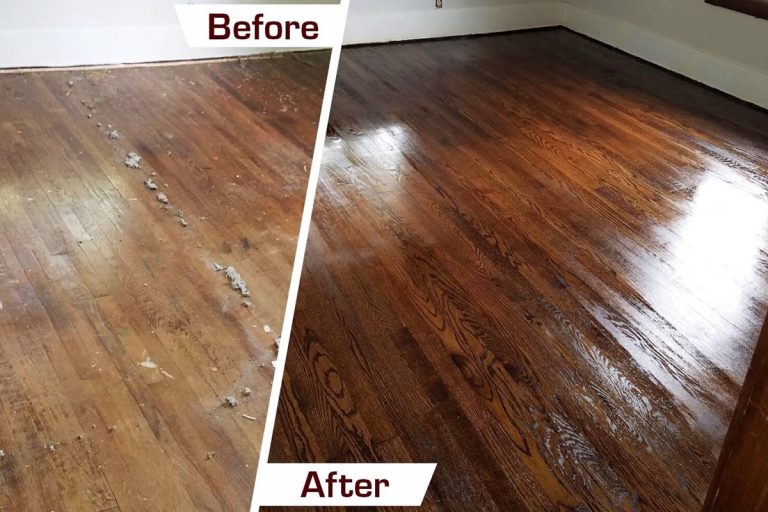
Getting paint off hardwood floors comes down to matching the method to how fresh or cured the paint actually is – a plastic scraper for wet spills, softening plus scraping for dried paint, and controlled heat for the stubborn cases that won’t lift any other way. Test everything on a hidden spot first, use plastic tools instead of metal, and check for lead paint before sanding or applying heat to anything on an older floor.
Handled this way, a paint spill is a cleanup job, not a reason to refinish the whole floor.
Sponsored / affiliate links. As an Amazon Associate I earn from qualifying purchases. I may earn additional commission from eligible campaigns.