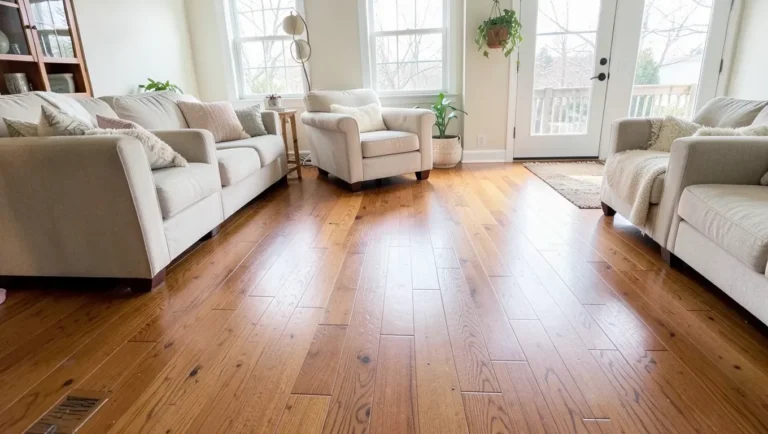
Best Rug for Hardwood Floors (Won’t Damage the Finish)
Wool, jute, and low-pile cotton make the best rug for hardwood floors — but only if the pad underneath is felt-and-rubber, not PVC or latex. The wrong backing chemically bonds to a polyurethane finish, trapping moisture that causes yellowing and soft spots within months. This guide covers which rug materials protect your floor, the safest pad to buy, and how long to wait before placing a rug on freshly refinished wood.
Insert your Affiliate Disclosure reusable block here.
Quick Answer
The safest rugs for hardwood floors are wool, jute, sisal, or low-pile cotton paired with a felt-and-rubber pad rated 1/4 to 3/8 inch thick. Avoid PVC, vinyl, or latex-backed pads — they trap moisture against the finish. Wait a full three weeks after refinishing before placing any rug or pad.
What to Look For When Choosing a Rug for Hardwood Floors
- Material: wool, jute, sisal, seagrass, or low-pile cotton
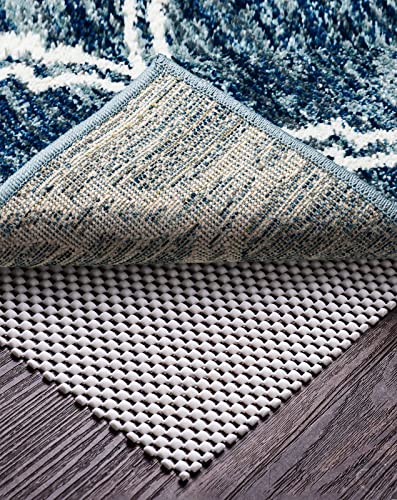
- Backing: felt-and-rubber pad — never PVC, vinyl, or latex
- Pad thickness: 1/4 to 3/8 inch for living areas, 1/8 inch under doors or furniture
- Size: leaves 12–18 inches of hardwood visible on all sides
- Cure time: wait a full 3 weeks after refinishing before placing any rug or pad
What Rug Materials Are Safest for Hardwood Floors?
Best Natural Fiber Rug Pick
SAFAVIEH Natural Fiber Collection Jute Area Rug
A handmade jute weave with the loose, breathable structure that keeps moisture from building up under the rug on a finished floor.
- Best for: living rooms and dining rooms over hardwood
- Why we picked it: natural jute fiber and a breathable weave, matching the safest-material guidance above
- Main drawback: coarser texture underfoot than wool or cotton
Compare more rug options for hardwood floors
 Option 1 – Cotton SAFAVIEH Boston Flatweave Cotton Rug
|
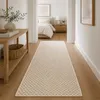 Option 2 – Wool The Knitted Co. Handwoven Wool Runner
|
 Option 3 – Low-Pile Cotiled Washable Low-Pile Rug
|
As an Amazon Associate we earn from qualifying purchases.
Wool is a natural fiber rug material that resists dust, mildew, and crushing, and its thick, springy fibers keep grit from grinding into the finish underfoot. It’s the most common recommendation for hardwood because it breathes and holds its shape for years, though it costs more than synthetic options.
Natural fiber rugs — jute, sisal, and seagrass — are the next-safest choice. Their loose, breathable weave lets air move underneath, which matters more than most buyers realize: a rug that traps moisture against a finish is what actually causes damage, not foot traffic. Cotton flatweave rugs are a lighter, washable option for kitchens and entryways, though they offer less cushioning than wool.

Low-pile synthetic rugs (polypropylene or nylon, machine-washable) work for high-traffic zones like entryways, but only if the backing itself is breathable. If a rug’s own backing feels rubbery or tacky rather than woven, it can scratch and discolor a hardwood floor the same way a bad pad can — even without a pad added underneath. If pets are part of the equation, pair whichever material you choose with the scratch-prevention habits in our guide to fixing dog scratches on hardwood floors.
What Rug Pad Should You Use on Hardwood Floors?
A felt-and-rubber rug pad is the safest backing for hardwood floors. Felt provides cushioning and grip resistance; natural rubber adds non-slip hold without the chemical additives that damage a finish. Together they stay breathable, so moisture from spills or humidity can escape instead of pooling under the rug. The same felt-plus-rubber logic applies to what you wear on your feet indoors — see our comparison of slippers with a non-marking sole for picks that use the same safe combination.
PVC, vinyl, and synthetic-latex “waffle” pads are the ones to avoid. These backings are effectively sealed plastic sheets: they don’t let moisture dissipate, and their plasticizers can slowly chemically bond to a polyurethane finish over months of contact — the sticky, cloudy residue left behind when someone finally pulls up an old rug pad is that bond, not just dirt. Once it’s happened, it usually means a full re-sand of that section, not a quick touch-up.
Thickness matters too: 1/4 to 3/8 inch is the right range for a living room rug pad, giving enough cushion to protect the floor without creating a trip edge at the rug’s border. Reserve thinner 1/8-inch pads for spots where a rug sits under a door swing or furniture leg. For a full lineup of pads and non-slip grippers sized to specific rugs, see our guides to the best rug pads for wood floors and the best rug grippers for hardwood floors.
📊 A felt-and-rubber rug pad between 1/4 and 3/8 inch thick gives the best balance of cushioning and grip without trapping moisture against a hardwood finish; pads under 1/8 inch are better reserved for spaces under doors or furniture. — Source: rug pad manufacturer thickness guidelines (RugPadUSA, The Rug Cleaners, 2026)
Rug Material Comparison for Hardwood Floors
| Material | Breathability | Best For |
|---|---|---|
| Wool | High – natural fiber, resists moisture and mildew | Living rooms, high-traffic areas |
| Jute / Sisal / Seagrass | Highest – loose, open weave | Dining rooms, low-moisture rooms |
| Cotton flatweave | High, machine washable | Kitchens, entryways |
| Low-pile synthetic | Moderate – depends on backing | Budget-friendly, high-traffic runs |
How Long Should You Wait Before Putting a Rug on New or Refinished Hardwood Floors?
Wait a full three weeks before placing any rug or pad on a newly installed or freshly refinished hardwood floor. A polyurethane finish can feel dry to the touch within a day, but it keeps off-gassing and hardening underneath the surface for weeks — and covering it early traps that process, leaving a soft or hazy patch exactly the shape of the rug.
“I’ve refinished dozens of hardwood floors, and the ones that come back damaged almost always have the same cause — a rubber-backed rug pad set down before the polyurethane fully cured. Give it the full three weeks, even if the floor feels dry underfoot.”
If you’re not sure whether your floor has cured or how to spot early wear once a rug is down, our guide on caring for untreated hardwood floors covers what the surface looks like before it’s fully sealed.
What Rug Backing Is Safe for Hardwood Floors?
A safe rug backing is woven natural fiber, felt, or a felt-and-rubber blend — anything that lets air pass through. Unsafe backings are PVC, vinyl, and synthetic latex, which seal against the floor and can discolor or soften the finish over months of contact. If a rug’s backing feels rubbery, sticky, or plastic-like rather than woven, pair it with a breathable pad rather than relying on the backing alone.
How to Size and Place a Rug on a Hardwood Floor
- Measure the room first: leave 12 to 18 inches of exposed hardwood between the rug’s edge and the wall so the floor still reads as a frame around the room.
- Cut the pad slightly smaller than the rug: a felt-and-rubber pad about 1 inch smaller on each side keeps it from peeking out and catching underfoot.
- Anchor the rug with furniture: in a living room, rest at least the front legs of major seating on the rug so it doesn’t shift and grind grit into the finish.
- Rotate the rug every three to six months: this evens out sun fading and pad pressure marks so the finish ages uniformly underneath.
Frequently Asked Questions
Is it OK to put rugs on hardwood floors?
Yes. Most rugs are safe on hardwood and add a layer of protection against scratches and scuffs from foot traffic and furniture. The exceptions are rugs or pads with PVC, vinyl, or latex backing — these can trap moisture and slowly damage the finish, so stick with wool, jute, cotton, or a felt-and-rubber pad instead.
How long should you wait before putting a rug on new or refinished hardwood floors?
Wait a full three weeks. A polyurethane finish continues curing under the surface well after it feels dry to the touch, and covering it too soon with a rug or pad can trap that process and leave a soft, hazy patch in the shape of the rug.
Can a rug or rug pad discolor a hardwood floor?
Yes, if the backing is PVC, vinyl, or synthetic latex. These materials seal against the floor, trap moisture, and can chemically bond to the finish over months, leaving a discolored outline. Felt-and-rubber pads and natural fiber rugs are breathable and don’t cause this problem.
Do you need a rug pad on hardwood floors?
Yes, for any rug without a built-in non-slip backing. A felt-and-rubber pad, 1/4 to 3/8 inch thick, adds cushioning and grip while protecting the finish from grit trapped under the rug — without it, a rug can shift and grind dirt into the floor.
What size rug should you use on hardwood floors in a living room?
Size the rug so it leaves 12 to 18 inches of hardwood visible on all sides of the room, and large enough that at least the front legs of your main seating rest on it. This keeps the rug anchored and shows off the floor as a border.
The best rug for hardwood floors comes down to breathable material and a felt-and-rubber pad — wool, jute, sisal, and cotton all protect the finish, while PVC or latex backings slowly damage it. Size the rug to leave a hardwood border, give a new or refinished floor the full three-week cure before covering it, and rotate the rug periodically to keep wear even. For the full range of pad and gripper options once you’ve picked a rug, see our guides to rug pads for wood floors and rug grippers for hardwood floors, or browse the rest of our hardwood flooring guides.
Sponsored / affiliate links. As an Amazon Associate I earn from qualifying purchases. I may earn additional commission from eligible campaigns.