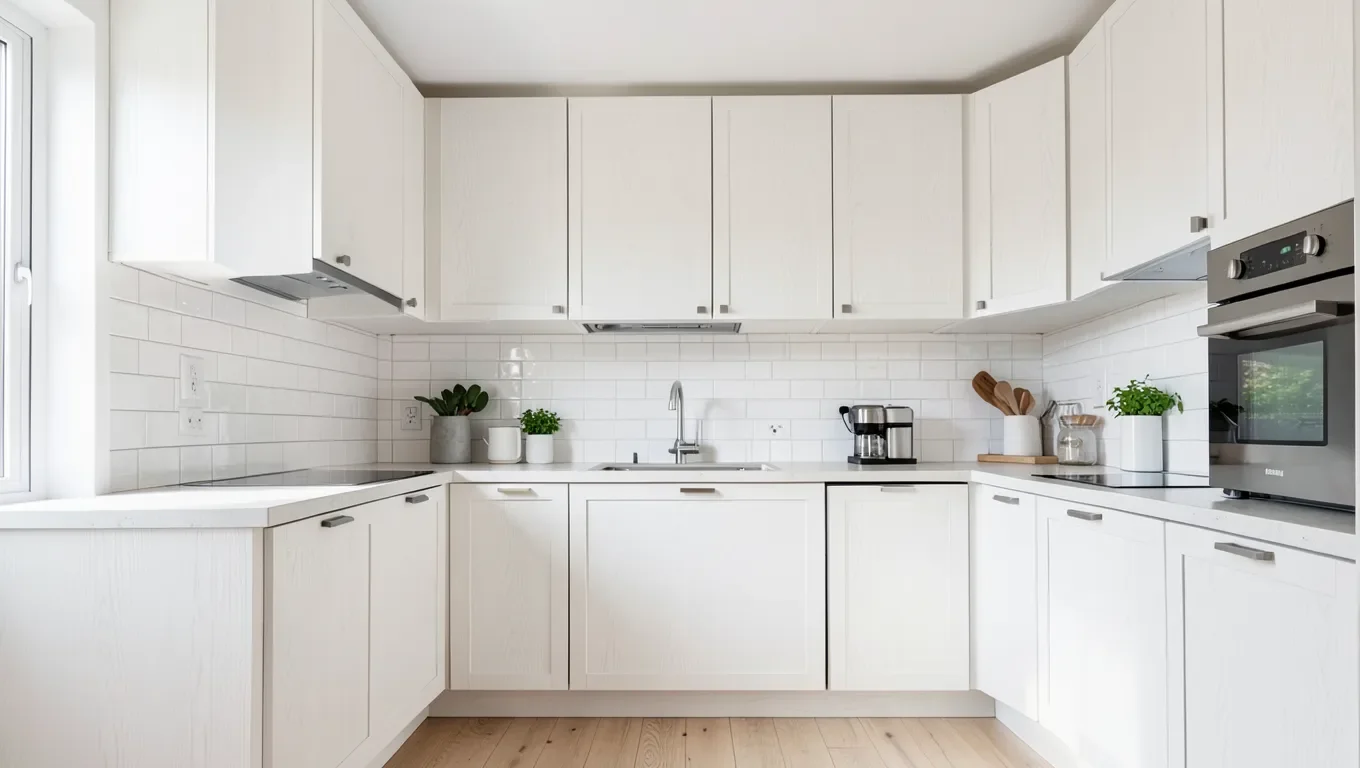
How to Paint Oak Cabinets White (Without the Grain Showing Through)
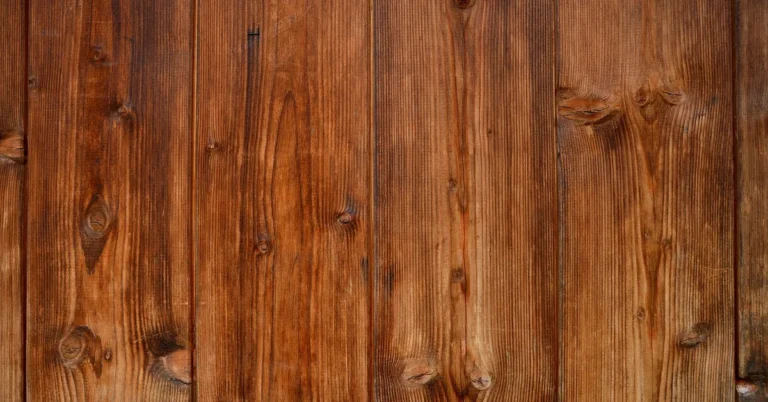
The wood grain shows through white paint on oak cabinets because oak’s grain is deep and open — a thin coat of paint just settles into those grooves instead of covering them. Fixing it takes three real steps most quick guides skip: fill the open grain with a grain filler before you ever prime, use a stain-blocking or shellac-based primer to seal in the tannins, then apply a self-leveling cabinet-specific paint rather than standard wall paint.
Here’s the full process, in the order it actually needs to happen.
Choosing the Right Primer
Best For A Factory-Smooth Cabinet Finish
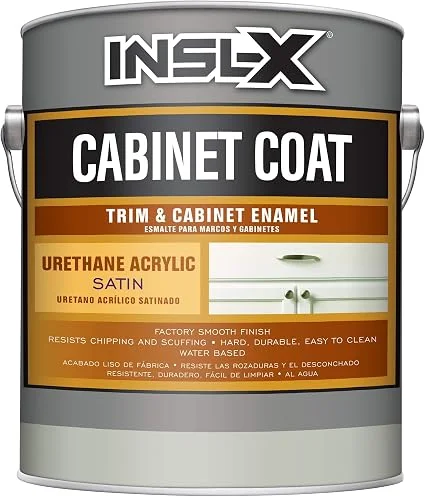 |
INSL-X Cabinet Coat – $66.99 A purpose-built cabinet enamel self-levels as it dries, closing over brush and roller marks the way standard wall paint never does.
|
Oak’s tannins and open grain need a primer built to handle both. A shellac-based primer like Zinsser B-I-N seals tannins completely and dries fast, making it the strongest choice on oak specifically. A high-adhesion primer works well if the cabinets have an existing glossy finish that plain primer would struggle to grip. Whichever you choose, apply it after the grain is filled and sanded, not before — priming over open grain just telegraphs the texture through every coat that follows.
Prepping the Cabinets
- Diagram everything before removing it. Number each door and drawer front, and bag the matching hardware together, so nothing gets mismatched during reassembly.
- Degrease thoroughly. Kitchen cabinets accumulate cooking grease that plain soap and water won’t fully cut — a TSP solution or a dedicated degreaser is worth the extra step, since paint won’t bond well over residual grease film.
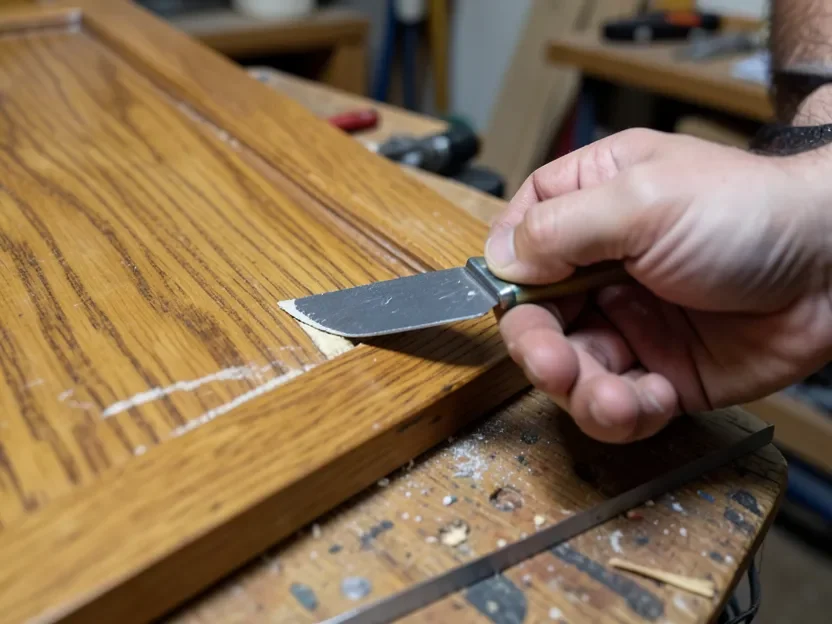
- Fill the open grain. Apply a grain filler with a putty knife, working it into the pores across the whole surface, then let it cure fully before sanding flush. This is the step that actually determines whether the grain shows through the final paint.
- Sand progressively. Start around 120 grit to level the filler and remove the old sheen, then move to 180 and 220 for a smooth final surface. Sand with the grain, and vacuum or tack-cloth away all dust before priming.
Priming and Painting
Apply primer in thin, even coats, checking corners and profile edges for pooling — excess primer builds up in these spots and needs a light sand-back once dry before it becomes a visible ridge under paint. Once primed and lightly sanded again, apply the cabinet paint with a smooth-nap roller or a sprayer for the most factory-like finish; a roller leaves a slight texture that a good self-leveling paint mostly smooths out on its own, while a sprayer avoids texture entirely but requires more setup and overspray control.
Apply at least 2 coats, letting each dry fully per the paint’s label before the next — rushing coats is the most common cause of a soft, easily marred finish, since the paint needs real cure time between layers to build hardness, not just surface-dry time.
Finishing Touches
Let the final coat cure fully before reinstalling doors and hardware — cured is different from dry-to-touch, and rehanging doors too early risks sticking or marring a still-soft finish. If you’re switching to new knobs or pulls, drill new holes with a spade or Forstner bit sized to the hardware’s screws, and fill any old, unused holes with wood filler and touch-up paint before final reassembly.
Pros and Cons of Painting Oak Cabinets White
Pros: a fraction of the cost of full cabinet replacement, a brighter and more modern kitchen feel, and a project realistically doable in a weekend or two by a patient DIYer.
Cons: the prep work (degreasing, grain-filling, sanding) is genuinely time-consuming and easy to shortcut, the grain can still show through if any step is skipped or rushed, and paint on high-touch surfaces like door edges can chip over years of use without a durable topcoat.
Frequently Asked Questions
Can You Paint White Over Oak Cabinets?
Yes. It’s a far cheaper way to update a kitchen than full cabinet replacement. The result depends heavily on prep — degreasing, filling the open grain, and sanding before priming and painting are what determine whether the finish looks smooth or shows the grain through.
How Do You Paint Oak Cabinets White Without the Grain Showing?
Fill the open grain with a grain filler before priming, sand it smooth, then apply a stain-blocking or shellac-based primer followed by a self-leveling cabinet-specific paint. Skipping the grain-filling step is the single most common reason the texture still shows through after painting.
Do Oak Cabinets Need Sanding Before Painting?
Yes. Sanding removes the existing sheen and roughs up the surface so primer and paint actually bond, rather than sitting on top of a slick factory finish where they can peel later. It’s needed both before priming and lightly again between coats.
What Is the Best Paint for Oak Cabinets?
A dedicated cabinet enamel formulated to self-level and cure hard is the better choice over standard wall paint, which stays softer and shows brush marks more. Urethane-acrylic and alkyd cabinet paints are the two common categories that hold up well to the daily wear cabinet doors take.
Conclusion
Painting oak cabinets white is a real weekend-scale project, not a full renovation, but the grain-filling step is what separates a smooth, professional-looking result from one that still shows the wood texture underneath. Fill the grain, prime with something built to block oak’s tannins, and finish with a cabinet-specific paint that self-levels as it cures.
Sponsored / affiliate links. As an Amazon Associate I earn from qualifying purchases. I may earn additional commission from eligible campaigns.