How to Remove Acetone from Wood: Easy and Effective Methods
Removing acetone from wood can be tricky. It requires careful steps to avoid damage.
Accidents happen, and spilling acetone on wood is a common one. Acetone, a strong solvent, can harm wood finishes, leaving unsightly stains or damage. But don’t worry, there are effective methods to tackle this issue. Understanding how to remove acetone properly can save your wooden surfaces and restore their beauty.
In this guide, we will explore simple and safe techniques to clean acetone from wood without causing further harm. Whether it’s your furniture or flooring, these steps will help you maintain the charm of your wooden items. Let’s dive into the process and keep your wood looking great.

Credit: www.reddit.com
Preparing For Acetone Removal
Collect paper towels, cotton balls, and mild dish soap. Keep a clean cloth and water nearby. Get a small container for mixing the soap. Ensure you have gloves to protect your hands.
Ensure the area is well-ventilated. Open windows or use a fan. Wear gloves to avoid skin contact. Keep acetone away from flames. Store acetone in a safe place, away from kids and pets.
Credit: www.reddit.com
Testing On A Small Area
Test on a small area first to ensure the method is safe for your wood. This prevents damage and keeps your wood intact.
Choosing A Hidden Spot
Pick a spot that no one sees. It can be under furniture. Or behind a door. This is important. It avoids visible damage. Use a cotton swab. Dip it in acetone. Rub it on the hidden spot. Wait for a few minutes. Look for any color change. Or wood damage.
Checking For Reactions
Watch the spot closely. Check for any changes. Look for discoloration. Or wood swelling. If nothing changes, it is safe. If there are changes, stop. Do not use acetone on the wood. It might be too strong. Always test first. It prevents big mistakes
Blotting The Acetone Spill
Use a clean, soft cloth to blot the acetone. Gently press the cloth on the spill. Absorb as much liquid as you can. Replace the cloth if it gets too wet. This helps to keep the surface clean.
Apply gentle pressure to avoid damage. Pressing hard can push acetone into the wood. This can cause stains or discoloration. Be careful and take your time. This will help protect your wood.
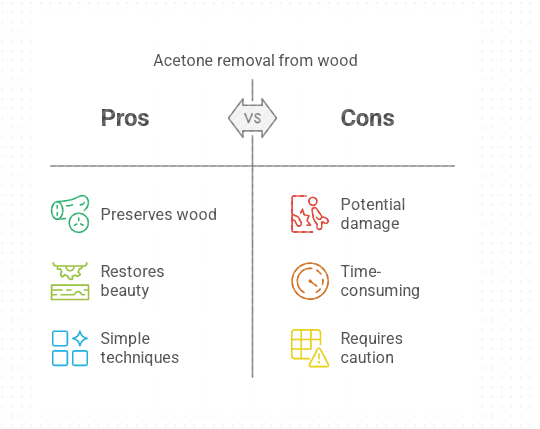
Applying A Cleaning Solution
Mix dish soap and water in a bowl. Use warm water for better results. Stir until bubbles form. This solution will help clean the wood.
Dip a soft cloth in the soapy water. Wring out extra water. Gently wipe the acetone spots on the wood. Avoid scrubbing hard. Repeat if needed. Dry the wood with a clean towel.
Removing Stains With Baking Soda
To remove acetone from wood, sprinkle baking soda on the stain. Gently rub with a damp cloth until the stain lifts. Repeat if necessary for best results.
Creating A Paste
Mix baking soda with water to form a paste. Use a small bowl. Add one tablespoon of water to two tablespoons of baking soda. Stir well until smooth.
Application And Removal
Apply the paste to the stained area on the wood. Use a soft cloth. Gently rub the paste onto the stain in a circular motion. Leave the paste on the stain for about 10 minutes. This will allow it to absorb the acetone.
After 10 minutes, wipe away the paste with a clean, damp cloth. Check the wood for any remaining stain. If needed, repeat the process. Finally, dry the wood with a clean, dry cloth.
Using Commercial Cleaners
Choose a cleaner that is safe for wood. Check labels for wood-friendly signs. Avoid cleaners with strong chemicals. They can damage wood. Natural cleaners are often better. Look for ones with gentle ingredients. Read reviews before buying. Test a small area first. This helps to make sure the cleaner is safe.
Use a soft cloth. Apply the cleaner lightly. Rub gently on the wood. Do not use too much cleaner. Wipe off excess liquid. Let the wood dry completely. Repeat if needed. Check the wood for damage. If any damage appears, stop using the cleaner.
Polishing And Restoring Wood Finish
Picking the right polish is very important. Select a polish that matches the wood type. Avoid polishes with harsh chemicals. Look for a polish with natural oils. Natural oils nourish the wood. They restore its shine. Some polishes are better for dark wood. Others work well on light wood. Read the label on the polish bottle. Choose wisely.
Apply the polish with a soft cloth. Rub in small circles. Don’t rub too hard. Hard rubbing can damage the wood. Apply a thin layer first. Let it dry for a few minutes. Then apply another layer. Multiple layers give better results. Avoid using a brush. Brushes can leave marks. Use a cloth for even application. Buff the wood after polishing. Buffing makes it shine more.
Preventing Future Spills
Protective mats are key. Place them under any containers of acetone. They catch drips and spills. Mats should be made of rubber or plastic. They are easy to clean. They also last long. Protective mats save your wood surfaces. Keep them in place always.
Store acetone in a cool, dry place. Use sealed containers. This prevents leaks. Keep them out of children’s reach. Label the containers clearly. This helps in identifying them. Store away from heat sources. Heat can cause dangerous fumes. Proper storage ensures safety.
Credit: www.tiktok.com
Frequently Asked Questions
How Do You Reverse Acetone Damage On Wood?
To reverse acetone damage on wood, gently sand the area, apply wood filler, and re-stain or re-paint.
What Removes Acetone Residue?
Use soap and warm water to remove acetone residue. For stubborn residue, try rubbing alcohol or a vinegar solution.
Will Acetone Ruin Hardwood?
Yes, acetone can ruin hardwood. It may strip the finish, cause discoloration, and damage the wood surface. Avoid using acetone on hardwood floors.
How Do You Remove Nail Polish From Wood Without Removing Finish?
Gently dab the nail polish with a cotton ball soaked in rubbing alcohol. Avoid scrubbing to prevent damage to the wood finish.
Conclusion
Removing acetone from wood can be easy with the right steps. Always act quickly to prevent damage. Use household items like soap, water, and baking soda. Be gentle to protect the wood’s finish. Test any cleaning method on a small area first.
Regular care keeps your wood looking its best. Follow these tips, and your wood will stay beautiful. For stubborn stains, consider professional help. Your wood deserves the best care and attention.