How To Remove Glue From Laminate Flooring: Essential Guide
If glue lands on your laminate floors, act fast! For fresh glue, gently scrape while damp. For dried glue, try plastic scraper and a mild solution of dish soap and water. For stubborn spots, a specialized laminate floor cleaner or isopropyl alcohol can help. Always test in an inconspicuous area first to safeguard your flooring’s finish.
Hello DIY friends! It’s Md Meraj here, ready to tackle another common household challenge with you. Those beautiful laminate floors can sometimes become unintentional glue magnets, whether from a craft project that got out of hand, a little one’s artistic endeavors, or even a small repair. Seeing a blob of glue on your pristine laminate can be a moment of panic, but don’t worry! Removing glue from laminate flooring is usually a straightforward process if you know the right techniques. We’ll walk through simple, safe methods that will have your floors looking good as new. Let’s get those floors clean!
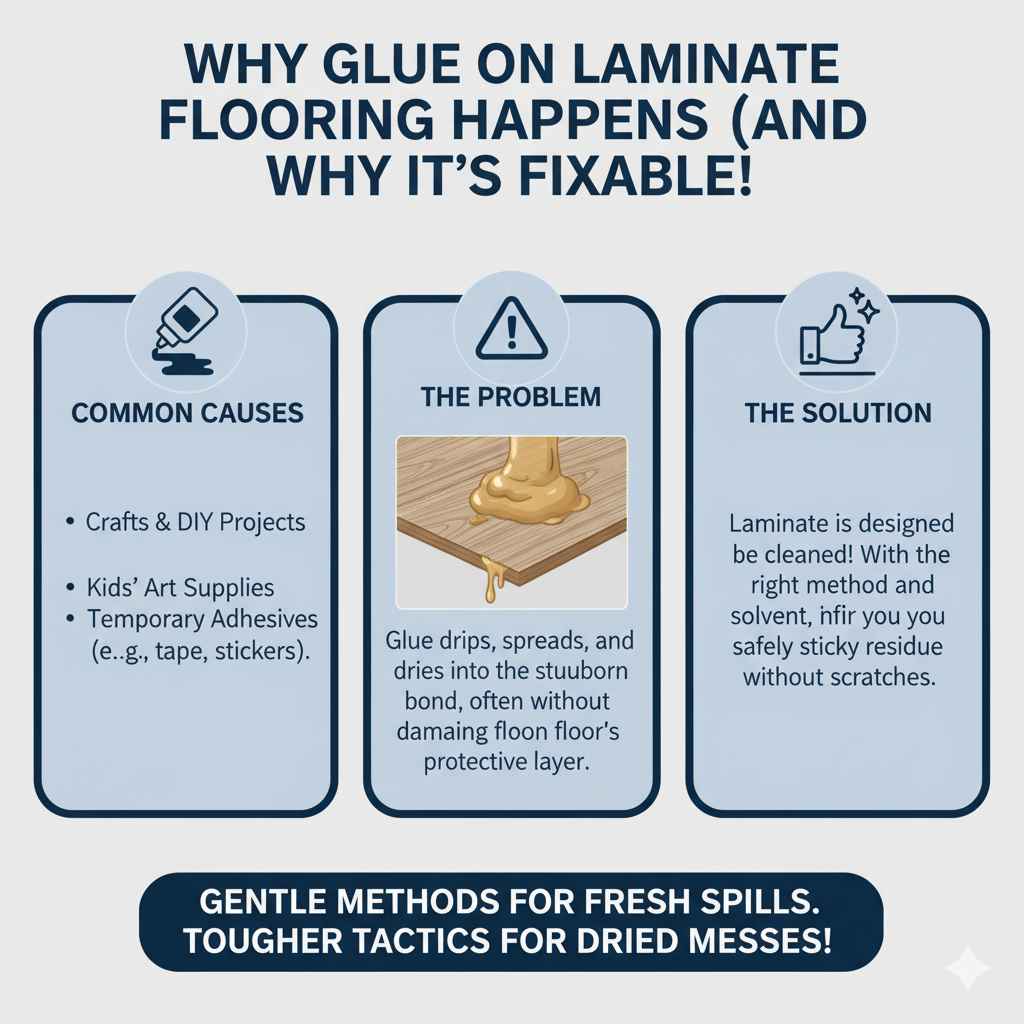
Why Glue on Laminate Flooring Happens (and Why It’s Fixable!)
Laminate flooring is a popular choice for homes because it’s durable, affordable, and comes in many stylish designs. However, its protective top layer, while tough, isn’t entirely impervious to sticky situations. Glue, in particular, can be tricky. It can drip, spread, and if left to dry, form a stubborn bond that seems impossible to break without damaging the floor.
You might encounter glue from:
- Craft projects involving adhesives.
- Kids’ art supplies.
- Applying decorative items or temporary carpets.
- Minor DIY repairs where a bit of adhesive might escape.
The good news is that laminate is designed to be cleaned, and with the right approach, you can lift that sticky residue without scratching or dulling the surface. The key is to understand the type of glue and the best solvent or method for removing it safely. We’re going to break down everything you need to know, from the gentlest methods for fresh spills to tackling those dried-on, tough messes. Stick with me, and we’ll have your floors back in perfect condition in no time!
Understanding Your Laminate Flooring
Before we get to the glue removal, a quick word about your laminate. Most laminate floors have a multi-layer construction topped with a clear protective wear layer. This wear layer is what you’re trying to preserve. It’s tough but can be scratched or dulled by harsh chemicals or abrasive scrubbing. Knowing this helps us choose the right tools and cleaning agents.
Laminate is essentially a high-density fiberboard core with a decorative print layer and a clear protective overlay. This makes it resilient but also means that excessive moisture can cause the core to swell, damaging the planks. So, while we’ll use liquids, we’ll focus on using them sparingly and drying the area well afterwards.
Safety First: Always Test First!
This is the golden rule whenever you’re trying a new cleaning method on any surface, especially your floors. Before applying any cleaner or using any tool extensively, do a spot test in an inconspicuous area – like a corner that’s rarely seen or under a large piece of furniture.
This simple step helps you:
- Confirm the cleaner doesn’t discolor or damage the laminate’s finish.
- Ensure the tool you’re using (like a scraper) doesn’t scratch the surface.
Give the tested spot some time to dry completely to see the final effect. A few minutes of caution now can save you from a much bigger headache later!
Step-by-Step Guide: How to Remove Glue From Laminate Flooring Effectively
Let’s get down to business! We’ll start with the gentlest methods and move on to stronger solutions only if necessary. This approach minimizes any risk to your beautiful flooring.
Phase 1: Dealing with Fresh Glue Spills
The absolute best-case scenario is catching the glue while it’s still wet. Fresh glue is much easier to remove and less likely to leave any residue or cause damage.
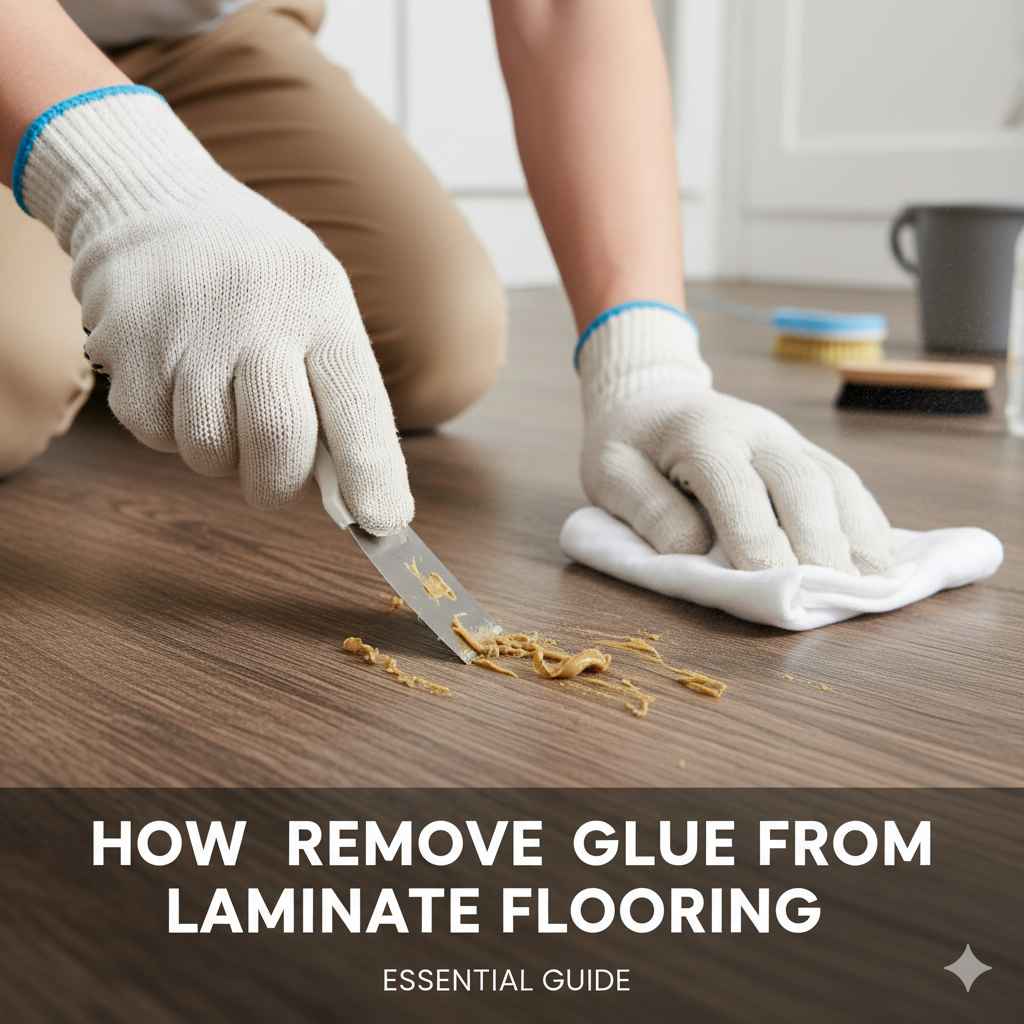
- Don’t Wipe! Blot and Scrape Gently: Resist the urge to smear it around with a cloth, as this will only spread the mess. Instead, grab a clean, damp cloth or a plastic putty knife/scraper. For very wet glue, you might be able to gently lift and scoop up the bulk of it. If it’s slightly tacky, use the edge of the plastic scraper to carefully coax it away from the floor surface. Work from the edges of the glue spot towards the center.
- Wipe Away Residue: Once the majority of the wet glue is gone, use a clean, damp cloth (not soaking wet) to wipe away any remaining sticky residue. You can add a tiny drop of pH-neutral dish soap to the damp cloth if needed, but make sure to rinse the cloth and wipe again with plain water afterward to remove any soap film. This is a good practice to keep the floor’s finish clear.
- Dry Thoroughly: Laminate flooring doesn’t like standing water. Use a clean, dry microfiber cloth to immediately dry the area. This prevents moisture from seeping into the seams and causing potential swelling.
Phase 2: Tackling Dried Glue Spots
Dried glue is tougher, but we have plenty of tricks up our sleeves. Patience is key here. Aggressive scraping or harsh chemicals are the enemies of your laminate’s finish.
Method A: The Gentle Scrape and Mild Solution
This is your go-to method for dried-on blobs that aren’t too deeply bonded.
- Loosen the Glue (Optional but Recommended): Sometimes, a little warmth can help soften dried glue. You can try holding a warm (not hot!) washcloth over the glue spot for a few minutes. Be careful not to overheat the area, as excessive heat can also damage laminate.
- Scrape with a Plastic Tool: Use a plastic putty knife, an old credit card, or a specialized plastic floor scraper. Hold the tool at a shallow angle to the floor and gently try to lift the edge of the glue. Work slowly and patiently. If you feel significant resistance, stop and try a different approach or moisture. Avoid metal scrapers as they can easily scratch the laminate.
- Use a Mild Cleaning Solution: If scraping alone isn’t cutting it, or to remove residual stickiness, mix a very mild solution of warm water and a few drops of pH-neutral dish soap. Dampen a clean microfiber cloth with this solution – it should be damp, not wet. Gently rub the glue residue in a circular motion. For tougher spots, you can let the damp cloth sit on the glue for a minute or two to help break it down, but don’t leave it for too long.
- Rinse and Dry: After applying the cleaning solution, use a separate clean cloth dampened with plain water to wipe away any soap residue. Immediately follow up with a dry microfiber cloth to ensure the area is completely dry. This step is critical for preserving the laminate’s finish and preventing moisture damage.
Method B: Isopropyl Alcohol (Rubbing Alcohol) – For Stubborn Spots
If the soap and water method still leaves behind a sticky film or hardened glue bits, isopropyl alcohol can be more effective. It’s a good solvent for many adhesives without being overly harsh on laminate, provided it’s used correctly.
Important Note: Always test isopropyl alcohol in an inconspicuous area first! While generally safe for laminate, some finishes might react. As mentioned earlier, a solution of 70% isopropyl alcohol is common in households.
- Apply to a Cloth, Not Directly to Floor: Never pour alcohol directly onto your laminate floor. Instead, dampen a clean microfiber cloth with isopropyl alcohol. You want the cloth to be damp, not dripping.
- Gently Rub the Glue: Lightly dab or gently rub the dampened cloth over the glue residue. The alcohol should start to break down the adhesive. You may need to apply a little gentle pressure with your plastic scraper again as it softens.
- Work in Small Sections: Don’t saturate a large area. Work on one small patch of glue at a time.
- Wipe Away and Dry: As the glue softens and lifts, wipe it away with a clean part of the alcohol-dampened cloth or a separate clean cloth. Once all the glue is removed, immediately wipe the area with a clean cloth dampened with plain water to remove any alcohol residue. Finish by drying the spot thoroughly with a dry microfiber cloth.
Method C: Specialized Laminate Floor Cleaners
There are cleaners specifically designed for laminate flooring. Many of these are formulated to be tough on grime but gentle on the flooring’s finish. Some can also help break down sticky residues.
- Choose a Laminate-Specific Cleaner: Look for products labeled for use on laminate flooring. Avoid all-purpose cleaners or those containing ammonia, wax, or heavy oils, as these can damage the wear layer or leave a dulling film.
- Follow Manufacturer Instructions: Each product will have specific usage directions. Typically, you’ll apply the cleaner to a cloth or mop (not directly to the floor) and gently work on the glued area.
- Test First: Even with specialized cleaners, it’s wise to test in a hidden spot.
- Rinse and Dry: Many laminate cleaners don’t require rinsing, but always check the label. Ensure the floor is dried immediately with a clean, dry cloth.
Phase 3: Dealing with Very Tough or Old Glue
Sometimes, glue has been on the floor for a long time, or it’s an exceptionally strong adhesive. In these extreme cases, stronger solvents might be considered, but extreme caution is needed.
Method D: Adhesive Removers (Use with Extreme Caution)
Products designed to remove adhesives, like Goo Gone or similar citrus-based removers, can be effective. However, these are often stronger and need careful application on laminate.
Crucial Precaution: These products can sometimes dull or soften the laminate finish. A patch test is NON-NEGOTIABLE. If the test spot shows any adverse reaction – even a slight change in sheen – do NOT proceed with this method. Instead, consider professional help.
- Test Thoroughly: Apply a tiny amount to a hidden spot first. Wait for it to dry and check for any damage or discoloration. If it seems safe, proceed with extreme care.
- Apply Sparingly to a Cloth: Dampen a clean cloth with the adhesive remover. Do not pour it directly onto the floor.
- Dab and Gently Work: Dab the cloth onto the glue spot. Let it sit for the time recommended by the product manufacturer (usually a few minutes), but no longer. Then, use your plastic scraper to gently lift away the softened glue.
- Thorough Rinse and Dry: This is critical. You MUST remove all residue of the adhesive remover. Wipe the area with a cloth dampened with plain water, then rinse again with plain water. Finally, dry the area completely with a clean, dry microfiber cloth. Some stronger removers may require a specific type of rinse – always refer to the product’s instructions.
For more information on general floor care and cleaning, resources like the Environmental Protection Agency (EPA) offer guidelines on maintaining household surfaces safely and effectively, which can translate well to choosing the right cleaning agents.
What NOT to Do When Removing Glue from Laminate Flooring
Just as important as knowing what to do is knowing what to avoid. These common mistakes can permanently damage your beautiful laminate floors:
- Using Harsh Abrasives: Steel wool, abrasive pads, or scouring powders will scratch the protective wear layer, making it look dull and susceptible to further damage.
- Using Ammonia-Based Cleaners: Ammonia can break down the laminate’s finish and dull its shine.
- Using Wax-Based Polishes or Cleaners: Laminate doesn’t need waxing and can become slippery, dull, and difficult to clean if wax is applied.
- Excessive Water: Never flood your laminate floors. Water can seep into the seams, causing the core to swell and warp the planks, leading to permanent damage.
- Metal Scrapers or Knives: These are almost guaranteed to gouge or scratch your flooring.
Tools and Supplies You’ll Need
Gathering the right supplies makes the job much smoother. Here’s a handy list:
Essential Tools:
- Plastic putty knife, plastic scraper, or old credit card
- Soft, clean microfiber cloths (several)
- Washcloths
Cleaning Agents (Choose based on glue type and stubbornness):
- Warm water
- Mild, pH-neutral dish soap
- Isopropyl alcohol (70%)
- Specialized laminate floor cleaner
- Adhesive remover (use with extreme caution)
Having these on hand will prepare you for most glue-related emergencies on your laminate floors.
Troubleshooting Common Glue Removal Issues
Even with a good guide, you might run into a snag. Here are some common problems and how to solve them:
Problem: The glue is still sticky after wiping.
Solution: You likely haven’t removed all the adhesive polymers. Try gently scraping again with your plastic tool. If that doesn’t work, a small amount of isopropyl alcohol on a cloth can often break down the remaining stickiness. Remember to rinse and dry immediately.
Problem: I accidentally used a cleaner that left a dull spot.
Solution: Quickly wipe the area with a clean cloth dampened with plain water. If that doesn’t restore the shine, it might indicate a slight dulling of the finish. For minor dullness, some laminate floor manufacturers suggest a specific laminate floor cleaner designed to restore shine. For significant damage, you might need to consider plank replacement or professional refinishing advice, though this is rare with spot cleaning.
Problem: The glue is smeared into the floor grooves.
Solution: This is trickier. Use a plastic scraper with a fine edge to carefully get into the groove. You can also try a wooden skewer or toothpick for very narrow lines of glue. Follow up with a lightly dampened cloth (with your chosen mild cleaner, if safe) and ensure the grooves are dried thoroughly with a dry cloth or even a hairdryer on a cool setting.
Problem: After cleaning, there’s a faint outline of the glue.
Solution: This could be a slight discoloration of the floor’s finish caused by the glue itself or the cleaner. Try repeating the most effective cleaning method (likely the mild soap and water or isopropyl alcohol) for a bit longer. Ensure you’re not rubbing too hard, which can cause more issues. If the outline persists, it might be very subtle damage that is best lived with or requires professional assessment.
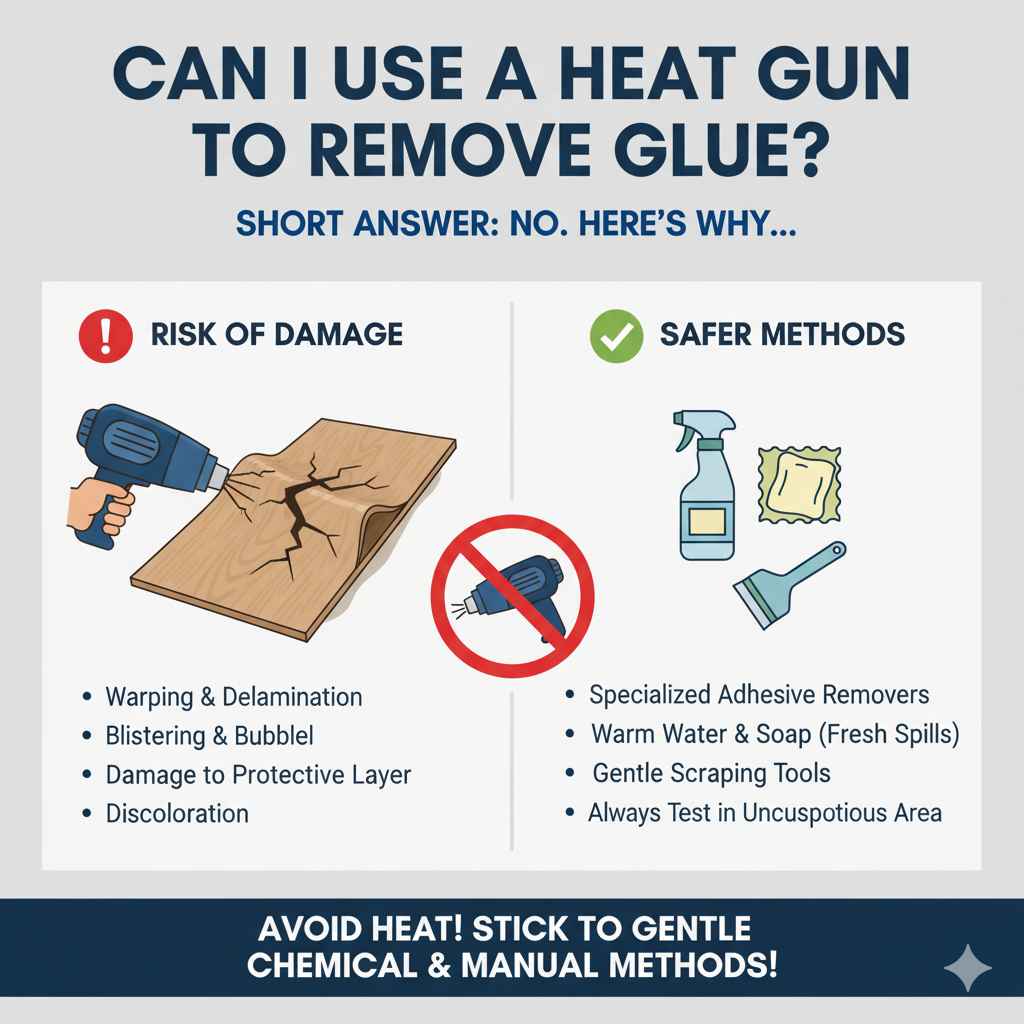
Can I Use a Heat Gun to Remove Glue?
Generally, it’s not recommended to use a heat gun on laminate flooring to remove glue. While heat can soften some adhesives, laminate flooring is susceptible to heat damage. Excessive or uneven heat can cause the laminate planks to warp, delaminate, or blister. The protective wear layer can also be damaged. Stick to the gentler methods described above to avoid this risk.
Maintaining Your Laminate Floors After Glue Removal
Once the glue is gone and your floors are sparkling, a little ongoing care will keep them looking great:
- Regular Cleaning: Dust and vacuum regularly. Use a damp (not wet) mop with a laminate-specific cleaner or a simple water/mild soap mix for routine cleaning. Always dry promptly.
- Wipe Spills Immediately: Make it a habit to clean up any spills, especially liquids, as soon as they happen.
- Use Furniture Pads: Place felt pads under furniture legs to prevent scratches and make moving furniture easier, reducing the chance of accidental spills.
- Avoid Harsh Chemicals: Stick to cleaners recommended for laminate flooring.
FAQ: Your Laminate Glue Removal Questions Answered
Q1: What is the easiest way to remove fresh glue from laminate flooring?
A1: For fresh glue, the easiest way is to gently scrape up the bulk of it with a plastic scraper or putty knife while it’s still wet. Then, wipe away any remaining residue with a damp cloth and immediately dry the area thoroughly.