How to Remove Polycrylic from Wood: Easy Cleanup Tips
To remove Polycrylic from wood, use a solvent like mineral spirits or denatured alcohol. Apply the solvent with a cloth and gently scrub the surface.
Polycrylic is a popular water-based finish that provides a durable protective layer on wood. However, mistakes happen, or you may want to change the finish. Removing Polycrylic requires specific methods to avoid damaging the wood underneath. Using the right tools and techniques can make the process efficient and effective.
Whether you’re refinishing furniture or correcting an application, understanding how to remove this finish is crucial. This guide will help you navigate the removal process while preserving the integrity of your wood surfaces. With the right approach, you can achieve a clean slate for your next project.
Introduction To Polycrylic Removal
Removing polycrylic from wood is important for maintaining the finish. Safe removal protects the wood’s surface and prevents damage. Using harsh chemicals can harm both the wood and your health. Always wear gloves and a mask when working.
Knowing when to remove polycrylic helps in planning your project. If the finish looks cloudy or peeling, it’s time to act. Remove polycrylic if it feels sticky to the touch. Improper application can lead to issues, making removal necessary.
Consider the environment when removing polycrylic. Use eco-friendly methods whenever possible. This ensures safety for you and your surroundings.
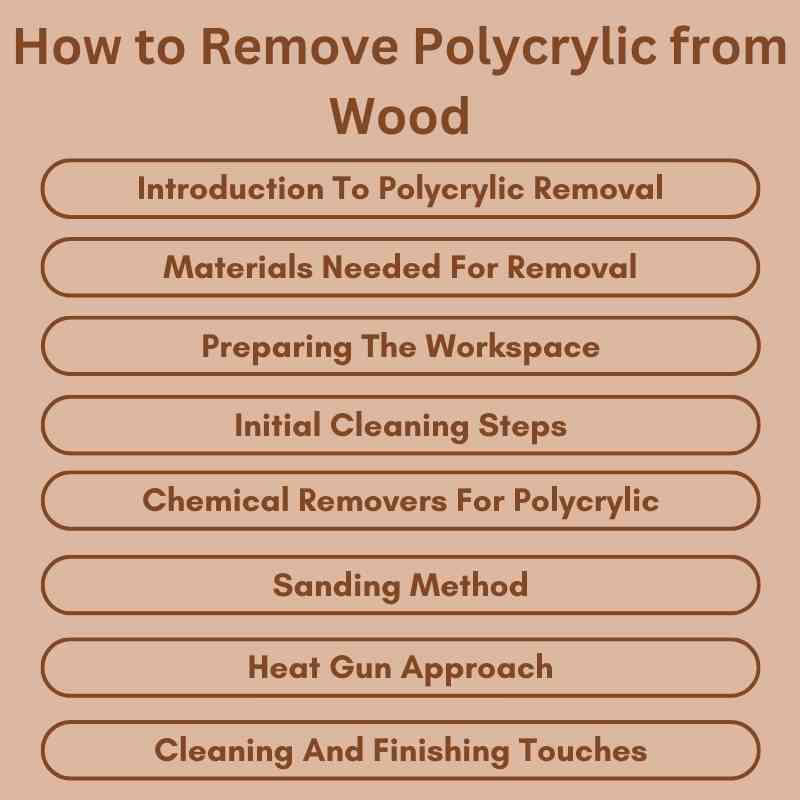
Materials Needed For Removal
To effectively remove Polycrylic from wood, gather the right materials. Here are the essential tools:
- Paint Stripper: A powerful solvent for dissolving Polycrylic.
- Scraper: Use a plastic scraper to lift the finish.
- Sandpaper: Fine and coarse grades help smooth the wood.
- Rags: For wiping excess stripper and debris.
- Bucket: To hold cleaning solutions and waste.
Don’t forget to wear protective gear:
- Gloves: Protect your hands from chemicals.
- Mask: Avoid inhaling harmful fumes.
- Goggles: Shield your eyes from splashes.
Preparing The Workspace
Start by clearing the area of any furniture or items. This helps prevent damage and ensures safety. Use drop cloths to protect the floor and nearby surfaces.
Make sure the room is well-ventilated. Open windows to let fresh air in. Use fans to improve airflow and reduce harmful fumes. Always prioritize your safety during the process.
Initial Cleaning Steps
Start by clearing the area of any items. This helps you focus on the wood surface. Use a dry cloth to wipe down the surface. This removes dust and dirt easily.
Next, check for any loose debris. Use a soft brush or vacuum to remove it. This step is important for a clean surface. A clean surface makes it easier to work on.
After that, inspect the wood closely. Look for any flaking or peeling areas. These spots need extra attention later. Keeping the surface clean helps the removal process.
Chemical Removers For Polycrylic
Choosing the right chemical remover is important for removing Polycrylic from wood. Look for products that are specifically designed for this purpose. Solvents like acetone or denatured alcohol can be effective. Always read the instructions before using any chemical remover.
Application techniques matter for best results. Use a brush or rag to apply the remover evenly. Let the remover sit for a few minutes. This helps break down the finish. Scrape the surface gently with a putty knife. Be careful not to damage the wood.
Wear gloves and work in a well-ventilated area. Safety is key when using chemicals. Dispose of any waste properly to protect the environment.
Sanding Method
Choosing the right sandpaper is essential for effective polycrylic removal. Use coarse grit sandpaper (80-120 grit) for initial sanding. This grit quickly removes the top layer of polycrylic. Afterward, switch to medium grit (150-180) for a smoother finish.
Finish with fine grit sandpaper (220 grit) to prepare the wood for refinishing. This step ensures a smooth surface without scratches. Always sand in the direction of the wood grain to avoid damage.
Use a sanding block for even pressure. This method prevents uneven surfaces. For larger areas, consider an orbital sander. Remember to wear a mask and goggles to protect yourself from dust.
Heat Gun Approach
Using a heat gun can effectively remove polycrylic from wood. It softens the finish, making it easier to peel away. Always wear safety goggles and gloves to protect yourself. Keep the heat gun moving to avoid burning the wood. Hold it about 6 inches away from the surface.
Start at one edge and slowly work your way across. The polycrylic will begin to bubble. Once it bubbles, use a scraper to peel it off. Be gentle to avoid damaging the wood underneath. After removing the finish, let the wood cool before sanding.
Cleaning And Finishing Touches
To effectively neutralize chemicals, use a mixture of water and vinegar. This solution helps to remove any remaining polycrylic residue. Apply it with a soft cloth for best results. Always wear gloves to protect your skin.
Restoring the wood surface is essential after cleaning. Sand the area lightly with fine-grit sandpaper. This step prepares the wood for a new finish. Wipe off dust with a damp cloth. Apply a suitable wood finish for a fresh look.
Disposal Of Waste
Proper disposal of Polycrylic waste is crucial for safety and the environment. Always check local regulations for specific guidelines. Many areas allow disposal in regular trash but may have restrictions.
Never pour Polycrylic down the drain. This can harm water systems and wildlife. Instead, consider the following methods:
- Allow the product to harden in a container.
- Seal the container and dispose of it in the trash.
- Look for local hazardous waste collection events.
For environmental considerations, ensure proper ventilation during use. Dispose of materials responsibly to protect wildlife and natural resources. Recycling or reusing materials reduces waste and promotes sustainability.
Prevention And Maintenance Tips
Regular wood care is essential for maintaining beautiful surfaces. Clean wood with a soft cloth regularly. Use a gentle cleaner to avoid damage. Always dry the wood after cleaning.
To avoid future buildup, apply a thin coat of finish. Reapply finish every few years. This keeps the wood protected and easy to clean. Avoid using harsh chemicals that may damage the finish.
Store wood items away from direct sunlight. Sunlight can cause fading and wear. Use coasters under drinks to prevent water rings.
Frequently Asked Questions
How Do I Remove Polycrylic From Wood?
To remove Polycrylic from wood, start with a solvent like mineral spirits or denatured alcohol. Apply the solvent on a cloth and gently rub the affected area. Avoid excessive pressure to prevent damaging the wood. Afterward, clean the surface with soap and water to remove any residue.
Can I Use Sandpaper To Remove Polycrylic?
Yes, sandpaper is an effective method to remove Polycrylic. Use medium-grit sandpaper initially, followed by fine-grit for a smooth finish. Sand in the direction of the wood grain to minimize scratches. Ensure to clean the area afterward to eliminate dust and debris.
What Tools Do I Need For Removal?
To remove Polycrylic, you’ll need a solvent, rags, and sandpaper. A putty knife can help in scraping off stubborn areas. Additionally, gloves and a mask are recommended for safety. Ensure you work in a well-ventilated area to avoid inhaling fumes.
Is It Safe To Use Chemicals For Removal?
Using chemicals like mineral spirits is generally safe when done correctly. Always read the product label and follow safety guidelines. Wear gloves and a mask to protect yourself. Ensure proper ventilation in your workspace to minimize exposure to harmful fumes.
Conclusion
Removing Polycrylic from wood is a manageable task with the right approach. Always test your methods on a small area first. Take your time to ensure a smooth finish. Following the steps outlined will help restore your wood’s natural beauty.
With patience, your project will shine once again.