Accidentally Used Interior Polyurethane Outside: Quick Fixes
How much trouble you’re in depends on how long the interior polyurethane has been outside. Caught within a few weeks, before the surface clouds or cracks, you can usually scuff-sand and topcoat with a real spar urethane. Left through a few weeks of direct sun and rain, the interior coat has likely already started failing and needs to come off first.
Why Interior Polyurethane Fails Outdoors
Best Spar Urethane Fix Pick
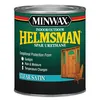 |
Minwax Helmsman Indoor/Outdoor Spar Urethane, Satin – $23.49 This is the product to topcoat with once you’ve caught an interior-poly mistake early — its UV inhibitors and flexible resin are exactly what plain interior polyurethane is missing outdoors.
|
As an Amazon Associate we earn from qualifying purchases.
Interior polyurethane is a rigid film with no UV inhibitors, because it was never designed to see direct sunlight. Outdoors, two things attack it that it has no defense against: UV radiation breaks down the resin from the surface in, causing the cloudy, crazed look; and daily temperature swings make the wood expand and contract while the rigid interior film can’t flex with it, so it cracks and lets moisture underneath. Wood rot starts once moisture gets under a cracked film and can’t escape — a bigger problem than the coating failure itself.
First: How Long Has It Been Outside?
This is the question that decides whether you’re topcoating or stripping. Check the surface for these specific signs before deciding:
| What You See | What It Means | What To Do |
|---|---|---|
| Still glossy and clear, no clouding | Caught early, film hasn’t started breaking down yet | Scuff-sand and topcoat with spar urethane — see below |
| Hazy, cloudy, or milky appearance | UV has started breaking down the resin | Sand back to bare wood, then apply spar urethane |
| Visible cracking or peeling | The film has failed and moisture may already be under it | Full strip required — check for soft or discolored wood underneath before refinishing |
Quick Fix: Topcoating an Early Catch
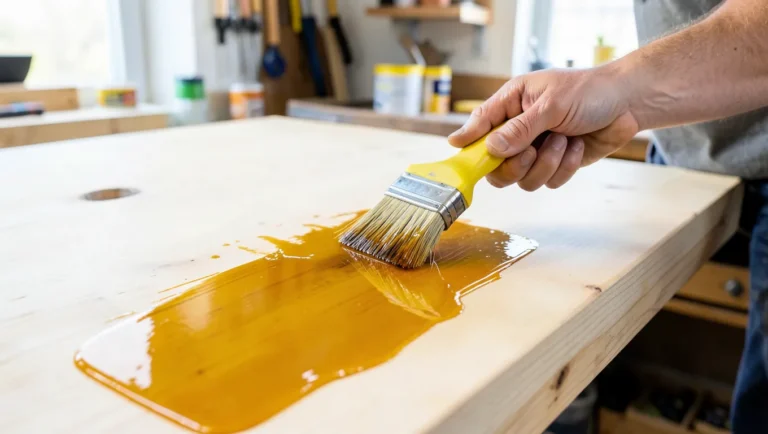
If the finish is still clear and intact, you don’t need to strip it — you need to seal it under a UV-resistant topcoat before the damage starts:
- Clean the surface with mineral spirits or a mild soap-and-water wash, then let it dry fully.
- Scuff-sand with 220-grit sandpaper to give the new coat something to grip — you’re not removing the interior poly, just breaking its surface sheen.
- Wipe away all dust with a tack cloth.
- Apply 2-3 thin coats of a genuine spar urethane, sanding lightly between coats. The UV blockers in the spar urethane now sit on top, protecting the interior coat underneath from the sunlight it can’t handle on its own.
This works because the interior polyurethane isn’t chemically wrong for wood — it’s just missing UV protection and flexibility. Give it both by burying it under a coat that has them.
Full Fix: Stripping a Failed Finish
Once the film has cracked, peeled, or clouded, topcoating over it just seals in a finish that’s already failing. Strip it back to bare wood instead:
- Chemical stripper for large, flat areas — faster than sanding but requires ventilation and cleanup with mineral spirits afterward.
- Sanding for smaller pieces or detail work — start around 100-120 grit to cut through the failed film, then move up through finer grits before finishing.
- Heat gun for thick buildups, used carefully to avoid scorching the wood.
After stripping, inspect the bare wood for gray, soft, or discolored patches — a sign moisture got under the cracked finish. Sand those spots back to solid wood before applying the new exterior finish; sealing over damaged wood just traps the problem.
Preventing the Mix-Up Next Time
- Label cans by location, not just product name — write “INDOOR ONLY” or “OUTDOOR OK” on the lid in marker, since interior and exterior poly cans often look nearly identical on the shelf.
- Store interior and exterior finishes on separate shelves so an outdoor project never grabs the wrong can by habit.
- Check the can’s label for “UV inhibitors” or “spar” before starting any project that will sit outside, even partially shaded ones like a covered porch rail.
Frequently Asked Questions
Can interior polyurethane be used outside?
No. It has no UV inhibitors and isn’t flexible enough for outdoor temperature swings, so it clouds, cracks, and lets moisture into the wood within weeks of sun and rain exposure.
Do I always have to strip it off, or can I just add a coat on top?
If you catch it early, while the film is still clear and intact, you can scuff-sand and topcoat with a real spar urethane instead of stripping. Once it’s already cloudy, cracked, or peeling, topcoating just seals in a failing finish — strip back to bare wood first.
Can Minwax interior polyurethane specifically be used outdoors?
No, standard Minwax polyurethane is an interior product without UV inhibitors. Minwax makes a separate outdoor-rated product, Helmsman Spar Urethane, specifically for exterior wood.
Will an interior stain sealed with interior poly hold up outside?
No. Interior stain lacks the UV-resistant pigments of exterior stain, and sealing it with interior poly doesn’t add UV protection either. Both the stain and the topcoat need to be exterior-rated products for the finish to last outdoors.
Conclusion
The fix depends entirely on how far the damage has already gone: catch it before the surface clouds and a spar urethane topcoat solves it in an afternoon; catch it after cracking starts and you’re stripping back to bare wood. Either way, the wood itself is almost always fine — it’s the coating, not the lumber, that needs the redo.
Sponsored / affiliate links. As an Amazon Associate I earn from qualifying purchases. I may earn additional commission from eligible campaigns.