How to Soften Wood for Axe Throwing (WATL Board Specs)
Water, not soaking or chemicals, is what actually keeps an axe throwing target soft enough to stick — mist the face before each session, or soak new boards overnight before you install them. Skip the water and the wood dries out, hardens, and starts bouncing hatchets back at you. This guide covers which wood species work (pine, cottonwood, and poplar — never oak or maple), official WATL board specs, and how to soften a target without growing mold.
Quick Answer
Mist the target face with water from a spray bottle before each session to keep it soft and sticky — that’s the maintenance method most axe-throwing venues actually use. For a brand-new board, soak it in water overnight (not days) before mounting it. Stick to softwoods like pine, cottonwood, or poplar; hardwoods such as oak or maple stay too dense and cause bounce-backs no matter how much you soak them.
How to Soften Wood for Axe Throwing
Best Axe Throwing Target Pick
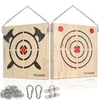
VNAKER Wooden Axe Throwing Target with Steel Chain
A pre-built softwood target board with hanging hardware, so you can skip sourcing and cutting your own 2×10 lumber.
- Best for: setting up a home practice target without building one from scratch
- Why we picked it: softwood face and steel mounting chain match the species and setup this guide covers
- Main drawback: still needs occasional misting — a pre-built board isn’t self-maintaining
Compare more axe throwing setup options
 Option 1 THRWCLUB Competition Throwing Axe (3-Pack)
|
 Option 2 General Tools MMD4E Wood Moisture Meter
|
 Option 3 Crosshairs Foldable Axe & Knife Target Board
|
As an Amazon Associate we earn from qualifying purchases.
Four methods actually keep a target board soft and stickable: regular misting for boards already in use, an overnight soak for new boards before you install them, steaming for thick or hard sections, and a rubbing-alcohol-and-water mix for stubborn dense grain. Older advice about “chemical wood softeners” or boiling boards for an hour isn’t how working ranges actually maintain targets — it’s slower, riskier, and unnecessary for softwoods. If your target still won’t hold an axe after softening it properly, the problem is usually the axe itself, not the wood.
Misting (Ongoing Maintenance)
- Fill a standard garden spray bottle with plain water — no soap or additives needed for routine use.
- Mist the target face lightly before each throwing session, and once a day if the target sits unused.
- Watch for over-saturation: a target that stays visibly wet for hours is a mold risk, not a better target.
Overnight Soak (New Boards)
- Submerge the board: place the new board flat in a tub or trough with enough water to cover it completely.
- Soak overnight: 8–12 hours is enough for standard 1½-inch target lumber — multi-day soaking isn’t necessary and can promote mold before the board is even installed.
- Air-dry the surface: pat the board dry and let it rest until the face is no longer dripping, then mount it while it’s still slightly damp inside.
Steaming (Thick or Hard Sections)
For a board that’s still too hard after soaking, steam it for about an hour per inch of thickness using a steamer box or a large covered pot. Steam relaxes the wood fibers deeper than surface misting can reach, and mounting the board while it’s still warm helps it settle into shape.
Alcohol-Water Mix (Dense Grain)
Mix equal parts rubbing alcohol and water in a spray bottle. Alcohol lowers the surface tension of the mixture so it penetrates tight grain faster than water alone — useful on denser softwood sections that aren’t softening evenly with plain misting.
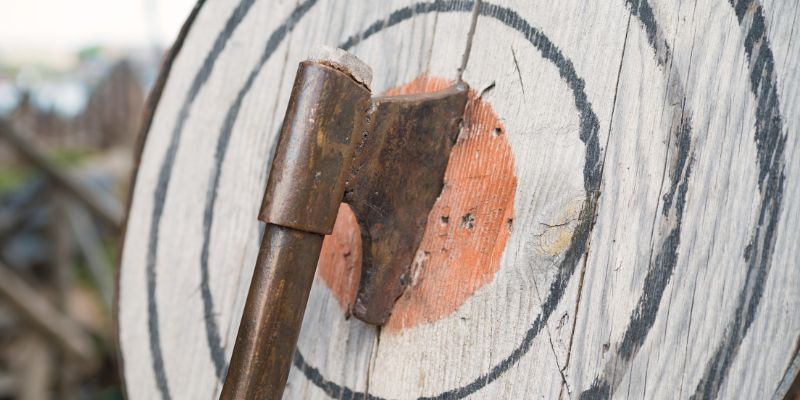
📊 Official WATL target boards are 2×10 lumber cut to 1½ in. thick, 9¼ in. wide, and 4 ft. long — not the 12-inch-thick boards some guides describe. A typical target uses 6–8 of these boards as a backing layer plus a top throwing-surface layer. Source: World Axe Throwing League, Venue Target Specifications.
Which Wood Actually Works for an Axe Throwing Target?
Target wood is a softwood chosen specifically so an axe blade can wedge into it without bouncing back. The safest picks are soft, forgiving species; dense hardwoods work against you no matter how long you soak or mist them.
| Wood Type | Works for Axe Throwing? | Notes |
|---|---|---|
| Cottonwood | Best choice | Self-heals around axe strikes; lasts 3–7x longer than harder woods |
| Pine / Spruce | Good, budget-friendly | Standard 2×10 dimensional lumber; what most venues actually use |
| Poplar | Good | Softer than pine, holds up reasonably well |
| Cedar | Usable | Softer softwood, but wears faster than pine under heavy use |
| Oak / Maple / Walnut | Avoid | Too dense — axes bounce off even when soaked or steamed |
| Plywood / MDF | Avoid | Layered/engineered construction won’t let a blade seat properly |
Grain orientation matters as much as species. End-grain boards (cut across the growth rings, like a butcher block) let the axe sink in and hold better than face-grain boards, which are more prone to splitting along the grain line after repeated hits. If you’re new to reading grain direction, our guide to hardwood vs. softwood covers how to tell them apart before you buy lumber, and our breakdown of pine wood texture and grain is useful if pine is your target wood of choice.
Mold Safety Note
Keeping a target damp enough to stick also makes it a candidate for surface mold. Don’t reach for bleach — it only kills mold on the surface and doesn’t stop it from coming back inside damp wood. A plain vinegar spray, left to sit and then wiped down, works better on wood and won’t degrade the fibers the way bleach can. Let the board dry out between sessions instead of keeping it constantly wet.
Preparing a New Target Board
- Strip the bark and rough edges: a sharp knife or scraper removes bark and splinters that would otherwise catch an axe edge instead of letting it seat cleanly.
- Clean the surface: wipe off dust, sap, or debris so the water or alcohol mix can soak in evenly rather than beading on a dirty surface.
- Split thick sections if needed: boards over about 2 inches thick soften unevenly whole — splitting them down closer to standard 1½-inch target lumber softens faster and more consistently.
- Soak or steam before mounting: use the overnight soak or steaming method above so the board is already pliable on install day, not just on the surface.
Once a target is mounted, ongoing upkeep is closer to general lumber care than anything axe-specific — our wood care and protection guide covers cleaning and moisture control for outdoor wood more broadly if you want the fuller picture.
Frequently Asked Questions
What is the best wood for an axe throwing target?
Cottonwood is the top choice because it self-heals around axe strikes and lasts several times longer than harder woods. Pine and spruce (standard 2×10 lumber) are the budget-friendly default most venues actually use. Avoid oak, maple, and walnut — these hardwoods are too dense and cause the axe to bounce off instead of sticking.
How thick should axe throwing target boards be?
Official World Axe Throwing League boards are cut from 2×10 lumber to 1½ inches thick, 9¼ inches wide, and 4 feet long, with 6–8 boards layered as backing plus a top throwing surface. A single 12-inch-thick slab isn’t the standard and isn’t necessary — standard dimensional lumber layered several boards deep works better and is far easier to source.
How do you keep axe throwing target boards from drying out?
Mist the target face with a spray bottle before each session and once a day if it sits unused. This is the maintenance method most working ranges rely on — it’s faster and safer than resoaking an installed board, and prevents the wood from hardening between uses.
Why won’t my axe stick in the target?
The most common causes are a dull blade, a target that’s dried out, or wood that’s simply too hard for throwing (oak and maple in particular). Sharpen the blade, mist the target, check your throwing distance and rotation, and confirm the boards are a proper softwood species before assuming it’s a technique problem.
Can you use bleach to clean mold off an axe throwing target?
No — bleach only kills mold on the wood surface and doesn’t reach mold growing inside damp fibers, so it comes back. A vinegar spray, left to sit and then wiped off, is more effective on wood and won’t break down the fibers the way repeated bleach use can. The better fix is letting the target dry out fully between sessions instead of keeping it constantly wet.
How long should you soak a new axe throwing target board before installing it?
8 to 12 hours submerged is enough for standard 1½-inch target lumber. Multi-day soaking isn’t necessary for softwoods and raises the risk of mold setting in before the board is even mounted.
Conclusion
A good axe throwing target comes down to two decisions: picking a soft, forgiving species like cottonwood, pine, or poplar, and keeping it consistently damp with regular misting rather than one-time soaking or chemical treatments. Skip the hardwoods, follow the WATL board dimensions if you’re building a permanent setup, and watch for over-saturation so you’re maintaining a target instead of growing mold on one.
Sponsored / affiliate links. As an Amazon Associate I earn from qualifying purchases. I may earn additional commission from eligible campaigns.