Is Birch a Softwood Real Facts Revealed
Many people wonder if birch is a softwood. This is a common question for beginners learning about different types of wood. It can be a little confusing because the names “softwood” and “hardwood” don’t always match how hard the wood actually feels.
But don’t worry! We’ll break down exactly what makes birch, and help you understand it easily. Let’s clear up the confusion about Is Birch a Softwood?
Real Facts Revealed with simple steps.
Understanding Wood Types
Learning about wood can seem tricky at first. People often think softwoods are just soft and hardwoods are hard. This isn’t quite true.
The real difference comes from how the trees grow and reproduce. This basic difference affects many things about the wood, like its strength and how it’s used. We’ll explain this in a way that makes sense for everyone.
Botanical Classification
The most important way to tell wood types apart is by looking at the trees they come from. This is called botanical classification. It’s like sorting animals into groups based on what they are.
For trees, the big split is between deciduous trees and coniferous trees.
Deciduous trees are the ones that lose their leaves each year. Think of oak or maple trees. They usually have broad leaves.
Coniferous trees are typically evergreen and have needles or scales. Pine and fir trees are good examples of these.
Botanists group trees based on these features. This grouping tells us a lot about the wood before we even touch it. It’s the root of why we have the terms softwood and hardwood.
Gymnosperms vs. Angiosperms
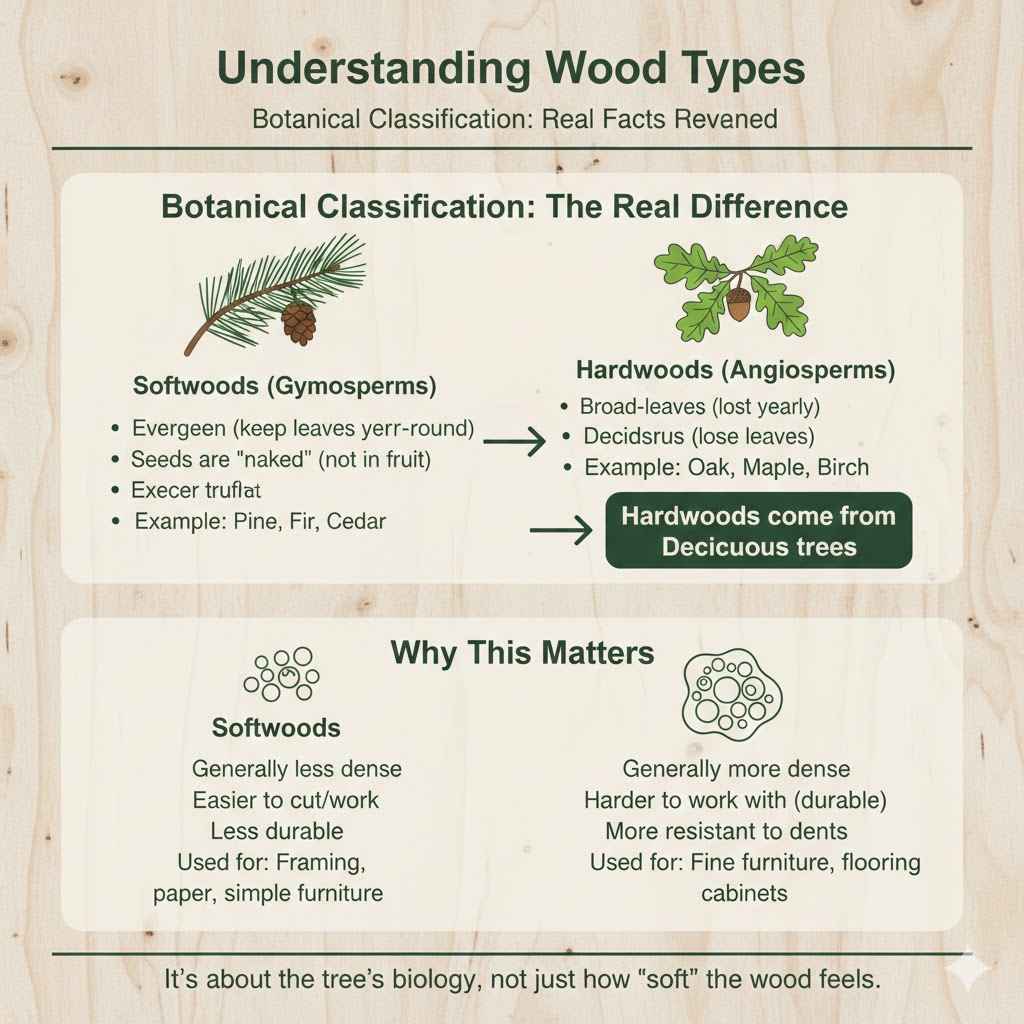
The botanical names for these groups are gymnosperms and angiosperms. Softwoods come from gymnosperms. These trees have seeds that are “naked,” meaning they aren’t inside a fruit or pod.
They often grow in cones.
Hardwoods come from angiosperms. These trees produce seeds that are enclosed within a fruit or a pod. Apple trees and flowering trees are angiosperms.
This fundamental difference in how the trees produce seeds is the scientific basis for classifying wood. It’s a key piece of information for anyone wanting to know the real facts about wood types.
What Are Softwoods and Hardwoods
The terms “softwood” and “hardwood” are really about the tree’s family, not just its texture. This classification system helps us predict the wood’s properties and its best uses in building and crafting. Understanding this is key to answering the question, Is Birch a Softwood?
Real Facts Revealed.
Defining Softwoods
Softwoods come from coniferous trees, which are usually evergreen. These trees are known for having needles or scale-like leaves and for producing cones. Think of popular trees like pine, spruce, and fir.
These trees grow relatively fast, which often makes their wood less dense and easier to work with.
The structure of softwood is generally simpler than hardwood. The cells are more uniform in size and shape. This simplicity can lead to quicker growth rates and easier harvesting.
Because of this, softwood lumber is often more affordable and widely available for many common uses. It’s a go-to choice for framing houses and making paper.
Characteristics of Softwood
Softwoods tend to have a lighter color and are generally lighter in weight. They often have visible grain patterns and knots, which can add character to furniture or paneling. While they are called “soft,” some softwoods can be quite strong and durable, depending on the species.
Growth Rings: Softwoods typically have distinct growth rings that are easy to see. These rings show the tree’s annual growth. They are often straighter and more uniform than those in hardwoods.
Cell Structure: The wood cells in softwoods are mostly tracheids, which are elongated cells that help transport water and provide structural support. There are fewer types of cells compared to hardwoods.
Resin Canals: Many softwoods contain resin canals, which produce sap. This sap can sometimes leak out, especially when the wood is heated or worked. This is why pine furniture might have a slight sticky feel at times.
Ease of Working: Softwoods are generally easier to cut, shape, and nail than hardwoods. This makes them popular for DIY projects and for builders who need to work quickly.
Defining Hardwoods
Hardwoods come from deciduous trees, which lose their leaves annually. These trees, like oak, maple, cherry, and walnut, have broad leaves. They are angiosperms, meaning their seeds are enclosed within a fruit or ovary.
Hardwood trees typically grow more slowly than coniferous trees, leading to denser, stronger wood.
The complex cellular structure of hardwoods contributes to their durability and strength. This makes them ideal for applications where strength and a fine finish are important, such as fine furniture, flooring, and cabinetry. The density also means they are more resistant to dents and wear.
Characteristics of Hardwood
Hardwoods vary greatly in color, density, and grain pattern. They often have a more complex and attractive grain structure, making them highly valued for decorative purposes. The term “hardwood” is a broad category, and the properties can differ significantly between species.
Cell Structure: Hardwoods have a more diverse cell structure, including vessels (which are wider tubes for water transport), fibers (for strength), and parenchyma (for storage). This complexity contributes to their density and strength.
Growth Rings: Growth rings in hardwoods can be less distinct than in softwoods, and they often contain pores that contribute to the wood’s texture. Some hardwoods, like oak, have very prominent ray structures that create beautiful patterns.
Durability and Strength: Generally, hardwoods are denser and harder than softwoods. This makes them more resistant to impact, wear, and decay. They hold screws and nails better and are less prone to splitting.
Aesthetics: Hardwoods are prized for their rich colors, fine grains, and ability to take a beautiful polish. This makes them a preferred choice for visible architectural features and high-end furniture.
Comparing Softwood and Hardwood
While the names suggest a simple hardness test, the real distinction lies in the tree’s botanical classification. Here’s a quick comparison:
| Feature | Softwood | Hardwood |
|---|---|---|
| Tree Type | Coniferous (evergreen, needles, cones) | Deciduous (loses leaves, broad leaves, fruit/flowers) |
| Botanical Group | Gymnosperm | Angiosperm |
| Growth Rate | Generally faster | Generally slower |
| Density | Generally lower | Generally higher |
| Cell Structure | Simpler (mostly tracheids) | More complex (vessels, fibers, parenchyma) |
| Common Uses | Framing, paper, general construction | Furniture, flooring, cabinetry, fine woodwork |
This table shows the core differences. It helps clarify why certain woods are chosen for specific jobs. Even though some hardwoods are softer than some softwoods, the botanical classification remains the primary factor.
Is Birch a Softwood or Hardwood
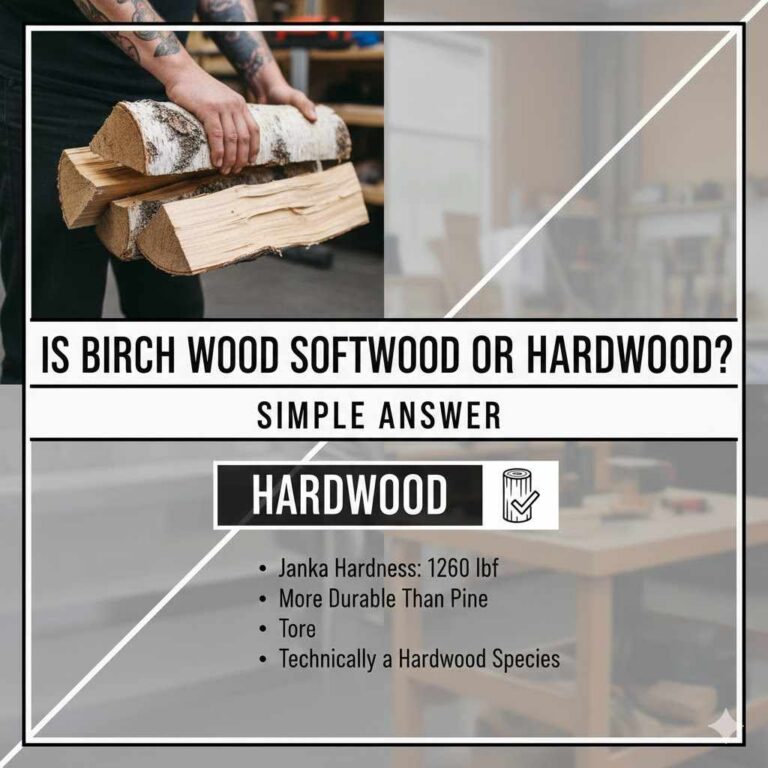
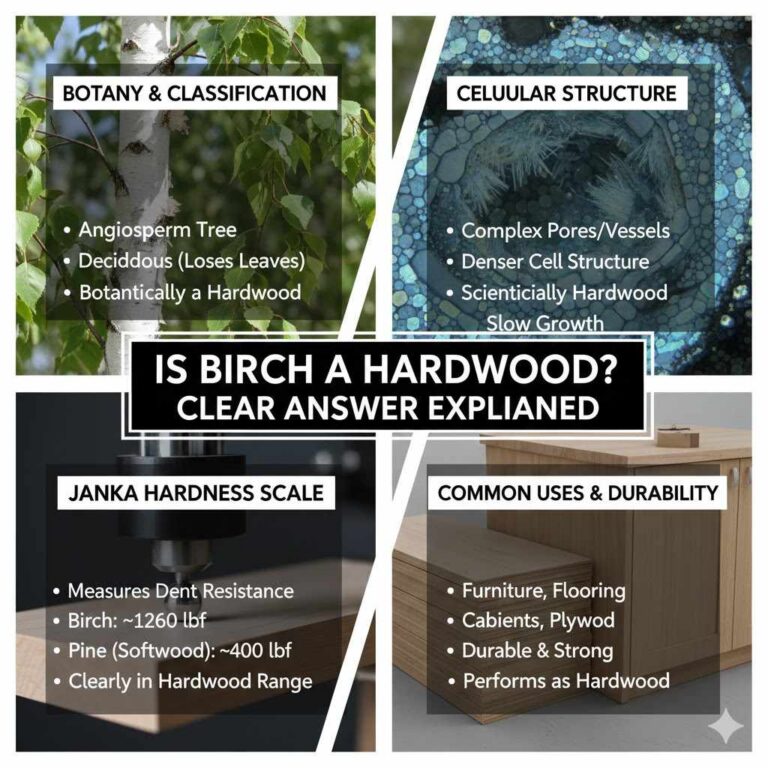
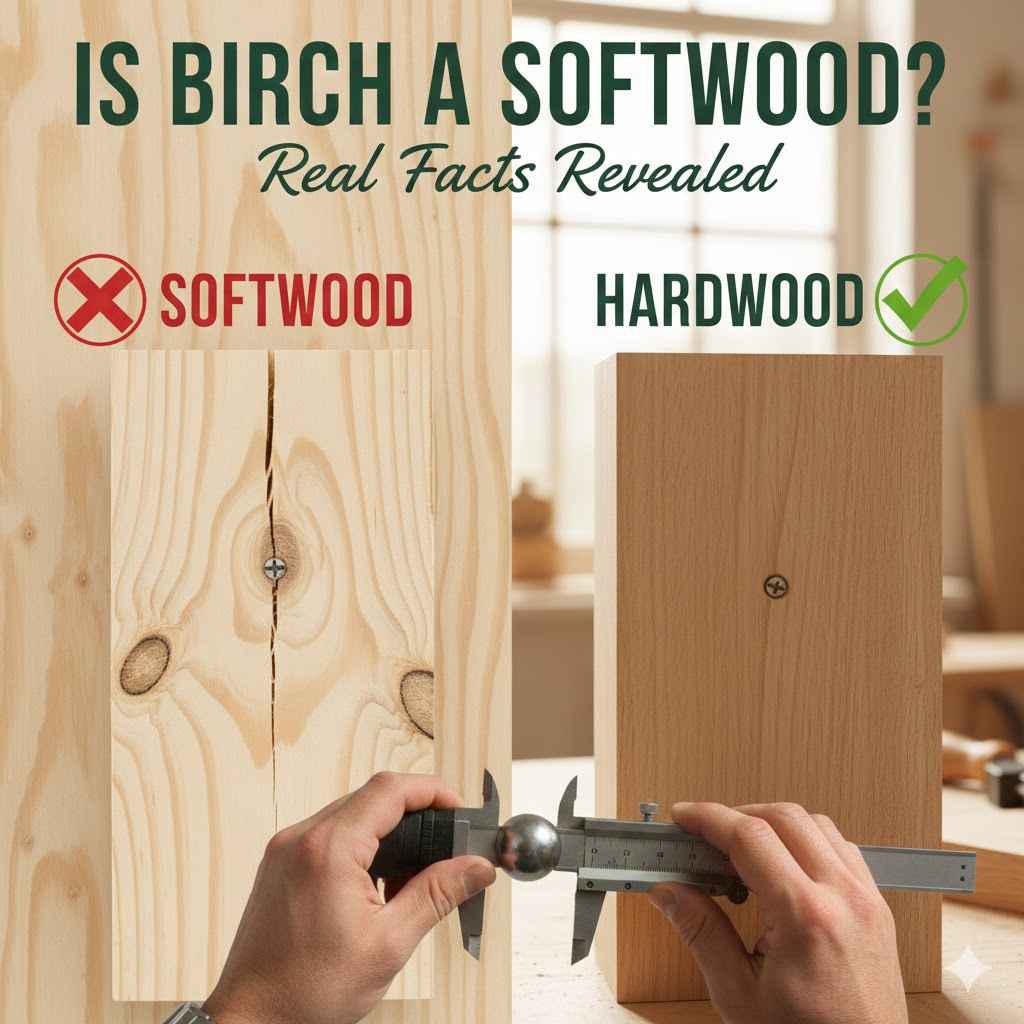
Now let’s tackle the main question: Is Birch a Softwood? Real Facts Revealed. Birch trees are deciduous, meaning they lose their leaves.
They also produce seeds enclosed within a fruit. Based on the botanical definitions, this places birch firmly in the hardwood category.
So, even though the name “birch” might sound light or easy to work with, scientifically, it’s classified as a hardwood. This classification is due to the type of tree it comes from, not solely its density or how easy it is to cut. Many people get confused because they expect wood names to perfectly describe their physical properties, but that’s not always the case.
Birch Tree Characteristics
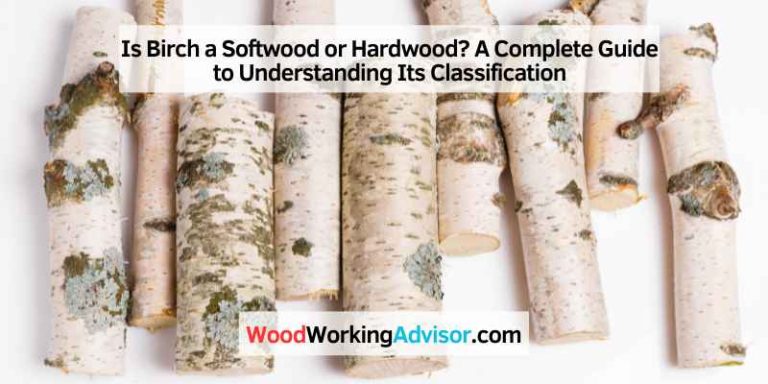
Birch trees belong to the Betula genus. They are found in temperate and boreal regions of the Northern Hemisphere. These trees are known for their distinctive bark, which is often white, gray, or yellow, and peels in papery strips.
They are angiosperms, reproducing through flowers and seeds enclosed in fruits, which is a key indicator of hardwood.
Birch trees are typically medium to large in size. They grow at a moderate to fast pace compared to some other hardwoods. This relatively quick growth contributes to the availability of birch wood, but it doesn’t change its classification from hardwood.
The wood itself is dense and strong, fitting the general profile of hardwood lumber.
Properties of Birch Wood
Birch wood is known for its strength, durability, and fine, even texture. It has a light color, often creamy white to pale brown, with a subtle grain pattern. This makes it a versatile wood that can be stained or finished to mimic more expensive hardwoods like cherry or maple.
Its strength and fine grain make it suitable for a wide range of applications. It’s commonly used in furniture making, cabinetry, plywood, and even for musical instruments. The wood takes finishes very well, providing a smooth and attractive surface for projects.
Strength and Density
Birch is considered a medium to hard hardwood. Its density is higher than most softwoods. For example, yellow birch has a density of about 42 pounds per cubic foot when dried, while common softwoods like pine can be as low as 25-35 pounds per cubic foot.
This density means birch is strong and resistant to wear.
This strength is why birch is often chosen for items that need to withstand regular use, like kitchen cabinets or dining tables. It’s not as hard as some exotic hardwoods, but it offers a great balance of hardness, strength, and workability for its price.
Workability and Finishing
Birch works well with most woodworking tools. It can be cut, shaped, and sanded to a very smooth finish. Its fine, even texture means that it doesn’t splinter easily.
This makes it a good choice for detailed work.
When it comes to finishing, birch is excellent. It accepts stains evenly, allowing for a wide range of color options. It also takes lacquers and varnishes very well, resulting in a durable and attractive surface.
This makes it a popular choice for manufacturers who want consistent, high-quality finishes on their products.
Birch Plywood
Birch plywood is a very popular product. It’s made by layering thin sheets of birch veneer. These layers are glued together with their grain directions alternating.
This construction makes the plywood very strong, stable, and resistant to warping or cracking.
Because birch is a hardwood, birch plywood is considered a high-quality product. It’s often used in furniture, cabinetry, and even for structural applications where strength and stability are needed. The quality of birch plywood is recognized in the industry, making it a preferred choice for many projects.
Its consistent performance and good appearance are key advantages.
Why the Confusion About Birch Wood
The confusion about whether birch is a softwood or hardwood often comes from a few common misunderstandings. People might hear “birch” and think of its paper-like bark or its often light appearance, which can sometimes be associated with softer woods. However, the scientific classification is based on the tree’s reproductive structure, not its physical properties alone.
Additionally, there’s a wide range of hardness within both the softwood and hardwood categories. Some hardwoods are softer than some softwoods. This overlap can lead to people assuming that if a wood isn’t extremely hard, it must be a softwood.
But birch, while not the hardest wood in existence, is definitely a hardwood by botanical definition.
Misconceptions About Wood Names
The names “softwood” and “hardwood” are historical and botanical terms. They don’t always directly reflect the wood’s actual hardness or density. For example, balsa wood, a very soft material, is botanically classified as a hardwood because it comes from a deciduous tree.
Conversely, some coniferous woods, like yew, can be quite hard and dense, yet they are still classified as softwoods. This is why relying on the tree’s botanical family is the most accurate way to classify wood. It’s a system that has been developed over centuries by botanists and foresters.
The Role of Density and Hardness
While not the primary classification factor, density and hardness are important properties of wood. They influence how wood is used. Birch wood is denser than most softwoods.
This makes it stronger and more durable.
When people feel or work with wood, they often base their assumptions on these physical characteristics. If a wood feels relatively easy to cut or dent, they might assume it’s a softwood. However, this sensory experience doesn’t align with the scientific classification of hardwoods and softwoods.
Practical Implications for Woodworkers
Knowing that birch is a hardwood is important for woodworkers. It means you should use sharp tools and appropriate techniques when working with it. Hardwoods can dull tools faster than softwoods.
They also require different types of fasteners and adhesives for optimal performance.
For example, when building furniture, birch’s hardness means it will hold screws and joints securely. Its fine texture allows for smooth sanding and a beautiful finish, which is a hallmark of quality hardwood projects. Understanding birch as a hardwood helps woodworkers choose the right methods and materials for successful projects.
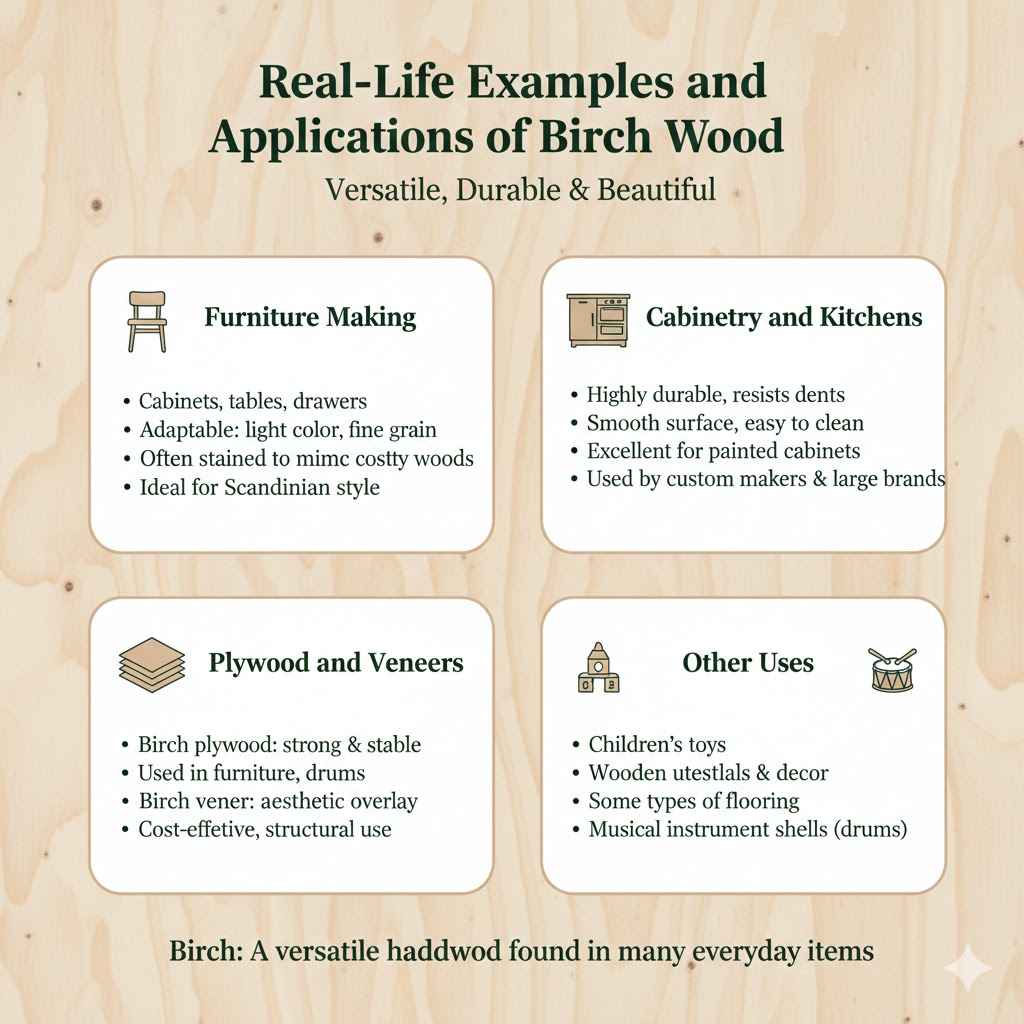
Real-Life Examples and Applications of Birch Wood
Birch wood is a versatile material used in many everyday items. Its strength, appearance, and workability make it a popular choice for manufacturers and craftspeople. Let’s look at where you’re likely to find birch wood.
Furniture Making
Birch is a very common wood for furniture. Its light color and fine grain make it adaptable. It’s often used for cabinet doors, drawer boxes, and tabletops.
Sometimes, manufacturers stain birch to look like more expensive woods such as cherry or walnut. This is a cost-effective way to achieve a high-end look.
A common example is Scandinavian-style furniture. This design often features light-colored woods with clean lines. Birch is perfect for this aesthetic.
Its natural light color and smooth finish fit well with minimalist and modern designs. Many popular furniture brands use birch for its balance of quality and affordability.
Cabinetry and Kitchens
In kitchens, birch is a frequent choice for cabinets. Its durability means it can withstand the daily wear and tear of a busy kitchen. Birch cabinet doors resist dents and scratches better than softer woods.
The smooth surface is also easy to clean and maintain.
Many custom cabinet makers and large manufacturers use birch. It’s especially popular for painted cabinets. The fine, even grain of birch ensures a smooth finish without the prominent grain lines sometimes seen in other hardwoods.
This uniformity is key for achieving a flawless painted surface.
Plywood and Veneers
As mentioned, birch plywood is very well-regarded. It’s used in high-quality furniture, cabinetry, and even in the construction of musical instruments like drum shells. The multiple layers of birch veneer give the plywood exceptional strength and stability.
Birch veneer is also used to cover less expensive core materials. This allows designers to achieve the look of solid birch wood without the higher cost. This technique is common in furniture and architectural paneling.
It’s a smart way to use the beauty of birch wood effectively.
Other Uses
Beyond furniture and cabinets, birch wood finds its way into many other items. It’s used for making children’s toys because of its smooth finish and durability. It’s also used for wooden utensils, decorative items, and even some types of flooring.
In some cases, birch is used for specific parts of musical instruments. For example, the shells of many drum kits are made from birch plywood due to its resonant qualities and strength. This shows the wide range of applications where birch excels.
Frequently Asked Questions
Question: Is birch wood good for flooring?
Answer: Yes, birch wood can be used for flooring. It is a hardwood, which means it is quite durable and can withstand foot traffic. Its attractive appearance and ability to take stains make it a popular choice for residential flooring.
Question: Does birch wood have a strong scent?
Answer: Birch wood generally has a mild, slightly sweet scent when freshly cut, but it is not considered strongly aromatic. The scent typically dissipates once the wood is dried and finished.
Question: Is birch wood more expensive than pine?
Answer: Generally, yes. Birch is a hardwood, and hardwoods are typically more expensive than softwoods like pine. This is due to slower growth rates and different harvesting processes.
Question: Can birch wood be used outdoors?
Answer: While birch is a hardwood, it is not naturally as resistant to moisture and decay as some other woods like cedar or redwood. For outdoor use, it typically requires extensive sealing and finishing to protect it from the elements.
Question: How can I tell the difference between birch and maple wood?
Answer: Both birch and maple are hardwoods with similar light colors and fine grains. Distinguishing them can be tricky. Maple often has a slightly finer and more uniform grain, and sometimes subtle figuring like “bird’s eye” or “flame” patterns.
Birch may have more noticeable, though still fine, growth ring patterns.
Final Thoughts
Birch is a hardwood. This is based on the tree’s botanical classification, not just its hardness. Its strength, fine texture, and beauty make it a valuable material for furniture, cabinets, and more.
You can trust birch for quality projects.