Is Japanese Maple Native? Full Origin Explained
Many garden lovers wonder, Is Japanese Maple Native? Full Origin Explained is a question that pops up often. It sounds simple, but the answer can be a bit tricky for folks new to gardening.
People get confused because these beautiful trees are so popular everywhere. Don’t worry, though! This guide makes it super easy.
We’ll walk through it step-by-step. Let’s uncover where these amazing trees truly come from and what that means for your garden.
Japanese Maple Origin And Native Range
Many people ask, “Is Japanese Maple Native?” The direct answer is yes, Japanese maples are native to a specific part of the world. This section will explore their natural homeland and the regions where they have grown for centuries. Understanding this helps us appreciate their ecological role and how they adapt to different climates.
We will look at the geography and environment that shaped these iconic trees long before they were cultivated for ornamental purposes.
Where Do Japanese Maples Naturally Grow
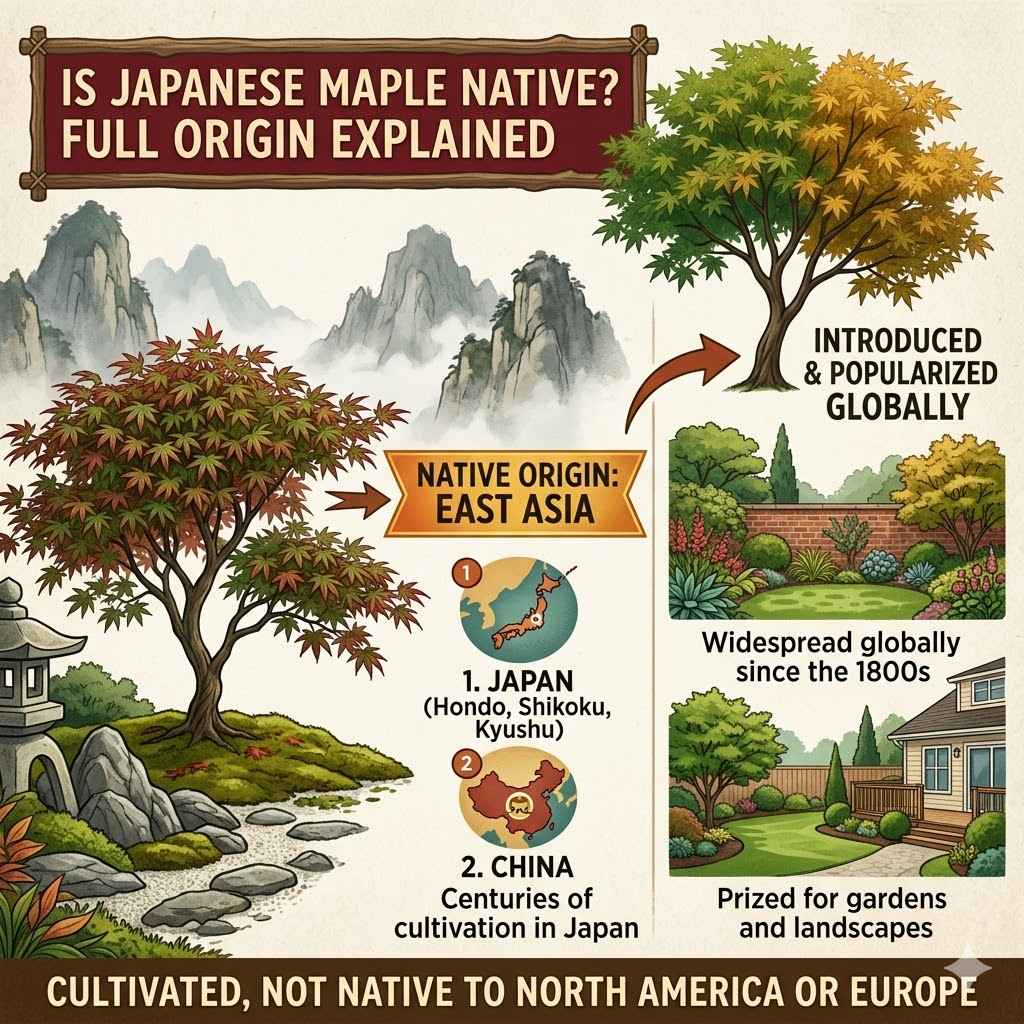
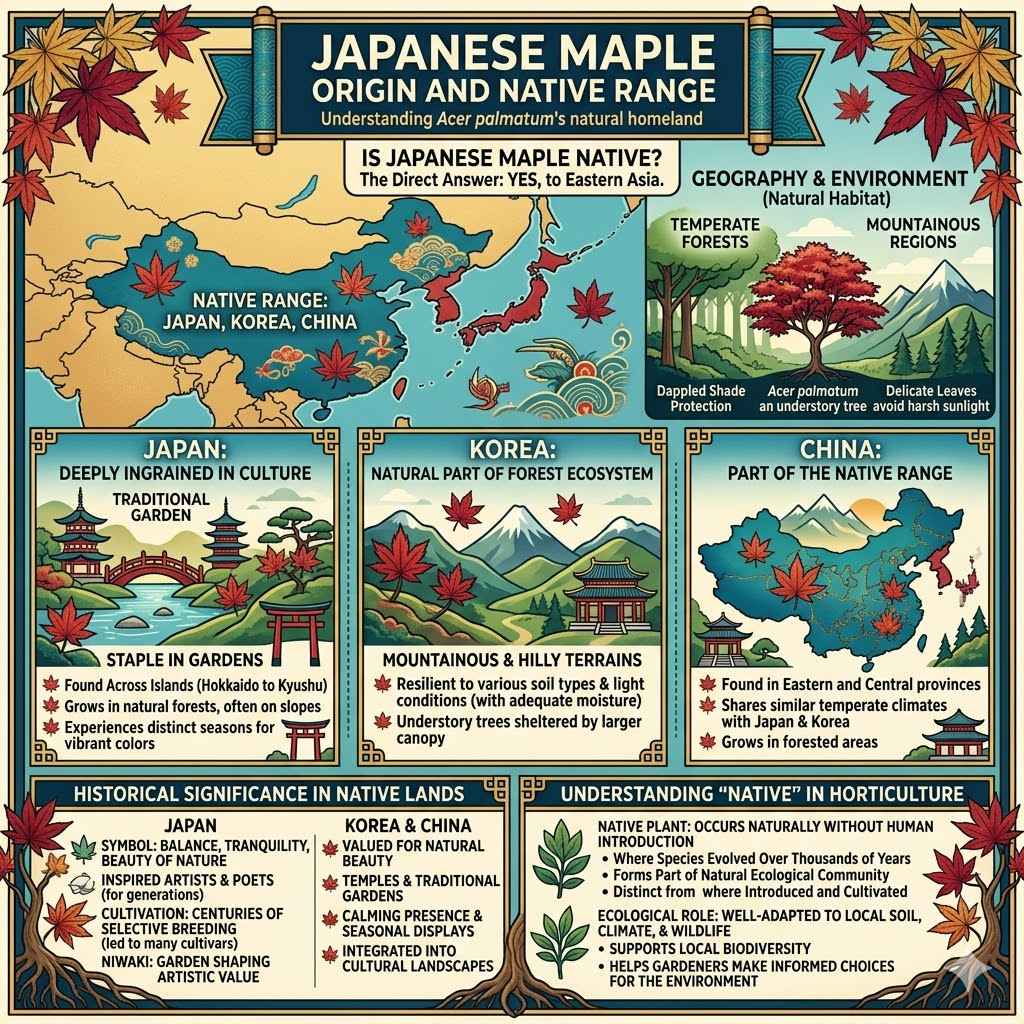
Japanese maples, scientifically known as Acer palmatum, are indigenous to Eastern Asia. Their native range primarily includes Japan, Korea, and parts of China. These countries offer diverse climates and landscapes that have allowed this species to thrive for a very long time.
The mountainous regions and temperate forests are their natural habitat.
In Japan, they are found across the islands, from Hokkaido in the north to Kyushu in the south. They often grow in dappled shade beneath taller trees. This protected environment helps their delicate leaves avoid harsh sunlight.
Korean native populations are often found in similar forest settings. In China, their presence is noted in specific provinces, usually in forested areas.
- Japan: Acer palmatum is deeply ingrained in Japanese culture and landscapes. It’s commonly found in natural forests, often on slopes, and is a staple in traditional Japanese gardens. Its presence is so significant that it’s often the first place people associate the tree with, leading to the common question, “Is Japanese Maple Native?” It thrives in the temperate climate of Japan, experiencing distinct seasons that influence its growth and vibrant fall colors.
- Korea: In Korea, Japanese maples are also a natural part of the forest ecosystem. They can be found in both mountainous and hilly terrains. Their natural distribution suggests a resilience to various soil types and light conditions, provided there is adequate moisture. Like in Japan, they often grow as understory trees, benefiting from the shelter of larger canopy trees.
- China: While less commonly highlighted than Japan or Korea, China is also part of the native range of Acer palmatum. It’s found in certain regions, particularly in the eastern and central parts of the country. These areas share similar temperate climates with the other native countries, supporting the natural growth of this species.
Historical Significance In Their Native Lands
For centuries, Japanese maples have held deep cultural and aesthetic significance in their native lands. In Japan, the tree is not just a plant; it’s a symbol. It represents balance, tranquility, and the beauty of nature.
Artists and poets have been inspired by its elegant form and changing colors for generations.
The cultivation of Japanese maples for their ornamental qualities began many centuries ago in Japan. Gardeners carefully selected and bred trees with unique leaf shapes, colors, and growth habits. This long history of selective breeding is a major reason why we see so many diverse cultivars today.
The practice of “niwaki,” or Japanese garden shaping, often features Japanese maples, highlighting their artistic value.
In Korea and China, while perhaps not as central to national identity as in Japan, these maples have also been appreciated for their natural beauty. They are often found in temples and traditional gardens, valued for their calming presence and seasonal displays. Their integration into these cultural landscapes further solidifies their natural connection to these regions.
Understanding ‘Native’ In Horticulture
When we ask, “Is Japanese Maple Native?”, it’s important to understand what “native” means in gardening. A native plant is one that occurs naturally in a particular region or ecosystem without human introduction. This definition is key to understanding the origin of Acer palmatum.
For Japanese maples, “native” refers to the areas where they evolved and grew wild over thousands of years. These are the regions where they form part of the natural ecological community. This is distinct from where they are introduced and cultivated, even if they grow very well there.
Many plants become popular globally, but their origins remain in specific geographic locations.
The term “native” also has ecological implications. Native plants are often well-adapted to local soil, climate, and wildlife. They play a vital role in supporting local biodiversity.
Understanding a plant’s native status helps gardeners make informed choices that can benefit the environment.
Cultivation And Spread Beyond Native Range
The beauty and unique characteristics of Japanese maples led to their widespread cultivation far beyond their native lands. This section explores how these trees were introduced to other parts of the world and how they are grown today. We will look at the process of their global spread and what makes them so popular in gardens worldwide.
This explains why many people might assume they are native everywhere they see them.
Introduction To Western Gardens
Japanese maples first made their way to Western gardens in the 19th century. European plant explorers and collectors were fascinated by the diverse and colorful varieties they discovered in Japan. These trees were brought back to Europe and North America, where they quickly gained popularity.
The initial introductions were likely through botanical gardens and private collections. As their appeal grew, nurseries began to propagate and sell them. This marked the beginning of their journey from their native East Asian forests to gardens across the globe.
Early horticulturalists recognized their ornamental value for landscaping and specimen planting.
The distinct foliage shapes, ranging from deeply cut to broad lobes, and the stunning array of colors, from vibrant reds and oranges to delicate greens and purples, made them highly desirable. They offered a different aesthetic from many of the European and North American trees common at the time. This made them a valuable addition to ornamental horticulture.
Popularity And Horticultural Value
The popularity of Japanese maples stems from their remarkable aesthetic qualities. Their finely dissected leaves, often described as lacy, and their graceful, often weeping or multi-trunked forms, lend an air of elegance to any landscape. They are prized for their ornamental appeal throughout the year.
In spring, new foliage unfurls in shades of red, pink, or green. Summer brings a lush canopy, and autumn offers a breathtaking display of fiery reds, oranges, and yellows. Even in winter, their intricate branching structure provides visual interest.
This year-round appeal is a major reason for their high horticultural value.
Beyond their beauty, they are relatively adaptable to cultivation. With the right conditions, they can thrive in many climates. Their size, with many cultivars remaining relatively small, makes them suitable for various garden spaces, from large estates to urban backyards.
This versatility contributes to their widespread planting.
Cultivation Challenges And Care
While adaptable, Japanese maples do have specific needs when grown outside their native range. They generally prefer a spot with partial shade, especially protection from intense afternoon sun, which can scorch their leaves. This preference is a holdover from their natural habitat, where they often grow as understory trees.
Well-draining soil is crucial. They do not like to have their roots sitting in waterlogged conditions, which can lead to root rot. Amending the soil with organic matter, like compost, can help improve drainage and fertility.
Consistent moisture is also important, particularly during dry periods, but overwatering must be avoided.
Wind protection is another factor. Strong winds can damage their delicate leaves and branches. Therefore, planting them in a sheltered location is often recommended.
Choosing the right spot and providing consistent care are key to their success in gardens far from their native East Asian homes.
Understanding Cultivars
The vast array of Japanese maple varieties we see today are known as cultivars. These are plants that have been selected and propagated by humans for specific desirable traits. The question, “Is Japanese Maple Native?”, can sometimes be confusing because many cultivars have been developed and popularized outside of Japan.
Each cultivar is a descendant of the wild Acer palmatum species but has been bred for unique characteristics. These differences can include leaf color, leaf shape, growth habit (upright, weeping, or spreading), and size. For example, ‘Bloodgood’ is known for its deep red leaves, while ‘Laceleaf’ or ‘Dissectum’ varieties have finely dissected foliage.
The development of these cultivars is a testament to human appreciation for the species’ variability. Horticulturalists have spent generations selecting and breeding specific traits, leading to hundreds of named varieties. This careful selection process has resulted in the diverse collection available to gardeners today.
Is Japanese Maple Native Key Factors
To definitively answer, “Is Japanese Maple Native?”, we need to consider a few key factors. This section will break down the core elements that define a plant’s native status. We will explore botanical classifications, genetic origins, and geographical evidence.
This will help solidify the understanding of where Acer palmatum truly belongs.
Botanical Classification
Botanical classification helps us understand a plant’s lineage and relationships. The species Acer palmatum belongs to the genus Acer, which includes maples. Within this genus, Acer palmatum is recognized as a distinct species.
Botanists determine species based on a range of characteristics, including their genetic makeup, physical traits, and where they are found growing naturally. The consensus among botanists is that Acer palmatum originated in East Asia. This scientific classification is a primary piece of evidence.
The scientific name itself, Acer palmatum, reflects its origins. “Palmatum” refers to the hand-like shape of its leaves, a common characteristic that is easily recognizable. This classification is consistent across global botanical databases and literature.
Geographic Origin Evidence
Geographic origin evidence comes from historical records, plant surveys, and the study of plant distributions. As mentioned earlier, detailed surveys and historical botanical texts confirm the natural presence of Acer palmatum in Japan, Korea, and parts of China.
These regions have a long history of documented flora. Early botanical expeditions and subsequent research consistently identify these countries as the native homeland. This evidence is robust and widely accepted within the scientific community.
The distribution patterns observed in these areas suggest that these maples have evolved within these specific ecological conditions. Their presence is not a result of recent introduction but rather a natural occurrence over long periods. This geographic evidence is crucial for the “Is Japanese Maple Native?” question.
Genetic Studies
Modern genetic studies provide further confirmation of Acer palmatum’s native origins. DNA analysis can reveal the evolutionary history of plant species and their relationships to other populations. Researchers compare genetic material from different populations of Acer palmatum.
These studies typically show that populations in Japan, Korea, and China are genetically similar and form distinct clusters, indicating a shared origin. Genetic diversity patterns often point to specific regions as the center of origin, with populations further away showing less diversity.
Genetic research supports the idea that Acer palmatum evolved in East Asia. The data helps to trace evolutionary pathways and confirm ancestral relationships. This scientific approach adds a layer of objective evidence to the question of its native status.
Distinguishing Native From Introduced
It is important to distinguish between a plant’s native range and where it has been introduced and successfully cultivated. Japanese maples are now widely grown in North America, Europe, Australia, and other parts of the world. In these areas, they are considered introduced or exotic species, not native.
An introduced species is one that has been brought to a new region by human activity, either intentionally or accidentally. While these plants can adapt and even thrive, they are not part of the natural ecological community that evolved in that area. They may compete with native plants for resources or lack natural predators.
The widespread popularity of Japanese maples has led to their presence in gardens globally. However, this global presence does not change their origin. The answer to “Is Japanese Maple Native?” always refers back to its original geographical homeland.
Common Misconceptions About Japanese Maple Origin
The popularity of Japanese maples, coupled with their long history of cultivation, has led to several common misconceptions. This section will address these misunderstandings directly, helping to clarify the true origin of Acer palmatum. By tackling these points, we can provide a clear and accurate picture.
Assumption Of Global Native Status
One of the most frequent misconceptions is that because Japanese maples are so common in gardens everywhere, they might be native to many places, or even globally. This is not the case. Their beauty and adaptability have led to widespread cultivation, but this does not equate to a native status in these new regions.
People see them in parks, gardens, and nurseries in the United States, Canada, or Europe, and naturally assume they have always been there. This is a common pitfall when learning about plant origins. The ease with which they grow in many climates can be misleading.
It’s important to remember that “common” does not equal “native.” Many plants are incredibly successful as introduced species, becoming landscape staples without being indigenous to the area.
Confusing Cultivars With Species Origin
Another point of confusion arises from the vast number of cultivars. With names like ‘Crimson Queen’, ‘Emperor I’, or ‘Coral Bark’, it might seem like these specific types are linked to different origins. However, all these cultivars ultimately trace back to the wild Acer palmatum species.
The diversity of cultivars is a result of human selective breeding from the native Japanese maple. These human-driven variations do not change the species’ fundamental native origin. Whether you have a weeping red leaf variety or an upright green one, its ancestral roots lie in East Asia.
This distinction is crucial. The parent species, Acer palmatum, is native to specific Asian countries. The many forms we enjoy today are cultivated varieties developed from that native species.
The Role Of Cultural Significance
The deep cultural significance of Japanese maples, especially in Japan, can sometimes lead people to believe they are exclusively Japanese. While Japan is a primary native country and has a strong historical connection, it’s essential to remember that their native range also includes Korea and parts of China.
While the tree is a quintessential element of Japanese gardens and art, its natural distribution is broader than just one nation. Acknowledging the full native range provides a more complete picture of its origins.
Their strong association with Japanese aesthetics makes them iconic. However, focusing solely on Japan overlooks the other regions where they also naturally occur. The question, “Is Japanese Maple Native?”, is answered by considering the entire natural distribution, not just the most culturally prominent region.
Caring For Your Japanese Maple
Knowing that Japanese maples are native to East Asia helps us understand their needs better. This section will provide practical advice on how to care for your Japanese maple, ensuring it thrives in your garden. Proper care helps replicate the conditions of its native environment as much as possible.
Ideal Planting Conditions
To help your Japanese maple flourish, choose the right location. They prefer a spot with morning sun and afternoon shade. This protects their delicate leaves from scorching in the hottest part of the day, mimicking the dappled light of their native forest floor.
The soil should be rich in organic matter and, most importantly, well-draining. Avoid heavy clay soils that retain too much water. If your soil is heavy, amend it generously with compost or other organic material before planting.
This ensures good aeration and prevents root rot.
Ensure the planting hole is about twice as wide as the root ball and just as deep. This encourages the roots to spread outward. Do not plant the tree too deep; the top of the root ball should be level with or slightly above the surrounding soil.
Watering And Fertilizing
Japanese maples need consistent moisture, especially when they are young and establishing their root systems. Water them deeply but less frequently, allowing the soil to dry slightly between waterings. Avoid letting the soil become waterlogged, as this can lead to root problems.
During hot, dry spells, you may need to water more often. Applying a layer of mulch around the base of the tree (but not touching the trunk) helps retain soil moisture and suppress weeds.
Fertilizing is usually not necessary if the soil is healthy and amended with compost. If you do fertilize, use a balanced, slow-release fertilizer in early spring. Avoid over-fertilizing, which can lead to weak, leggy growth and can burn the roots.
Pruning Techniques
Pruning is essential for maintaining the shape and health of your Japanese maple. The best time to prune is usually in late winter or early spring, before the sap starts to flow heavily. Light pruning can also be done in midsummer to refine the shape.
Remove any dead, damaged, or crossing branches first. Then, you can selectively prune to enhance the tree’s natural form. Avoid heavy pruning or “topping” the tree, as this can harm its structure and appearance.
The goal is to create an attractive, well-balanced silhouette.
For weeping varieties, pruning may focus on opening up the canopy or managing the spread. For upright types, it’s about developing strong structural branches. Always use clean, sharp pruning tools to make precise cuts.
Pest And Disease Management
Japanese maples are generally quite hardy, but they can occasionally be affected by pests or diseases. Common issues include aphids, scale insects, and Japanese beetles. These can usually be managed with horticultural oils, insecticidal soaps, or by hand-picking.
Diseases like verticillium wilt can be a concern, especially in stressed trees. This fungal disease affects the vascular system and can cause wilting. Planting in well-draining soil and avoiding stress from drought or overwatering can help prevent it.
Good air circulation is also important.
Regularly inspect your tree for any signs of trouble. Early detection and intervention are key to keeping your Japanese maple healthy and vibrant. Addressing minor issues promptly can prevent them from becoming major problems.

Frequently Asked Questions
Question: Are Japanese maples considered native to North America?
Answer: No, Japanese maples (Acer palmatum) are not native to North America. They are native to East Asia, specifically Japan, Korea, and parts of China. They were introduced to North America for their ornamental value.
Question: If a plant is popular everywhere, does that make it native?
Answer: No, popularity does not determine if a plant is native. Many plants are popular worldwide because they have been introduced and cultivated successfully. Their native status is determined by their natural geographic origin.
Question: How can I tell if my Japanese maple is healthy?
Answer: A healthy Japanese maple will have vibrant leaves of its expected color, a well-formed canopy, and no signs of wilting or widespread pest damage. Look for strong growth and good branch structure.
Question: Do Japanese maples need a lot of sun?
Answer: Japanese maples generally prefer partial shade, especially protection from intense afternoon sun. Too much direct sun can scorch their delicate leaves. Morning sun is often ideal.
Question: What is the main difference between a species and a cultivar of Japanese maple?
Answer: The species is the original wild plant (Acer palmatum), native to East Asia. Cultivars are specific varieties developed by humans from the species, bred for unique traits like leaf color or shape.
Conclusion
So, to answer the question, “Is Japanese Maple Native?”, the origin is clearly East Asia. These beautiful trees naturally grow in Japan, Korea, and parts of China. Their stunning looks have made them beloved worldwide, but this global popularity means they are cultivated, not native, in places like North America or Europe.
Appreciating their true home helps us care for them better, ensuring their beauty graces our gardens for years to come.