Is Spray Polyurethane Better Than Brush? Uncover the Truth!
Spray polyurethane often provides a smoother finish than brush application. It also covers large areas more quickly and evenly.
Spray polyurethane offers distinct advantages over traditional brush application. Many homeowners and professionals prefer it for its efficiency and superior finish. This method allows for an even coat, reducing the likelihood of brush strokes or uneven patches. Spray application is particularly beneficial for intricate surfaces or large projects, saving time and effort.
While it requires proper equipment and safety precautions, the results can be impressive. Understanding the benefits and drawbacks of each method can help you choose the right one for your project. Whether you’re tackling furniture refinishing or a home renovation, knowing your options will lead to a more satisfying outcome.
Introduction To Spray Polyurethane And Brush Methods
Choosing the right application method for polyurethane is crucial. Two popular methods are spray polyurethane and brush application. Each method has unique benefits and challenges. Understanding these methods helps you make the best choice for your project.
Basics Of Spray Polyurethane
Spray polyurethane is a fast and efficient way to apply coatings. It uses a spray gun to distribute the material evenly. This method covers large areas quickly, making it ideal for big projects.
- Quick Application: Saves time on large surfaces.
- Even Coating: Reduces the risk of streaks.
- Less Waste: Minimal material loss during application.
- Requires Equipment: Needs a spray gun and compressor.
Spray polyurethane provides a smooth finish. It is perfect for intricate designs and hard-to-reach areas. Yet, it requires practice to master. Proper safety gear is a must due to fumes.
Understanding Brush Application
Brush application is a traditional and straightforward method. It involves using a brush to apply the polyurethane. This method gives you more control over the application.
- Ease of Use: Simple for beginners.
- Control: Allows for detailed work.
- Less Equipment: No need for expensive tools.
- Time-Consuming: Slower than spray methods.
Brush application is suitable for small projects. It works well in tight spaces. However, it may leave brush strokes. Patience is key for a smooth finish.
| Feature | Spray Polyurethane | Brush Application |
|---|---|---|
| Application Speed | Fast | Slow |
| Finish Quality | Smooth | May have brush strokes |
| Ease of Use | Requires skill | Beginner-friendly |
| Equipment Needed | Spray gun, compressor | Brush |
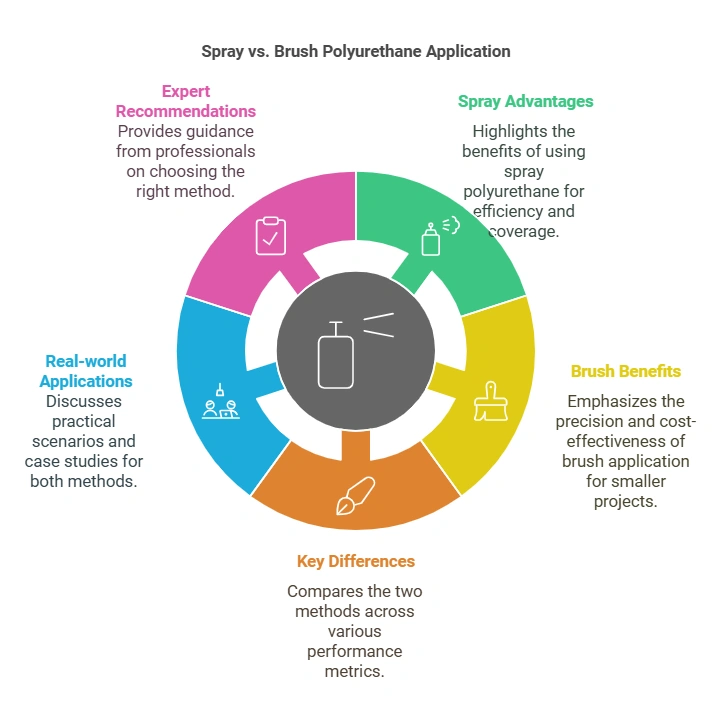
Key Differences Between Spray And Brush Applications
Choosing between spray and brush applications can affect your project. Both methods have unique advantages and drawbacks. Understanding these differences helps you make a better choice.
Application Time And Efficiency
Time is crucial in any project. Spray applications often save more time than brush applications.
- Spray Application: Covers large areas quickly.
- Brush Application: Ideal for detailed work but takes longer.
Here’s a quick comparison:
| Method | Time Required | Efficiency |
|---|---|---|
| Spray | Short | High |
| Brush | Long | Moderate |
Finish Quality And Appearance
Finish quality can greatly impact your project. Spray and brush applications produce different results.
- Spray Finish: Creates a smooth, even coat.
- Brush Finish: May show brush strokes, affecting appearance.
Consider these factors:
- Spray can reach tight spaces easily.
- Brush allows more control over details.
- Spray dries faster, reducing waiting time.
- Brush may require touch-ups for perfection.
Deciding between spray and brush applications depends on your project’s needs. Evaluate time, efficiency, and desired finish quality.
Advantages Of Spray Polyurethane
Spray polyurethane offers many benefits over traditional brushing methods. It provides a smooth finish and saves time. Let’s explore some key advantages.
Uniform Coverage And Finish
Spray polyurethane ensures an even coat on surfaces. This leads to a consistent finish without brush marks. Key benefits include:
- Even Application: Covers all angles and edges effectively.
- Fewer Touch-Ups: Reduces the need for additional coats.
- Quick Drying: Allows for faster project completion.
Uniform coverage enhances the overall look. A smooth finish makes surfaces more attractive. This method is ideal for large areas.
Speed And Efficiency In Large Projects
Spraying polyurethane speeds up the entire process. It is particularly useful for bigger jobs. Here are some reasons:
- Fast Application: Covers large surfaces quickly.
- Less Labor: Requires fewer people to apply.
- Reduced Cleanup: Fewer tools mean less time spent cleaning.
Efficiency saves time and labor costs. This makes spray polyurethane a popular choice. It helps complete projects faster without compromising quality.
Benefits Of Brush Application
Brush application offers unique advantages for various projects. It provides control, precision, and cost savings. Let’s explore these benefits in detail.
Precision In Application
Using a brush allows for precise application. This is crucial for detailed work. Here are some key points:
- Control: Brushing gives you full control over the amount applied.
- Detail: Ideal for intricate designs and corners.
- Surface Texture: Creates a smoother finish on flat surfaces.
Brushes can reach tight spaces. They can also help avoid overspray. This method is great for DIY enthusiasts.
Cost-effectiveness For Small Projects
Brush application proves to be cost-effective. It’s perfect for smaller tasks. Here’s why:
- Lower Material Costs: Brushes are cheaper than spray equipment.
- No Special Equipment: No need for compressors or spray guns.
- Less Waste: Brushes minimize excess product use.
This method reduces expenses for small jobs. It suits homeowners on a budget. Choosing brushes makes sense for simple tasks.
Comparative Analysis: Durability And Longevity
Understanding the durability and longevity of spray polyurethane versus brush application is essential. Both methods have unique strengths. This analysis reveals how they stand against wear and tear.
Resistance To Wear And Tear
Durability is vital for any coating. Spray polyurethane often outperforms brush applications in this area.
- Spray Polyurethane: Provides a thicker coat.
- Brush Application: May leave streaks and uneven layers.
Spray polyurethane forms a uniform film. It resists scratches and dents effectively. Brush coatings may chip or wear off faster.
| Feature | Spray Polyurethane | Brush Application |
|---|---|---|
| Thickness | Thicker and more even | Thinner and uneven |
| Scratch Resistance | High | Moderate |
| Chipping | Low | High |
Maintenance And Care Requirements
Maintenance is crucial for long-lasting finishes. Spray polyurethane requires less upkeep. Brush applications need more frequent touch-ups.
- Spray Polyurethane:
- Easy to clean.
- Resistant to stains.
- Long-lasting shine.
- Brush Application:
- More prone to stains.
- Requires periodic reapplication.
- May dull over time.
Choose wisely based on your needs. Spray polyurethane often wins in durability. Brush applications may be easier for small projects.
Environmental And Health Considerations
Understanding the environmental and health impacts of spray polyurethane versus brush application is essential. Both methods have unique factors to consider. Let’s explore the implications of using spray polyurethane.
Voc Emissions And Air Quality
Volatile Organic Compounds (VOCs) are harmful chemicals released during application. These compounds can impact both health and air quality.
| Application Method | VOCs Emitted | Impact on Air Quality |
|---|---|---|
| Spray Polyurethane | Higher VOC levels | Can degrade air quality |
| Brush Application | Lower VOC levels | Less impact on air quality |
Spray polyurethane emits more VOCs than brush application. This can lead to poor air quality, especially in enclosed spaces. Health risks may arise from prolonged exposure.
Safety Measures And Best Practices
- Use protective gear: gloves, goggles, and masks.
- Work in well-ventilated areas.
- Avoid direct skin contact.
- Store materials in a cool, dry place.
Before starting, read all safety labels. Ensure to follow local regulations on VOC emissions. Proper disposal of leftover materials is also important.
By taking these precautions, you can reduce health risks and protect the environment while using spray polyurethane.
“`
Real-world Applications And Case Studies
Understanding the differences between spray polyurethane and brush application is crucial. Both methods have unique strengths. Here, we explore real-world applications through professional insights and DIY projects.
Professional Insights
Experts favor spray polyurethane for many reasons:
- Speed: Spraying covers large areas quickly.
- Finish Quality: Spraying results in a smooth, even coat.
- Accessibility: Hard-to-reach areas are easier to spray.
Case studies reveal impressive results:
| Project Type | Application Method | Outcome |
|---|---|---|
| Furniture Restoration | Spray Polyurethane | Smooth, durable finish |
| Garage Flooring | Brush Application | Even, but less durable |
Professional painters report fewer drips and runs with spray. They emphasize the need for protective gear. Proper ventilation is vital. Safety should always come first.
Diy Projects: Successes And Challenges
Many DIY enthusiasts choose spray polyurethane for home projects. Common successes include:
- Refinishing kitchen cabinets.
- Sealing outdoor furniture.
- Creating custom wood signs.
Challenges often arise:
- Overspray: Can lead to unwanted mess.
- Learning Curve: Requires practice for best results.
Some DIYers prefer brush application for smaller projects. It allows for more control. Yet, the finish may not be as smooth. Each method has its place based on project size and experience.
Making The Right Choice For Your Project
Choosing between spray polyurethane and brush application can impact your project. Each method has unique advantages and challenges. Understanding these will help you decide what suits your needs best.
Factors To Consider
- Project Size: Larger areas benefit from spray application.
- Surface Type: Rough surfaces may require brushing for better adhesion.
- Finish Quality: Spray provides a smooth, even coat.
- Application Time: Spraying is faster than brushing.
- Cleanup: Spraying often requires more cleanup effort.
Expert Recommendations And Tips
Experts suggest evaluating your specific project needs. Here are some tips:
- For detailed work, use a brush.
- For large, flat areas, opt for spray.
- Practice spraying on scrap material first.
- Wear protective gear while spraying.
- Follow manufacturer instructions for best results.
| Method | Advantages | Disadvantages |
|---|---|---|
| Spray Polyurethane |
|
|
| Brush Polyurethane |
|
|
Frequently Asked Questions
Is Spray Polyurethane More Efficient Than Brushing?
Yes, spray polyurethane is generally more efficient. It allows for quicker application and better coverage. The fine mist ensures an even coat, reducing the chance of drips. This method saves time, making it ideal for larger projects.
Does Spray Polyurethane Provide A Smoother Finish?
Absolutely! Spray polyurethane often results in a smoother finish. The aerosol application minimizes brush strokes and imperfections. It creates a more professional appearance, enhancing the overall look of your project.
Can I Use Spray Polyurethane Indoors?
Yes, you can use spray polyurethane indoors. However, ensure proper ventilation to avoid inhaling fumes. Always wear a mask and protective gear. This will help keep the air quality safe while you work.
How Long Does Spray Polyurethane Take To Dry?
Spray polyurethane typically dries within 30 minutes to an hour. However, full curing may take up to 24 hours. Factors like temperature and humidity can affect drying times. Always check the manufacturer’s instructions for specific guidance.
Conclusion
Choosing between spray polyurethane and brush application depends on your specific needs. Spray offers a smooth finish and faster application, while brushing provides better control in detailed areas. Consider your project’s size and desired outcome. Both methods have their advantages, so select the one that fits your goals best for optimal results.