Is Teak A Hard Wood? Proven Essential Facts
Teak wood is definitively classified as a hardwood. It ranks highly on the Janka hardness scale, making it exceptionally dense, durable, and resistant to decay and pests. This essential fact is why teak is prized for everything from fine furniture to challenging outdoor applications.
Welcome to the workshop! Are you staring at a piece of beautiful teak, perhaps for an outdoor bench or a cutting board, and wondering if it can handle the job? A very common question beginners have is: is teak a hard wood? Getting this answer right means your project will last for decades. Trying to work with wood that isn’t suitable can lead to frustrating results.
Don’t worry! Today, we are breaking down exactly what makes teak a hardwood, what that means for your DIY plans, and how to spot its best qualities. We’ll make this simple, clear, and confidence-boosting. Let’s dive into the amazing world of teak together!
What Exactly is “Hardwood” in Woodworking?
When we talk about wood in construction or furniture making, you often hear terms like “hardwood” and “softwood.” These labels can sometimes confuse beginners because they don’t always refer to how physically hard the wood feels.
The Botanical Difference: Hardwood vs. Softwood
The main difference isn’t about how tough the wood is to scratch; it’s about the tree it came from.
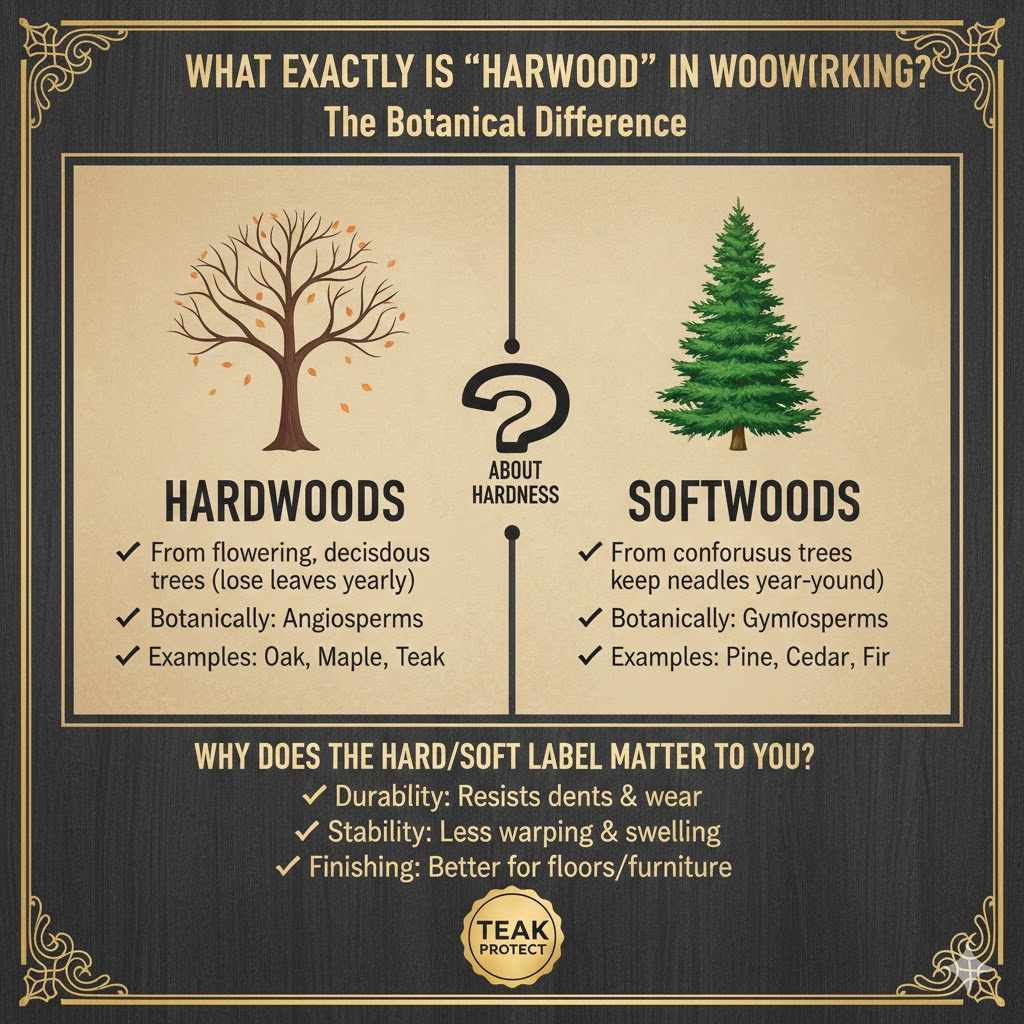
- Hardwoods: These come from flowering, deciduous trees (trees that lose their leaves yearly). Think of Oaks, Maples, Walnuts, and, yes, Teak. Botanically, they are angiosperms.
- Softwoods: These come from coniferous (cone-bearing) trees that usually keep their needles year-round. Pine, Cedar, and Fir are classic examples. Botanically, they are gymnosperms.
This botanical distinction is the true definition. However, for practical DIY purposes, we often link “hardwood” with superior strength and density, which leads us perfectly to teak.
Why Does the Hard/Soft Label Matter to You?
Knowing the category helps you choose the right wood for the job.
- Durability: Hardwoods generally offer better resistance to dents and wear over time.
- Stability: They often warp or swell less when exposed to moisture changes.
- Finishing: Certain applications (like wood floors or dense furniture tops) require the structure of a hardwood.
Because teak falls squarely into the hardwood category, you immediately know it possesses inherent structural benefits.
Teak: The Proven Hardwood Facts
So, if someone asks, “Is teak a hard wood?” your answer is a resounding yes. But to truly understand why you should use it (or how much effort you might need to work it), let’s look at the numbers and proven characteristics.
Fact 1: Janka Hardness Scale Score
The Janka Hardness Test is the gold standard for measuring wood resistance to denting and wear. A steel ball is forced halfway into a piece of wood; the force required (measured in pounds-force or lbf) determines the score.
A higher Janka score means the wood is harder. Here is where teak stacks up against some common favorites:
| Wood Type | Janka Hardness (lbf) | Classification Note |
|---|---|---|
| Teak (Genuine Tectona grandis) | 1070 | A very respectable mid-to-high-range hardwood. |
| Red Oak | 1290 | A standard benchmark hardwood. |
| Maple (Hard Maple) | 1450 | Considered a very hard furniture wood. |
| Pine (Yellow) | 690 | A common, softer utility wood. |
As you can see, teak (at 1070 lbf) sits comfortably above many common utility woods, classifying it clearly as a durable hardwood suitable for robust furniture projects. It’s slightly softer than Red Oak, which explains why it’s sometimes easier to work than rock-hard oak.
Fact 2: Density and Weight
Hardwoods are usually dense. Density is just a fancy way of saying there is more wood mass packed into the same space, making the material heavier and stronger.
Teak is known for being dense. This density is key to its most famous quality: natural water and rot resistance. The oils trapped inside the dense grain act like a natural sealant. If you’ve ever noticed how heavy a piece of teak patio furniture feels compared to a pine equivalent, that weight is evidence of its dense, hard structure.
Fact 3: Incredible Natural Oils and Durability
This is where teak truly shines as a champion hardwood. Teak contains high levels of natural oils (resins) and silica.
- Oil Content: These natural oils repel water. This makes the wood highly resistant to rotting, fungal decay, and warping—qualities you typically have to add to softer woods with stains and sealers.
- Pest Resistance: Termites and wood-boring insects generally avoid teak because of these oils.
For outdoor projects—like building a boat dock or a stunning garden bench—these features make teak an essential choice. For more information on how wood density affects exterior performance, you can review material science insights often cited by institutions like those dealing with sustainable building standards.
Teak’s Essential Properties: Beyond Just Being Hard
Understanding that teak is a hardwood opens the door to appreciating its specific benefits. It’s not just hard; it’s functionally superior in several areas crucial for DIY success.
Durability in Outdoor Settings
If you want your project to live outside without constant maintenance, teak is your go-to hardwood.
The Rot Resistance Advantage: Unlike many hardwoods (which might rot if left constantly wet) or softwoods (which deteriorate quickly outside), teak maintains its structural integrity outdoors. It develops a silvery-gray patina over time if left untreated, which is natural aging, not decay.
Dimensional Stability
Stability means the wood doesn’t expand or contract drastically when humidity changes. When you build a door or a cabinet face from wood that moves too much, you get sticky drawers or cracked finishes. Teak is famous for its excellent stability, making it a favored wood by shipbuilders for centuries! This is a hallmark of high-quality hardwoods.
Working with Teak: A Beginner’s Insight
While teak is a hard wood, it is surprisingly manageable compared to denser tropical hardwoods like Ipe. However, working with it still requires a few special considerations, mostly due to those wonderful natural oils.
Be Mindful of Tool Buildup: Those natural oils that make teak waterproof are also great at gumming up saw blades and sandpaper. This is critical knowledge for beginners!
Tips for Working with Teak
- Sharp Blades are Non-Negotiable: Dull blades will tear the wood and require excessive force. Since teak is hard, dull blades can also be a safety hazard. Always use high-quality, sharp carbide-tipped blades.
- Use Appropriate Adhesives: Standard wood glue might struggle to bond properly due to the surface oils. For structural joints, you should wipe the joint surfaces with acetone just before gluing to remove surface oils. Then, use a high-quality exterior-rated glue, like an epoxy or specific polyurethane adhesive.
- Sanding Progression: You might find you need to progress through sandpaper grits slightly faster than you expect because the oils can “load up” the paper. Work systematically from coarse to fine grit.
- Avoid Filling Nail Holes: Because the wood expands and contracts very little, nails and screws hold incredibly well, often requiring no pre-drilled holes if you use the right pilot size.
This balanced nature—hard and durable, yet slightly forgiving in processing compared to the hardest exotic woods—is what makes teak an accessible high-end choice for the home craftsman.
Comparing Teak to Other Hardwoods
To cement your understanding of where teak fits in the hierarchy of wood hardness, let’s compare it to other common building materials you might encounter in a lumber yard.
Hardwood vs. Mid-Range Utility Woods
It is helpful to see teak’s performance benchmarked against what you probably already use for simple indoor projects.
| Wood | Hardness Level | Best For Beginners? | Key Feature |
|---|---|---|---|
| Teak | High-Mid Hardwood | Yes, with proper tools. | Extreme natural weather resistance. |
| Poplar | Lower Hardwood | Excellent (Softest Hardwood) | Paints very well; readily available. |
| Cherry | Mid Hardwood | Good | Beautiful natural color when aged. |
| Hickory | Very High Hardwood | Challenging (Very Dense) | Extremely high shock resistance. |
As you can see, teak sits in a sweet spot. It offers the weather protection and longevity of true exotic hardwoods but is often slightly easier to source and dimension (cut and shape) than the ultra-hard choices. For beginners looking to make a durable outdoor piece, understanding that teak is a strong hardwood that still respects your handsaws and orbital sanders is a huge plus!
The Economic Factor: Why Hardwood Costs More
When you shop for wood, you’ll notice that hardwoods, especially Teak, carry a higher price tag than softwoods like Pine or Fir. Your initial thought might be: “Is teak a hard wood, and is that why it’s so expensive?” Yes, in part.
Factors Driving Hardwood Costs (and Teak’s Price)
Several factors converge to set the price point for high-quality hardwoods like teak:
- Growth Time: Teak trees take a very long time—often 20 to 40 years—to reach maturity large enough for harvesting premium lumber. This slow growth results in denser wood (which we established is a characteristic of a hardwood).
- Demand: Because teak offers unparalleled durability for marine use, high-end exterior furniture, and flooring, demand stays consistently high worldwide.
- Sustainability Concerns (For Genuine Teak): Sourcing genuine Tectona grandis sustainably adds tracking and certification costs. Be wary of non-certified sources, which may harm resources. Always look for suppliers who practice responsible forestry. Responsible forest management, often overseen by national agencies or certifications, ensures long-term supply.
- Milling Difficulty: As mentioned, processing dense hardwood requires more powerful machinery and consumes saw blades faster, increasing the mill’s operating cost.
Understanding the intrinsic value linked to its hardness and durability helps justify the investment when planning your next serious DIY piece. You are paying for guaranteed longevity.
Debunking the Myth: Does “Hard” Always Mean “Better”?
While our main goal is confirming that teak is a hardwood, it’s useful to know that hardness isn’t the only factor. A common beginner mistake is assuming the hardest wood is always the best choice.
When Softer Wood Might Be Smarter
Sometimes, the properties of a slightly softer wood are actually superior for a specific project:
- Ease of Shaping: If you plan on making intricate carvings or delicate moldings, softer woods (or softer hardwoods like Poplar) allow for easier detailing without excessive chipping.
- Cost: For interior shelving or basic shop storage, a more affordable softwood offers great utility without needing teak’s massive rot resistance.
- Finishing Reception: Some softer woods accept stains or paints more readily and evenly than dense, oily hardwoods like teak.
The takeaway: Teak is an excellent hardwood when you need ultimate strength, dimensional stability, and outdoor/wet-area resilience. It’s an investment in longevity!
Maintenance Considerations for Your Hardwood Teak Project
Once you know teak is a powerful hardwood, the next question is usually, “How do I care for it?” Even the toughest wood benefits from some basic attention.
To Seal or Not to Seal: The Teak Dilemma
Because teak is oily, traditional sealers and stains don’t penetrate well and often fail quickly, leading to frustration.
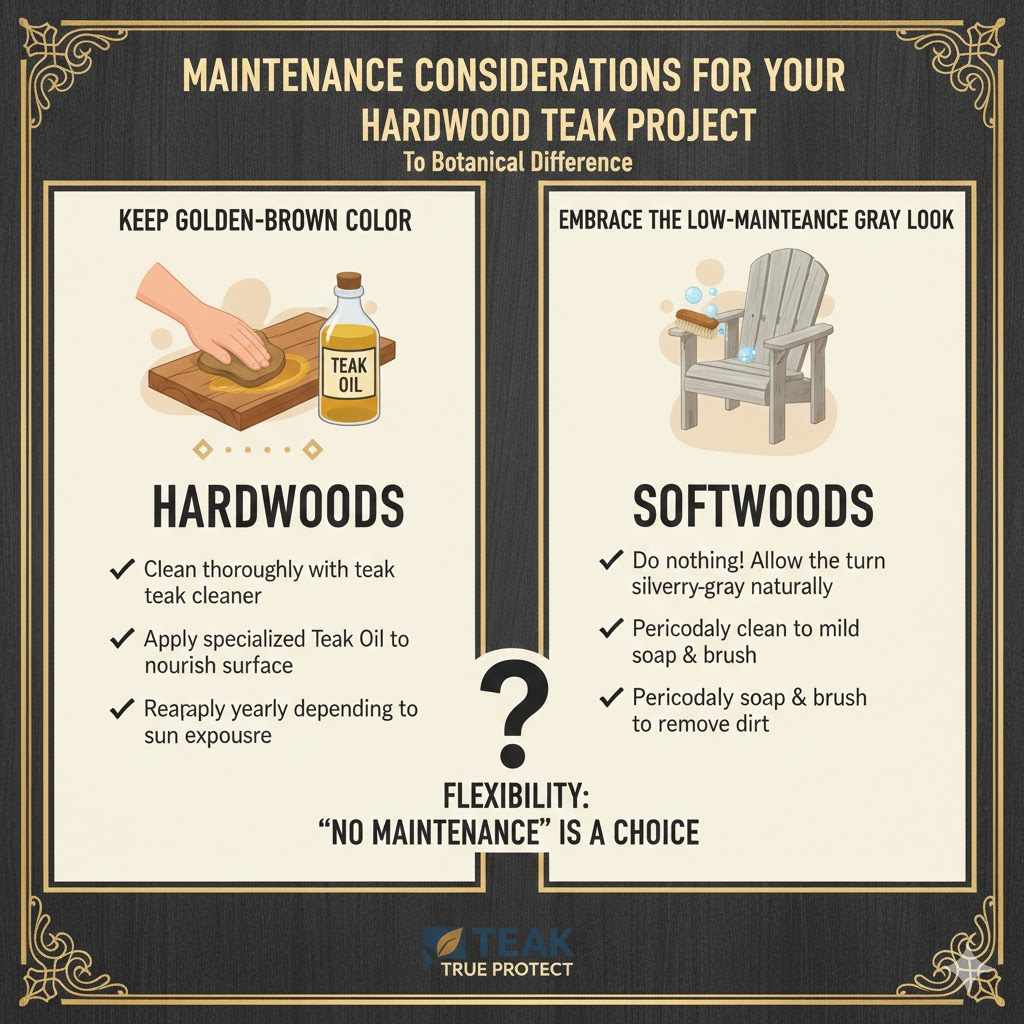
If you want to keep the golden-brown color:
- Clean the surface thoroughly (a specialized teak cleaner works best).
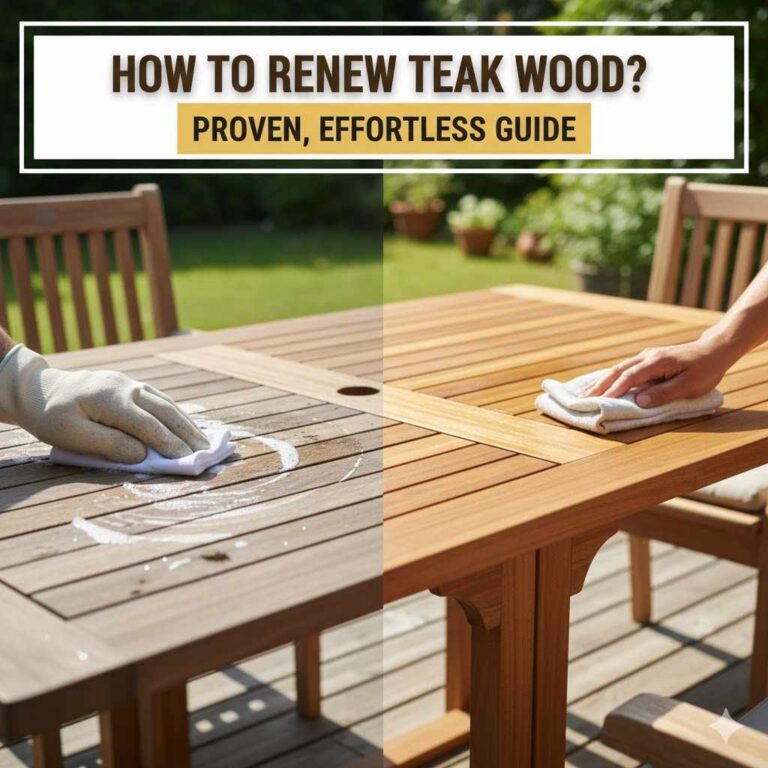
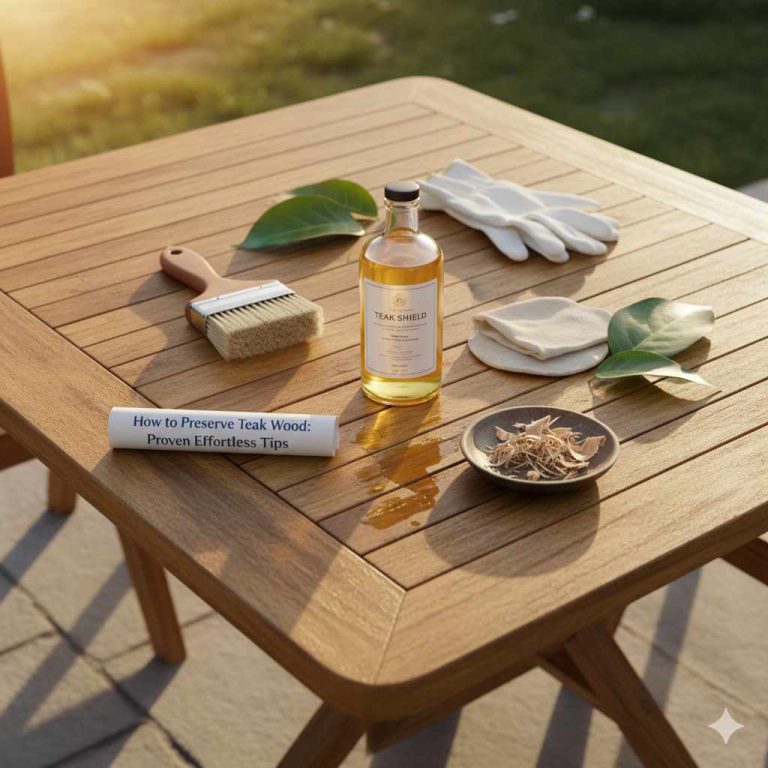
- Apply a specialized Teak Oil finish. This isn’t for waterproofing (teak is already waterproof); it’s designed to nourish the surface and maintain that fresh golden color. You might need to reapply yearly depending on sun exposure.
If you prefer the low-maintenance gray look:
- Do nothing! Allow the sun and rain to turn the wood silvery-gray naturally.
- Periodically, use a mild cleaner and a stiff brush to remove surface dirt and grime, rinsing well.
This flexibility—where “no maintenance” is a valid, durable option—is rare among construction materials, cementing teak’s standing as a premier, albeit hard, material.
Frequently Asked Questions (FAQ) About Teak Hardwood
Q1: If teak is a hardwood, is it difficult to cut with standard hand tools?
A: While teak is a hardwood, it’s generally workable. The main challenge isn’t the sheer force required but managing the natural oils that clog blades. Ensure your saw blade is very sharp to get clean cuts.
Q2: Can I use the same drill bits on teak as I do on Oak?
A: Yes, generally you can, but it is crucial to pre-drill pilot holes for screws and nails in teak. Use a pilot hole that is slightly smaller than the fastener’s core diameter. This prevents splitting in the dense grain.
Q3: Does Teak rot if I use it in a very wet area, even though it’s a hardwood?
A: Genuine Teak (Tectona grandis) is exceptionally resistant to rot, fungal decay, and water damage due to its natural oil content. It is considered one of the best woods globally for constant contact with water, like in boats or shower stalls.
Q4: Is reclaimed teak just as hard as new teak?
A: Yes. Since the hardness and durability come from the wood’s cellular structure and oil content, reclaimed teak, even if it’s 50 years old, retains the same excellent density and strength qualities of a mature hardwood.
Q5: Which is harder: Teak or Brazilian Walnut (Ipe)?
A: Ipe (Brazilian Walnut) is significantly harder than Teak. Ipe typically scores over 3500 lbf on the Janka scale, making it extremely dense and notoriously difficult to work, whereas Teak sits around 1070 lbf.
Q6: Why does my teak look dull and why is it hard to glue?
A: This is due to the natural silica and high oil content of this specific hardwood. Before gluing, always wipe the surfaces lightly with acetone or mineral spirits to temporarily remove the surface oil layer. This helps the glue form a proper bond.
Conclusion: Solidifying Your Knowledge About Teak
We’ve explored the heart of the matter today. You now have a clear, well-researched answer: Teak is absolutely a hardwood. This isn’t just a technicality; it’s the core reason why this timber is globally famous for its beauty, resilience, and longevity, particularly when facing the challenges of the outdoors.
You’ve learned that its hardness is measured practically by the Janka scale and functionally by its incredible natural oils and density. Whether you’re building a simple potting bench or investing in permanent patio furniture, knowing you are working with a premium, durable hardwood removes uncertainty.
Take this knowledge into your next project with confidence. Treat your sharp tools well, respect the natural oils when finishing or gluing, and you will create something beautiful that stands the test of time. Woodworking is rewarding, and choosing the right material is half the battle won. Happy crafting!