Lie-Nielsen vs Veritas Premium Hand Plane Showdown
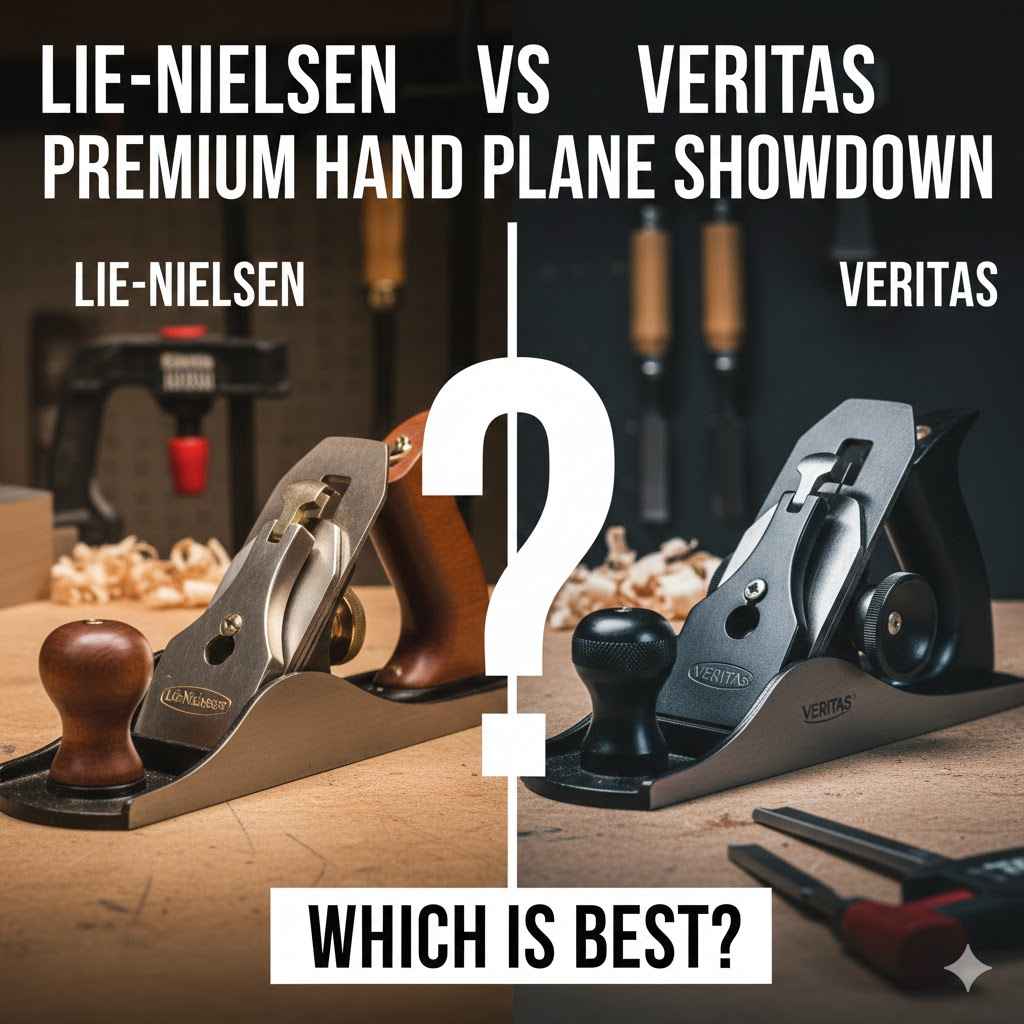
Choosing the right hand plane can feel tricky, especially when you’re just starting out. The Lie-Nielsen vs Veritas: Premium Hand Plane Showdown is a big topic for woodworkers. Many wonder which one is best for them.
It’s easy to get lost in all the options and technical talk. But don’t worry, we’ll break it down simply. Let’s look at what makes these planes special and help you figure out your perfect match.
Lie-Nielsen Hand Planes Exploration
Lie-Nielsen tools are known for their beautiful design and excellent performance. They draw inspiration from classic tools but use modern materials and manufacturing. This section explores what makes a Lie-Nielsen plane stand out.
We’ll look at their construction, materials, and how they feel in the hand. You’ll learn about the craftsmanship that goes into each tool.
Materials and Craftsmanship
Lie-Nielsen uses high-quality cast iron for their plane bodies. This iron is ductile, meaning it can bend a bit without breaking. It’s also very stable, which helps the plane keep its shape.
The machining is precise, ensuring parts fit together perfectly.
-
High-Quality Ductile Iron Bodies
A ductile iron body is strong and can absorb vibrations well. This helps create a smoother planing action. It means the plane won’t chatter or skip on the wood. The weight of the iron also adds to the plane’s stability and feel. This is a key reason why many woodworkers love the heft of these planes. -
Bronze Accents and Hardware
Many Lie-Nielsen planes feature bronze for their lever caps, handles, and other small parts. Bronze is a tough metal that resists wear and corrosion. It also adds a touch of classic elegance. The smooth feel of bronze against your hand is a pleasure during long work sessions. It shows attention to detail. -
Precision Machining
Every part of a Lie-Nielsen plane is machined with great accuracy. This ensures that the sole is perfectly flat and the mouth opens and closes precisely. Good machining means the tool works as intended right out of the box. It reduces the need for extensive setup.
Performance and User Experience
What you feel when using a tool matters a lot. Lie-Nielsen planes are designed to feel good and work efficiently. They offer a very satisfying user experience for many woodworkers.
-
Ergonomics and Comfort
The shapes of Lie-Nielsen planes are often inspired by Stanley Bedrock designs. They are designed to fit comfortably in the hand. The wooden handles are smooth and well-contoured. This helps reduce hand fatigue during extended use. A comfortable plane allows for more control and precision. -
Cutting Performance
With a sharp blade and a well-adjusted mouth, Lie-Nielsen planes excel at shaving wood. They can produce very thin, consistent shavings. This is ideal for tasks like smoothing, chamfering, and fitting joints. The mass of the plane helps it glide over the wood. -
Aesthetic Appeal
These planes are not just tools; they are also works of art. The clean lines, polished surfaces, and bronze details make them beautiful to look at. Many woodworkers take pride in displaying their Lie-Nielsen tools. This visual appeal adds to the overall enjoyment of using them.
Example: Flattening a Workbench Top
Imagine you need to flatten a large workbench top that has become uneven. Using a Lie-Nielsen No. 6 Fore Plane can make this job much easier.
- The plane’s substantial weight helps it cut consistently across the surface.
- Its long sole provides good stability, allowing for long, smooth strokes.
- The adjustable mouth can be set to take thin shavings, preventing gouges.
- You can work for longer periods without your hands getting tired due to the comfortable grip.
This makes a challenging task more manageable and results in a much flatter surface.
Veritas Hand Planes Deep Dive
Veritas, made by Lee Valley Tools, offers a different approach to hand planes. They often incorporate innovative features and aim for excellent value. This part looks at what makes Veritas planes a strong contender.
We will cover their design philosophy, unique aspects, and how they perform.
Innovative Design Features
Veritas is known for its clever design solutions. They often improve on traditional plane designs with modern twists. This can make them very user-friendly.
-
Adjustable Frog and Mouth
Many Veritas planes have a mechanism that allows you to adjust the frog (the part that holds the blade) while the plane is in use. This lets you change the blade’s pitch and the mouth opening without removing the blade. This is a huge convenience for different types of wood and tasks. -
Blade Alignment Systems
Some Veritas planes include systems that help you keep the blade perfectly square to the sole. This ensures that your plane cuts straight and true. It’s a valuable feature, especially for beginners, as it makes setting up the blade much simpler. -
User-Friendly Adjustments
Veritas planes often have very precise and easy-to-use adjustment knobs for the blade depth and lateral position. These knobs are typically well-marked and turn smoothly. This allows for fine-tuning the cut with minimal effort.
Materials and Construction
Veritas planes are also built with quality materials. They aim to provide durability and good performance.
-
Cast Iron Bodies
Like Lie-Nielsen, Veritas uses high-quality cast iron for its plane bodies. This provides a solid, stable base for cutting. The iron is often stress-relieved to prevent warping over time. -
Austenitic Ductile Iron
Some Veritas planes use a special type of ductile iron called austenitic. This iron has improved corrosion resistance and is less prone to rust. This can be a benefit in humid environments. -
Well-Machined Components
Veritas parts are machined to high standards. The soles are ground flat and the bodies are well-finished. While they might not have the same level of hand-finishing as some premium brands, their machining is very accurate.
Performance and Value
Veritas planes offer a great balance of performance and price. They provide excellent functionality without the highest price tags.
-
Versatility
The innovative features on Veritas planes often make them very versatile. For example, a plane with an adjustable mouth can handle both softwoods and hardwoods effectively. This means one plane can do the work of several. -
Cutting Accuracy
With their precise adjustments and alignment systems, Veritas planes can achieve very accurate cuts. They can produce thin shavings for smooth finishes and precise dimensioning. The sharpness of the blades is also typically very good. -
Excellent Value Proposition
Veritas planes are often seen as offering superior value for money. You get high-quality construction and clever features at a price that is more accessible than some ultra-premium options. This makes them a popular choice for many woodworkers.
Sample Scenario: Chamfering Table Legs
Imagine you’re building a set of table legs and need to add a consistent chamfer to each one. A Veritas Router Plane can be perfect for this.
- You can set the depth of cut very precisely using its adjustment knob.
- The adjustable fence ensures the chamfer is the same width on every leg.
- Its compact size makes it easy to maneuver around the edges of the legs.
- The blade alignment feature helps ensure the chamfer is cut at a perfect 45-degree angle.
This tool makes repetitive tasks like this quick and accurate.
Lie-Nielsen vs Veritas: Premium Hand Plane Showdown Comparison
When comparing Lie-Nielsen and Veritas hand planes, many factors come into play. This is the core of the Lie-Nielsen vs Veritas: Premium Hand Plane Showdown. We will look at what sets them apart in design, feel, and what you get for your money.
This comparison will help you decide which might be the best fit for your workshop.
Design Philosophy
The underlying design philosophies of Lie-Nielsen and Veritas are quite different, even though both aim for quality.
- Lie-Nielsen: Focuses on refined, classic designs. They take traditional tools, often from the golden age of hand tool woodworking, and perfect them with modern materials and manufacturing. The emphasis is on timeless beauty, feel, and proven performance. It’s about creating heirloom-quality tools that feel traditional yet perform exceptionally.
- Veritas: Tends to be more innovation-driven. While they respect traditional designs, they aren’t afraid to add modern features and clever solutions to improve usability and performance. They aim to solve common woodworking problems with smart engineering. This often results in planes that are highly functional and adaptable.
Materials and Build Quality
Both brands use excellent materials, but there are subtle differences in their execution.
- Lie-Nielsen: Known for its high-grade ductile iron bodies and often uses bronze for accents and hardware. The machining is incredibly precise, with a very fine finish. The attention to detail in the fit and finish is often considered top-tier, contributing to their premium feel and higher price.
- Veritas: Also uses high-quality cast iron, sometimes with enhanced corrosion resistance. Their machining is very accurate and functional. While the finish might not always be as polished as Lie-Nielsen, the precision ensures excellent performance. They offer robust construction that is built to last.
User Experience and Feel
The way a tool feels in your hands is a significant part of its appeal.
- Lie-Nielsen: Often described as having a “perfect” feel. The weight, balance, and ergonomics are designed for comfort and control. The smooth, polished surfaces and classic shapes make them a joy to use. Many users report a deeply satisfying connection to their work when using these planes.
- Veritas: Provides a very functional and comfortable user experience. The ergonomic handles and well-designed adjustment mechanisms make them easy to use. The innovative features often contribute to a smoother workflow. While they might feel more modern, they are still very pleasant to handle for extended periods.
Price and Value
Price is a major factor for most woodworkers when considering these premium brands.
- Lie-Nielsen: These planes are generally priced at the higher end of the market. You are paying for the exquisite craftsmanship, premium materials, and brand prestige. They are an investment for serious woodworkers or collectors who value the absolute best in traditional tool design and execution.
- Veritas: Offers exceptional value for the quality and features provided. While not inexpensive, they are typically more affordable than Lie-Nielsen planes. Veritas planes are a fantastic option for woodworkers who want high performance and innovative features without a prohibitive cost. They deliver excellent bang for your buck.
Comparison Table: Lie-Nielsen vs Veritas
| Feature | Lie-Nielsen | Veritas |
|---|---|---|
| Design Focus | Refined classic designs, heirloom quality | Innovative features, user-centric improvements |
| Primary Body Material | High-grade ductile iron | High-grade ductile iron (often with enhanced properties) |
| Accents | Often bronze | Typically cast iron, sometimes other metals |
| Machining & Finish | Exceptional precision, highly polished | Very precise, functional finish |
| User Experience | Superb feel, balance, and control | Functional, comfortable, with innovative aids |
| Innovation Level | Subtle improvements on classic forms | Significant proprietary features and mechanisms |
| Price Point | High premium | Mid-to-high premium, excellent value |
| Target User | Purists, collectors, those seeking ultimate refinement | Woodworkers seeking performance, innovation, and value |
Case Study: A Beginner’s Choice
Sarah, a new woodworker, wanted to buy her first quality smoothing plane. She was overwhelmed by the Lie-Nielsen vs Veritas: Premium Hand Plane Showdown discussions online. She felt Lie-Nielsen planes were beautiful but very expensive.
Veritas planes, however, offered many of the features she heard were important for beginners, like easy blade adjustment and good alignment, at a price she could manage. She chose a Veritas plane and found it easy to set up and use, helping her quickly learn the skills of planing. This allowed her to gain confidence and produce good results without breaking the bank.
Choosing Your Premium Hand Plane
Deciding between Lie-Nielsen and Veritas ultimately comes down to your personal preferences, budget, and woodworking goals. Both brands produce outstanding hand planes that will serve you well for years. This section will help guide you toward making the right choice for your workshop.
We’ll consider factors like your skill level, the types of projects you undertake, and how much you value certain aspects of tool design.
Skill Level Considerations
Your experience with hand tools can influence which plane is a better starting point.
- For Beginners: Veritas planes often shine here. Their built-in alignment systems and easy-to-use adjustments can make learning to plane much less frustrating. A plane that is forgiving and simple to set up allows you to focus on developing your technique rather than fighting with your tool. This helps build confidence early on.
- For Experienced Woodworkers: Both brands offer excellent options. Experienced users might appreciate the nuanced feel and refined performance of Lie-Nielsen planes. They may also seek out Veritas’s specialized designs for specific tasks or their innovative features that can improve efficiency. The choice often depends on personal taste and the desire for incremental improvements.
Project Types and Needs
The kind of work you do in your shop is a key factor.
- Fine Furniture Making: If you focus on highly precise joinery and smooth surfaces, the exceptional finish and control of Lie-Nielsen planes can be very appealing. Their ability to produce paper-thin shavings is ideal for these demanding tasks. However, Veritas planes with fine adjustment capabilities can also achieve similar results.
- General Carpentry or Restoration: For more general woodworking, restoration projects, or if you work with a wide variety of woods, Veritas planes often offer greater versatility. Features like adjustable mouths and frogs can make them adaptable to different situations, from softwood to very hard timber.
- Specialized Tasks: Both brands offer specialized planes. Veritas, in particular, has developed unique tools like their Router Plane or Scrapers that address specific challenges effectively. Lie-Nielsen offers classic versions of many specialized planes that are highly regarded.
Budget and Long-Term Value
Your budget will play a significant role, but consider the long-term value.
- Investment vs. Value: Lie-Nielsen planes are a significant investment, representing a commitment to premium tools. They hold their value extremely well and can be considered an heirloom. Veritas planes offer tremendous value for their price, providing high performance and excellent features that make them a wise purchase for most woodworkers.
- Cost of Ownership: While the initial cost differs, both brands are built to last. A well-cared-for hand plane from either manufacturer can last a lifetime, making them economical in the long run compared to disposable tools. Consider the total cost of ownership over many years of use.
Recommendations
If you are new to hand planing and on a tighter budget, a Veritas plane is an excellent starting point. Look at their bench planes, like the Veritas Bevel Up Smoothing Plane or the Veritas Custom 5. They offer great performance and learning features.
If you have some experience, a larger budget, and appreciate traditional craftsmanship, a Lie-Nielsen plane might be your dream tool. Their classic bench planes, such as the No. 4 or No.
5, are superb. Many woodworkers start with one, then add others over time.
Frequently Asked Questions
Question: What makes Lie-Nielsen and Veritas planes so expensive?
Answer: These planes are expensive because they are made from high-quality materials like ductile iron and bronze. They are also meticulously machined and often hand-finished to very high tolerances. The craftsmanship, precision, and durability contribute to their premium price tag.
Question: Can a beginner easily use a Lie-Nielsen plane?
Answer: Yes, a beginner can use a Lie-Nielsen plane, but it might have a steeper learning curve than some Veritas models. Their classic design is proven, but they may require more attention to setup and adjustment compared to planes with more modern user-friendly features.
Question: Which brand is better for hardwoods?
Answer: Both brands produce planes that can handle hardwoods well. Veritas planes often have features like adjustable mouths that are very useful for different types of wood, including hard varieties. Lie-Nielsen planes, with their precise chip-breaking capabilities and sharp blades, also perform admirably on hardwoods.
Question: Do Veritas planes hold their value as well as Lie-Nielsen planes?
Answer: Lie-Nielsen planes are generally known to hold their value exceptionally well, almost like collector’s items. Veritas planes also hold their value very well due to their quality and popularity, but Lie-Nielsen often commands a slightly higher resale price.
Question: Is it worth it to own both Lie-Nielsen and Veritas planes?
Answer: Many woodworkers find it beneficial to own planes from both brands. You can appreciate the classic beauty and feel of Lie-Nielsen while benefiting from the innovative features and versatility of Veritas for specific tasks. Having a mix can provide the best of both worlds.
Conclusion
The Lie-Nielsen vs Veritas: Premium Hand Plane Showdown reveals two outstanding brands. Lie-Nielsen offers refined classics with exquisite craftsmanship and feel. Veritas provides innovative designs with excellent performance and value.
Choosing depends on your budget, skill, and what you seek in a tool. Both will elevate your woodworking.