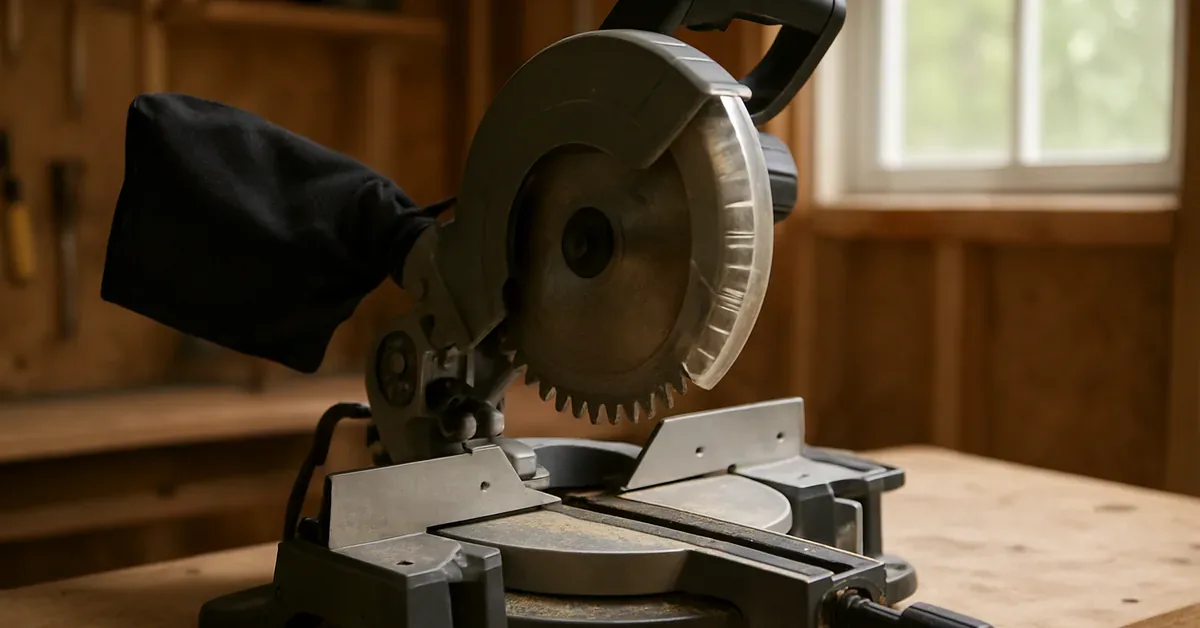
Makita Miter Saw Dust Collection: Bag vs Shop Vac
A Makita miter saw’s stock dust bag catches roughly 60-70% of sawdust when empty — but that rate drops fast as the bag fills, and it only works if the bag is attached to the upper dust port. Skip the shop vac and you’ll still sweep. This guide covers real bag-vs-vacuum collection rates, which port to use, matching hose adapter sizes, and fixes for a bag that stops pulling dust.
How Much Dust Does the Stock Bag Actually Catch?
Best Miter Saw Dust Collection Upgrade
CRAFTSMAN CMXEVBE17250 2.5 Gallon Wet/Dry Shop Vacuum
A compact shop vac sized to live next to a miter saw station instead of taking up a corner of the garage.
- Best for: replacing a stock dust bag with real suction on the upper port
- Why we picked it: small footprint, known brand, enough capacity for a miter saw station without being bulky
- Main drawback: 2.5-gallon tank needs emptying often on long trim runs
Compare more dust collection options
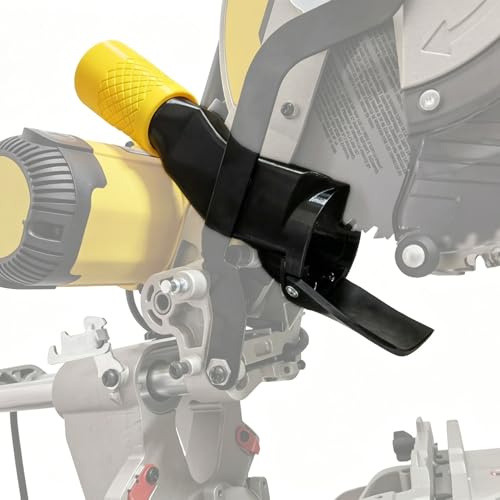
 Option 1 TPU Flexible Miter Saw Vacuum Adapter
|
 Option 2 Universal 2-1/2″ Shop Vac Tool Adapter
|
 Option 3 DEWALT DXV04T 4 Gallon Wet/Dry Shop Vac
|
As an Amazon Associate we earn from qualifying purchases.
An empty Makita dust bag catches roughly 60-70% of the sawdust a cut produces. That number isn’t fixed — it drops noticeably once the bag is half full, because static buildup and reduced airflow through a packed bag cut suction well before the bag looks “full.”
The bag only captures what passes through the saw’s internal dust channel, and the soft rubber flaps at that opening constrict the passage — part of why bag-only collection plateaus well short of 100%, no matter how often you empty it.
📊 An empty miter saw dust bag captures roughly 60-70% of sawdust; that rate falls once the bag is half full. — Source: woodworking forum consensus (Sawmill Creek, WoodnBits) and shop dust-collection write-ups, 2026
Upper Port or Lower Port — Which One Actually Connects to a Vacuum?
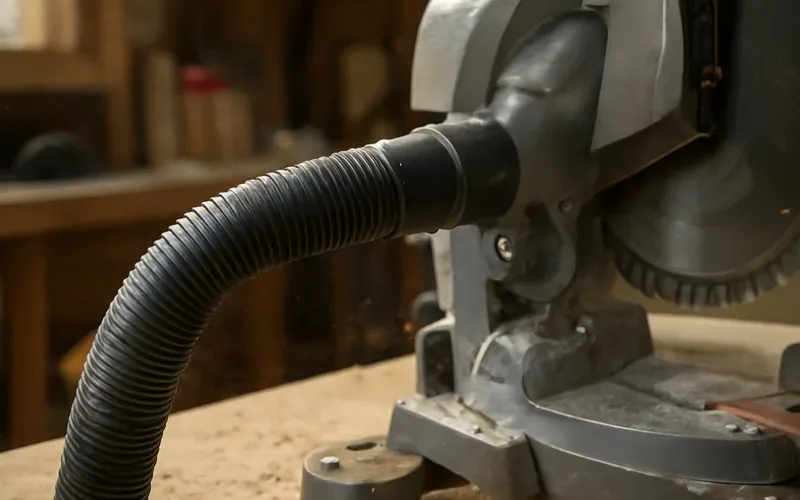
On Makita compound miter saws, a vacuum hose only connects to the upper dust port — the lower port feeds the bag and isn’t a vacuum connection point on its own. This trips up a lot of first-time shop vac users who hook up the wrong port and wonder why collection barely improved.
According to Makita’s own product documentation (referenced in Sawmill Creek’s LS1019L dust collection thread), the factory fix is a dedicated fitting: the Quick-Connect Adapter (P-70378) on older manuals, replaced by the Front Cuff (424379-9) on newer ones. Both are functionally the same part — a male-ended cuff that seats into the upper manifold, which draws from the lower chute at the same time. That’s the piece that lets one shop vac hose pull dust from both chutes instead of forcing a choice between them.
What Hose Size Fits a Makita Miter Saw Dust Port?
Makita’s stock dust port is roughly 1-1/8″ outer diameter — smaller than a standard shop vac hose — so a direct fit almost never works without an adapter. Match your hose to the saw with one of these three common adapter sizes.
| Shop Vac Hose Size | Fits Without Modification? | Best For |
|---|---|---|
| 1-1/4″ | No — needs a step-down adapter | Compact/cordless shop vacs |
| 1-7/8″ | No — needs a multi-size adapter | Mid-size wet/dry vacs (most common) |
| 2-1/2″ | No — needs a step-up adapter | Full-size shop vacs, dedicated dust extractors |
A universal multi-size adapter (see below) is the simplest fix — most are stepped or cut-to-size so one part covers all three hose diameters instead of buying a separate fitting for each vacuum you own. This applies whether you’re running a compact 10″ saw or one of the larger picks in our compound sliding miter saw reviews — the port sizing logic is the same across brands.
Dust Bag vs Shop Vac vs Dust Collector: Real Collection Rates Compared
The stock bag is the least effective option and the dedicated dust collector setup is the most effective — but the jump from “bag alone” to “shop vac on the upper port” is the single biggest upgrade most home shops will ever make to a miter saw station.
| Setup | Typical Collection Rate | Best For |
|---|---|---|
| Stock dust bag alone | ~60-70% (drops as bag fills) | Occasional cuts, quick jobs |
| Shop vac on upper port | ~85-90% | Most home and hobby shops |
| Dust collector + shroud/enclosure | 90%+ | Dedicated miter saw stations, daily use |
An enclosed shroud or wooden box around the saw — tied into a dust collector through a 4″ duct — is a bigger project than most readers need, but it’s the only setup that gets close to fully clean without also catching dust that a bag or open hose connection misses around the blade guard. If you’d rather size a dedicated unit than run a shop vac full-time, our dust collector for home shop buying guide walks through CFM and static pressure basics.
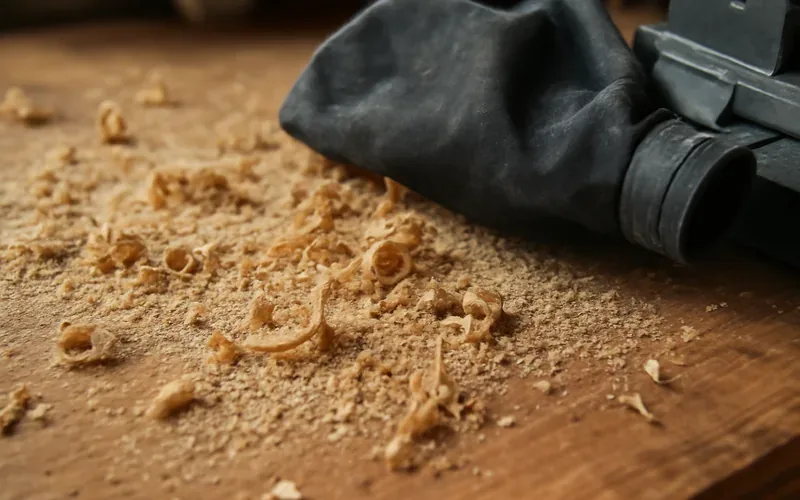
Why the Dust Bag Stops Collecting Well (And How to Fix It)
- Empty the bag at 1/3 full, not when it looks full: collection rate falls well before the bag visually appears packed, since static and airflow resistance build up early.
- Check the rubber flaps at the dust channel opening: these soft flaps constrict the passage by design — if they’re torn, warped, or clogged with compacted dust, clear or replace them.
- Confirm the bag is seated on the upper port, not just resting against it: a loose or crooked seal leaks suction before it ever reaches the bag.
- Switch to a shop vac on the upper port for real gains: this single change typically moves collection from the 60-70% range into the mid-to-high 80s.
- Clean the port and blade guard channel after every session: compacted dust inside the chute narrows airflow over time even with a vacuum attached.
Does the Miter Saw Model Change Dust Collection? LS1019L vs LS1219L vs Cordless
The 10″ LS1019L and 12″ LS1219L both use dual dust ports (upper and lower) and accept the same Front Cuff (424379-9) adapter, so the collection improvements above apply to both. Makita’s 40V max XGT cordless models, like the GSL02, use a similar bag-and-port design but move less air on battery power alone — a shop vac connection matters even more on the cordless line if you’re cutting more than the occasional board.
For contractors running a miter saw daily, Makita also sells the XCV05ZX 36V LXT backpack dust extractor, which ships with the hose and adapters sized for their own saws — worth a look if you’re past the point where a shop vac adapter is enough, though it’s a bigger investment than most home shops need. New to compound miter saws generally? Our guide on how a miter saw machine cuts and works covers the mechanics behind the dust channel referenced above. The same bag-vs-vacuum tradeoff shows up on other shop tools too — see why dust collection matters for a table saw for the table saw version of this comparison.
Frequently Asked Questions About Makita Miter Saw Dust Collection
How does the Makita miter saw handle dust collection?
Dust is pulled through an internal channel at the blade guard into the upper dust port, where it either fills the stock bag or, with the right adapter, feeds a shop vac hose. The lower port also produces dust but isn’t a standalone vacuum connection — Makita’s Front Cuff adapter is what lets one hose draw from both.
Can I connect a shop vac to a Makita miter saw?
Yes. Remove the stock bag from the upper dust port and attach a shop vac hose using a step or multi-size adapter, since the port is narrower than most vac hoses. This single change typically raises collection from the 60-70% range of the bag alone into the mid-to-high 80s.
What size hose fits a Makita miter saw dust port?
The stock port is roughly 1-1/8″ outer diameter, smaller than standard 1-1/4″, 1-7/8″, or 2-1/2″ shop vac hoses. A universal stepped or cut-to-size adapter is the simplest way to match whichever hose size your vacuum uses.
Why does my miter saw dust bag not collect dust well?
Usually one of three things: the bag is more than a third full and airflow has already dropped, the rubber flaps at the dust channel opening are torn or clogged, or the bag isn’t seated tightly on the upper port. Bag-only collection also has a hard ceiling around 60-70% even when everything is working correctly.
Should I use the upper or lower dust port on a Makita miter saw?
Use the upper port for any vacuum or dust bag connection — it’s the only one designed to hold suction on its own. The lower port still generates dust, which is why Makita’s Front Cuff adapter draws from both through the upper connection instead of leaving the lower chute uncaptured.
Conclusion
The stock bag on a Makita miter saw is fine for occasional cuts, but its 60-70% ceiling means real cleanup gains come from the upper port, the right hose adapter, and a shop vac. Match your adapter size, empty the bag before it’s a third full, and you’ll notice the difference in one session.
Sponsored / affiliate links. As an Amazon Associate I earn from qualifying purchases. I may earn additional commission from eligible campaigns.