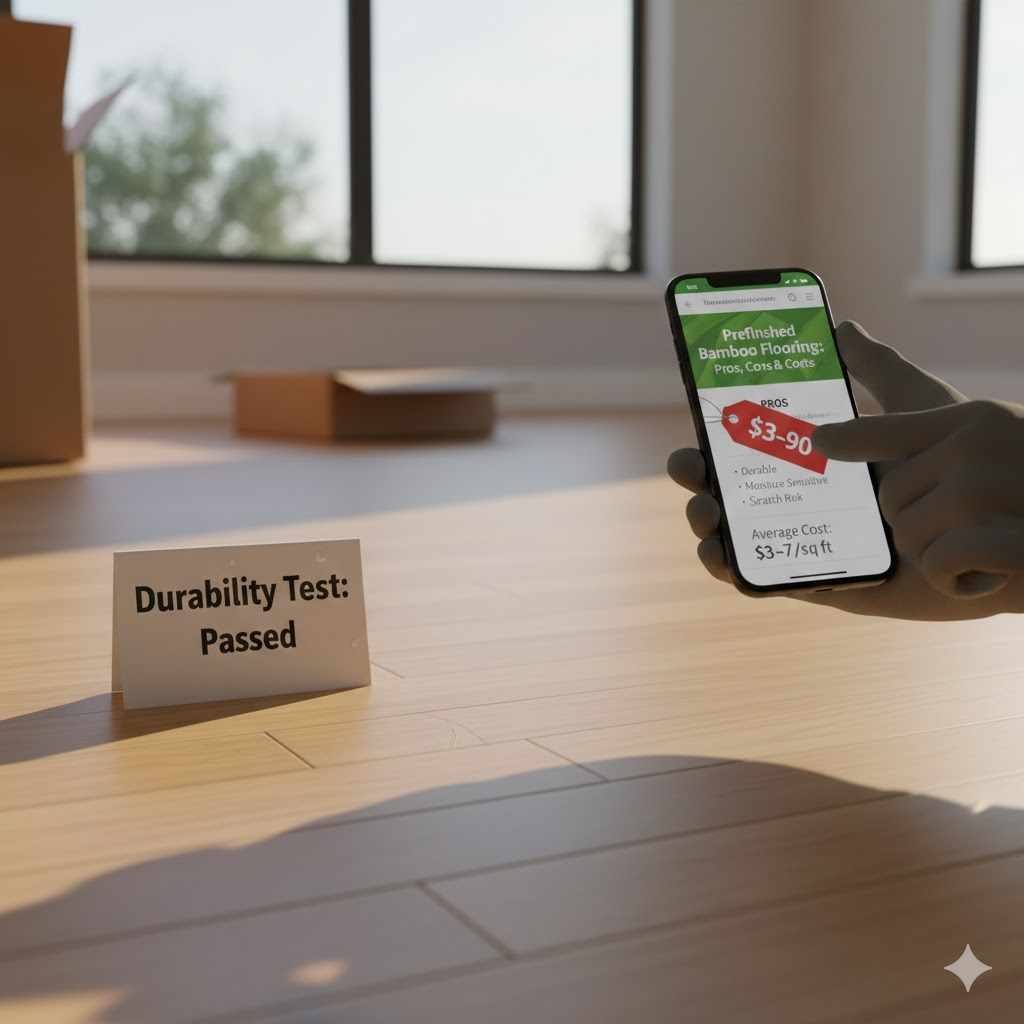
Prefinished Bamboo Flooring Pros Cons Costs
Picking out new floors can feel a little tricky, especially when you’re new to it. You might wonder if it’s a good choice for your home or what you need to know. That’s why we’re here to make it super simple.
We’ll walk you through Prefinished Bamboo Flooring: Pros, Cons & Costs step-by-step. Get ready to learn all about it without any confusion.
Prefinished Bamboo Flooring Your Quick Guide
Prefinished bamboo flooring is a popular choice for many homeowners looking for an eco-friendly and stylish flooring option. It comes with a protective finish already applied at the factory, making installation quicker and easier compared to unfinished options. This guide will help you understand the good and bad points, as well as what you can expect to pay, so you can make a smart decision for your home.
What Is Prefinished Bamboo Flooring
Prefinished bamboo flooring is made from the bamboo plant, which is a fast-growing grass. It’s processed into planks that look and feel like hardwood floors. The key feature is that the wear layer, or the protective coating, is applied at the factory.
This means it’s ready to go right out of the box.
This factory finish is usually a tough, multi-layer coating made of things like aluminum oxide, polyurethane, or UV-cured acrylic. It’s designed to protect the floor from scratches, spills, and everyday wear and tear. This pre-applied finish is what makes it different from unfinished flooring, which requires sanding and finishing after installation.
The Manufacturing Process
Making prefinished bamboo flooring involves several steps. First, bamboo stalks are harvested and then processed into strips. These strips are then laminated together using strong adhesives and high pressure to form the planks.
Once the planks are formed, they are cut to size. Next, they are sanded smooth. After sanding, the protective finish is applied in multiple coats.
Each coat is cured, often using UV light, to ensure a hard and durable surface. This whole process is done in a controlled factory setting for consistent quality.
Types of Bamboo Flooring
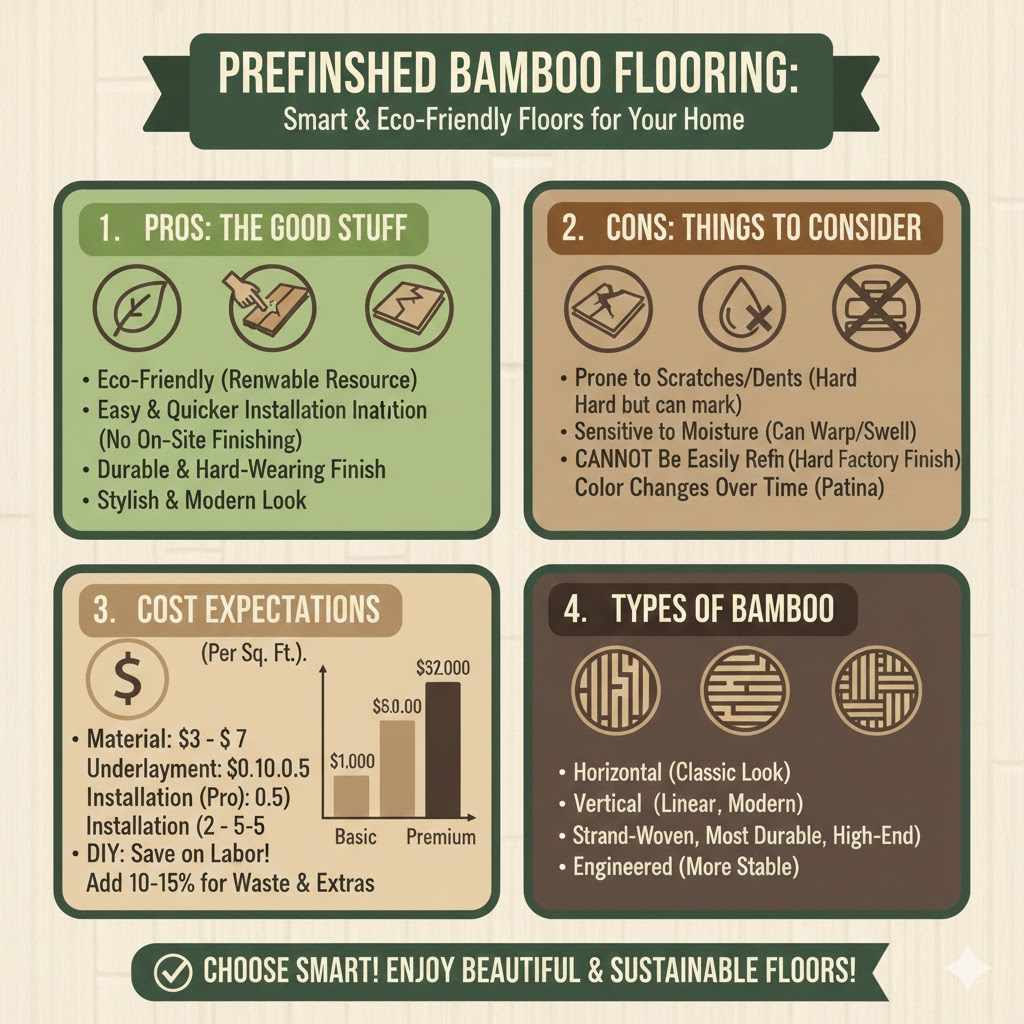
There are a few main types of bamboo flooring, each with its own look and construction. The most common are horizontal, vertical, and strand-woven bamboo.
- Horizontal bamboo flooring shows the natural grain pattern of bamboo in wide, flat strips. It has a more natural, wood-like look with distinct knots visible.
- Vertical bamboo flooring has a more uniform and linear appearance because the bamboo strips are aligned vertically. This gives it a sleeker, more modern feel.
- Strand-woven bamboo flooring is the strongest and most durable type. It’s made by shredding bamboo into fibers, mixing them with resin, and then compressing them under extreme heat and pressure. This results in a very dense and resilient floor.
When buying prefinished bamboo, you’ll often see these types available with different finishes, such as matte, satin, or high gloss.
Advantages of Prefinished Bamboo Flooring
Choosing prefinished bamboo flooring offers several appealing benefits that make it a strong contender for your home. Its unique qualities contribute to its popularity among homeowners.
Eco-Friendly and Sustainable
Bamboo is a highly sustainable resource. It grows much faster than most hardwoods, with some species growing several feet in a single day. This rapid growth means it can be harvested without depleting forests.
Unlike trees that take decades or even centuries to mature, bamboo can be replanted and regrown quickly.
Because bamboo is a grass, harvesting it doesn’t kill the plant; it simply regrows from the same root system. This makes it an excellent choice for environmentally conscious consumers. Many bamboo flooring products are also certified by organizations like the Forest Stewardship Council (FSC), which ensures responsible sourcing and production practices.
Durability and Strength
Bamboo, especially strand-woven bamboo, is incredibly strong and durable. In fact, strand-woven bamboo can be harder than many traditional hardwoods, like oak or maple. This makes it resistant to dents, scratches, and wear from daily foot traffic, pets, and furniture.
The Janka hardness rating is a measure of wood hardness. While traditional hardwoods vary, many oak floors have a Janka rating around 1290. In contrast, strand-woven bamboo can have a Janka rating exceeding 3000, making it exceptionally resilient.
This means your bamboo floors can maintain their beautiful appearance for many years.
Easy Installation
One of the biggest advantages of prefinished bamboo is its ease of installation. Since the finish is already applied, there’s no need for sanding, sealing, or waiting for coats of finish to dry. This significantly cuts down on installation time and mess.
Most prefinished bamboo floors come with a click-lock or tongue-and-groove system, allowing planks to easily snap or fit together. This makes it a suitable option for DIY enthusiasts. You can often install it over existing subfloors, and it can be floated, nailed, or glued down depending on the product and subfloor type.
Aesthetic Appeal and Variety
Bamboo flooring offers a unique and attractive look that can complement various interior design styles. It comes in a range of colors, from light natural shades to darker, richer tones. The grain patterns can also vary, adding visual interest.
The warm tones of bamboo can make a room feel more inviting and cozy. Whether you prefer a modern minimalist look or a more traditional feel, bamboo can adapt. The smooth, clean finish also contributes to its appealing appearance.
Cost-Effectiveness
When compared to many hardwood flooring options, prefinished bamboo flooring can be quite cost-effective. While prices vary based on quality, type, and brand, bamboo often provides a good balance of beauty, durability, and affordability.
The savings aren’t just in the initial purchase price. The ease of installation for prefinished bamboo can also reduce labor costs if you hire professionals. Its durability means fewer repairs or replacements over time, leading to long-term savings.
Disadvantages of Prefinished Bamboo Flooring
While prefinished bamboo flooring has many advantages, it’s also important to be aware of its potential drawbacks. Understanding these can help you make a well-rounded decision.
Sensitivity to Moisture
Bamboo, like all wood-based flooring, is susceptible to moisture damage. Excessive water exposure can cause planks to warp, swell, or cup. While the factory finish offers some protection, it is not entirely waterproof.
Areas prone to high humidity or frequent spills, such as bathrooms or laundry rooms, may not be the best places for bamboo flooring. Proper ventilation and prompt cleanup of spills are crucial to prevent moisture-related issues. Even strand-woven bamboo, despite its hardness, can be affected by prolonged moisture.
Potential for Fading
Exposure to direct sunlight can cause prefinished bamboo flooring to fade over time. The natural color of the bamboo can lighten, and the finish itself might degrade. This fading can lead to an uneven appearance across the floor if some areas receive more sunlight than others.
To mitigate this, it’s advisable to use curtains, blinds, or UV-filtering window films to protect the flooring from harsh sunlight. Rotating area rugs can also help ensure a more consistent appearance across the entire floor surface.
Quality Variations
The quality of prefinished bamboo flooring can vary significantly between manufacturers. Cheaper options might use lower-grade bamboo, less durable finishes, or weaker adhesive systems, leading to premature wear, scratching, or delamination.
It’s important to research brands and read reviews before purchasing. Look for flooring with a good warranty and positive customer feedback. Choosing a reputable manufacturer that uses high-quality materials and production methods is key to ensuring your bamboo floor lasts.
Can Be Noisy
Some types of prefinished bamboo flooring, particularly those installed using a floating method, can sometimes produce a hollow or creaky sound when walked upon. This is more common with less dense bamboo or when the underlayment isn’t properly installed.
Using a high-quality underlayment designed for bamboo or wood flooring can help reduce noise. Proper subfloor preparation is also essential to minimize hollow sounds. Some people find the noise acceptable, while others find it bothersome.
Scratching and Denting Concerns
While strand-woven bamboo is very hard, other types can still be susceptible to scratches and dents, especially from sharp objects or heavy furniture. The factory finish offers protection, but it’s not invincible. The quality of the finish is a major factor here.
Using furniture pads on the legs of chairs, tables, and other heavy items is highly recommended. Area rugs in high-traffic areas can also help protect the floor from wear and tear. Keeping pets’ nails trimmed can also prevent scratches.
Prefinished Bamboo Flooring Costs
The cost of prefinished bamboo flooring can range widely. Several factors influence the final price, including the type of bamboo, the quality of the finish, the brand, and the installation method.
Material Costs
The material cost for prefinished bamboo flooring typically falls between $2 to $7 per square foot. The lower end of this range usually applies to basic horizontal or vertical bamboo with a standard finish.
- Horizontal and Vertical Bamboo: These types generally range from $2 to $4 per square foot. They offer a good balance of aesthetics and affordability.
- Strand-Woven Bamboo: This more durable option typically costs between $4 to $7 per square foot. Its increased hardness and longevity justify the higher price point.
These prices are for the flooring material alone and do not include installation, underlayment, or any necessary preparation work.
Installation Costs
If you choose to hire professionals for installation, you can expect to pay an additional $3 to $6 per square foot. The total cost, including materials and professional installation, could therefore range from $5 to $13 per square foot.
DIY installation can save money on labor, but it requires time, effort, and potentially the purchase of tools. The complexity of the room layout, the type of installation (floating, glued, or nailed), and the condition of the subfloor can also affect installation costs.
Additional Factors Affecting Price
Beyond the material and installation, other factors can impact the overall cost. These include:
- Underlayment: A good quality underlayment is essential for moisture protection, sound dampening, and cushioning. This can add $0.50 to $2 per square foot.
- Subfloor Preparation: If your subfloor is uneven or damaged, it may require repair or leveling, which can add to the cost.
- Transition Strips and Trim: You’ll need trim pieces for doorways, edges, and where the flooring meets other surfaces. These add to the material cost.
- Removal of Old Flooring: If you have existing flooring to remove, this can incur an additional charge.
A realistic budget should account for all these potential expenses to avoid surprises.
Real-Life Cost Example
Consider a homeowner wanting to install prefinished bamboo flooring in a living room measuring 15 feet by 20 feet. The total area is 300 square feet.
- Material Cost: If they choose mid-range strand-woven bamboo at $5 per square foot, the material cost would be 300 sq ft * $5/sq ft = $1500.
- Installation Cost: With professional installation at $4 per square foot, the labor cost would be 300 sq ft * $4/sq ft = $1200.
- Underlayment: A good underlayment at $1 per square foot would add 300 sq ft * $1/sq ft = $300.
- Total Estimated Cost: $1500 (material) + $1200 (installation) + $300 (underlayment) = $3000.
This example shows that for a 300-square-foot room, the total investment could be around $3000, or $10 per square foot. This doesn’t include potential costs for subfloor repair or trim. Prices can vary significantly based on your location and the specific products chosen.
Prefinished Bamboo Flooring vs. Other Options
When deciding on flooring, comparing prefinished bamboo to other popular materials can help clarify its place in the market.
Comparison Table
| Feature | Prefinished Bamboo | Hardwood (Oak) | Laminate | Vinyl Plank (LVP) |
|---|---|---|---|---|
| Sustainability | Very High | Moderate | Low | Moderate to High (depending on core) |
| Durability | Good to Excellent (strand-woven) | Good | Good | Excellent |
| Cost per Sq Ft (Material) | $2 – $7 | $3 – $8 | $1 – $4 | $2 – $6 |
| Water Resistance | Poor | Poor | Moderate (with water-resistant core) | Excellent |
| Installation Ease (DIY) | Easy | Moderate to Difficult | Easy | Easy |
| Maintenance | Easy | Moderate | Easy | Very Easy |
This table highlights some key differences. Bamboo stands out for its sustainability. Hardwood offers a classic appeal but can be more expensive and less eco-friendly.
Laminate is budget-friendly but less durable and can’t be refinished. Vinyl plank flooring is highly water-resistant and durable, making it a strong competitor, especially for high-moisture areas.
Hardwood Flooring Comparison
Compared to traditional hardwood floors, prefinished bamboo flooring is often more sustainable. Bamboo is a rapidly renewable resource, while hardwood trees take many years to grow. In terms of durability, high-quality strand-woven bamboo can be harder than many hardwoods, making it more resistant to dents.
However, many people still prefer the classic, timeless look of traditional hardwoods. Hardwood can also be sanded and refinished multiple times, extending its lifespan significantly, which bamboo cannot typically do with its factory finish.
Laminate Flooring Comparison
Laminate flooring is generally less expensive than prefinished bamboo. It’s made from composite wood pressed together and topped with a printed image of wood, stone, or other materials, protected by a clear wear layer. Laminate is easy to install and can mimic the look of wood very well.
The main advantage of bamboo over laminate is its more natural material and potentially longer lifespan if well-maintained. Laminate, while durable, cannot be refinished and is more prone to damage from moisture than even standard bamboo.
Vinyl Plank Flooring (LVP) Comparison
Luxury Vinyl Plank (LVP) flooring has become extremely popular due to its excellent water resistance, durability, and ease of maintenance. It often features realistic wood or stone visuals and can be installed easily, much like prefinished bamboo.
The key advantage of LVP is its superior water resistance, making it suitable for kitchens, bathrooms, and basements. Prefinished bamboo, on the other hand, offers a more natural material feel and is generally considered more eco-friendly, provided it is sourced responsibly. For areas where moisture is a concern, LVP might be a more practical choice.
Caring for Your Prefinished Bamboo Floor
Proper care is essential to keep your prefinished bamboo floors looking their best for years to come. The factory finish offers good protection, but regular maintenance is still needed.
Daily Cleaning
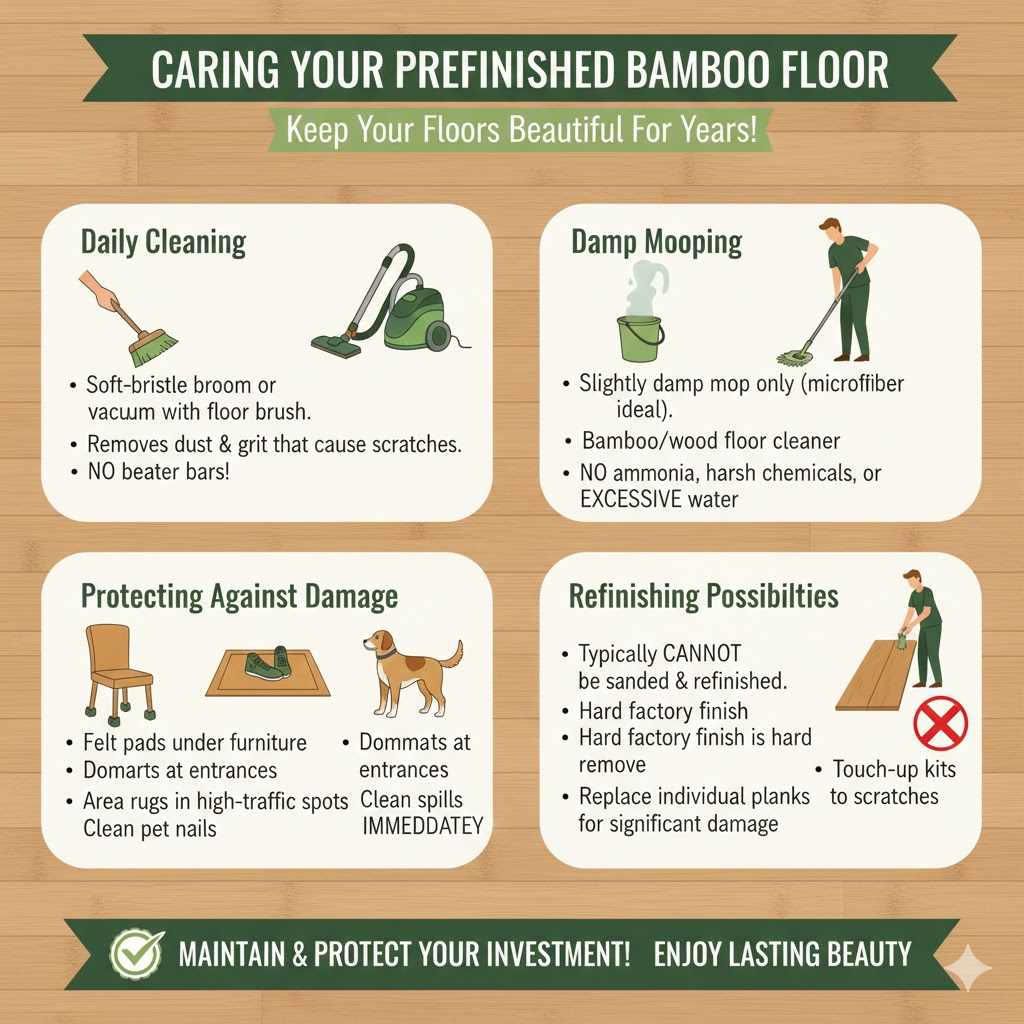
For daily cleaning, a soft-bristle broom or a vacuum cleaner with a floor brush attachment is ideal. This will help remove dust, dirt, and grit that can scratch the surface over time. Avoid using vacuums with beater bars that can damage the finish.
Regular sweeping or vacuuming prevents abrasive particles from being ground into the floor, which helps maintain its sheen and prevents premature wear. It’s a simple step that makes a big difference.
Damp Mopping
When it’s time for a more thorough cleaning, use a slightly damp mop. Never use excessive water or a soaking wet mop, as this can damage the bamboo. A microfiber mop is a good choice because it absorbs well and doesn’t leave much water behind.
Use a floor cleaner specifically designed for wood or bamboo flooring. Avoid ammonia-based cleaners or harsh chemicals, as they can dull or damage the finish. For tough spots, a cleaner designed for bamboo can be used according to the manufacturer’s instructions.
Protecting Against Damage
Protect your bamboo floors from potential damage by taking a few precautions. Place felt pads under furniture legs to prevent scratches when furniture is moved. Use doormats at all entrances to trap dirt and moisture before it’s tracked onto the floor.
For areas with high traffic or where furniture is frequently moved, consider using area rugs. Be mindful of pet claws; keeping your pets’ nails trimmed can help prevent scratches. Also, clean up any spills immediately to prevent moisture from seeping into the planks.
Avoid Excessive Moisture
As mentioned earlier, bamboo is sensitive to moisture. Do not let water stand on the floor. If a spill occurs, wipe it up immediately with a dry or slightly damp cloth.
Avoid using steam mops, as the heat and moisture can damage the finish and the bamboo itself.
Ensure that potted plants are placed on coasters or trays to prevent water from leaking onto the floor. In humid environments, consider using a dehumidifier to maintain an optimal humidity level for your floors, typically between 35-55%.
Refinishing Possibilities
Unlike solid hardwood that can be sanded and refinished many times, prefinished bamboo flooring typically cannot be refinished in the same way. The factory finish is very hard, and attempting to sand it down usually removes the protective layer and can expose the softer bamboo beneath, or even damage the layers of construction.
Some manufacturers offer touch-up kits for minor scratches. For significant damage, planks may need to be individually replaced. If your bamboo floor becomes heavily worn or damaged, you might consider a new installation rather than refinishing.
Frequently Asked Questions
Question: Is prefinished bamboo flooring good for kitchens
Answer: Prefinished bamboo flooring is generally not recommended for kitchens because it is susceptible to water damage. While it has a protective finish, it is not waterproof, and spills or high moisture levels can cause warping or swelling.
Question: How long does prefinished bamboo flooring last
Answer: With proper care and maintenance, prefinished bamboo flooring can last anywhere from 15 to 25 years, or even longer. Strand-woven bamboo tends to be the most durable and may last even longer than other types.
Question: Can prefinished bamboo flooring be installed over concrete
Answer: Yes, prefinished bamboo flooring can often be installed over concrete, but proper subfloor preparation is crucial. A moisture barrier and appropriate underlayment are typically required when installing over concrete to prevent moisture issues.
Question: Is prefinished bamboo flooring more expensive than hardwood
Answer: Prefinished bamboo flooring can be comparable in price to mid-range hardwood flooring. However, high-quality strand-woven bamboo can sometimes be more expensive than some hardwood options. Overall, it often offers good value for its durability and eco-friendliness.
Question: How do I clean my prefinished bamboo floors
Answer: Clean your prefinished bamboo floors daily with a soft broom or vacuum cleaner. For deeper cleaning, use a slightly damp mop with a pH-neutral cleaner specifically designed for wood or bamboo floors. Avoid excessive water and harsh chemicals.
Conclusion
Prefinished bamboo flooring offers a beautiful, sustainable, and durable option for many homes. Its easy installation and attractive appearance make it a popular choice. By understanding its pros, cons, and costs, you can confidently select and care for this unique flooring.