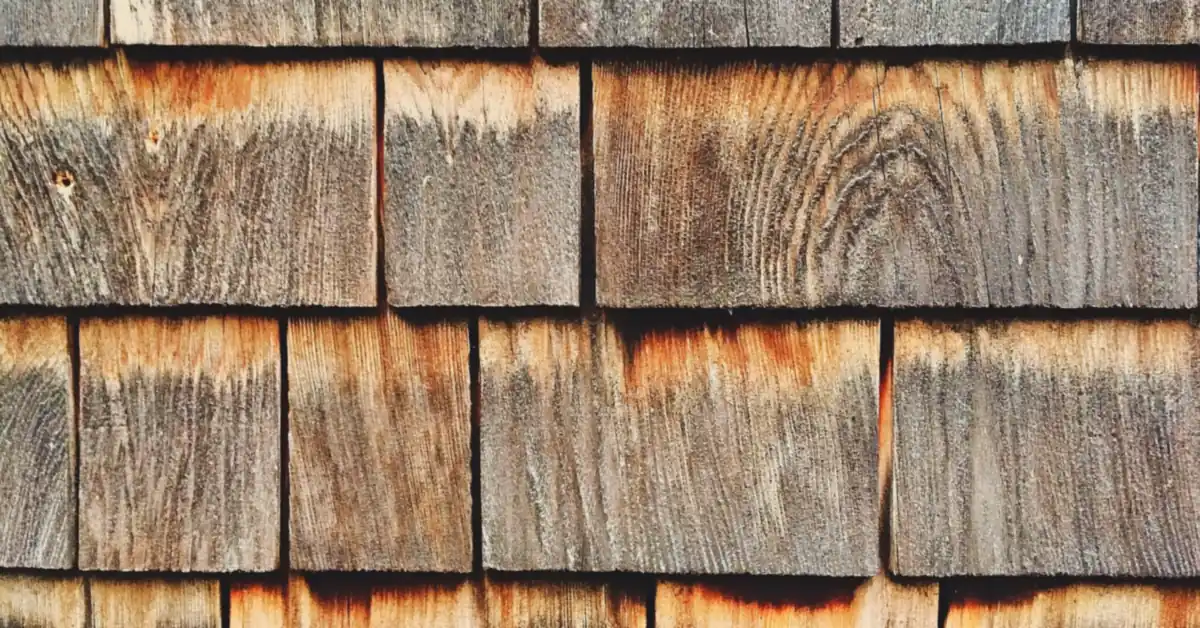
Exterior Wood Glue for Cedar: 6 Compared by Bond & Cure (2026)
For most exterior cedar projects, Titebond III Ultimate Wood Glue is the strongest all-around choice — it passes the ANSI/HPVA Type I waterproof standard and posts 4,000 psi bond strength on hard maple in the manufacturer’s own testing. But cedar’s natural oils are a real variable: Franklin International’s own technical data sheet flags “exotic and oily woods” as needing a test glue-up first, and that caution applies directly to cedar.
We compared six exterior-rated wood glues specifically for cedar: three PVA formulas, two polyurethanes, and one two-part epoxy. Every spec below comes from each manufacturer’s own published technical data sheet or live Amazon pricing pulled for this article — not estimated, not carried over from a competitor’s roundup.
Exterior Wood Glue for Cedar: Comparison Table
| Glue | Chemistry | ANSI/HPVA Rating | Open / Working Time | Full Cure | Room-Temp Bond Strength | Cost per fl oz | Best For Cedar |
|---|---|---|---|---|---|---|---|
| Titebond III Ultimate | Cross-linking PVA | Type I (waterproof) | 8–10 min open / 20–25 min total | 24 hr | 4,000 psi (ASTM D-905, hard maple) | $0.60 | #1 overall — but Franklin’s own TDS flags oily woods for a test glue-up |
| Gorilla Original | Moisture-cured polyurethane | Waterproof (EN 204/205-D4) | 5–10 min open / 10–15 min working | 24 hr | Not ASTM-published (mechanical foam-lock bond) | $1.25 | Cedar’s oils specifically — doesn’t need to fully wet the wood surface |
| Loctite PL Premium | Polyurethane construction adhesive | Water-resistant (ASTM D3498) | 15–20 min open / 30–45 min reposition | 24–48 hr | 638 psi dry lumber (ASTM D3498) | $0.74 | Large structural gaps — pergola beams, half-laps |
| West System G-flex 655 | Two-part toughened epoxy | Not ANSI/HPVA-rated; mfr-rated waterproof | 45 min pot life / 75 min working | 24 hr to full load | 3,440 psi tensile (ASTM D638) | $5.05 | Cedar that moves seasonally — flexes instead of cracking |
| Gorilla Ultimate Waterproof | Cross-linking PVA | Type I (waterproof) | Up to 15 min working | 24 hr | Not independently published | $0.69 | Budget Type I waterproof PVA alternative to Titebond III |
| Titebond II Premium | Cross-linking PVA | Type II (water-resistant) | 3–5 min open / 10–15 min total | 24 hr | 3,750 psi / 72% wood failure (ASTM D-905, hard maple) | $0.44 | Covered/rain-protected cedar only — documented cedar failure in field tests |
Cost per fluid ounce is calculated from each product’s live Amazon buy-box price at the container size linked below, divided by its stated fluid-ounce volume — e.g. Titebond III’s 16 oz bottle at $9.58 works out to $0.60/fl oz. West System G-flex 655 ships as two 4.5 fl oz tubes (9 fl oz combined) at $45.42, or $5.05/fl oz. Bond-strength figures are each manufacturer’s own published number and use different test methods (ASTM D-905 for the PVA glues, ASTM D3498 for Loctite, ASTM D638 for the epoxy) — they are not directly comparable to each other across chemistry types, only within the same chemistry.
Best Exterior Wood Glues for Cedar
1. Titebond III Ultimate Wood Glue — #1 Best Overall
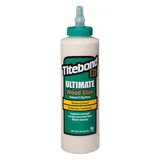
Price: $9.58 — See current price on Amazon
- ANSI/HPVA Type I waterproof
- 4,000 psi bond strength (ASTM D-905, hard maple, room temp)
- Open assembly time: 8–10 minutes at 70°F/50% RH
- VOC: 5.6 g/L
- FDA-approved for indirect food contact
Titebond III is the strongest all-purpose glue in this comparison by published bond strength, and it’s the only one rated for both interior and exterior use straight out of the bottle with water cleanup while wet. It scales from a 4 oz bottle up to a 5-gallon pail, so it works for a single cedar planter or a full run of deck furniture.
Main drawback: Franklin International’s own technical data sheet is explicit that for “exotic and oily woods” you should contact their technical support team before committing to a project — and cedar isn’t called out by name as tested. Cedar’s surface oils can interfere with any water-based PVA glue’s ability to wet and penetrate the wood fibers. Run a test glue-up on a cedar offcut before trusting it on the real joint.
Who it’s for: tight, clamped cedar joints — furniture, planters, and joinery where the wood surfaces meet cleanly.
2. Gorilla Original Polyurethane Glue — Best for Cedar’s Natural Oils
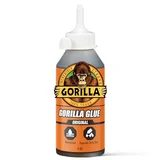
Price: $9.98 — See current price on Amazon
- Waterproof; classified EN 204/205-D4 (weather- and boil-resistant)
- Open assembly: 5–10 min; closed assembly: 10–15 min
- Full cure: 24 hours at 20°C
- Expands roughly 3x into the wood as it cures
- Requires 12–20% wood moisture for a proper bond
Real-world reports from woodworkers on WoodWeb’s public knowledge base describe cedar joints glued with polyurethane holding up 8 to 25 years outdoors with no reported failures — a longer documented track record on cedar specifically than any PVA glue in this comparison. Polyurethane cures by reacting with moisture rather than needing to fully wet the wood surface the way PVA does, which is likely why it sidesteps cedar’s oil-interference problem better in practice.
Main drawback: Foam expansion makes squeeze-out messy, and it is not a true gap-filling glue in the structural sense — Gorilla’s own technical data sheet states its “gap-filling properties are limited.” Cured glue can only be removed mechanically, not with a solvent. Very dry kiln-dried cedar may need a light misting on one surface before gluing.
Who it’s for: any cedar joint with real weather exposure where you want the strongest documented track record against cedar’s oils specifically.
3. Loctite PL Premium Polyurethane Construction Adhesive — Best for Large Structural Cedar Joints
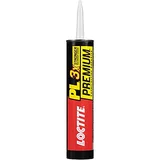
Price: $7.38 — See current price on Amazon
- Meets/exceeds ASTM D3498
- 638 psi dry-lumber compression shear strength (24-hour cure)
- Open time: 15–20 min; repositioning window: 30–45 min
- Full cure: 24–48 hours at 78°F/50% RH
- Service temperature: -40°F to 160°F
Applied from a caulking gun in a continuous bead, PL Premium genuinely gap-fills in a way none of the bottled glues in this comparison do — useful for rough-sawn cedar timbers, pergola half-laps, and beam-to-post joints where a tight PVA-style glue line isn’t realistic. Woodworkers report it holding cedar pergola half-laps tight for years in real outdoor use.
Main drawback: Loctite’s own data sheet lists composite decking and Ipe wood as bonding-difficulty limitations and requires pressure-treated lumber to season at least 6 months before bonding — a reminder that this adhesive family is genuinely sensitive to what’s in the wood, the same category of caution that applies to cedar’s oils. It’s a construction adhesive, not a fine-woodworking glue: visible squeeze-out is hard to clean and it isn’t meant to be sanded flush.
Who it’s for: structural cedar builds — pergolas, arbors, raised beds — where mechanical fasteners do the real work and the adhesive backs them up.
4. West System G-flex 655 Epoxy — Best for Cedar That Moves With the Seasons
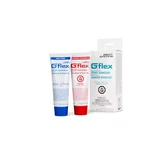
Price: $45.42 — See current price on Amazon
- 1:1 mix ratio by volume
- Pot life: 45 min; working time: 75 min (72°F)
- Initial cure: 3–4 hr; workable cure: 7–10 hr; full structural load at 24 hr
- Tensile strength: 3,440 psi; compression yield: 5,270 psi (ASTM D638/D695)
- Modulus of elasticity: 150,000 psi — more flexible than standard epoxy
G-flex is formulated specifically for “damp and difficult-to-bond woods” and is more flexible than West System’s standard 105/205 epoxy, so it can absorb the expansion and contraction of an exterior cedar joint through winter/summer humidity cycles without the bond line cracking. Because it’s an epoxy, it doesn’t rely on wetting the wood surface the way PVA does, which sidesteps cedar’s oil-interference problem at the chemistry level rather than working around it.
Main drawback: By far the most expensive pick tested — about 8x the per-ounce cost of Titebond III — and it’s a genuine two-part mix-and-apply system, not a squeeze-and-clamp bottle. Overkill for a small cedar birdhouse or planter.
Who it’s for: high-value cedar furniture or builds where the joint has to survive real seasonal wood movement and cost isn’t the deciding factor.
5. Gorilla Ultimate Waterproof Wood Glue — Best Easy-Cleanup Alternative to Titebond III
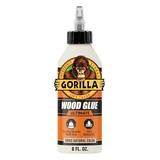
Price: $5.50 — See current price on Amazon
- ANSI/HPVA Type I waterproof (same certification tier as Titebond III)
- Working time: up to 15 minutes
- Clamp time: 20–30 minutes
- 80% strength in 1–2 hours; full cure in 24 hours
- Dries a natural tan color
At $0.69/fl oz this is the cheapest ANSI/HPVA Type I — genuinely waterproof, not just water-resistant — glue in the comparison. It cleans up with water while wet, sands and paints once cured, and its lighter dry color blends into cedar’s natural tone better than Titebond III’s darker glue line.
Main drawback: It’s the same PVA chemistry class as Titebond III, so the same oily-wood caution applies, and Gorilla’s published data doesn’t call out cedar specifically either. It’s also a newer formula than Titebond III, so there’s less independently-documented field history on cedar specifically.
Who it’s for: budget-conscious cedar projects where you still want a true Type I waterproof rating rather than stepping down to Type II.
6. Titebond II Premium Wood Glue — Best for Covered or Semi-Exposed Cedar Projects
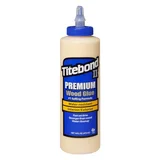
Price: $6.99 — See current price on Amazon
- ANSI/HPVA Type II water-resistant (not fully waterproof)
- Open assembly: 3–5 min; total assembly: 10–15 min
- 3,750 psi bond strength / 72% wood failure (ASTM D-905, hard maple)
- Full cure: 24 hours
- VOC: 3.0 g/L
At $0.44/fl oz this is the cheapest glue tested, with a fast set for production work, and Franklin markets it explicitly for “outdoor furniture, birdhouses, mailboxes, planters and picnic tables.” Its published wood-failure percentage (72%) is actually higher than Titebond III’s own published number (57%) on hard maple — a reminder that a higher waterproof rating doesn’t automatically mean a stronger bond on every wood.
Main drawback: This is the one pick in this comparison with a documented real-world cedar failure. In side-by-side testing shared on WoodWeb’s public knowledge base, a contributor reported that both Titebond and Titebond II PVA glue “failed” on cedar joints, while polyurethane glue and Titebond III held. Type II is water-resistant, not waterproof, and cedar’s oils appear to compound that risk.
Who it’s for: indoor-adjacent or covered cedar builds — a roofed porch, a covered pergola — where full waterproofing isn’t required.
Real-World Cedar Glue Test Reports
Cedar-specific glue failures are rarely tested in a lab and published — most of what’s documented comes from woodworkers who’ve actually built with cedar and shared what happened. Here’s what surfaced during research for this article, from a cedar-lamination discussion thread on WoodWeb’s public knowledge base:
- One contributor tested Titebond and Titebond II side-by-side on cedar and reported both “failed” — even after an acetone wipe-down recommended by Franklin’s own support team, which also failed.
- The same discussion documented Titebond III holding where the PVA glues didn’t: “the joint held as the wood split apart. So TB3 is probably a good alternative,” the contributor wrote.
- Multiple contributors reported long-term success with polyurethane glue on cedar, including one exterior curved railing built with cedar strips that, after 8 years outdoors, “still looks great.”
- A moisture-content note came up repeatedly: check the cedar’s moisture before using polyurethane glue — above 15% moisture, glue directly; below 15%, dampen one surface first.
- None of the threads found in this research documented an epoxy failure on cedar — though fewer contributors reported using epoxy on cedar specifically compared with PVA and polyurethane, so that’s a thinner sample, not a stronger endorsement.
These are anonymous forum reports, not a controlled lab study — treat them as directionally useful rather than definitive, which is exactly why the “test on an offcut first” advice below matters more than any single data point in this article.
How We Picked These
No physical hands-on testing was done for this article — this is a compared roundup, not a tested one. Every pick and every number above was sourced from: live Amazon Creators API pricing and availability (pulled the day this article was published), each manufacturer’s own published technical data sheet (Franklin International/Titebond, Gorilla Glue, Henkel/Loctite, and Gougeon Brothers/West System), and real-world cedar-specific testing documented by named contributors on WoodWeb’s public woodworking knowledge base. Where a manufacturer hadn’t published a cedar-specific number, that gap is disclosed in the table and prose rather than guessed at. Amazon’s review API returned no star rating or review count for any of these six products at the time of research, so no ratings appear anywhere in this article — an honest gap rather than an invented number.
What to Consider When Buying Exterior Wood Glue for Cedar
Why Cedar’s Natural Oils Complicate Gluing
Cedar — like teak, ipe, and other resinous species — contains natural oils and extractives that sit on the wood’s surface and can interfere with a glue’s ability to wet and penetrate the wood fibers. Franklin International’s Titebond III technical data sheet specifically flags “exotic and oily woods” as needing extra care and directs users to contact their technical support team before gluing them. This isn’t unique to Titebond: Gorilla Glue’s European technical data sheet issues a nearly identical warning for tannic-acid-rich woods like oak, recommending a test glue-up before production work. The same logic applies directly to cedar.
ANSI/HPVA Type I vs Type II: What the Rating Actually Means
Type I means fully waterproof — rated for continuous outdoor exposure, including direct rain and standing moisture. Type II means water-resistant — it survives humidity and occasional rain but isn’t rated for continuous wet exposure. Of the six glues compared here, Titebond III, Gorilla Original, and Gorilla Ultimate Waterproof are all Type I. Titebond II is Type II only. Loctite PL Premium and West System G-flex use different test standards entirely (ASTM D3498 and epoxy-specific ASTM testing) rather than the ANSI/HPVA wood-glue scale, but both are explicitly marketed for exterior and wet-condition use.
PVA vs Polyurethane vs Epoxy for Cedar
PVA (Titebond III, Titebond II, Gorilla Ultimate) is the easiest to use and cleans up with water, but it needs to wet the wood surface to bond — exactly where cedar’s oils cause the most trouble. Polyurethane (Gorilla Original, Loctite PL Premium) cures by reacting with moisture rather than needing full surface wetting, which is likely why it shows up repeatedly in real-world cedar success stories. Epoxy (West System G-flex) doesn’t rely on surface wetting at all — it mechanically encapsulates the wood fibers — which is why manufacturers market it specifically for “difficult-to-bond” species.
Test a Glue Joint on an Offcut First
Glue two cedar offcuts from the same board using your chosen adhesive, clamp for its stated clamp time, and let the joint reach full cure. Then try to break it apart. If the wood fibers tear before the glue line releases — what manufacturers call “wood failure” — the bond is strong enough to trust. If the joint pops apart cleanly at the glue line, that specific glue isn’t bonding well to that specific board, regardless of what the data sheet promises.
Wood Moisture Content Before You Glue
Gorilla Original’s technical data sheet specifies a 12–20% wood moisture window for a proper polyurethane bond. Kiln-dried cedar lumber from a home center commonly runs under that, and may need a light misting on one glue surface before bonding with a polyurethane. PVA glues aren’t as sensitive to this, but bone-dry cedar is harder for any water-based glue to wet properly.
Gap-Filling Glue vs a Tight Clamped Joint
PVA glue and non-foam polyurethane both want a tight, well-clamped joint with minimal gap. Foaming polyurethane and epoxy tolerate gaps far better. For rough-sawn or live-edge cedar timbers where joints won’t close perfectly, Loctite PL Premium or West System G-flex are the safer picks over a bottled PVA glue.
Cost Per Fluid Ounce vs the Price on the Shelf
The six glues compared here span $0.44 to $5.05 per fluid ounce — an 11x spread. For a single cedar birdhouse, a few dollars either way doesn’t matter. For a project that needs a full gallon of adhesive, the gap between the cheapest and priciest pick here is real money, which is why the comparison table above prices everything per ounce rather than per bottle.
Covered vs Fully Exposed Cedar Projects
Fully exposed to rain and sun year-round: use a Type I PVA, a polyurethane, or an epoxy only. Under a covered porch roof or pergola cover with only incidental rain exposure: Type II Titebond II is a viable, cheaper option — with the understanding that it’s the one glue in this comparison with a documented real-world cedar failure in fully exposed conditions.
Shelf Life and Storage
If you’re buying glue for more than one cedar project, shelf life matters. Titebond III and Titebond II are both rated for 24 months in a tightly closed container below 75°F. Loctite PL Premium is rated for 12 months unopened from its date of manufacture. Gorilla Original and Gorilla Ultimate Waterproof don’t publish an exact shelf-life figure in the technical documents sourced for this article — that gap is disclosed here rather than guessed at. Any PVA bottle that’s thickened, separated, or won’t restore with vigorous shaking belongs in the trash, not on an exterior cedar joint.
Glue Alone Isn’t Enough — Add Mechanical Fasteners
Woodworkers who’ve had exterior glue joints last decades consistently note they didn’t rely on glue alone. Combine glue with mechanical fasteners — screws, dowels, or pocket screws — at any load-bearing joint. The glue adds strength and helps seal the joint against moisture intrusion, but fasteners are what keep the piece together if the glue bond is ever compromised by weather or cedar’s oils.
How to Glue Cedar for Exterior Projects
- Test the glue on an offcut first. Cut two cedar scraps from the same board, glue and clamp them using your chosen adhesive’s stated clamp time, then let it reach full cure. Try to break the joint — if the wood fibers tear before the glue line releases, the bond is sound.
- Check the cedar’s moisture content. If you’re using a polyurethane glue, keep wood moisture in the 12–20% range; very dry kiln-dried cedar may need a light misting on one surface before gluing.
- Sand or wipe the joint surfaces immediately before gluing. A light scuff-sand removes any surface oil that’s migrated to the top layer since the board was milled.
- Apply glue to both surfaces for PVA and polyurethane, or mix and spread epoxy within the manufacturer’s stated pot life so you don’t lose working time.
- Clamp to the pressure and duration specified on that product’s data sheet — clamping too light or too briefly is a more common failure cause than the glue itself.
- Let the joint reach full cure (24 hours minimum for every glue in this comparison) before subjecting it to load or moving the piece outdoors.
- Back up every glued exterior joint with mechanical fasteners where the design allows it — screws, dowels, or pocket screws — so the glue isn’t the only thing holding the joint together in weather.
Frequently Asked Questions
What is the best wood glue for outdoor cedar furniture?
Titebond III Ultimate Wood Glue is the strongest all-around choice for outdoor cedar furniture — it’s ANSI/HPVA Type I waterproof and posts 4,000 psi bond strength in the manufacturer’s own testing. If you want extra confidence against cedar’s natural oils specifically, Gorilla Original polyurethane glue has a longer documented track record of real-world cedar joints holding up outdoors.
Do I need special glue for cedar decks?
For structural deck framing, glue isn’t a substitute for proper fasteners — use exterior-rated screws or bolts. For deck furniture, planters, or trim details, an ANSI/HPVA Type I waterproof glue (Titebond III, Gorilla Original, or Gorilla Ultimate Waterproof) is the right category; a Type II glue like Titebond II is better reserved for covered areas.
Can I use regular wood glue for exterior cedar projects?
Standard interior-only PVA glue that isn’t rated Type I or Type II isn’t recommended — it’s not formulated to survive rain and humidity cycles, and cedar’s natural oils make marginal bonds even less reliable. Choose a glue specifically rated ANSI/HPVA Type I or Type II, or a polyurethane/epoxy adhesive designed for exterior use.
How long does exterior wood glue take to cure on cedar?
Every glue compared in this article reaches full cure in 24 hours under normal conditions (70°F and up), though Loctite PL Premium can take up to 48 hours in cooler or more humid conditions. Clamp times are much shorter — typically 20 minutes to a few hours — but full structural strength develops over the full cure window, not the clamp time.
Will the natural oils in cedar affect the glue?
Yes, potentially. Franklin International’s own Titebond III technical data sheet specifically flags “exotic and oily woods” as needing extra care and recommends contacting their technical support team before gluing them. Real-world testing shared by woodworkers on WoodWeb documented Titebond and Titebond II PVA glue failing on cedar joints in side-by-side comparisons, while polyurethane glue and Titebond III held. Always test on an offcut first.
Should I test the glue before gluing my whole cedar project?
Yes. Glue two cedar offcuts from the same board, clamp them for the manufacturer’s stated clamp time, let the joint reach full cure, then try to break it apart. If the wood tears before the glue line separates, the bond is strong enough to trust on the real project.
Can I use wood glue alone for outdoor cedar furniture, or do I need screws too?
Glue alone is rarely enough for exterior furniture. Combine glue with mechanical fasteners — screws, dowels, or pocket screws — at any load-bearing joint. The glue adds strength and helps seal the joint against moisture intrusion, but fasteners are what keep the piece together if the glue bond is ever compromised by weather or cedar’s oils.
Final Thoughts
Titebond III Ultimate Wood Glue remains the strongest overall pick for exterior cedar work, with the highest published bond strength and a true ANSI/HPVA Type I waterproof rating — but its own manufacturer’s data sheet is the one telling you to test it on oily woods first. Cedar is genuinely one of those woods. If you’d rather lean on the glue chemistry that has the longest documented real-world track record against cedar’s oils specifically, Gorilla Original polyurethane is the better-evidenced choice. Either way: glue two cedar offcuts before you glue the real project, and back up every exterior joint with screws.
Related Cedar and Glue Guides
- Our full wood glue comparison covers general-purpose picks across bond type, cure time, and cost for every woodworking project, not just cedar.
- Gorilla Wood Glue’s specific track record on cedar goes deeper on one product from this comparison.
- The best cedar grades for outdoor furniture if you haven’t picked your lumber yet.
- Cedar deck design ideas for the finished project once your joints are glued and assembled.
- The best exterior stains for cedar for finishing the project once it’s glued and assembled.
- A cedar wood preservative can extend the life of the joint alongside the right glue.
- How polyurethane glue achieves its waterproof bond explains the chemistry behind picks #2 and #3 above.
- Gorilla Glue vs. Loctite compares the two polyurethane brands head-to-head outside the cedar-specific context.
Sponsored / affiliate links. As an Amazon Associate I earn from qualifying purchases. I may earn additional commission from eligible campaigns.