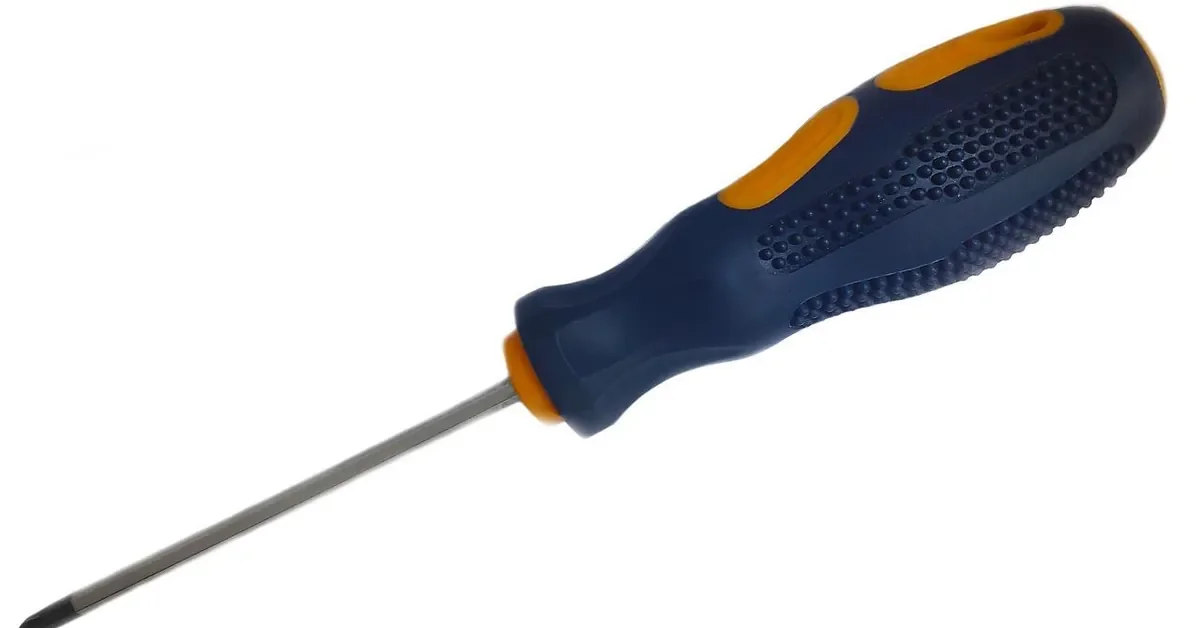
Screwdriver Size Chart: Phillips #0-#4, Torx, Slotted & Hex
Screwdriver size depends on the drive type, because there is no single scale: Phillips uses numbers (PH0 to PH4), Torx uses T-numbers, slotted is measured in blade millimeters, and hex in across-flats millimeters. A bit that fills the recess turns the screw, and one that does not cams out and strips the head. This guide pairs each drive size with the screw gauge it fits, using standards and maker references.
Quick Answer
A #2 Phillips (PH2) fits #5 to #9 screws, which covers most household wood and cabinet screws. Use PH1 for #2 to #4 screws and PH3 for #10 to #16. Torx deck screws usually take T20 for #8 and T25 for #10. Identify the drive type first (cross, star, square, hex, slot), then pick the size that fills the recess with no wobble.
Understanding Screwdrivers
 |
Best Mixed-Drive Set Pick Amartisan 43-Piece Magnetic Screwdriver Set – $19.99 One case that covers the five drive types in the charts below: Phillips, slotted, Torx, hex and Pozidriv, so you can test-fit the bit to the screw before you drive it.
|
As an Amazon Associate we earn from qualifying purchases.
A screwdriver has to match two things: the shape of the recess (the drive type) and its size. Getting the shape wrong is as common a cause of stripped screws as getting the size wrong, and a stripped head means extraction work with improvised tools. For the wider tool picture, see our woodworking tools and saws guide.
Types Of Screwdrivers And Their Applications
- Slotted (flathead): one flat blade for a single straight slot.
- Phillips: a cross-shaped tip, sized PH0 to PH4 for most work.
- Pozidriv: looks like Phillips but has extra tick marks on the screw head and a different tip.
- Torx (star): a six-lobed star, common on deck screws and electronics.
- Hex (Allen): a six-sided key or bit, used on furniture hardware and socket cap screws.
- Square (Robertson): a square recess, common on Canadian-made deck and framing screws.
Screwdriver Sizes
A screwdriver size is a drive-specific code, not one universal measurement. Phillips and Pozidriv use numbers (PH2, PZ2), Torx uses a T-number, Robertson uses a number or color, and slotted and hex are measured directly in millimeters. The code tells you which screws the bit is made for, which is why the screw gauge matters as much as the bit.
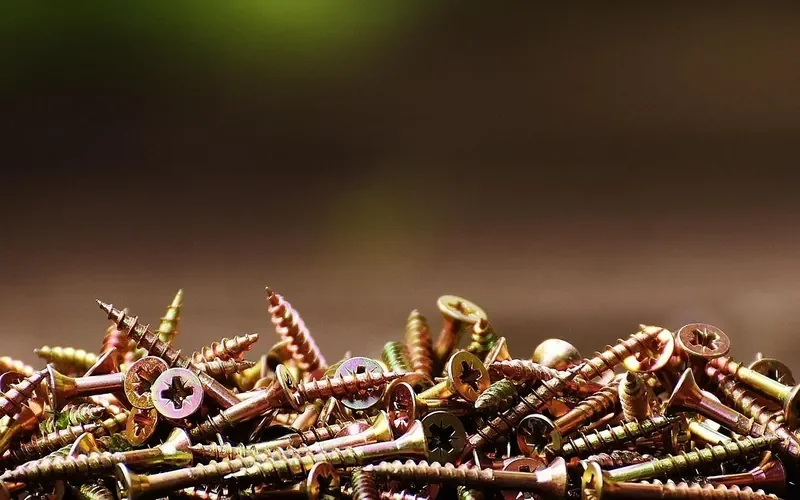
What Are The Different Sizes Of Screwdrivers?
Each drive family has its own range. Phillips runs from the very fine PH000 and PH00 (electronics, eyeglasses) through PH0 to PH4 for wood, drywall and construction screws. Torx runs from small electronics sizes up through T50. Slotted blades run from about 1 mm precision tips to 10 mm heavy-duty blades. The size that matters is the one that matches the recess, not the length of the screw.
How To Choose The Right Screwdriver Bit
Identify the drive type on the screw head, then pick the size that seats fully. Look for these tells: a plain cross is Phillips, a cross with small tick marks between the arms is Pozidriv, a six-point star is Torx, a square hole is Robertson, a hexagon is hex. A bit that is too small cams out and rounds the recess, and one that is too large will not seat. Test-fit by hand before you put a drill or impact driver on it.
Pozi Head Screwdriver Size Guide
Pozidriv screws are common in European hardware and many woodworking screws. Wikipedia describes the identifying feature as radial tick marks at 45 degrees to the main cross on the screw head. Sizes are PZ0 to PZ5; per the same reference, PZ1 is normally used on screws with a 2 to 3 mm nominal diameter, PZ2 on 3.5 to 5 mm, and PZ3 on 5.5 to 8 mm.
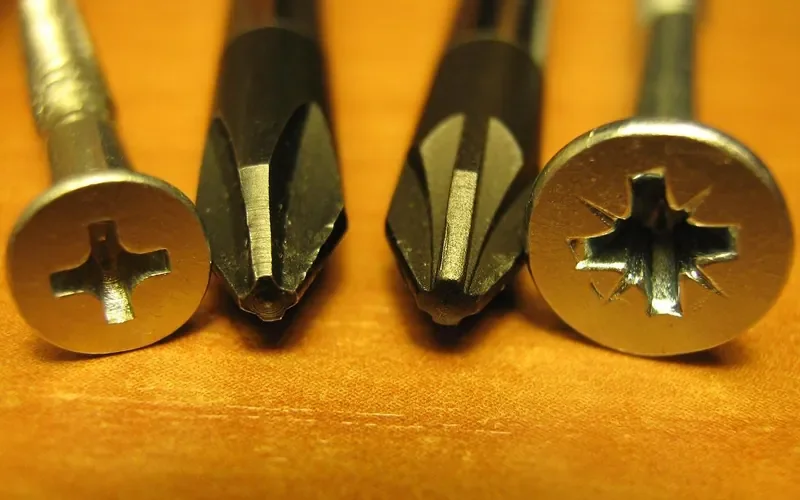
Pozidriv and Phillips look interchangeable but are not. A Pozidriv driver jams into a Phillips screw and can tear the head when tightened, and a Phillips driver in a Pozidriv screw turns loosely and cams out under torque. Match the family first, then the number.
Screwdriver Size Chart
The tables below pair each drive size with the screw it is meant to turn. Dimensions come from the sources named under each table; where a source did not give a number, the cell is left out rather than estimated.
Phillips Head Screwdriver Sizes Chart
Phillips sizes are matched to wood-screw gauge ranges, so the gauge on the screw box tells you the bit. The millimeter column is the screw’s major (thread) diameter, calculated from the Unified screw formula of 0.060 inch plus 0.013 inch per gauge number.
| Phillips size | Fits screw gauge | Screw diameter (mm) | Typical screws |
|---|---|---|---|
| PH0 | #0 to #1 | 1.52 to 1.85 | Small hinges, light hardware |
| PH1 | #2 to #4 | 2.18 to 2.84 | Small cabinet and furniture screws |
| PH2 | #5 to #9 | 3.17 to 4.50 | Most general wood, cabinet and drywall screws |
| PH3 | #10 to #16 | 4.83 to 6.81 | Large wood screws, heavy hardware |
| PH4 | #18 to #24 | 7.47 to 9.45 | Heavy construction fasteners |
Sources: Wikipedia, Phillips screw drive (size-to-gauge ranges); Unified Thread Standard number-size formula (diameters calculated here). PH000 and PH00 are precision sizes for electronics and have no gauge mapping in these sources.
Flat Head (Slotted) Screwdriver Sizes Chart
Slotted drivers are sized by blade width in millimeters rather than a number. Precision drivers run about 1.0 to 2.5 mm, general-purpose drivers 3.0 to 5.5 mm, and heavy-duty drivers 6.5 to 10 mm. The fit rule is simple: use the widest blade that drops into the slot snugly without extending past the screw head’s diameter, and fills the slot’s depth as well as its width. A narrow blade twists in the slot and burrs it; an oversized one gouges the wood around the screw.
Screwdriver Bit Sizes Chart
Driver bits for screw guns, drills and impact drivers share a 1/4 inch hex shank, so the size that changes from bit to bit is the tip. If you are unsure whether you need a drill bit or a driver bit, our guide to the drill bit and driver bit difference covers it.
Torx (Star) Size Chart
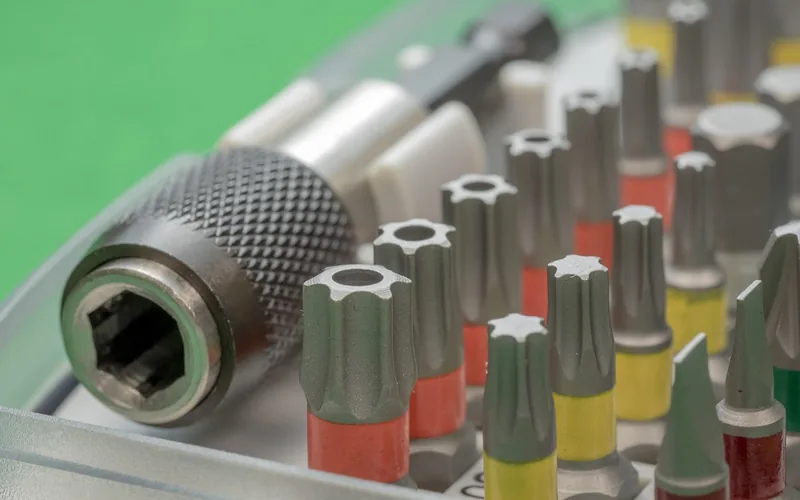
Torx sizes are defined by point-to-point tip diameter, so the number means the same thing from any maker. Deck screw makers pair specific Torx sizes with screw gauges: Simpson Strong-Tie lists its #8 Deck-Drive DWP screws with a T20 drive and its #10 screws with T25.
| Torx size | Point-to-point (mm) | Point-to-point (inch) | Common pairing |
|---|---|---|---|
| T10 | 2.74 | .107 | Small hardware, electronics |
| T15 | 3.27 | .128 | Small screws |
| T20 | 3.86 | .151 | #8 deck screws |
| T25 | 4.43 | .173 | #10 deck screws |
| T27 | 4.99 | .195 | Larger fasteners |
| T30 | 5.52 | .216 | Larger fasteners |
| T40 | 6.65 | .260 | Heavy-duty fasteners |
Sources: Wiha Tools, Torx dimensions (diameters); Simpson Strong-Tie Deck-Drive DWP product listings (#8 with T20, #10 with T25). Pairings for sizes other than T20 and T25 are not stated by these sources.
Hex And Square (Robertson) Sizes
Hex keys and bits are measured across the flats of the hexagon in millimeters (or fractions of an inch). For metric socket head cap screws, the ISO 4762 pairings are below.
| Screw size | Hex key (mm) |
|---|---|
| M3 | 2.5 |
| M4 | 3 |
| M5 | 4 |
| M6 | 5 |
| M8 | 6 |
| M10 | 8 |
Source: ISO 4762 socket head cap screw key sizes as listed by Wiha Tools and Engineers Edge.
Robertson (square) drive is color coded, which makes it the easiest size system to remember. Per the Wikipedia Robertson screw article:
| Robertson size | Color | Screw sizes |
|---|---|---|
| #00 | Orange | #1, #2 |
| #0 | Yellow | #3, #4 |
| #1 | Green | #5, #6, #7 |
| #2 | Red | #8, #9, #10 |
| #3 | Black | #12, 1/4 inch |
| #4 | Brown | 5/16, 3/8 inch |
Why Do Phillips Screwdrivers Cam Out More Than Torx?
A popular story says Phillips heads were designed to cam out on purpose so assembly-line workers could not overtighten aircraft fasteners. Wikipedia’s Phillips article notes there is no good evidence for this and that the property is not mentioned in the original patents. The cam-out itself is real: the tapered cross lets the bit climb out of the recess under high torque, which is why impact-driven deck and construction screws moved to Torx and square drives.
Do You Need A Different Screwdriver For Deck Screws?
Usually yes. Many deck screws use Torx or square drive instead of Phillips, and the screw box states which. As a working rule from maker listings, #8 deck screws take T20 and #10 take T25. A Phillips bit in a Torx recess slips and strips it.
Choosing The Right Screwdriver
Match the drive type first, then the size from the charts above. Reading the screw gauge off the box is the fastest route: gauge #8 points to PH2 for a Phillips screw or T20 for a Torx deck screw.
| Screw head | Driver you need |
|---|---|
| Slotted | Slotted blade matching the slot width |
| Phillips | Phillips (PH) bit of the right number |
| Pozidriv | Pozidriv (PZ) bit, not Phillips |
| Torx | Torx (T) bit of the right size |
| Square (Robertson) | Robertson bit of the right number or color |
| Hex socket | Hex key or bit in mm |
- Seat the tip fully in the recess before applying torque.
- Match the tip to the recess exactly; a loose fit is the top cause of stripped heads.
- Replace rounded or chipped tips, which cam out even on a correctly sized screw.
- Check pilot hole and screw size for the wood as well; our wood screw sizes chart covers gauge, length and pilot holes.
- Use a magnetic tip or a magnetizer to hold small screws during one-handed work.
Frequently Asked Questions On Screw Driver Size Chart
What Are The Sizes Of Screwdrivers?
Screwdrivers are sized per drive type: Phillips PH0 to PH4 for most work, Pozidriv PZ0 to PZ5, Torx T-numbers such as T20 and T25, slotted by blade width in millimeters, and hex by across-flats millimeters. There is no single scale, so identify the drive type before choosing a size.
How Do You Measure A Screwdriver?
For slotted drivers, measure the blade tip width across its widest point with calipers. For Phillips, Pozidriv and Torx, read the size stamped on the shank or bit (such as PH2 or T25) rather than measuring, then test-fit it in the screw head before driving.
What Does #2 Phillips Mean?
A #2 Phillips (PH2) is the Phillips driver size made for #5 to #9 screws, which includes most general-purpose wood, cabinet and drywall screws. It is the size most household screwdriver sets treat as the default.
How Do You Match A Screwdriver To A Screw?
Match the drive type first (Phillips, slotted, Torx, Pozidriv, hex or square), then choose the size that fills the recess completely. For Phillips, use the screw gauge: #2 to #4 takes PH1, #5 to #9 takes PH2, and #10 to #16 takes PH3.
What Size Screwdriver Is Standard For Household Use?
A PH2 Phillips covers #5 to #9 screws, the common range for furniture, cabinets and general repairs. Keep a PH1 for small hardware such as hinges, and a slotted blade that fits the slot snugly for slotted screws.
Are Torx Sizes The Same Across All Brands?
Yes. Torx sizes are defined by a fixed point-to-point tip diameter, for example T25 at 4.43 mm and T20 at 3.86 mm per Wiha’s dimension table, so a T25 bit should fit any T25 screw. Phillips tip dimensions are less strictly fixed, which is why test-fitting matters.
Can You Use A Phillips Screwdriver On A Pozidriv Screw?
You can, but you should not. A Phillips driver turns a Pozidriv screw loosely and cams out under torque, which can damage the head. Check for the small tick marks on the head and use a Pozidriv (PZ) bit instead.
Conclusion
Choosing the right screwdriver comes down to matching the drive type first and then the size to the screw in front of you. For Phillips, the gauge decides the bit: PH2 for #5 to #9, PH1 below it, PH3 above it. For Torx, T20 and T25 cover most deck screws. Test-fit before driving, and pair this chart with the wood screw sizes chart for pilot holes.
Sponsored / affiliate links. As an Amazon Associate I earn from qualifying purchases. I may earn additional commission from eligible campaigns.