Should Japanese Maple Roots Be Exposed
Many plant lovers wonder, Should Japanese Maple Roots Be Exposed? This can be a puzzling question for folks new to gardening. You see pictures online, and sometimes the roots look like they are part of the art. It’s not always clear if this is good or bad for the tree.
We will break it down easily, step by step. You’ll learn why this question pops up and what the best way is to care for your beautiful Japanese maple.
Understanding Exposed Japanese Maple Roots
The idea of letting Japanese maple roots show above the soil often comes up when people are styling these trees, especially for bonsai or as a feature in a garden. It’s a technique that can make a tree look very old and wise, or even give it a unique artistic flair. However, not all exposed roots are good for the tree’s health.
Some might be naturally showing, while others are deliberately uncovered for aesthetics. We need to know the difference to keep our trees happy and healthy. This section looks at what exposed roots really mean for your Japanese maple.
What Are Exposed Roots?
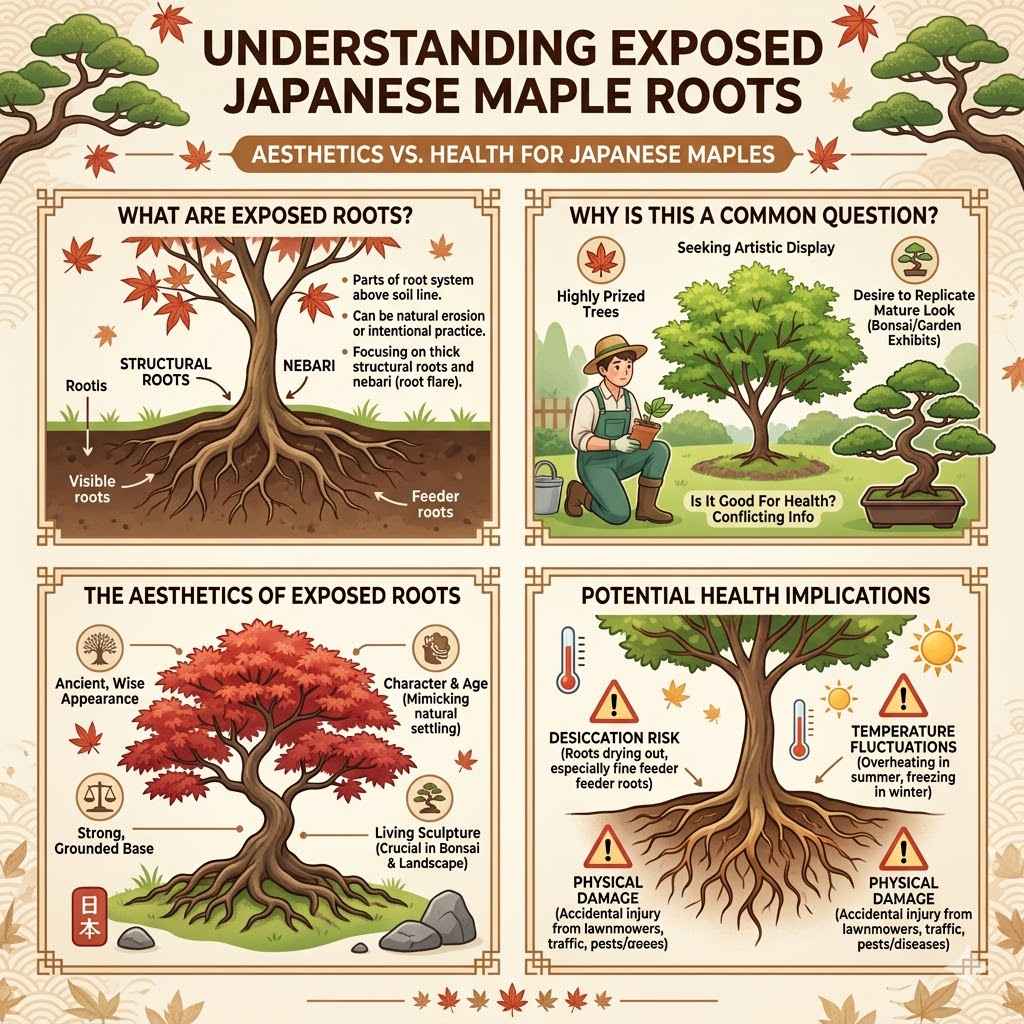
Exposed roots are simply parts of the tree’s root system that are visible above the soil line. This can happen naturally as the soil erodes around the base of the tree over time, or it can be an intentional gardening practice. When people talk about exposed roots, they might be referring to the thick, woody roots that anchor the tree, often called structural roots or buttress roots.
They can also mean the finer, feeder roots that absorb water and nutrients. The appearance can range from a few small root tips peeking out to a large network of roots prominently displayed.
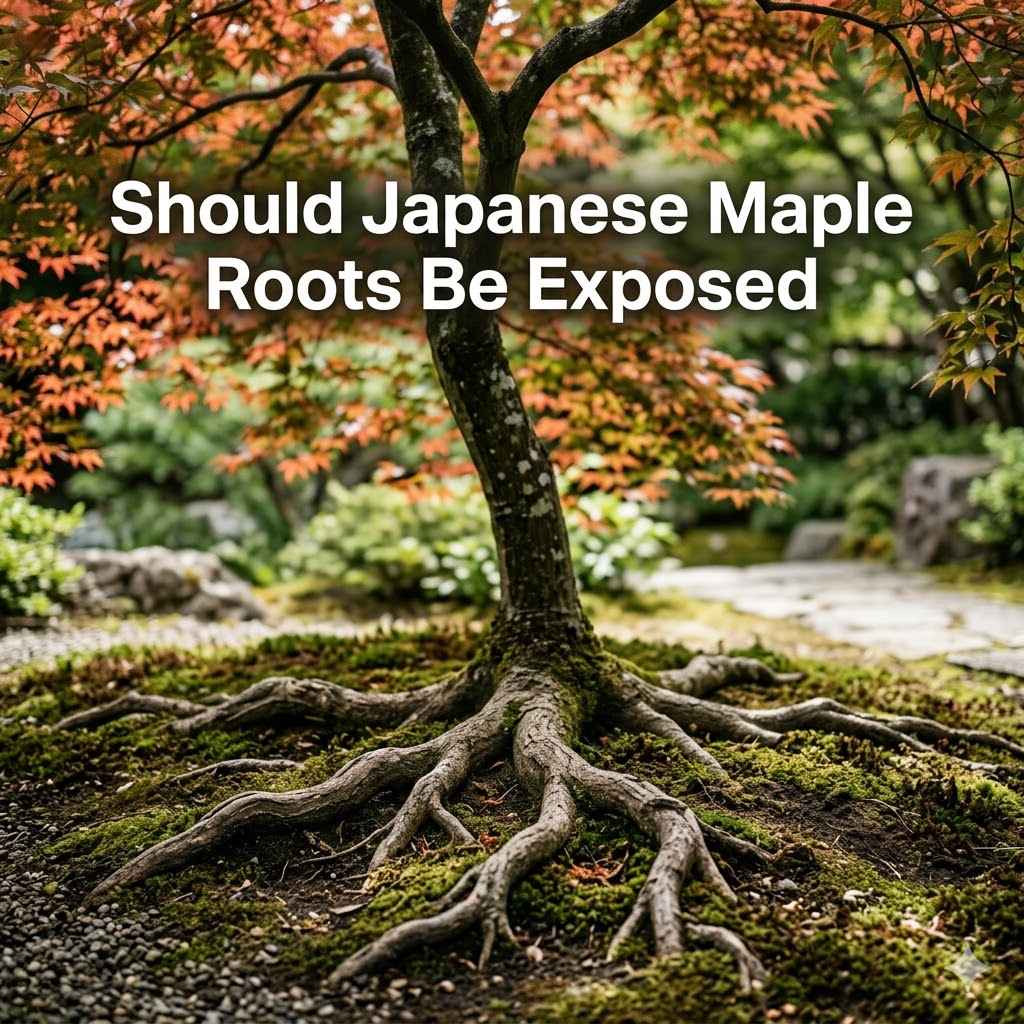
In the context of Japanese maples, gardeners often expose the nebari, which is the root flare where the trunk meets the roots. A well-developed nebari is a sign of a healthy, mature tree and is highly valued in Japanese garden design. Exposing these roots can improve air circulation around the base and allow for better drainage, which can be beneficial in certain climates.
However, it’s important to understand that not all roots should be exposed or can tolerate being exposed long-term without proper care and consideration.
The visual appeal of exposed roots is a major factor. They can give a Japanese maple a windswept look or a grounded, ancient feel. This aesthetic is often sought after by enthusiasts.
But like many gardening practices, the “how” and “why” are more important than just doing it. It requires a balance between appearance and the tree’s actual needs for survival and growth. We will explore this balance further.
Why Is This A Common Question?
The question of Should Japanese Maple Roots Be Exposed? becomes common because Japanese maples are highly prized for their elegant form and delicate foliage. Many gardeners aspire to create a beautiful, artistic display with these trees. When they see images or examples where roots are deliberately showcased, it sparks curiosity and a desire to replicate that look.
This often leads to the fundamental question of whether this practice is good for the tree’s health.
Beginners might also find this topic confusing because there isn’t a single, simple answer that applies to every situation. Some trees naturally develop prominent root flares that look beautiful exposed. Others might have roots that are more sensitive to the air and sun.
The confusion arises from trying to apply a general rule without considering the specific needs of the Japanese maple variety, its environment, and the long-term goals of the gardener. It’s a delicate balance between aesthetics and horticulture.
The desire to mimic the striking appearances seen in professional gardens or bonsai exhibits also fuels this question. These displays often represent years of careful cultivation and specific techniques. Without this context, it’s easy for a novice gardener to assume that exposing roots is always a desirable and beneficial practice.
This leads to uncertainty about how much is too much, or if it should be done at all. We aim to clear up this confusion.
The Aesthetics of Exposed Roots
The visual appeal of exposed roots is a significant draw for many Japanese maple enthusiasts. The way the roots spread out from the base of the trunk can create a strong, grounded appearance. This is particularly true for the nebari, the visible root flare.
A well-developed nebari can resemble the feet of an ancient creature or the base of a wise old sage. This natural beauty is often enhanced by the Japanese maple’s graceful branching patterns and vibrant leaf colors.
Exposed roots can also contribute to a sense of age and character in a tree. In natural settings, soil erosion or natural settling can gradually reveal parts of the root system. Gardeners sometimes replicate this effect to give a younger tree a more mature look.
This can be achieved through careful pruning and soil management, revealing the structural roots that anchor the tree and giving it an artistic, sculpted appearance that draws the eye.
For bonsai cultivation, exposed roots are almost a defining feature. The goal is to create a miniature representation of a mature tree, and a prominent, well-trained nebari is crucial to achieving this. Even in larger landscape settings, a carefully exposed root system can add a unique focal point, blending the tree’s natural form with the gardener’s artistic vision.
It transforms a simple tree into a living sculpture.
Potential Health Implications
While exposed roots can look beautiful, there are potential health implications to consider. The most significant risk is desiccation, or drying out. Roots that are normally protected by soil are exposed to air and sunlight, which can lead to them drying out and becoming damaged.
This is especially true for the fine feeder roots that are crucial for absorbing water and nutrients. If these roots dry out, the tree can suffer from lack of water and nutrients, leading to wilting and poor growth.
Another concern is temperature fluctuations. Exposed roots are more vulnerable to extreme heat and cold. In summer, they can overheat, and in winter, they can freeze.
This can damage the delicate root tissues and compromise the tree’s ability to function properly. The soil acts as a natural insulator, protecting the roots from these harsh conditions. When roots are exposed, they lose this protection.
There’s also the risk of physical damage. Exposed roots are more likely to be accidentally injured by lawnmowers, weed whackers, or even foot traffic. These injuries can create entry points for diseases and pests, further weakening the tree.
Therefore, while aesthetics are important, the tree’s health must always come first. Proper care can mitigate many of these risks, but it requires awareness and attention.
When Are Japanese Maple Roots Meant To Be Seen?
Japanese maple roots can be intentionally exposed for aesthetic purposes in specific situations, but it’s crucial to distinguish between these and naturally exposed roots. The key lies in understanding what parts of the root system are being exposed and ensuring they are adequately protected. This section explores the contexts where exposed roots are not only acceptable but can enhance the tree’s beauty and health.
We will look at what makes certain roots more suitable for exposure.
The Root Flare Or Nebari
The most commonly and successfully exposed part of a Japanese maple’s root system is the nebari, also known as the root flare. This is the area where the trunk widens out and transitions into the main structural roots at the base of the tree. A healthy nebari is a sign of a well-established and vigorous tree, and showcasing it can significantly enhance the tree’s aesthetic appeal.
It often resembles the gnarled feet of an ancient being, providing a sense of age and character.
Exposing the nebari is a deliberate gardening technique, especially popular in Japanese garden design and bonsai. It involves carefully removing soil over time to gradually reveal these prominent roots. The goal is to create a balanced and visually pleasing root spread.
When done correctly, this exposure does not harm the tree; in fact, it can improve air circulation around the base and help prevent root rot, which is a common problem for many trees, including Japanese maples.
It’s important to note that only the upper, woody portions of these structural roots are typically exposed. The fine feeder roots, which are essential for water and nutrient absorption, should remain buried. The exposed nebari roots should also be the thicker, more mature parts of the root system.
This distinction is vital for the tree’s long-term health and survival, ensuring that the parts necessary for its sustenance remain protected and functional.
Bonsai And Traditional Gardens
In the art of bonsai, exposing roots is a fundamental practice. Bonsai trees are miniature representations of mature trees, and a well-developed, visible nebari is a hallmark of a high-quality bonsai. Enthusiasts spend years training the roots, often using techniques like root over rock or cascade styles, where the roots are intentionally displayed to create a dramatic visual effect.
The roots are carefully sculpted and pruned to create a pleasing radial spread from the trunk.
Traditional Japanese gardens also frequently feature exposed roots as a key design element. The concept of wabi-sabi, which embraces imperfection and natural beauty, often translates into showcasing the gnarled and weathered appearance of exposed root structures. These gardens aim to evoke a sense of age, serenity, and harmony with nature.
The exposed roots become a focal point, adding depth and character to the landscape. They are carefully integrated into the overall design, complementing other elements like moss, rocks, and water features.
These practices are successful because they are done with great care and knowledge. The exposed roots are typically the thicker, woody structural roots, while the fine feeder roots remain protected beneath the soil surface. Regular maintenance, including careful watering and occasional root pruning, ensures the health of the tree despite the exposure.
It’s about artful presentation combined with horticultural understanding.
Naturally Exposed Roots
Sometimes, Japanese maple roots become exposed naturally due to environmental factors. One common cause is soil erosion. If a tree is planted on a slope or in an area with significant rainfall, the soil can gradually wash away from the base of the trunk, revealing the upper parts of the root system.
This is not necessarily harmful, as long as the exposed roots are not excessively dry or damaged.
Another natural occurrence is when a tree settles into the ground over time. As the soil compacts and shifts, some roots that were once fully buried may become partially visible. This is often seen in older, established trees.
The exposed sections are usually the thicker, more resilient structural roots that are less vulnerable to drying out than the fine feeder roots.
In some cases, a shallow root system can also lead to roots naturally appearing close to the surface. Japanese maples, particularly certain cultivars, can have a more fibrous or shallow root structure. This means that even without significant erosion, the tops of some roots might be visible.
The key here is to observe the tree’s overall health. If the tree is thriving, with good leaf color and growth, then naturally exposed roots are likely not a cause for concern.
Erosion And Soil Movement
Soil erosion is a primary natural process that can lead to exposed roots. When heavy rains fall, especially on sloped terrain, the topsoil can be washed away from around the base of the tree. This process can gradually reveal the upper layers of the root system over time.
If the erosion is gradual, the tree may have time to adapt. However, rapid or severe erosion can expose delicate root tissues to drying and damage.
Soil movement, including settling and compaction, also plays a role. As a Japanese maple matures, the soil around its base can settle, causing parts of the root system to become more visible. This is a natural part of the tree’s life cycle.
In some instances, particularly in garden settings where soil may have been disturbed during planting, the soil level can decrease over time, leading to the gradual emergence of roots.
When roots are exposed due to erosion or settling, the tree’s ability to cope depends on several factors. The type of roots exposed is important; thicker, woody roots are generally more tolerant than fine feeder roots. The climate also plays a role; in consistently moist environments, erosion might be less detrimental than in arid regions where exposed roots can quickly dry out.
Regular monitoring of the tree’s health is crucial in these situations.
When Exposure Is NOT Recommended
Exposing Japanese maple roots is not always a good idea, and it’s crucial to know when to avoid it. The most important factor is protecting the fine feeder roots, which are responsible for absorbing water and nutrients. These roots are thin, delicate, and very susceptible to drying out when exposed to air and sunlight.
If these roots are uncovered and dessicate, the tree will suffer, showing signs of wilting, leaf drop, and reduced vigor.
Furthermore, exposing roots can make them vulnerable to temperature extremes. The soil acts as an insulator, protecting the roots from the damaging effects of frost in winter and intense heat in summer. Roots exposed to these conditions can be damaged, hindering the tree’s ability to absorb water and nutrients.
This is particularly problematic in regions with harsh winters or very hot summers.
Physical damage is another significant risk. Exposed roots are more prone to being accidentally cut by lawnmowers or weed whackers, or damaged by foot traffic. These injuries can create openings for diseases and pests to enter the tree, weakening its overall health.
Therefore, if the roots are fine feeder roots, or if the climate is extreme, or if the area has heavy foot traffic, it’s generally best to keep the roots covered by soil.
Damage To Fine Feeder Roots
The fine feeder roots are the unsung heroes of a tree’s root system. These are the delicate, hair-like roots that are primarily responsible for taking up water and essential nutrients from the soil. They have a large surface area relative to their size, which makes them highly efficient at absorption.
However, this efficiency comes at the cost of fragility. Unlike the thicker, woody structural roots, feeder roots have thin cell walls and lack the protective bark layer.
When these fine roots are exposed to the atmosphere, they can quickly lose moisture. This process is called desiccation. Even a short period of exposure can lead to irreversible damage.
Once these vital absorption pathways are compromised, the tree cannot effectively hydrate itself or take up the minerals it needs to thrive. This leads to a cascade of negative effects, starting with wilting and progressing to leaf scorch, stunted growth, and, in severe cases, the death of the tree.
Therefore, any gardening practice that involves exposing these delicate structures needs to be approached with extreme caution. It is generally recommended to keep feeder roots covered by a layer of soil, mulch, or other organic material. This layer provides insulation against temperature fluctuations, retains moisture, and protects them from physical injury.
Prioritizing the health and function of feeder roots is paramount for the long-term vitality of any Japanese maple.
Protecting Roots From The Elements
Protecting the roots of your Japanese maple from harsh elements is crucial for its health, especially if you choose to expose some of the upper root structure. Mulching is one of the most effective ways to achieve this. A layer of organic mulch, such as wood chips, shredded bark, or compost, applied around the base of the tree, acts as a natural insulator.
It helps to retain soil moisture, keeping the roots hydrated, and it moderates soil temperature, protecting them from extreme heat and cold.
Furthermore, mulching helps suppress weeds that can compete with the tree for water and nutrients. It also slowly breaks down, enriching the soil over time. When mulching around Japanese maples, it’s important to keep the mulch a few inches away from the trunk itself.
This prevents moisture from accumulating against the bark, which can lead to rot or fungal diseases. The mulch should form a ring around the base, extending out to the drip line of the tree.
Another protective measure is careful watering, especially during dry periods. If you have exposed roots, you may need to water more frequently, ensuring that the soil and the exposed roots receive adequate moisture. In areas with very harsh winters, a thicker layer of mulch can provide extra protection against freezing temperatures.
For newly planted trees, temporary protective covers might be considered during the first winter.
The Role Of Mulch
Mulch plays a vital role in maintaining the health of Japanese maple roots, whether they are exposed or not. When applied around the base of the tree, mulch creates a protective blanket. This blanket is incredibly effective at conserving soil moisture.
By reducing evaporation from the soil surface, mulch ensures that water applied during irrigation or rainfall stays available for the roots to absorb. This is especially important during dry spells when water is scarce.
Mulch also acts as a natural temperature regulator. It insulates the soil, keeping it cooler in the summer and warmer in the winter. This moderation of soil temperature is critical for root health.
Extreme temperature swings can shock and damage root tissues, impairing their function. By providing a buffer against these fluctuations, mulch helps the roots stay in a more stable and favorable environment. This stability is key for consistent nutrient and water uptake.
Beyond moisture and temperature, mulch helps suppress weed growth. Weeds compete with the Japanese maple for precious resources like water, nutrients, and sunlight. By smothering weeds, mulch reduces this competition, allowing the tree to thrive.
Additionally, as organic mulches decompose over time, they add valuable organic matter to the soil, improving its structure and fertility. This slow-release fertilization benefits the tree’s overall health and vigor.
How To Expose Japanese Maple Roots Safely
If you’ve decided that exposing the roots of your Japanese maple is the right choice for both aesthetics and the tree’s health, doing it safely is paramount. This involves a gradual, careful process that prioritizes the tree’s well-being. You don’t want to shock the tree or damage its vital systems.
Here’s a step-by-step approach to achieving beautiful exposed roots without causing harm.
Gradual Soil Removal
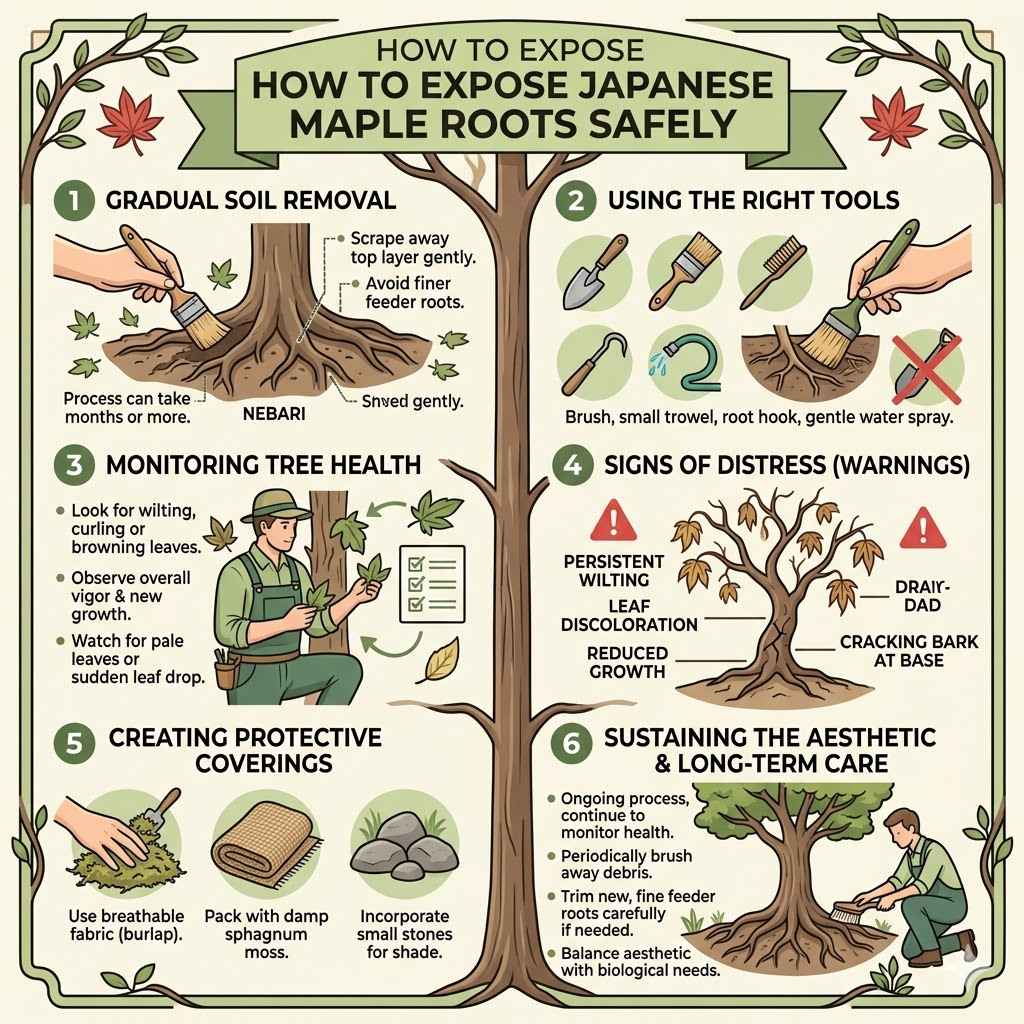
The safest way to expose Japanese maple roots is through gradual soil removal. Instead of digging out a large amount of soil all at once, a small amount should be removed at a time, over an extended period. This allows the tree to adapt to the changing environment around its root flare.
Begin by gently scraping away the top layer of soil with a hand trowel or a small brush. Focus on the areas where you want to reveal the roots.
As you remove soil, observe the roots you uncover. You’re looking for the thicker, structural roots that form the nebari. Avoid disturbing or exposing the finer, hair-like feeder roots, as these are essential for the tree’s survival.
If you encounter delicate feeder roots, stop removing soil in that area or gently push the soil back around them. The goal is to sculpt the soil away, rather than excavate it.
This process can take several months or even a year or more, depending on how much you want to expose. Regular, light soil removal is much better than a single, aggressive digging session. This careful approach minimizes stress on the tree and allows it to adjust to the increased air circulation and sunlight around its upper root structure.
It’s a patient process that yields beautiful results.
Using The Right Tools
When undertaking the task of exposing Japanese maple roots, using the correct tools is essential for minimizing damage and ensuring efficiency. A simple hand trowel or a small gardening spade is often sufficient for removing larger amounts of soil. However, for more precise work, especially around delicate roots, a small brush, such as a paintbrush or a whisk broom, is invaluable.
These brushes allow you to gently sweep away soil particles without risking damage to the roots.
A root hook or a cultivator can also be helpful for carefully teasing away compacted soil without cutting or bruising the roots. For more stubborn soil, a watering wand or a gentle stream of water from a hose can help to loosen it. This method is particularly useful for flushing out fine soil particles from between the roots, revealing their form more clearly.
Always use water at a low pressure to avoid damaging root tissues.
Chisels or even small carving tools might be used in advanced bonsai techniques, but for most garden applications, simpler tools are best. The key is to approach the task with patience and gentleness. The right tools help you work carefully, ensuring that you are exposing the desired parts of the root system while protecting the more vulnerable components of the tree’s foundation.
This careful selection of tools is part of a safe process.
Monitoring Tree Health
After you begin exposing the roots of your Japanese maple, constant monitoring of the tree’s health is vital. This is not a one-time task but an ongoing process. You need to be observant and responsive to any signs that the tree may be under stress.
The most immediate indicators are changes in the foliage. Look for wilting leaves, curling, or browning edges, especially during hot or dry periods. These can signal that the tree is not getting enough water, possibly due to exposed feeder roots.
Also, pay attention to the overall vigor of the tree. Is it producing new growth? Are the leaves a healthy, vibrant color?
A sudden decline in growth, pale leaves, or increased leaf drop could indicate root issues. If you notice any of these symptoms, it’s a sign that you may have exposed too much, or perhaps the wrong parts of the root system, or that the exposed roots are not receiving adequate moisture. You might need to adjust your watering schedule or even cover some of the exposed roots again.
Regularly inspect the exposed root surfaces themselves. Are they drying out excessively? Do they appear cracked or damaged?
Healthy exposed roots should feel firm, and while they may be dry to the touch, they shouldn’t appear brittle or shriveled. This constant vigilance allows you to make timely adjustments, ensuring that your aesthetic choices do not compromise the long-term health and beauty of your Japanese maple.
Signs Of Distress
Recognizing the signs of distress in your Japanese maple is crucial. The most common early symptom is wilting. If the leaves start to droop, especially during the warmer parts of the day, it indicates that the tree is struggling to absorb enough water.
This can be a direct result of exposed feeder roots drying out or being damaged. Persistent wilting that doesn’t recover overnight is a clear warning sign.
Leaf discoloration is another key indicator. While Japanese maples are known for their beautiful color changes in autumn, off-season browning, yellowing, or scorched-looking edges can point to root problems. This often happens when the roots cannot adequately supply water and nutrients to the leaves.
The leaves essentially dry out or are starved, leading to these visual cues. Reduced leaf size or fewer leaves on the branches can also be a sign of overall stress.
Growth reduction is a more subtle but important sign. If your Japanese maple has typically shown vigorous new growth each spring but suddenly slows down, it could be related to root health. The tree might not have the resources to support new development.
Lastly, observe the bark at the base of the tree. If it appears to be cracking or peeling away in unusual patterns, it could be a sign of root stress or disease entering through damaged root areas.
Creating Protective Coverings
If you find that your Japanese maple’s roots are drying out too quickly after exposure, or if you live in a climate with extreme temperatures, creating protective coverings is a wise step. While keeping the nebari visible is desirable, the tree’s health must come first. You can use a variety of materials to provide this protection without completely hiding the aesthetic you’ve worked to achieve.
One simple method is to use a layer of sphagnum moss, which is highly absorbent and retains moisture well.
You can gently pack damp sphagnum moss around the exposed roots. This will help to keep them hydrated and provide a buffer against temperature fluctuations. Another option is to use a breathable fabric, such as burlap, to wrap the roots.
This offers protection while still allowing some air circulation. Ensure the fabric is secured loosely so it doesn’t constrict the roots.
For more permanent solutions, consider integrating small, well-placed rocks or decorative stones around the base of the tree. These can act as a partial shield for the roots, shading them from direct sun and providing some insulation. The key is to use materials that are natural-looking and complement the tree’s aesthetic.
These coverings can often be adjusted or removed seasonally as needed, allowing you to balance beauty with the practical needs of your Japanese maple.
Sphagnum Moss As A Shield
Sphagnum moss is an excellent material for protecting exposed Japanese maple roots, offering both moisture retention and insulation. This unique type of moss has a remarkable ability to absorb and hold water, up to 20 times its own weight. When applied to exposed roots, it creates a moist environment that prevents desiccation.
This is particularly beneficial during dry periods or in arid climates.
The moss also provides a degree of insulation against temperature extremes. Its fluffy structure traps air, creating a barrier that helps keep the roots cooler in summer and warmer in winter. This protection can be vital for preventing damage from frost or excessive heat.
When using sphagnum moss, it’s best to dampen it thoroughly before applying it to the roots. You can then gently pack it around the exposed root areas, ensuring good contact.
While sphagnum moss is effective, it does require maintenance. It will dry out over time, especially in hot or windy conditions, so it needs to be re-moistened periodically. It can also decompose over time, so it may need to be replenished occasionally.
Despite these minor drawbacks, its benefits in protecting exposed roots make it a valuable tool for many Japanese maple enthusiasts seeking to balance aesthetics with tree health.
The Long Term Perspective
When you are considering whether Should Japanese Maple Roots Be Exposed?, thinking about the long-term health of your tree is paramount. While the immediate visual appeal of exposed roots can be striking, it’s essential to ensure that this practice supports the tree’s vitality for years to come. A Japanese maple is an investment that can bring beauty to your garden for decades, and its longevity depends on proper care.
Exposing only the nebari, or root flare, is generally the safest approach. This part of the root system is more robust and less prone to damage than the fine feeder roots. By focusing on this area, you can achieve an attractive aesthetic while minimizing the risk of harming the tree.
Over time, a well-maintained exposed nebari can become a signature feature, enhancing the tree’s character and value.
Remember that the goal is a harmonious balance between appearance and the tree’s biological needs. This means consistent monitoring, appropriate protection, and a willingness to adjust your approach if the tree shows any signs of stress. With careful attention and a long-term perspective, you can successfully showcase the beautiful root structure of your Japanese maple.
Sustaining The Aesthetic
Sustaining the aesthetic of exposed Japanese maple roots is an ongoing process that requires attention to detail and regular care. Once you have successfully revealed the nebari, you will need to maintain its appearance while ensuring the tree remains healthy. This involves continuing to monitor the exposed roots for any signs of drying out or damage.
You may need to adjust your watering schedule, especially during hot, dry spells, to ensure adequate moisture reaches the root system.
Periodically, you might need to gently brush away any accumulated debris or soil that starts to cover the roots again. This is especially true if you have applied a layer of mulch for protection; you’ll want to keep the nebari clearly visible. If any new, fine roots begin to emerge and are not intended to be part of the exposed design, they can be carefully trimmed back.
This helps to maintain the clean lines of the exposed root structure.
Over the years, the roots themselves will continue to grow and thicken. You might need to make minor adjustments to the exposed area as the tree matures. The aim is to create a look that appears natural and artful, rather than forced.
A well-maintained exposed root system will only enhance the tree’s beauty and character over time, becoming a beloved feature of your garden that evolves gracefully with the tree.
Conclusion
Deciding Should Japanese Maple Roots Be Exposed? involves balancing beauty with the tree’s health. Focus on the strong nebari, or root flare, for aesthetic appeal. Always protect the fine feeder roots, which are essential for the tree’s life.
Gradual soil removal and consistent monitoring are key. With careful attention, you can create a stunning display that your Japanese maple will thrive with.
Frequently Asked Questions
Question: Is it bad to expose Japanese maple roots?
Answer: It is not inherently bad to expose Japanese maple roots, especially the nebari (root flare). However, exposing delicate feeder roots can be harmful as they are prone to drying out and damage. The key is to expose only the structural upper roots and to protect them adequately.
Question: How much of the roots can I expose?
Answer: You can expose the root flare, which is the area where the trunk widens into the main roots. This often looks very attractive. It is generally advised to keep the finer, hair-like feeder roots covered by soil or mulch to protect them.
Question: How often should I water if I expose roots?
Answer: If you expose roots, you will likely need to water more frequently. Check the soil moisture regularly by feeling it with your finger. If the top inch or two feels dry, it’s time to water.
Exposed roots can dry out faster.
Question: Can exposed roots freeze in winter?
Answer: Yes, exposed roots are more susceptible to freezing temperatures than roots covered by soil. A good layer of mulch can help insulate the roots during winter. In very cold climates, additional protection might be necessary.
Question: What should I do if my exposed roots start to look dry?
Answer: If your exposed roots look dry, you should water them more thoroughly. You can also consider applying a layer of damp sphagnum moss or a breathable fabric loosely around them for temporary protection and moisture retention.
Summary
Deciding Should Japanese Maple Roots Be Exposed? requires careful consideration. Exposing the nebari can enhance beauty. Always protect feeder roots.
Gradual soil removal, vigilant monitoring, and protective measures are essential. This approach ensures your Japanese maple remains healthy and stunning for years to come.