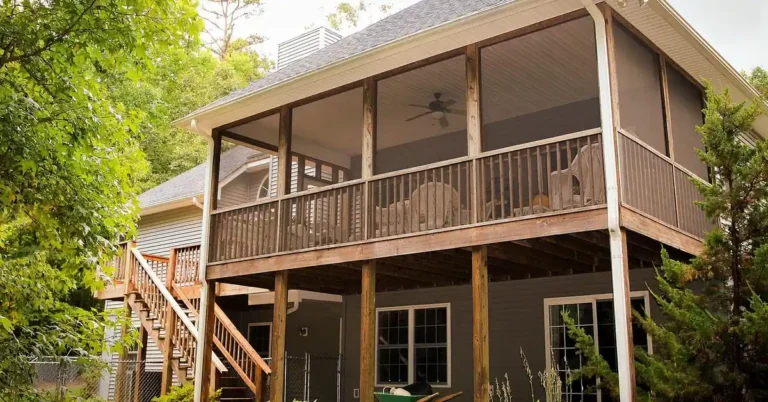
Decking Water Feature Ideas: Fountains, Ponds, and Streams
A water feature on or next to a wood deck works best when it’s sized to the deck and sealed off from the boards themselves — standing water and untreated decking don’t mix well over time. Below are the most practical options for a deck setting, from small built-in fountains to freestanding ponds, along with the sizing, waterproofing, and winter-care details that keep one from becoming a maintenance headache.
Choosing the Right Size and Style
Best For Off-Grid Deck Fountains
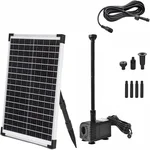 |
ECO-WORTHY 25W Solar Fountain Pump Kit – $82.60 No outlet on your deck is no longer a dealbreaker — this kit runs a fountain, small pond, or bubbling urn entirely off its included solar panel.
|
Measure your deck’s usable space before picking a feature — a fountain that’s too large for the area feels like it’s taking over the deck, and one that’s too small gets visually lost. As a rule of thumb, a tabletop or wall-mounted fountain suits decks under 150 square feet, while a freestanding pond or multi-tier fountain needs at least a 4×4-foot dedicated footprint to look intentional rather than crowded.
Match the material to your deck’s style: natural stone reads as rustic and pairs well with cedar or redwood decking, brushed metal fits modern composite decks, and a wood-clad fountain surround blends into either. Whatever you choose, keep the water source off the deck boards themselves — either raised on a stand with a drip tray, or set on a section of paver or tile rather than directly on wood.
Water Feature Ideas That Work On a Deck
Built-In Wall or Rail Fountains
A slim fountain mounted to a deck rail post or a privacy wall takes up almost no floor space, which makes it the easiest option for small decks. Water recirculates through a small reservoir at the base, so there’s no open pool to worry about near foot traffic.
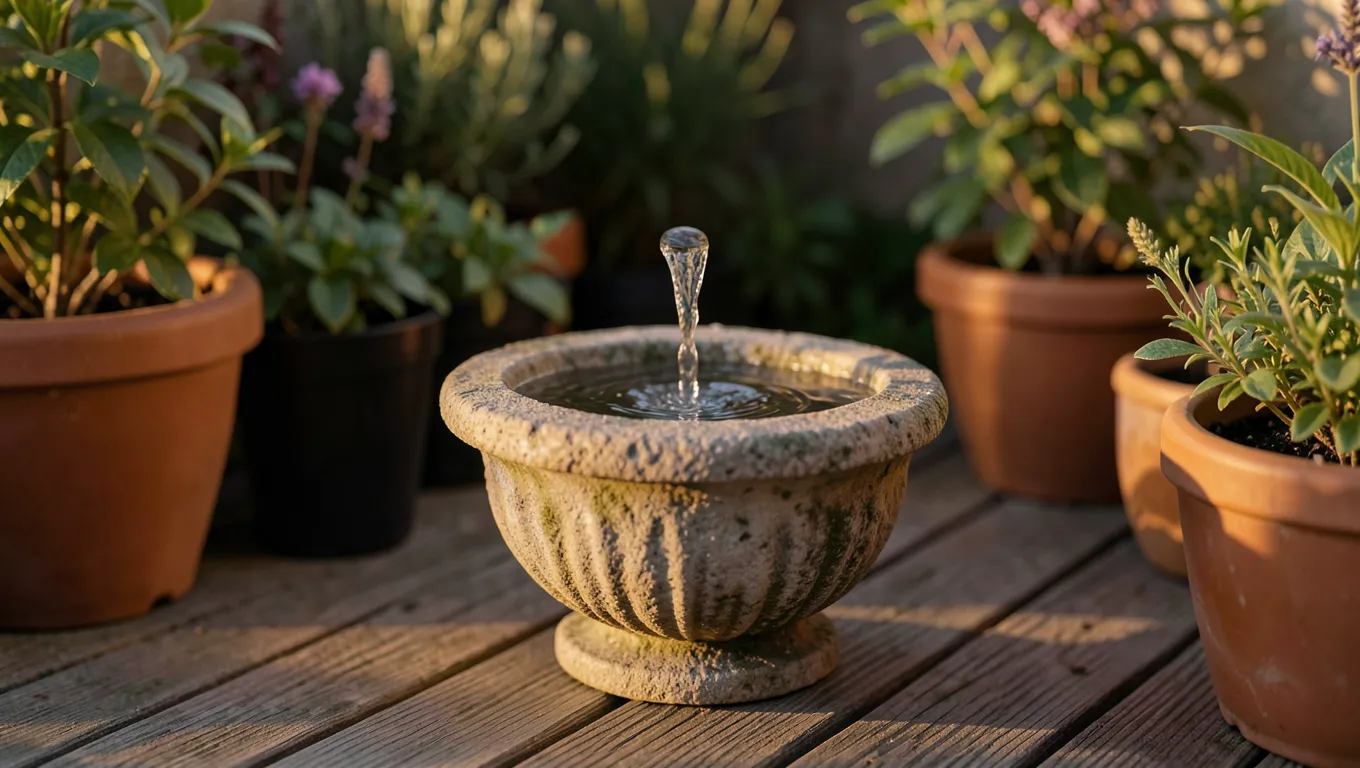
Freestanding Fountains and Urns
A ceramic or stone urn fountain with a self-contained reservoir is the most portable option — it can be rearranged or moved indoors for winter, and doesn’t require any cutting or built-in plumbing. Solar-powered kits (like the one above) remove the need to run an extension cord across the deck, which is also a trip-hazard reduction.
Container Ponds
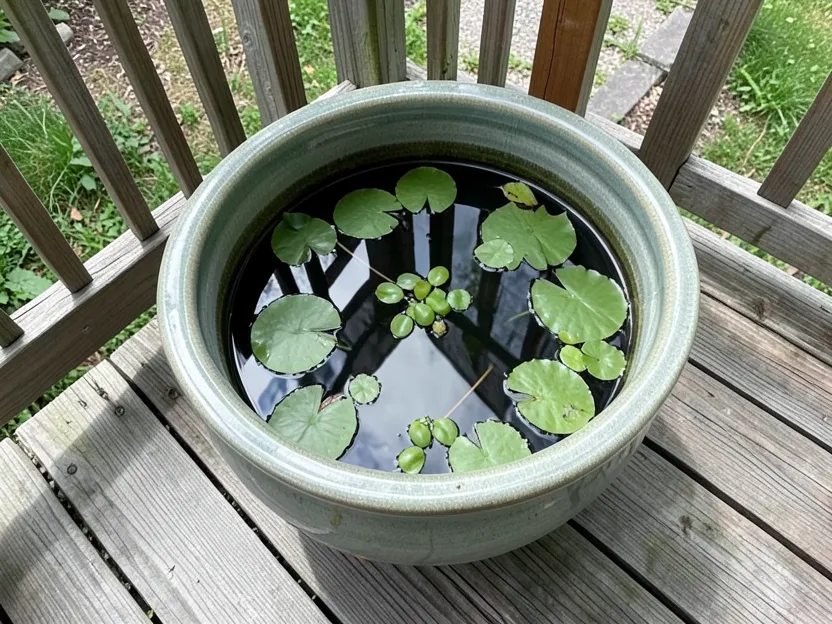
A half-barrel or large glazed pot, lined and filled with water, lily pads, and a small pump, gives you a pond look without cutting into the deck structure. These are popular because they can house a couple of small fish or just aquatic plants, and they sit directly on the deck surface on a paver or plant stand rather than requiring excavation.
Multi-Tier Cascades
On a multi-level deck, a tiered fountain or a short cascade built into a step transition uses the existing height change to create movement without extra construction. This works especially well flanking a stairway between deck levels.
Protecting the Deck Itself
The biggest risk a water feature poses to a wood deck isn’t the fountain, it’s splash and overflow sitting on the boards. A few precautions prevent long-term damage:
- Use a drip tray or paver base under any freestanding feature so water can’t pool directly against the wood.
- Keep splash zones clear of end-grain cuts on the decking, since end grain absorbs moisture faster than the board face.
- Reseal nearby boards annually if the feature sits within a few feet of unsealed wood decking — composite decking doesn’t need this step.
- Check for standing water after rain, since an overflow reservoir can combine with rainwater and overtop onto the deck if it isn’t emptied periodically.
Lighting the Feature
- Submersible LED lights: Waterproof lights placed inside the reservoir highlight moving water and are safe to touch since they run on low voltage.
- Solar accent lights: Placed around the base, these need no wiring and charge during the day, though output is weaker on cloudy days.
- Color-changing LEDs: A nice option for evening entertaining, but keep them subtle — a fountain lit in shifting colors can look more like a nightclub feature than a calming one.
Maintenance
- Weekly: Skim leaves and debris, and top off water lost to evaporation.
- Monthly: Pull the pump and rinse the intake screen — a clogged screen is the most common reason a fountain pump suddenly gets quiet or weak.
- Algae control: A small dose of an aquatic-safe algaecide, or adding floating plants that shade the water surface, keeps buildup down without harsh chemicals.
- Winter: In freezing climates, drain the reservoir fully, remove and store the pump indoors, and cover the empty basin. Water left in a pump or reservoir over a hard freeze can crack the housing.
Safety Around Water on a Deck
- Slip resistance: Splash zones get slippery. Textured or grooved decking, or a small mat, helps near any feature with open water.
- Child and pet supervision: Even a shallow container pond is a drowning risk for a toddler. Keep features away from unsupervised play areas or add a low barrier.
- Electrical safety: Any pump plugged into an outlet (rather than solar) needs a GFCI-protected outdoor outlet. Never run an extension cord across a walkway.
Budget-Friendly Options
A DIY container pond built from a large glazed pot or a half whiskey barrel, a small submersible pump, and a few stones for a natural edge typically costs $60–$120 total, well under most pre-made deck fountains. Watch for end-of-season sales on garden centers’ fountain and pond stock, which often clear out at 30–50% off in early fall.
Frequently Asked Questions
What are popular decking water features?
Built-in wall fountains, freestanding urn fountains, container ponds, and multi-tier cascades are the most common choices for wood decks, since none of them require cutting into the deck structure.
Will a water feature damage my wood deck?
Not if you keep the water source off the boards themselves — use a drip tray or paver base, keep splash zones away from end-grain cuts, and reseal nearby unsealed wood annually.
Are decking water features eco-friendly?
They can be. Solar-powered pumps eliminate the electricity draw, and floating plants provide natural filtration that reduces the need for chemical algae treatments.
How do I winterize a deck water feature?
Drain the reservoir completely, remove the pump and store it indoors, and cover the empty basin. Leaving water in the pump or reservoir through a hard freeze risks cracking the housing.
Can water features increase home value?
A well-maintained, appropriately sized water feature can add to a deck’s appeal to buyers, but an oversized or poorly maintained one can just as easily read as a maintenance burden. Scale and upkeep matter more than the feature itself.
The right deck water feature comes down to matching the size to your available space and keeping splash water off the boards. A small solar-powered fountain or urn is the lowest-effort starting point; a container pond or multi-tier cascade is worth the extra setup if you have the space and want something more substantial. Whichever you choose, budget for the winter drain-and-store routine — it’s the maintenance step that gets skipped most often and causes the most damage.
Sponsored / affiliate links. As an Amazon Associate I earn from qualifying purchases. I may earn additional commission from eligible campaigns.
 Simpson Strong-Tie T8PTD1 Preservative-Treated Wood Decking Nail, Ring Shank — 2-1/2 in. x .120 in. Type 316 (1 lb.)
 SuperStructuring Plugs for Decking - 1/4" Trex Composite Decking Wood Plugs, Weather-Resistant, UV Protection, Hole Covers for Outdoor Home Improvement & Repair - Enhance Naturals Foggy Wharf, 100-Pc