Simple Wooden Jewelry Box: Build It With Real Dimensions
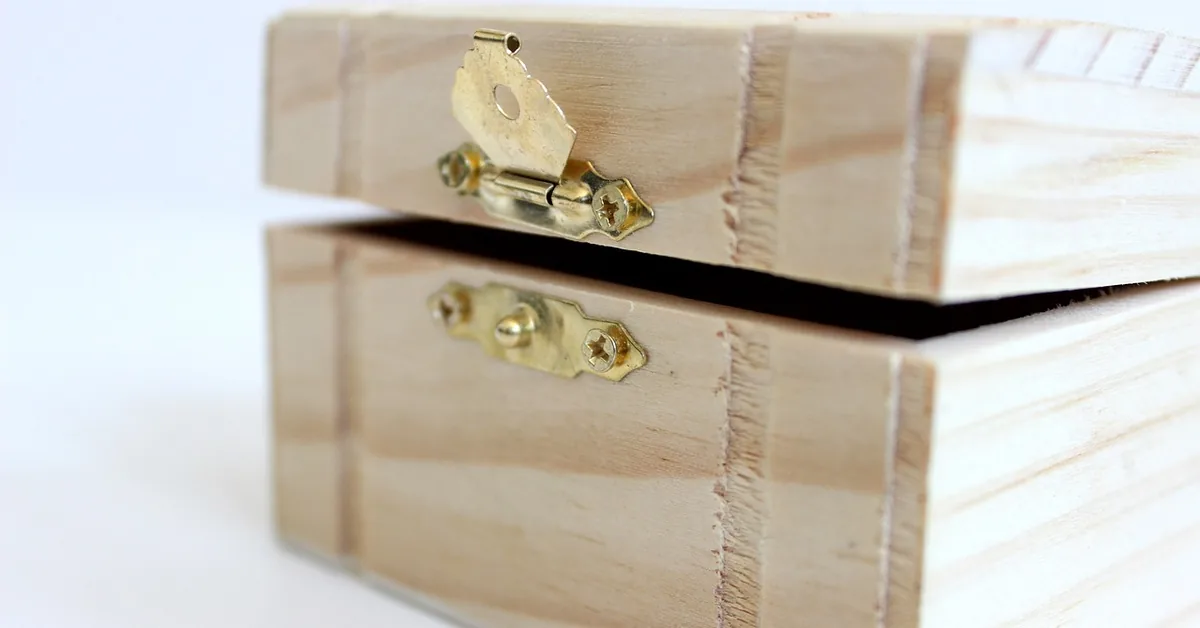
A simple wooden jewelry box is a rabbet-jointed hardwood case, typically 8 inches long, 5 inches wide, and 3 inches tall, built from six cut pieces and closed with a pair of small brass hinges. Skip the rabbet and a glued butt joint eventually racks loose under the lid’s weight. This guide covers the exact cut list, how to cut the rabbets, which hinge size fits a half-inch wall, and how to finish it. If you want to compare wood species, drawer layouts, or engraving options before committing to this cut list, see our broader wood jewelry box plans guide first.
This post contains affiliate links. As an Amazon Associate we earn from qualifying purchases at no extra cost to you.
Quick Answer
A simple wooden jewelry box is an 8 x 5 x 3-inch hardwood case joined with quarter-inch rabbets at the corners, glued and clamped, then closed with a pair of 0.79-inch brass hinges set an inch from each corner. Cut six pieces, glue up the sides, sand to 220 grit, then finish with wipe-on polyurethane.
What You’ll Need: Tools, Materials & Real Dimensions
Best Jewelry Box Hinge Pick
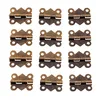
dophee Antique Brass Butterfly Hinges for Small Box, 0.79″ x 0.67″ (12-Pack)
Surface-mount butterfly hinges sized right for a 1/2″-thick jewelry box wall — no mortising required.
- Best for: a 1/2″ to 5/8″ wall thickness like this build
- Why we picked it: surface-mounted, so a beginner can install them with just a screwdriver
- Main drawback: decorative butterfly leaves show on the outside of the box, which some builders prefer to hide with a mortised hinge instead
Compare more jewelry box building supplies
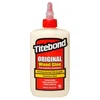 Wood Glue Titebond Original Wood Glue, 8 oz
|
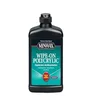 Finish Minwax Water-Based Wipe-On Poly, Satin, 1 Pint
|
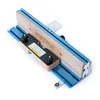 Box Joint Jig POWERTEC Adjustable Box Joint Jig
|
As an Amazon Associate we earn from qualifying purchases.
Hardwoods like walnut, cherry, and maple hold their shape and take a finish better than softwoods, which is why they show up in nearly every real jewelry box plan. A 1/2-inch-thick board is the sweet spot for the sides — thick enough for the rabbets below to hold, thin enough that the box doesn’t look bulky.
- Hardwood board, 1/2″ thick (walnut, cherry, or maple) for the sides and lid
- 1/4″ plywood or thin hardwood for the bottom panel
- Table saw or circular saw with a straightedge guide
- Dado blade or router table (for cutting the rabbets)
- Wood glue
- Bar or spring clamps (at least 4)
- Sandpaper, 150 through 220 grit
- Wipe-on polyurethane, oil, or wax finish
- Small box hinges and a hasp or latch
- Measuring tape or combination square
- Pencil and marking gauge
- Safety glasses and hearing protection
The dimensions below build an 8″ x 5″ x 3″ box (outside measurements) — a size that fits a bracelet, a few rings, and a couple of necklace chains without feeling oversized on a dresser. Every piece is sized off that footprint, so if you want a bigger or smaller box, scale the long and short sides proportionally and keep the 1/2″ wall thickness the same.
| Piece | Qty | Size (L x W x Thickness) | Notes |
|---|---|---|---|
| Long sides (front/back) | 2 | 8″ x 3″ x 1/2″ | Rabbet each end 1/4″ wide x 1/4″ deep on the inside face |
| Short sides (ends) | 2 | 4-1/2″ x 3″ x 1/2″ | Fits into the rabbets on the long sides |
| Bottom panel | 1 | 8″ x 5″ x 1/4″ | Glued and pinned flush to the bottom edge of the four walls |
| Lid | 1 | 8-1/4″ x 5-1/4″ x 5/8″ | Slightly oversized so it overhangs the walls by 1/8″ on each side |
The short-side length comes from the math, not a guess: outside width (5″) minus twice the wall thickness (1/2″), plus twice the rabbet depth (1/4″), equals 4-1/2″. If you change the wall thickness or rabbet depth, run that same formula before you cut anything.
Choosing Your Joinery: Butt, Rabbet, or Box Joint
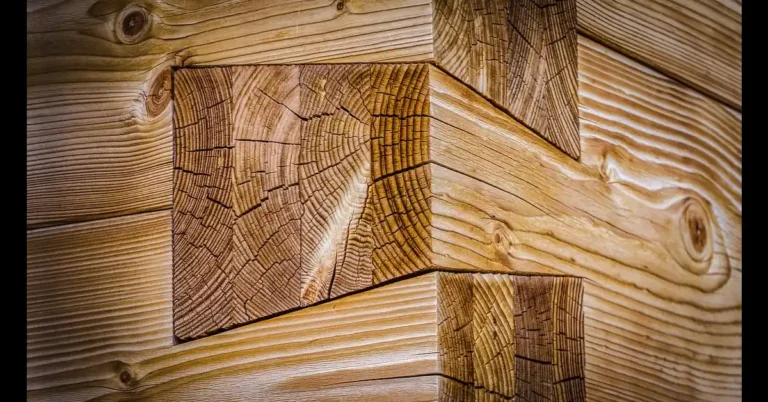
A rabbet joint is a step-shaped recess cut into the end of one board so a second board fits flush inside it, roughly doubling the glue surface of a plain butt joint and keeping the corner aligned while the glue sets. It’s the joint this cut list is built around, and it’s the one most beginner-friendly plans quietly skip in favor of glue alone.
| Joint Type | Difficulty | Strength | Best For |
|---|---|---|---|
| Butt joint | Beginner | Weakest — glue is the only bond | A practice box before committing good wood |
| Rabbet joint | Beginner-Intermediate | Good — glue surface roughly doubles | A gift-quality box built with basic tools |
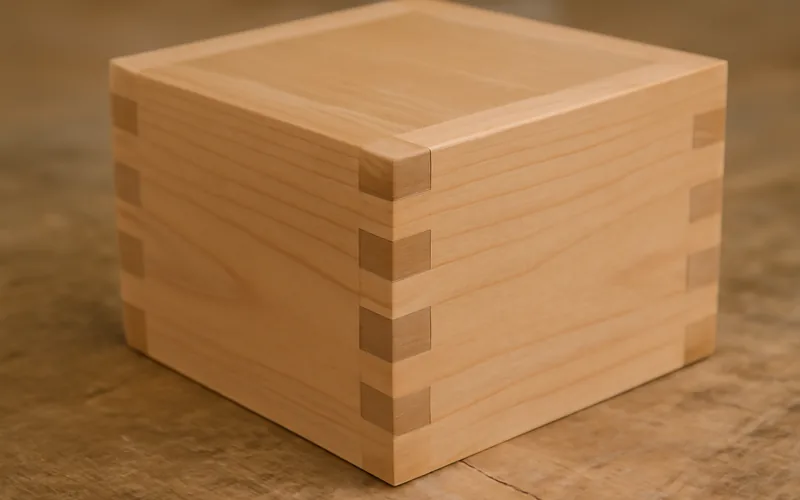
| Box joint (finger joint) | Intermediate | Strongest — interlocking fingers resist racking | An heirloom box that shows the joinery on purpose |
If you already own a table saw or router and want the interlocking-finger look instead of a plain rabbet, a box joint jig turns the same six pieces into finger joints. Standard jig keys cut 1/4″ or 1/2″ fingers, so size the box height to a multiple of your finger width — a 3″-tall box divides evenly into twelve 1/4″ fingers per corner, with none left partial.
Step-by-Step: Cutting and Assembling the Box
- Mill and cut the six pieces: Cut the two long sides, two short sides, bottom panel, and lid to the sizes in the cut list. Cut everything a hair oversize and trim to final size in one pass so all matching pieces are exactly equal.
- Cut the rabbets: Set a dado blade or router bit to 1/4″ wide and 1/4″ deep. Rabbet both ends of the two long sides on the inside face so the short sides will seat flush.
- Dry-fit before glue: Assemble all four sides without glue and check the corners with a square. A rabbet joint hides small gaps better than a butt joint, but the box should still sit flat with no rocking.
- Glue and clamp the sides: Apply glue to each rabbet, assemble the four walls, and clamp corner-to-corner. Check the diagonals with a tape measure — equal diagonals mean a square box — and let the glue cure fully before unclamping.
- Attach the bottom panel: Apply glue to the bottom edge of the four walls and set the bottom panel in place flush with the outside edges. Pin or clamp it until the glue sets.
- Sand to 220 grit: Start with 150-grit to level any glue squeeze-out and uneven joints, then work up through 180 and 220 grit for a smooth, finish-ready surface.
- Attach the hinges and hasp: Set the lid on the box, mark hinge locations 1″ in from each back corner, and mortise or surface-mount the hinges per the manufacturer’s instructions. Center the hasp on the front edge.
If you don’t own a table saw, a hand saw and miter box will get you through the straight cuts on a box this small — check whether your local home center will cut your boards to rough length first, and finish the precision cuts by hand. For the small, controlled cuts a jewelry box calls for, a coping saw also works well for shaping decorative details after the box is assembled.
Installing the Hinges and Hasp
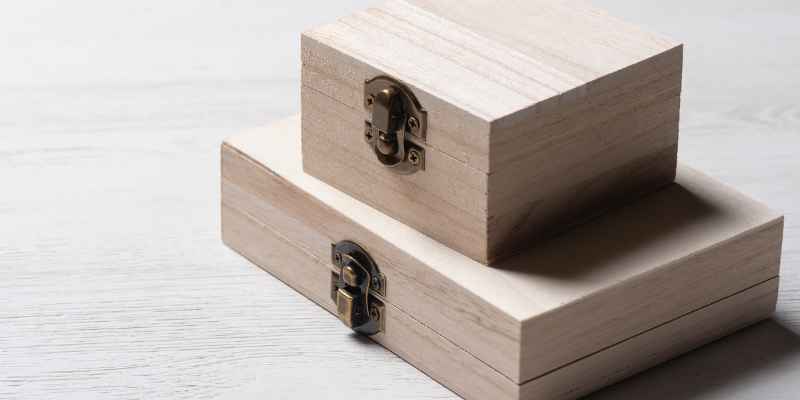
Mill your lumber to a consistent 1/2″ thickness before you buy hinges — most small-box butt and butterfly hinges are sized for a wall between 1/2″ and 3/4″, and a wall outside that range leaves the screws with nothing solid to bite into. For this build’s 1/2″ walls, a 0.79″ surface-mount butterfly hinge or a 3/4″-tall butt hinge both work; set each hinge about 1″ in from the corner so the lid’s weight is carried evenly instead of twisting on a single point.
A hasp — a small hook-and-eye catch, usually available in 3/4″ to 1-1/2″ widths — keeps the lid from popping open in a drawer or during travel. Center it on the front edge, opposite the hinges, and use the screws included with the hardware rather than substituting longer ones that could poke through a 1/2″-thick wall.
Sanding and Finishing
Work through 150, 180, and 220-grit sandpaper before any finish goes on — skipping straight to 220 leaves machine marks and glue squeeze-out that the finish will only highlight, not hide. An orbital sander speeds this up on the flat panels, but sand the corners and rabbet lines by hand so you don’t round over an edge that’s supposed to stay crisp.
Wipe-on polyurethane is the most forgiving finish for a first box: apply with a lint-free cloth, let it dry, then scuff with 320-grit between coats and apply two to three thin coats total. If you’d rather skip film finishes, a penetrating oil (Danish oil or pure tung oil) soaks into the grain instead of sitting on top, though it needs reapplication every few months and offers less protection against moisture rings.
Customization Ideas for Your Jewelry Box
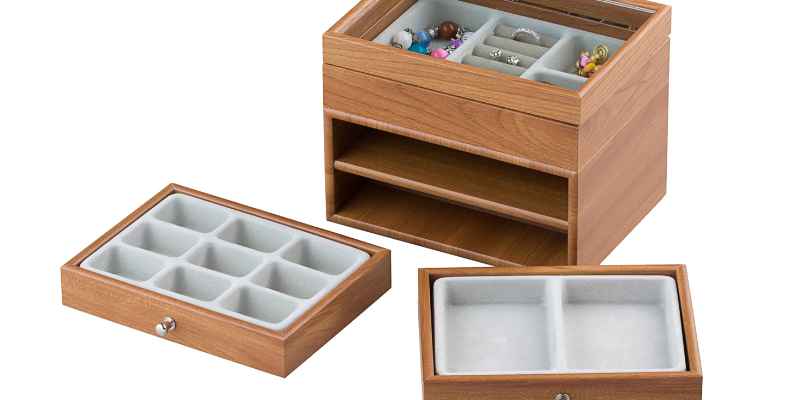
Once the basic box works, these upgrades change how it functions without changing the cut list:
Dividers. A grid of thin plywood or fabric-wrapped foam strips glued into the bottom keeps rings, earrings, and chains from tangling in one open compartment — building the dividers as their own removable tray makes it easy to reline or resize later.
Carving and inlay. Contrasting wood inlay strips set into a shallow groove around the lid’s perimeter dress up an otherwise plain box without adding any real build time — cut the groove before assembly, since it’s much harder to route cleanly once the box is glued up.
Felt or velvet lining. A thin layer of adhesive-backed felt on the bottom and inside walls protects softer metals and stones from scratching against bare wood, and it also keeps raw, unfinished wood from directly contacting jewelry — untreated wood can slowly tarnish silver through natural acids and moisture in the grain.
Common Mistakes to Avoid When Building a Jewelry Box
Most first-box problems trace back to one of three things: measuring, joinery, or finish sequence.
Cutting to the wrong reference edge. Mixing up inside and outside measurements is the single most common error — a box built to the outside cut list above will always be 4-1/2″ wide on the short sides, not 5″. Mark your reference edge on every board before cutting so you’re not re-deriving the math mid-project.
Gluing up out of square. A box that looks square from above can still be a parallelogram. Always check both diagonal measurements after clamping — if they don’t match within about 1/16″, loosen the clamps and adjust before the glue sets.
Finishing before the joints are fully sanded flush. Any glue squeeze-out or slight step at a rabbet joint becomes far more visible once stain or poly is on it, because finish darkens end grain and squeeze-out spots differently than the surrounding wood. Sand the joints flush and wipe with a damp cloth to check for missed glue before you open the finish can.
Maintenance Tips for Your Wooden Jewelry Box
Keep the box out of direct sunlight and away from radiators or heating vents — both cause the wood to dry unevenly and can open small gaps at the joints over time. Dust it with a soft, dry cloth, and reserve a damp cloth for stubborn grime only, drying immediately afterward.
For minor surface scratches, rub gently with a soft cloth to clear away dirt, then work a small amount of matching wood polish or wax along the direction of the grain and buff until the scratch is less visible. Deeper gouges that go through the finish into bare wood are best left to a light re-sand and a fresh coat of finish rather than polish alone.
Frequently Asked Questions
How do you make a wooden jewelry box?
Cut six pieces to a cut list — two long sides, two short sides, a bottom, and a lid — then rabbet the ends of the long sides 1/4″ wide by 1/4″ deep so the short sides fit flush. Glue and clamp the four walls square, attach the bottom, sand to 220 grit, then add hinges and a hasp before finishing.
What type of wood is best for a jewelry box?
Walnut, cherry, and maple are the three most common choices because they’re stable, take a finish evenly, and are widely available in the 1/2″ to 5/8″ thicknesses a small box needs. Walnut hides tool marks best for a first project; maple shows the most figure if you’re adding inlay.
Can you store jewelry in a wooden box?
Yes, but line the interior with felt or velvet first. Bare, unfinished wood can slowly tarnish silver and other soft metals through natural acids and moisture in the grain, and a fabric lining also protects stones and plating from scratching against the wood directly.
What can I use instead of a jewelry box?
A hanging fabric organizer, a lined drawer insert, a decorative tray, or a small dish all work as alternatives. They’re faster to set up than building a box, though none offer the same dust protection or stackable storage a lidded box provides.
What size should a jewelry box be?
An 8″ x 5″ x 3″ outside footprint is a practical beginner target — big enough for a bracelet, several rings, and a few necklace chains, small enough to sit on a dresser without dominating it. Scale the length and width up or down as needed, but keep the wall thickness around 1/2″ so standard small-box hinges still fit.
What hinges are best for a small wooden box?
Surface-mounted brass butterfly or butt hinges sized between 1/2″ and 1″ tall are the easiest for a first box, since they screw directly to the surface with no mortise required. Match the hinge height to your wall thickness — a hinge much taller than the wall it’s screwed into has less wood to grip and can pull loose over time.
Conclusion
A simple wooden jewelry box comes down to six accurately cut pieces, a rabbet joint that does more work than a plain glue line, and hardware sized to a 1/2″ wall. Follow the cut list above, check your diagonals before the glue sets, and you’ll have a box that holds its shape for years — whether you keep it or give it away. For your next build, see our full list of woodworking projects for adults or start smaller with these simple beginner woodworking projects.
Sponsored / affiliate links. As an Amazon Associate I earn from qualifying purchases. I may earn additional commission from eligible campaigns.