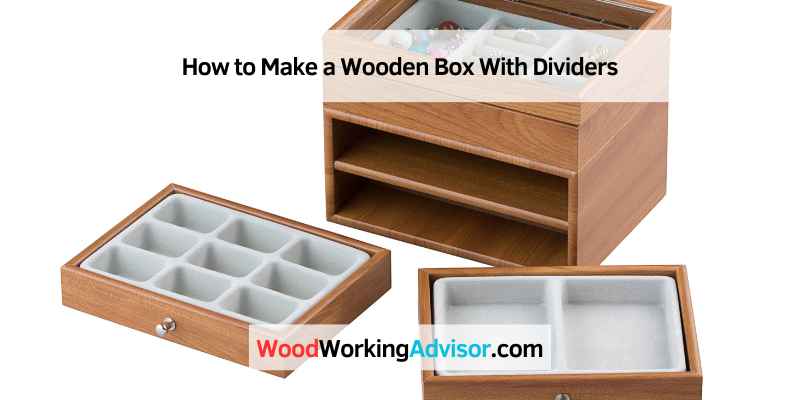
How to Make a Wooden Box With Dividers: 3 Joinery Methods
A wooden box with dividers uses notched plywood or solid-wood strips that slot together in a grid – kerf notches for 1/4-inch stock, dado grooves for anything thicker. Cut a notch too shallow and the grid racks under weight; too deep and the strip snaps. This guide covers all three notch methods, a worked 12x18x8 example with exact spacing, and how to add dividers to a drawer you already own.
Insert your Affiliate Disclosure reusable block here.
Quick Answer
Use kerf notches (quarter-inch-wide slots cut halfway through the stock) for 1/4-inch plywood dividers under 18 inches long – they’re fastest and need no glue if you want a removable grid. Switch to dado grooves for solid wood 1/2 inch or thicker, and save finger joints for the box’s outer corners where visible strength matters more than speed.
Tools and Materials
Best Divider Kit Pick
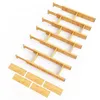
SpaceAid Bamboo Drawer Dividers with Inserts and Labels
Expandable 17-22 inch spring-loaded dividers with 15 mini inserts – skip the notching entirely if you’d rather buy a ready-made grid.
- Best for: kitchen, office, or dresser drawers you want organized today
- Why we picked it: expandable width covers most standard drawers without custom cutting
- Main drawback: bamboo, not paintable/stainable to match a wood box like a shop-built grid
Compare more drawer divider options
 Option 1 SpaceAid Bamboo 4-Pack Dresser Dividers
|
 Option 2 Rockler Adjustable Drawer Divider Holder
|
 Option 3 Guiogc Bamboo Kitchen Drawer Organizer
|
As an Amazon Associate we earn from qualifying purchases.
- 1/4-inch plywood (Baltic birch for a nicer look, construction-grade for a utility box)
- Wood glue
- Clamps (2-4 small bar or spring clamps)
- Jigsaw or a hand saw with a miter box
- Sandpaper (150 and 220 grit)
- Pencil, combination square, and a tape measure
- Paint, stain, or clear finish (optional)
Choose Your Joinery Method: Kerf, Dado, or Finger Joint
Every wood box divider comes down to one of three notch types. Picking the wrong one for your stock thickness is the single most common reason a divider grid ends up loose or cracked. If you also want to explore other wood joinery methods for the box’s outer corners, mortise and tenon joints are the stronger (and slower) alternative to a butt-jointed box.
| Method | Notch/Joint Depth | Best For |
|---|---|---|
| Kerf notch | Half the strip’s width, notch width = stock thickness | 1/4-inch plywood grids, removable/adjustable dividers |
| Dado groove | About 1/3 of stock thickness, routed or table-saw cut | Solid wood 1/2 inch or thicker, permanent trays |
| Finger joint | Fingers = stock thickness, interlocking | Outer box corners where you want visible strength |
How to Build Wooden Box Dividers (A Worked 12x18x8 Example)
Here’s a real layout you can copy or scale: a box with a 12-inch by 18-inch interior and 8 inches of depth, divided into 15 compartments using 1/4-inch plywood strips 7-3/4 inches wide. If you’re cutting your own plywood project pieces from a single sheet, this divider grid uses only a narrow offcut strip, so it’s a good way to use up scrap.
- Measure the interior: confirm the box’s inside dimensions before cutting anything – dividers built to the outside measurement will never fit.
- Cut the plywood strips: for a 12×18 grid, cut four strips 12 inches long and two strips 18 inches long, all 7-3/4 inches wide and 1/4 inch thick.
- Mark and cut the notches: draw a line halfway up each strip’s width (3-7/8 inches from the edge) at every point where two strips will cross, then cut a 1/4-inch-wide kerf on both sides of the line with a jigsaw.
- Sand each notch: sand the inside of every notch until a scrap piece of 1/4-inch plywood slides through it with light hand pressure – too tight and the grid won’t seat flat.
- Dry-fit the grid: slide the notched strips together into a lattice and test it inside the box before adding any glue.
- Glue or leave removable: add a thin bead of wood glue at each notch intersection for a permanent grid, or skip the glue entirely if you want dividers you can rearrange later.
- Sand and finish: knock down any rough notch edges, then stain, paint, or seal the grid to match the box.
How to Add Wood Dividers to a Drawer You Already Have
You don’t need to build a new box to get divided storage – dividers can go straight into an existing drawer. Decide what will go in the drawer first, since that determines how many dividers you need and how wide each section should be.
- Cut pieces of scrap 1/4-inch plywood or thin solid wood to the drawer’s inside height and depth, keeping every piece the same thickness so they sit flush.
- Set the dividers in place and use a square to make sure each one is vertical and perpendicular to the drawer sides.
- Mark where each divider touches the drawer sides with a pencil – this is where you’ll attach it.
- Remove the dividers and drill a pilot hole at each marked point, staying at least 3/4 inch from either end so the wood doesn’t split.
- Screw or nail each divider into place through the drawer side, using a fastener long enough to bite into both pieces without poking through.
What Thickness Plywood Should You Use for Box Dividers?
Divider-grade plywood is thin plywood, usually 1/4 inch, chosen because it notches cleanly without splitting and still holds its shape under light to moderate weight. Anything under 3/16 inch flexes and won’t stay square once the box is loaded; anything over 3/8 inch is hard to notch by hand and eats into usable interior space. Use 1/4-inch Baltic birch for dividers you want to look good on display, and construction-grade 1/4-inch plywood for a shop or garage utility box.
A worked layout for a 12-inch by 18-inch interior needs four strips cut 12 inches long and two strips cut 18 inches long, all 1/4 inch thick and 7-3/4 inches wide, to build a 15-compartment grid.
Common Mistakes When Building Divided Boxes
The most common mistake with shop-built dividers is cutting the notch exactly to the pencil line. Do that and the joint binds the moment wood glue swells the grain, forcing the strip out of square or splitting the notch corner. Leave the notch a hair open – sand it until a test piece slides in with light hand pressure – and glue it up loose rather than tight; a snug friction fit is easier to correct than a joint you’ve already forced shut.
Two more mistakes show up often: gluing dividers before dry-fitting the whole grid (fix a bad notch after the glue sets and you’re usually cutting a new strip), and skipping a finish coat on the dividers themselves while staining the box – unfinished plywood edges soak up moisture at a different rate and swell out of the notch over time. If you haven’t picked a glue yet, our wood glue buying guide covers which type holds best on plywood edge grain.
Divided boxes are a good first project if you’re still building basic skills – see our full woodworking projects and tips guide for the tools and terms every beginner project draws on.
FAQ
What’s the best joint for wood box dividers: kerf, dado, or finger joint?
Kerf notches are the best choice for most box dividers because they’re fast to cut and work well in 1/4-inch plywood. Use dado grooves instead if your dividers are solid wood 1/2 inch or thicker, and save finger joints for the box’s outer corners where you want visible, load-bearing strength rather than a simple internal grid.
How thick should plywood be for divider walls?
1/4 inch is the standard thickness for divider walls. It notches cleanly without splitting, holds its shape under normal storage weight, and doesn’t eat too much space out of the box’s interior. Thinner stock flexes and loses squareness; thicker stock is harder to notch by hand.
Can drawer or box dividers be removable instead of glued?
Yes. If you cut kerf notches sized so a test strip slides in with light hand pressure, the grid will hold together on friction alone and lift out cleanly for rearranging. Add glue only at the notch intersections if you want the grid permanent.
Do box dividers need to be glued to the sides of the box?
No, not usually. A notched divider grid that fits snugly inside the box will typically stay in place from friction and the weight of stored items alone. Glue the grid to the box sides only if you want a single fixed layout and never plan to rearrange the compartments.
What size notch do I cut for 1/4-inch plywood dividers?
Cut the notch 1/4 inch wide to match the plywood’s thickness, and cut it about halfway up the strip’s width so two notched strips interlock flush when slid together. Sand the notch until a scrap test strip slides in with light pressure rather than force.
A wooden box with dividers comes down to matching the joint to the stock: kerf notches for 1/4-inch plywood, dado grooves for solid wood, finger joints for the outer corners. Follow the 12x18x8 worked example above, dry-fit before you glue, and sand every notch until it takes a test strip without force.
Sponsored / affiliate links. As an Amazon Associate I earn from qualifying purchases. I may earn additional commission from eligible campaigns.