Vinyl Hardwood Floor Cleaner: DIY Recipe (Skip the Steam Mop)
A pH-neutral cleaner made for vinyl plank flooring is the safest daily choice — or mix ½ cup of white vinegar per gallon of warm water for a DIY version. Wax, ammonia, and steam mops can dull the finish or push moisture into the seams, sometimes voiding the manufacturer’s warranty. This guide covers the daily routine, the DIY vinegar recipe, three cleaners worth buying, and what actually ruins vinyl plank floors.
Insert your Affiliate Disclosure reusable block here.
Clean Vinyl Hardwood Floors the Right Way (Daily Routine)
Best Vinyl Floor Cleaner Pick
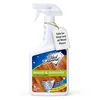
Wood & Laminate Floor Cleaner – Vinyl Floor Cleaner, 1 Quart
A ready-to-use, no-rinse spray formulated for wood, laminate, and vinyl plank floors — no mixing or dilution required.
- Best for: everyday spray-and-mop cleaning on sealed wood, laminate, and vinyl plank floors
- Why we picked it: ready-to-use, streak-free formula that’s safe across mixed-flooring homes
- Main drawback: the 1-quart bottle doesn’t go far in larger homes — the gallon size costs less per ounce
Compare more vinyl floor cleaner options
 Option 1 ZEP Multi Floor Cleaner 128 oz
|
 Option 2 Minwax Hardwood Floor Cleaner 32 fl oz
|
 Option 3 Rubbermaid Reveal Spray Mop Floor Cleaning Kit
|
As an Amazon Associate we earn from qualifying purchases.
Most damage to vinyl plank floors happens before a mop ever touches them — grit dragged around by dry sweeping does the scratching. Get the order of operations right and the floor stays scratch-free far longer than any cleaner alone can manage.
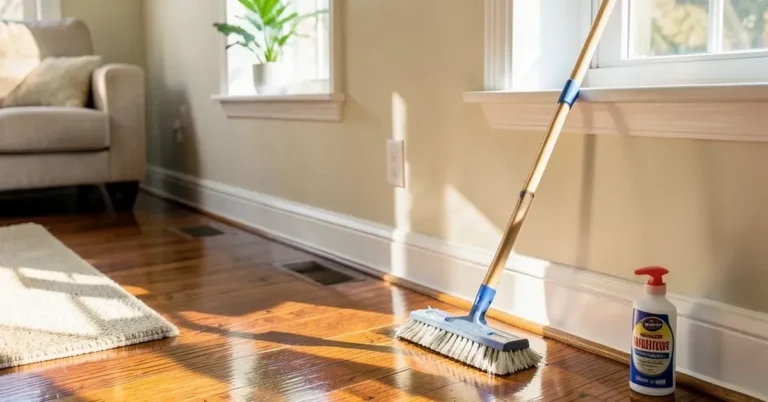
- Sweep or dry-vacuum first: use your vacuum’s bare-floor setting (no beater bar) to lift grit before it gets ground into the finish.
- Mop with plain water or a pH-neutral cleaner: use a well-wrung microfiber mop, not a saturated string mop.
- Work in small sections: dry the floor behind you with a towel or a second dry mop pass so water doesn’t sit.
- Spot-treat sticky spots separately: use the vinegar solution below on stains instead of soaking the whole floor.

DIY Vinegar Cleaner Recipe for Vinyl Plank Floors
A vinegar rinse is a legitimate vinyl-safe cleaner — but the ratio matters. Too strong, and repeated use can dull the finish; too weak, and it won’t cut grease. Here’s the ratio that balances both:
- Mix the solution: combine ½ cup of distilled white vinegar with 1 gallon of warm water in a bucket.
- Test it first: dab a hidden corner and wait 5 minutes to confirm the finish doesn’t dull or haze.
- Mop lightly: dip a microfiber mop, wring it until barely damp, and mop in small sections.
- Dry immediately: follow with a dry microfiber cloth or a second dry mop pass so no moisture sits in the seams.
📊 Use vinegar as an occasional deep-clean, not a daily mop solution — vinegar is acidic, and cleaning experts consistently note that frequent use can gradually dull a vinyl floor’s factory shine. Save it for monthly stain touch-ups and use plain water or a pH-neutral cleaner in between.
Best Vinyl Floor Cleaners to Buy
If you’d rather skip mixing your own solution, these are the cleaners we’d actually put in a shopping cart — all are pH-neutral or specifically formulated for vinyl and mixed hard-surface floors, so they won’t strip the wear layer the way a generic all-purpose cleaner can.
What Ruins Vinyl Plank Floors (Avoid These 5 Things)
Vinyl plank floors are durable, but the wear layer that keeps them looking new is thinner than most homeowners assume. These five habits are the ones most likely to void a warranty or leave permanent damage:
- Steam mops: the heat (often over 200°F) makes vinyl planks expand and can soften the click-lock adhesive underneath, leading to warping, gaps, or lifted edges — most manufacturer warranties explicitly exclude steam damage.
- Wax and solvent-based polish: vinyl doesn’t need a topcoat, and wax builds up into a cloudy film that attracts more dirt than it removes.
- Ammonia and bleach: both strip the clear protective wear layer and can discolor the printed pattern underneath it.
- Steel wool or abrasive scrubbers: they scratch the wear layer, and every scratch becomes a place for grime to collect.
- Standing water: water left pooling at the seams for more than a few minutes can seep beneath the planks and cause subfloor damage or mold.
DIY Vinegar Rinse vs. Store-Bought Cleaner
| Factor | DIY Vinegar Rinse | Store-Bought pH-Neutral Cleaner |
|---|---|---|
| Cost per use | About $0.05 per gallon batch | About $0.50–$1.00 per use |
| Residue risk | Can dull shine with weekly use | Formulated to leave zero residue |
| Grease-cutting power | Weak on set-in kitchen grease | Stronger on grease and grime |
| Best for | Occasional deep-cleans, tight budgets | Weekly cleaning, kitchens, high traffic |
“The most common mistake homeowners make with vinyl plank floors is grabbing whatever hardwood cleaner is already under the sink. Most oil-soap wood cleaners leave vinyl looking hazy after a few cleanings — check the label for ‘vinyl-safe’ or ‘luxury vinyl plank’ specifically before you use it on plank flooring.”
Vinyl hardwood floors add a warm, low-maintenance look to a room without the upkeep of solid hardwood next to vinyl transitions, but the cleaning routine that works for laminate wood floors isn’t always safe for vinyl plank — laminate can’t tolerate standing water at all, while vinyl plank tolerates a damp mop as long as it’s dried quickly. For a broader look at how vinyl compares to solid and engineered options, see our full wood flooring guide.
Frequently Asked Questions About Vinyl Hardwood Floor Cleaner
What is the best way to clean vinyl hardwood floors?
Sweep or dry-vacuum first, then mop with plain water or a pH-neutral cleaner using a well-wrung microfiber mop. For stains, mix ½ cup white vinegar with 1 gallon of warm water and spot-treat instead of soaking the whole floor. Avoid abrasive scrubbers, wax, and ammonia-based cleaners.
What should you not clean vinyl plank flooring with?
Avoid steel wool, detergents, abrasive cleaners, wax or solvent-based polish, ammonia or bleach, and steam cleaners on vinyl plank flooring. Each of these either scratches the wear layer or breaks down the finish over time.
What is the best floor cleaner for vinyl flooring?
A ready-to-use, pH-neutral cleaner formulated for wood, laminate, and vinyl floors is the safest choice for regular use — it cleans without leaving streaks or dulling the wear layer. Reserve a DIY vinegar rinse for occasional deep-cleans rather than everyday mopping.
Can you use hardwood floor cleaner on vinyl?
Yes, if the label specifically says it’s safe for vinyl or “multi-surface.” Cleaners like Minwax Hardwood Floor Cleaner and Bona’s hard-surface formulas are made to clean wood, tile, and vinyl without damaging any of them. A cleaner labeled only for wax-finished hardwood is not automatically safe for vinyl — check the label first.
Can you use a steam mop on vinyl plank flooring?
No. Steam mop heat can make vinyl planks expand and soften the adhesive that holds click-lock seams together, which leads to warping, gaps, or lifted edges. Most flooring manufacturers exclude steam damage from their warranty coverage, so a damp microfiber mop is the safer choice.
How often should you clean vinyl plank floors?
Sweep or dry-vacuum every 2–3 days in high-traffic homes, and damp-mop with plain water or a pH-neutral cleaner about once a week. Spot-clean spills immediately rather than waiting for the next full mopping.
Conclusion
A pH-neutral cleaner or a properly diluted vinegar rinse, applied with a well-wrung mop, is all vinyl plank flooring needs to stay scratch-free and glossy. Skip the steam mop, wax, and ammonia-based cleaners — they cause more damage than the dirt they’re meant to remove.
Sponsored / affiliate links. As an Amazon Associate I earn from qualifying purchases. I may earn additional commission from eligible campaigns.