What Do Japanese Maple Roots Look Like
Many people wonder about the roots of their Japanese maple trees. It’s a common question, especially for those new to gardening. Some find it tricky to picture them.
This guide will make it super simple. We will break down What Do Japanese Maple Roots Look Like? step by step. Get ready to see them clearly.
Exploring Japanese Maple Root Systems
Understanding the root system of a Japanese maple is key to keeping your tree healthy and happy. These trees, known for their delicate beauty, have root structures that play a vital role in their survival. They anchor the tree and gather water and nutrients from the soil.
Different types of Japanese maples might have slightly varied root patterns, but the general principles remain the same.
This section will look at how these roots grow and what makes them unique. We’ll cover how they spread, their texture, and what you might see when you’re planting or repotting your tree. It’s not as complicated as it sounds.
You’ll learn to spot healthy roots and understand what they need to thrive.
The Structure of Japanese Maple Roots
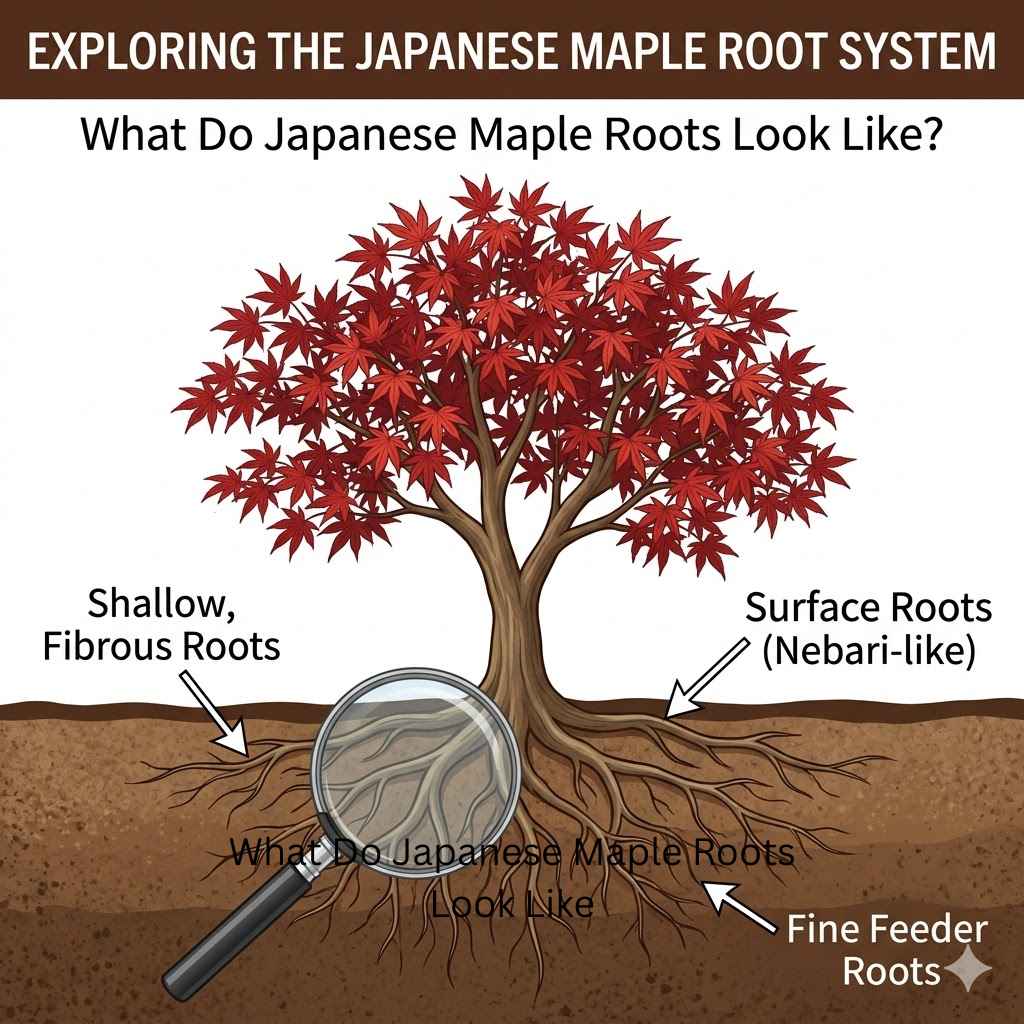
Japanese maple roots generally form a fibrous, wide-spreading network rather than a single deep taproot. This fibrous system is excellent for absorbing moisture and nutrients from the upper layers of the soil, which is typical for many maple species. When you dig up a Japanese maple, or when it’s planted in a pot, you’ll often see a dense mat of fine, hair-like roots interwoven with thicker, cord-like roots.
These fine roots are the workhorses, responsible for most of the nutrient and water uptake. The thicker roots provide support and transport resources. The overall appearance can be described as a tangled mass, but a healthy one is usually moist and firm to the touch, not dry or brittle.
The color can range from a creamy white or pale yellow for new growth to a light brown for older, established roots.
Root Color and Texture
The color of Japanese maple roots is a good indicator of their health. Fresh, active roots that are efficiently absorbing nutrients and water will typically be a bright white or a pale, creamy color. As roots mature and lignify, they may turn a light tan or a soft brown.
A dark brown or black color can sometimes indicate rot or disease, especially if accompanied by a mushy texture.
The texture should feel firm and slightly springy. If the roots feel dry, brittle, and snap easily, it suggests the tree is dehydrated or has been stored improperly. Conversely, overly soggy and mushy roots, often with a foul odor, are a sign of root rot, usually caused by waterlogged soil.
Healthy roots should also be free of excessive slime or mold.
How Japanese Maple Roots Spread
Japanese maple roots are known for their shallow and widespread growth habits. They tend to spread outwards, often extending as far as or even beyond the canopy of the tree. This lateral spread is a survival strategy, allowing the tree to capture a wide area of rainfall and soil nutrients.
Unlike trees with deep taproots that seek water far below the surface, Japanese maples are adapted to drawing sustenance from the top few inches to a foot of soil.
This shallow root system makes them somewhat susceptible to drought and temperature fluctuations if not properly mulched and cared for. When planting, it’s crucial to give them ample space for this outward growth. Disturbing this network too much during transplanting can stress the tree.
Understanding this spreading nature helps in deciding planting locations and avoiding root damage from nearby digging.
Radial Growth Patterns
The roots of a Japanese maple grow outward in a radial pattern from the base of the trunk. This means they extend in all directions, forming a network that covers a significant area. This radial expansion is most vigorous in the topsoil layer, typically within the top 6 to 18 inches of the ground.
Over time, this network can become quite extensive, with the root tips exploring for available moisture and minerals.
As the tree matures, some of these radial roots will thicken and lignify, becoming structural support. However, the fine, feeder roots, which are essential for absorption, remain concentrated towards the outer edges of this radial spread and in the upper soil horizons. This distribution pattern makes the tree highly efficient at utilizing resources available in its immediate environment.
Factors Influencing Spread
Several factors influence how Japanese maple roots spread. The type of soil is a major one; roots will spread more easily in loose, well-draining soil and may struggle or grow more slowly in heavy clay or compacted earth. Soil moisture is also critical.
If water is consistently available, roots will spread laterally to access it. In drier conditions, roots might still seek out moisture, but their outward expansion could be slower or more restricted.
Competition from other plants can also affect root spread. If there are other trees, shrubs, or even a dense lawn nearby, the Japanese maple’s roots will have to compete for space, water, and nutrients, potentially altering their growth pattern. Obstacles in the soil, like rocks or buried structures, can also redirect root growth.
Common Observations When Examining Roots
When you get a chance to see the roots of a Japanese maple, whether it’s bare-root or in a pot, you’ll notice a few key things. They are usually not as thick and woody as you might expect from larger trees. Instead, they often appear like a dense, interwoven mat.
This mat is made up of many thin, thread-like roots, interspersed with slightly thicker ones that serve as primary pathways.
It’s important to distinguish between healthy roots and those that might be suffering. Healthy roots are typically firm, flexible, and have a light color. They smell earthy, not unpleasant.
If you see roots that are dark, mushy, or smell foul, it’s a sign of potential problems like root rot, often caused by too much water.
Fine Feeder Roots
The most numerous roots on a Japanese maple are its fine feeder roots. These are the delicate, hair-like structures that are typically only a millimeter or two in diameter. They are the primary sites for absorbing water and essential nutrients from the soil.
Think of them as the tree’s tiny mouths, constantly working to draw in what the tree needs to grow and stay healthy.
These roots are often white or pale yellow when they are actively growing. They are also the most sensitive parts of the root system. Because they are so fine, they can dry out quickly if exposed to air for too long, which is why it’s important to handle them carefully when transplanting.
Their density forms a mat that helps the tree hold onto soil and nutrients.
Thicker Structural Roots
Interspersed among the fine feeder roots are the thicker structural roots. These roots are more substantial, ranging from pencil-thick to as thick as your finger or even your wrist on older trees. Their main purpose is to anchor the tree firmly in the ground, providing stability against wind and other forces.
They also serve as conduits, transporting water and nutrients from the feeder roots up to the trunk and branches.
These thicker roots lignify over time, becoming woody and more rigid. Their color is typically a light brown or tan, gradually darkening as they age. When you examine a root ball, you’ll see these thicker roots radiating outwards, supporting the mass of finer feeder roots.
Their health is crucial for the overall strength and longevity of the Japanese maple.
What Healthy Roots Look Like
Healthy Japanese maple roots should be firm, flexible, and moist. Their color will generally range from a creamy white to a light tan or brown. There should not be any signs of rot, such as mushiness or a foul odor.
The fine feeder roots should be plentiful and appear healthy, even if they are delicate. This appearance signifies a well-nourished and hydrated tree.
When you encounter healthy roots, you’ll likely feel a slight resistance if you try to bend them; they won’t snap easily. The surface of these roots should be relatively smooth, without excessive fungal growth or damage. This vibrant, living appearance is what you want to see, especially when planting or repotting to ensure the tree has the best chance of establishing itself successfully.
Signs of Healthy Roots
The most obvious sign of healthy roots is their color and texture. White, cream, or light brown hues are good. They should feel firm and pliable.
If you gently squeeze a root, it should not feel mushy or brittle. A healthy root system will also have a pleasant, earthy smell, much like fresh soil. The presence of many fine, hair-like feeder roots indicates active nutrient and water absorption.
Another indicator is how the roots respond to moisture. If they are slightly damp but not waterlogged, it suggests good water management. When a tree is well-hydrated, its roots will appear plump and full.
This visual and tactile assessment is very important for gardeners to gauge the well-being of their Japanese maple. A healthy root ball will also hold together reasonably well without crumbling excessively.
What Unhealthy Roots Look Like
Unhealthy roots on a Japanese maple can show several warning signs. Dark brown or black coloration is often a red flag, especially if the roots are also soft and mushy. A strong, foul, or rotten smell emanating from the roots is a clear indication of rot, typically caused by overwatering or poor drainage.
Brittle, dry roots that snap easily suggest dehydration or damage.
Look for signs of disease like fungal growth, slime, or unexplained lesions on the root surface. If the root ball is excessively bound or appears to have circled the pot repeatedly, it indicates the tree has outgrown its container and may be stressed. These visual cues are vital for diagnosing problems and taking corrective action to save your Japanese maple.
Root Rot Indicators
Root rot is a common problem for many plants, including Japanese maples, and is usually caused by persistently wet soil. The most telling sign of root rot is the color and texture of the roots. Instead of firm and light-colored, infected roots become dark brown or black, and they feel soft, mushy, and can be easily broken.
They often have a distinct, unpleasant, rotten smell, which is a very strong indicator.
In severe cases, the entire root ball might be coated in a slimy, dark substance. If you see these symptoms, it means the roots are dying and can no longer absorb water or nutrients properly. This is why ensuring good drainage is so important for Japanese maples.
Prompt action is needed if root rot is suspected.
Dehydration Symptoms
Dehydration in Japanese maple roots manifests differently than rot. Instead of being mushy, the roots will appear shriveled, dry, and brittle. They may have a lighter, dusty brown color.
When you try to bend them, they will snap easily, much like dry twigs. The fine feeder roots will be particularly affected, looking desiccated and frail.
A tree with dehydrated roots will also show signs above ground. The leaves might droop, turn brown at the edges, or even fall off prematurely. If you gently scrape away the outer layer of a root, the inner core might look dry and brown instead of moist and white.
Addressing dehydration involves increasing watering, but it’s crucial not to overcompensate, which could lead to root rot.
Caring for Your Japanese Maple’s Roots
Taking good care of your Japanese maple’s roots is fundamental to its health and appearance. Since their root systems are generally shallow and widespread, they require specific considerations. This means paying close attention to watering, soil conditions, and avoiding unnecessary disturbance.
Proper mulching is also a very helpful practice to protect the roots from extreme temperatures and retain soil moisture.
By understanding how these roots grow and what they need, you can provide an environment where they flourish. This leads to a stronger, more beautiful tree. We will explore essential care practices that directly support the root system, ensuring your Japanese maple thrives for years to come.
It’s about providing the right foundation.
Watering Best Practices
Watering Japanese maples correctly is crucial for root health. Their shallow root systems mean they can dry out more quickly than trees with deep taproots. Aim for consistent moisture, but avoid waterlogging, which can lead to root rot.
Water deeply and less frequently, allowing the top inch or two of soil to dry out between waterings. This encourages roots to grow deeper within the shallow zone.
During hot, dry periods, you may need to water more often. Conversely, in cooler, wetter weather, reduce watering. Always check the soil moisture before watering by sticking your finger into the soil.
If it feels dry, it’s time to water. Using a soaker hose or drip irrigation system can be very effective for providing water directly to the root zone without wasting it.
How Often and How Much
The frequency of watering depends on several factors, including weather, soil type, and the tree’s age. Young trees, especially those recently planted, will need more frequent watering to establish their root systems. Mature trees are more resilient but still benefit from adequate watering, particularly during dry spells.
A general guideline is to water thoroughly when the top inch or two of soil feels dry.
When you water, do so deeply. This means applying enough water to moisten the soil several inches down. This encourages roots to grow downwards in search of moisture, creating a stronger, more stable root system.
Avoid frequent, light sprinklings, which only wet the surface and encourage shallow root growth. For potted Japanese maples, watering is often needed more frequently as pots can dry out faster.
The Importance of Mulching
Mulching is an essential practice for maintaining the health of Japanese maple roots. A layer of organic mulch, such as wood chips, shredded bark, or compost, applied around the base of the tree is highly beneficial. Mulch helps to conserve soil moisture by reducing evaporation, keeping the soil cooler in summer and warmer in winter, and suppressing weed growth which competes for water and nutrients.
When applying mulch, keep it a few inches away from the trunk itself to prevent moisture buildup against the bark, which can lead to fungal diseases or pest problems. A mulch layer that is 2-4 inches deep is typically recommended. This protective layer mimics the natural forest floor and provides a more stable environment for the tree’s shallow root system.
Benefits of Organic Mulch
Organic mulches offer numerous advantages for Japanese maple root health. As they decompose over time, they add valuable nutrients and organic matter to the soil, improving its structure and fertility. This slow release of nutrients is ideal for Japanese maples, which prefer rich, well-drained soil.
Mulch also acts as a natural insulator, protecting the roots from the harsh effects of temperature extremes.
In summer, mulch keeps the soil surface cooler, preventing the roots from overheating. In winter, it acts as a blanket, shielding the roots from freezing temperatures and preventing frost heave, which can damage roots by pushing them out of the ground. Furthermore, mulch helps to prevent soil compaction caused by heavy rain or foot traffic, allowing roots to breathe and grow more freely.
Pruning and Root Care
While pruning is typically associated with the visible parts of a tree, some root care might be necessary, especially when dealing with potted Japanese maples or during transplanting. For trees in the ground, it’s best to avoid disturbing the roots unless absolutely necessary. If you must prune roots, do so with clean, sharp tools and only remove damaged or circling roots.
When repotting a Japanese maple, which might be needed every few years for younger trees, inspect the root ball. Remove any dead, damaged, or circling roots. Circling roots can strangle the tree over time, hindering growth and nutrient uptake.
Pruning these back allows for healthier, outward root growth into the new potting mix.
Repotting Considerations
Repotting is often done when a Japanese maple has become root-bound in its container. This means the roots have filled the pot and may be circling the inside walls. When you unpot the tree, you’ll see the dense root ball.
Gently loosen the outer layer of roots with your fingers or a blunt tool. Any roots that are circling the pot or growing upwards should be pruned back.
Using a slightly larger pot with fresh, well-draining potting mix is ideal. Ensure the new potting mix is of good quality and suitable for Japanese maples. After repotting, water the tree thoroughly.
Avoid fertilizing immediately after repotting, as this can stress the newly disturbed roots. Wait a few weeks until you see signs of new growth before resuming a feeding schedule.
Understanding Root Bound Conditions
A root-bound condition occurs when a plant’s roots have grown too large for its container. The roots form a dense, tangled mass that essentially fills the pot. This can happen to Japanese maples grown in pots, or sometimes even in the ground if they encounter an obstacle or poor soil that restricts their natural spread.
When a tree is root-bound, its ability to absorb water and nutrients is severely limited. This leads to stunted growth, yellowing leaves, and a general decline in health. Recognizing and addressing this condition is vital for the long-term well-being of the tree.
What Root Bound Looks Like
Visually, a root-bound Japanese maple will show several signs. In a pot, the roots may emerge from the drainage holes at the bottom, or you might see them growing on the surface of the soil. The soil line itself might be raised as roots push upwards.
When you remove the tree from its pot, the root ball will be a tightly packed, matted mass, often with the roots spiraling around the sides and bottom.
Above ground, the tree’s growth will slow significantly. Leaves may become smaller, turn yellow, or wilt easily, even with regular watering. The tree might appear generally less vigorous.
This constricted root system cannot support the plant’s needs, leading to these visible issues.
Circling Roots
One of the most common problems associated with being root-bound is the presence of circling roots. These are roots that have grown around the perimeter of the pot and continue to grow in circles. Eventually, these roots can start to constrict the main root ball and even the trunk base, much like a tight belt.
Circling roots prevent the plant from effectively taking up water and nutrients. They can also impede the development of new, healthy roots. If left unaddressed, they can lead to a weaker root system and a less stable tree.
It’s important to identify and correct this issue during repotting.
Addressing Root Bound Trees
If you discover your Japanese maple is root-bound, the solution is usually to repot it into a larger container or to plant it in the ground. When repotting, you will need to carefully loosen and prune the circling roots. Gently tease apart the outer roots with your fingers or a blunt tool, like a chopstick.
Then, prune any roots that are tightly circling or growing upwards, making clean cuts with sharp, sterile shears.
When planting into the ground, dig a hole that is at least twice as wide as the root ball but no deeper than the root ball itself. This encourages outward growth. Backfill the hole with the original soil, amended if necessary with organic matter for better drainage.
After planting, water thoroughly.
Repotting Steps
Here are the basic steps for repotting a root-bound Japanese maple:
- Choose a new pot that is 2-4 inches wider and deeper than the current one. Ensure it has drainage holes.
- Gently remove the tree from its current pot. If it’s stuck, you might need to tap the sides or use a knife around the edge.
- Examine the root ball. Loosen the matted roots by gently pulling them apart with your fingers or a gardening tool.
- Prune away any roots that are circling the pot, growing upwards, or appear dead. Make clean cuts with sharp, sterile pruners.
- Add a layer of fresh, well-draining potting mix to the bottom of the new pot.
- Place the tree in the new pot, ensuring the top of the root ball is about an inch below the rim.
- Fill in around the root ball with fresh potting mix, gently firming it to remove air pockets.
- Water the tree thoroughly until water drains from the bottom.
- Place the repotted tree in a shaded area for a week or two to recover before returning it to its usual spot.
Root-Pruning Techniques
Root pruning for Japanese maples is typically done when repotting or sometimes when preparing a tree for transplanting to encourage a denser root ball. The goal is to stimulate the growth of new, finer feeder roots closer to the trunk, which helps the tree establish better.
When repotting, after loosening the outer root ball, you would prune away about one-third of the feeder roots, particularly those that are long, thin, and have grown out of the main mass. For older, established trees that you might want to move, a more aggressive root-pruning technique might be employed over several seasons. This involves digging a trench around the tree at a certain radius and severing the roots within that trench, allowing the tree to regrow roots within that space before the final move.
When and Why to Prune Roots
You prune roots primarily when a tree is root-bound in a container, or if it’s exhibiting signs of stress due to a constricted root system. The “why” is to encourage healthier, more efficient root growth. For container-grown trees, it prevents strangulation and allows for better nutrient and water uptake.
For trees in the ground, it can be a technique to prepare for relocation or to rejuvenate an older tree.
The “when” is usually during the dormant season, typically late winter or early spring, before new growth begins. This minimizes stress on the tree. For container trees, it’s done during repotting, which is also often done in late winter or early spring.
Avoid root pruning during the heat of summer or when the tree is actively flowering or fruiting, as this can cause excessive stress.
Visualizing Japanese Maple Roots
To truly grasp what Japanese maple roots look like, visualization is key. Imagine a complex, underground network that mirrors the delicate branching of the tree’s canopy, but denser and more fibrous. These roots are not typically thick, woody structures like you might see in an old oak.
Instead, they are a tapestry of fine threads interwoven with slightly more substantial cords.
Think of a healthy root ball as a living sponge, moist and firm, ready to soak up water and nutrients. The color is usually light, indicating active growth and good health. This visual understanding helps immensely when you’re potting, planting, or simply caring for your Japanese maple, allowing you to recognize what a thriving root system should look like.
Root Ball Appearance
When you examine the root ball of a Japanese maple, whether it’s in a pot or has been recently dug up, you’ll notice a dense, interwoven mass. It’s not usually a few thick roots, but rather a large quantity of fine, hair-like roots. These feeder roots create a matted texture, holding the soil together in a firm ball.
Thicker roots will radiate outwards, anchoring the tree.
A healthy root ball will be moist but not soggy. The soil should cling to the roots. If the roots are packed so tightly that they form a solid mass with no discernible soil, or if they are excessively dry and brittle, it’s a sign of a problem, likely that the tree is root-bound or has been underwatered for a prolonged period.
Example Scenario 1: A New Purchase
You just bought a small, potted Japanese maple from a nursery. When you take it out of its pot to transplant it into a slightly larger container or into your garden, you see a tightly packed ball of roots. Most of them are fine and white, forming a dense layer around the outside of the soil.
You can also see a few thicker roots that have grown around the edge of the pot. The root ball is moist and smells earthy. This is a common and healthy appearance for a nursery-grown tree that is ready for a larger space.
Example Scenario 2: A Stressed Tree
Imagine you have a Japanese maple that has been struggling for a while. Its leaves are yellowing, and it’s not growing much. When you examine its roots, you find that they are dark brown, almost black, and feel soft and mushy.
There’s a distinct, unpleasant odor. The fine feeder roots are scarce, and the overall root ball feels waterlogged. This indicates root rot, likely due to overwatering or poor drainage, and the tree is in serious trouble.
Comparing Root Structures
It’s helpful to compare the root structure of a Japanese maple to other types of trees to appreciate its specific characteristics. Many trees, like oaks or pines, develop a dominant taproot that goes deep into the ground, providing strong anchorage and access to deep water sources. Japanese maples, however, typically lack a significant taproot.
Instead, their root systems are more fibrous and spread horizontally. This is why Japanese maples are often easier to transplant when they are younger and their root systems are not yet extensively spread. It also means they are more vulnerable to drought if surface moisture is not consistently available.
| Feature | Japanese Maple Roots | Oak Tree Roots |
|---|---|---|
| Dominant Root Type | Fibrous, widespread, shallow | Taproot, deep and spreading |
| Primary Absorption Zone | Upper soil layers (top 6-18 inches) | Deeper soil layers and surface |
| Anchorage Strength | Good through widespread network | Excellent due to deep taproot |
| Susceptibility to Drought | Higher if surface moisture is lacking | Lower due to access to deep water |
| Transplant Ease (Young) | Generally easier due to shallower roots | Can be more challenging due to taproot |
Frequently Asked Questions
Question: What color should my Japanese maple roots be?
Answer: Healthy Japanese maple roots are typically white, creamy, or a light tan color. Dark brown or black roots often indicate rot or disease.
Question: Do Japanese maples have deep roots?
Answer: No, Japanese maples generally have shallow, widespread root systems that spread horizontally rather than growing deeply.
Question: How do I know if my Japanese maple is root-bound?
Answer: Signs include roots growing out of drainage holes, roots circling the pot tightly, stunted growth, and leaves wilting easily even when watered.
Question: What is the best way to water a Japanese maple?
Answer: Water deeply and less frequently, allowing the top inch or two of soil to dry out between waterings to encourage healthy root development.
Question: Should I mulch my Japanese maple?
Answer: Yes, mulching is highly recommended to retain soil moisture, regulate soil temperature, and protect the shallow root system.
Final Thoughts
Japanese maple roots are generally shallow and fibrous. They spread wide to collect water and nutrients. Healthy roots look white or light tan and feel firm and moist.
Unhealthy roots can be dark, mushy, or brittle, signaling problems like rot or dehydration. Proper watering, mulching, and avoiding root disturbance are key to a thriving root system. Care for the roots, and your tree will flourish.