What Is The Meaning Of Cedar: Essential Insights
Cedar, often associated with its distinct aroma and natural resistance to decay, symbolizes durability, protection, and vitality. In woodworking and design, it signifies natural beauty, longevity, and a touch of rustic elegance, making it a favored material for various projects.
Have you ever smelled that wonderful, fresh scent and wondered, “What is the meaning of cedar?” Maybe you’ve seen beautiful wooden chests or outdoor furniture and noticed it’s often made from cedar. It’s a wood that many of us encounter but might not fully understand. It’s not just a tree; it’s a wood with a rich history and many useful qualities. Don’t worry if it seems a bit mysterious! We’re going to explore what makes cedar so special together, step-by-step. We’ll uncover its meanings and why it’s a fantastic choice for so many of your DIY and home projects.
The Meaning of Cedar: Beyond the Wood
When we talk about “what is the meaning of cedar,” we’re often referring to more than just the physical properties of the wood. Cedar trees and their wood carry a deep symbolic weight across various cultures and traditions. They speak of strength, endurance, and spiritual significance.
Ancient Symbolism and Spiritual Significance
For centuries, cedar has been revered. From ancient Mesopotamia to biblical times, cedar was highly prized.
Durability and Immortality: Its natural resistance to decay and insects made it a symbol of longevity and even immortality. Think of ancient temples and sacred objects crafted from cedar that have survived millennia. This resilience gave it a powerful symbolic association with things that last forever.
Purity and Healing: Cedar used to be burned as incense in spiritual ceremonies. Its fragrant smoke was believed to purify the air and ward off evil spirits. It was also used in sacred rituals and considered a holy wood, linking it to divine connections and spiritual well-being.
Strength and Protection: The tall, strong stature of cedar trees in nature naturally lends itself to symbolism of strength, stability, and protection. A cedar tree stands tall and firm, offering shelter and enduring harsh weather, much like a protector.
Cultural References to Cedar
Many cultures have stories and traditions that highlight cedar’s importance.
Biblical Relevance: Cedar of Lebanon is frequently mentioned in the Bible, particularly in relation to the construction of King Solomon’s Temple. It was considered a precious and mighty timber, signifying grandeur and divine favor.
Indigenous Traditions: Various Indigenous communities have long used cedar in their ceremonies, art, and daily life. It’s often seen as a gift from the Creator, symbolizing healing, wisdom, and connection to the spiritual world.
Mythology and Folklore: In myths and legends, cedar trees are sometimes depicted as sacred places or even as divine beings themselves, reflecting their perceived power and importance.
Modern Interpretations of Cedar Meaning
Today, while the ancient spiritual meanings are still appreciated, the “meaning of cedar” in modern contexts often focuses on its practical and aesthetic qualities, still touching upon its inherent symbolic traits.
Natural Purity and Aroma: The distinct, pleasant aroma of cedar is one of its most recognized features. This scent is often associated with natural freshness, cleanliness, and a sense of calm. It’s why cedar is often used in closets and chests to naturally repel moths and keep clothes smelling fresh.
Enduring Quality and Craftsmanship: When used in woodworking, cedar’s natural resilience and beauty suggest a commitment to quality and longevity. A cedar fence, deck, or piece of furniture is an investment that promises to last, reflecting a value for enduring craftsmanship.
Connection to Nature: In our increasingly urbanized world, the use of natural materials like cedar connects us back to nature. It brings a sense of the outdoors in, offering a feeling of peace and grounding.
Types of Cedar Wood: What You Should Know
When people talk about cedar, they might be referring to several different types of trees, all belonging to the Cupressaceae family. While they share some common traits, there are differences that matter for woodworking and other uses. Understanding these types helps you choose the right cedar for your project.
Some common types include:
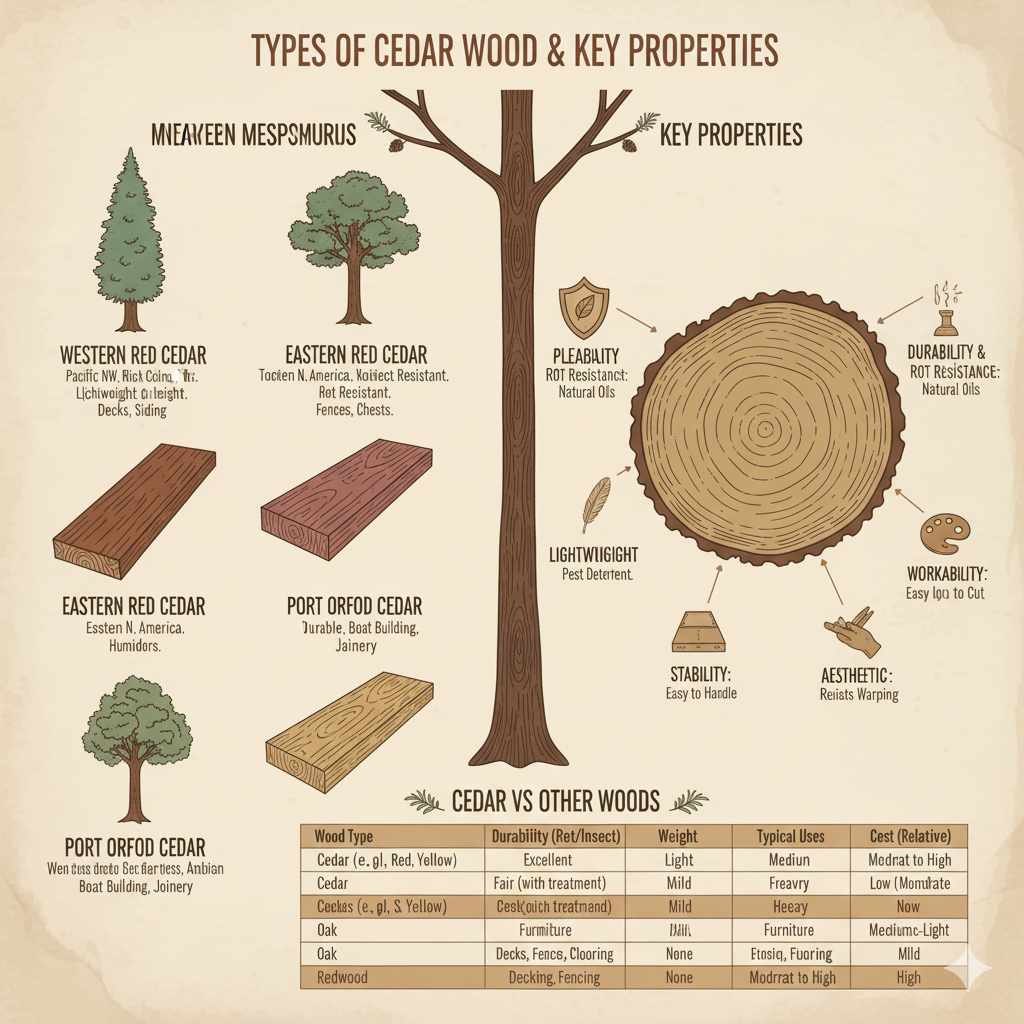
Western Red Cedar (Thuja plicata): Very popular for its rich color, natural beauty, and excellent resistance to decay and insects. It’s lightweight yet durable and easy to work with. Found along the Pacific Northwest coast of North America.
Eastern Red Cedar (Juniperus virginiana): Known for its aromatic, purplish-red heartwood and pale sapwood. It’s also very rot-resistant and often used for small projects, chests, and fence posts. It’s native to eastern North America.
Aromatic Red Cedar (Juniperus virginiana): This is a specific type of Eastern Red Cedar prized for its strong, pleasant scent, making it a favorite for lining closets and drawers.
Spanish Cedar (Cedrela odorata): Despite its name, it’s not a true cedar but a tropical hardwood. It’s used in high-end humidors and cigar boxes because it doesn’t impart flavor to the tobacco, and it’s also insect-repellent.
Port Orford Cedar (Chamaecyparis lawsoniana): A very durable and aromatic wood, often used for outdoor applications, boat building, and Japanese joinery.
Key Properties of Cedar Wood
No matter the specific type, cedar wood often boasts a remarkable set of characteristics:
Natural Durability and Rot Resistance: This is perhaps the most significant property. Cedar contains natural oils and extractives that make it highly resistant to decay, fungi, and insect infestations, such as moths and termites. This makes it ideal for outdoor use.
Pleasant Aroma: Most cedars have a distinct, pleasant fragrance derived from these same natural oils. This scent is not only enjoyable but also acts as a natural deterrent for many pests.
Lightweight: Cedar is generally a lightweight wood, making it easy to handle, transport, and install, which is a big plus for DIY projects.
Stability: It tends to be quite stable, meaning it doesn’t warp, twist, or shrink excessively with changes in humidity. This is crucial for building projects that need to maintain their shape.
Workability: Cedar is relatively easy to work with using hand and power tools. It cuts cleanly and can be glued and finished well.
Aesthetic Appeal: Cedar often features beautiful grain patterns and a range of colors, from pale yellow and pink to reddish-brown and deep red. This natural beauty allows it to be used in decorative ways.
Cedar vs. Other Woods: A Comparison
Let’s see how cedar stacks up against some other common wood choices. This table highlights why you might choose cedar for your next project.
| Wood Type | Durability (Rot/Insect Resistance) | Weight | Aroma | Typical Uses | Cost (Relative) |
|---|---|---|---|---|---|
| Cedar (e.g., Western Red) | Excellent | Light | Pleasant, distinct | Outdoor furniture, decks, fences, siding, closets, chests | Moderate to High |
| Pine (e.g., Southern Yellow) | Fair (with treatment) | Medium | Mild | Framing, furniture, general construction | Low to Moderate |
| Oak | Good (Heartwood) | Heavy | None | Furniture, flooring, cabinetry, barrels | Moderate to High |
| Redwood | Excellent | Medium-Light | Mild | Decking, fencing, outdoor structures, outdoor furniture | High |
As you can see, cedar offers a fantastic blend of natural resistance and pleasant aesthetics, making it a top choice for many applications where longevity and appearance are key.
The Meaning of Cedar in Woodworking Projects
In the workshop, the “meaning of cedar” translates directly into its practical benefits and the value it brings to finished projects. When you choose cedar, you’re often aiming for something that is not only beautiful but also built to last.
Why Beginners Love Cedar
For those just starting out in woodworking, cedar is a wonderfully forgiving material. Its lightweight nature and ease of working make it less intimidating than harder, heavier woods.
Easy to Cut and Shape: Cedar cuts cleanly, whether you’re using a handsaw or a power saw. It sands smoothly, and you won’t struggle to drive screws or nails into it. This means fewer frustrations and more successful early projects.
Lightweight for Handling: Moving lumber can be tough, but cedar is light enough that even beginners can manage standard boards without needing heavy lifting equipment. This makes cutting, moving, and assembling pieces much easier.
Natural Protection (Less Finishing Needed): Its inherent resistance to rot and insects means that for many outdoor applications, you don’t need to apply heavy, toxic finishes to protect the wood. This simplifies the finishing process considerably. A good sealant or stain can enhance its beauty, but it’s not always strictly necessary for longevity.
Pleasant to Work With: The aroma emanating from cedar as you cut and sand is a pleasant bonus. It makes the woodworking experience more enjoyable than working with woods that might have strong, unpleasant odors.
Popular Cedar Projects for DIYers
Given its properties, cedar is perfect for a variety of projects, many of which are ideal for beginners:
Outdoor Furniture: Cedar is a top choice for Adirondack chairs, picnic tables, benches, and planters. It withstands the elements beautifully.
Planters and Raised Garden Beds: Its rot resistance means your garden structures will last for years, even in constant contact with soil and moisture.
Birdhouses and Feeders: The natural scent and durability make cedar a safe and long-lasting choice for our feathered friends.
Storage Chests and Boxes: Aromatic Red Cedar is perfect for lining keepsake boxes, blanket chests, or even large outdoor storage units.
Fencing and Decking: Cedar offers a beautiful, natural look for outdoor structures that stands up well to weather.
Picture Frames and Small Decor: The beautiful grain and color make cedar a great choice for decorative items and smaller crafts.
Practical Tips for Working with Cedar
While cedar is easy to work with, a few tips can make your experience even better.
Wear a Dust Mask: Even though the aroma is pleasant, like any wood dust, cedar dust can be irritating to your lungs. Always wear a good quality dust mask and use appropriate ventilation when cutting or sanding. The Occupational Safety and Health Administration (OSHA) provides guidelines on respiratory protection.
Use Sharp Tools: Cedar’s natural oils can sometimes make it a bit soft. Sharp blades and bits will ensure clean cuts and prevent tear-out.
Consider Fasteners: For outdoor projects, use corrosion-resistant fasteners like stainless steel or galvanized screws and nails to prevent rust stains from bleeding into the wood over time.
Finishing for Longevity and Aesthetics: While cedar is durable, a finish can extend its life and enhance its appearance. Clear sealers will protect the wood and allow its natural color to shine. Stains can alter the color, and you can also opt for exterior-grade paints. Applying a finish is a good practice for maximizing the lifespan of your cedar projects, especially those exposed to harsh weather.
Essential Insights on Cedar Care and Maintenance
Knowing how to care for your cedar projects will ensure they look great and last for many years. The “meaning of cedar” as longevity directly relates to how well you maintain it.
Protecting Cedar Outdoors
Cedar’s natural resistance is impressive, but the elements can still take a toll over time.
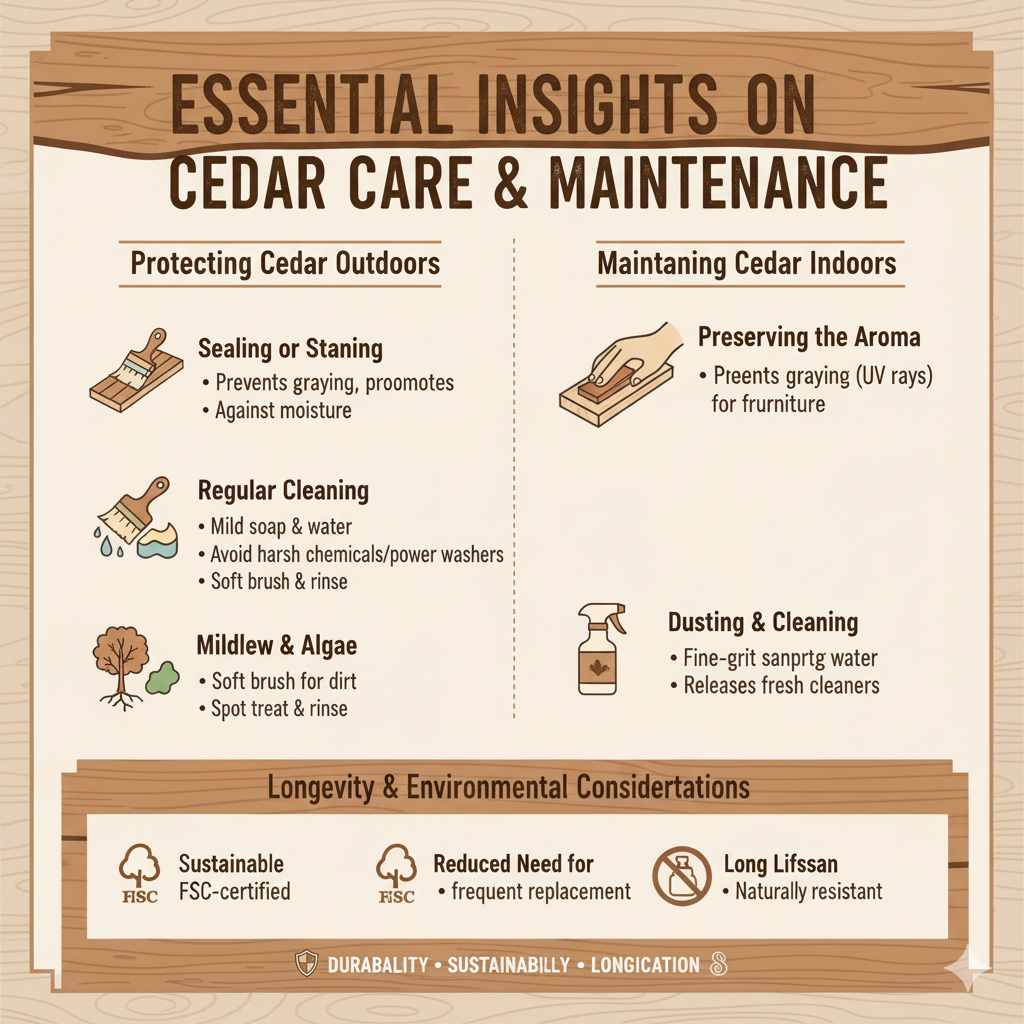
Sealing or Staining: Applying an exterior-grade sealant, stain, or water-repellent finish is highly recommended for outdoor cedar projects like decks, fences, and furniture. This helps to prevent the wood from graying due to UV exposure and provides an extra layer of protection against moisture.
Regular Cleaning: Gently clean your cedar surfaces annually with mild soap and water. Avoid harsh chemicals or power washers, which can damage the wood fibers. A soft brush can help remove surface dirt and mildew.
Addressing Mildew and Algae: If you notice mildew or algae growth, a solution of one part bleach to ten parts water can be used for spot treatment, followed by thorough rinsing. Always test a small, inconspicuous area first.
Watch for Fading: Over time, UV rays will naturally cause the wood to fade to a silvery gray. This is purely cosmetic and doesn’t necessarily mean the wood is deteriorating. If you prefer a different look, you can reapply a stain or sealant.
Maintaining Cedar Indoors
Cedar used indoors, like in closets or chests, requires less maintenance but still benefits from some care.
Preserving the Aroma: The famous cedar scent naturally fades over time as the natural oils dissipate. To revive it, lightly sand the surface of the wood with fine-grit sandpaper. This releases fresh oils and restores the aroma. This is particularly useful for cedar-lined closets or chests.
Dusting: Regular dusting with a soft cloth will keep your cedar items looking their best.
Avoiding Harsh Cleaners: Just like outdoors, avoid harsh chemicals that can damage the wood or its natural oils.
Longevity and Environmental Considerations
The very properties that give cedar its meaning – durability and natural resistance – contribute to its eco-friendliness when sourced responsibly.
Sustainable Harvesting: Look for cedar products that are certified by organizations like the Forest Stewardship Council (FSC). This ensures the wood comes from responsibly managed forests, which helps protect biodiversity and ecosystems and affirms that the “meaning of cedar” in terms of sustainability is being honored.
Reduced Need for Chemical Treatments: Because cedar is naturally resistant to decay and insects, it often does not require the chemical treatments that some other woods need for outdoor use. This means fewer harsh chemicals are introduced into the environment.
Long Lifespan: Projects made from cedar tend to last longer than those made from less durable materials. This means less frequent replacement and, therefore, less waste and consumption of resources over time.
Frequently Asked Questions About Cedar
What makes cedar smell so good?
Cedar’s distinctive, pleasant aroma comes from natural oils and extractives within the wood. These compounds are also what give cedar its natural resistance to insects and decay.
Is cedar wood good for outdoor furniture?
Yes, cedar is one of the best woods for outdoor furniture! Its natural resistance to rot, decay, and insect damage means it can withstand moisture and the elements much better than many other types of wood. It’s durable yet lightweight and easy to work with.
Will cedar rot if exposed to ground contact?
While cedar is highly rot-resistant, prolonged direct contact with soil can eventually lead to decay. For projects like fence posts or raised beds, it’s excellent, but some builders recommend using protective barriers or specific grades of cedar for situations with constant, deep ground contact to ensure maximum longevity.
How do I maintain the scent of cedar in my closet?
To refresh the cedar scent, simply lightly sand the wood surfaces with fine-grit sandpaper. This action releases more of the aromatic oils. You can also use cedar blocks or sachets, which can be gently sanded periodically.
Is cedar expensive compared to other woods?
Cedar can be moderately expensive, often priced higher than common pine but comparable to or less expensive than hardwoods like oak or redwood, depending on the specific type and grade. Its price reflects its excellent natural properties and durability.
Can I paint or stain cedar?
Absolutely! Cedar takes both paint and stain beautifully. If you want to preserve its natural color, a clear water-repellent finish is a great choice. If you prefer a different look, stains can enhance or change its color, and exterior paints offer excellent protection and a wide range of color