Does Cedar Repel Bugs? Yes, But Not Carpenter Bees
Cedar repels moths, ants, fleas, silverfish, and cockroaches through cedrol and thujone in its natural oils — but it does not repel carpenter bees or many wood-boring beetles, which actually prefer cedar’s soft grain. University of Arkansas and Illinois research found the effect fades within about three years in a sealed chest, and faster in a closet that isn’t airtight. This guide covers which bugs cedar actually deters, how long the protection lasts, and how to refresh it.
Insert your Affiliate Disclosure reusable block here
How Cedar Repels Bugs
Cedar’s effectiveness comes down to chemistry, not folklore. Cedarwood — especially Eastern Red Cedar and Western Red Cedar — contains volatile oils dominated by three compounds: cedrol, cedrene, and thujone (thujone is more concentrated in Western Red Cedar). These sesquiterpenes evaporate slowly off the wood’s surface, and at close range they do two things to insects: they mask the pheromone trails bugs use to find food, mates, and egg-laying sites, and at higher concentrations they’re directly toxic to larvae and eggs, disrupting hatching.
That’s different from how a chemical insecticide works. Cedar doesn’t kill adult insects on contact the way a pyrethroid spray does — it disorients and deters them, and it’s most effective against eggs and young larvae rather than mature adults. That distinction matters for what cedar can and can’t realistically do in your closet or garage.
Which Bugs Cedar Actually Repels (and Which It Doesn’t)
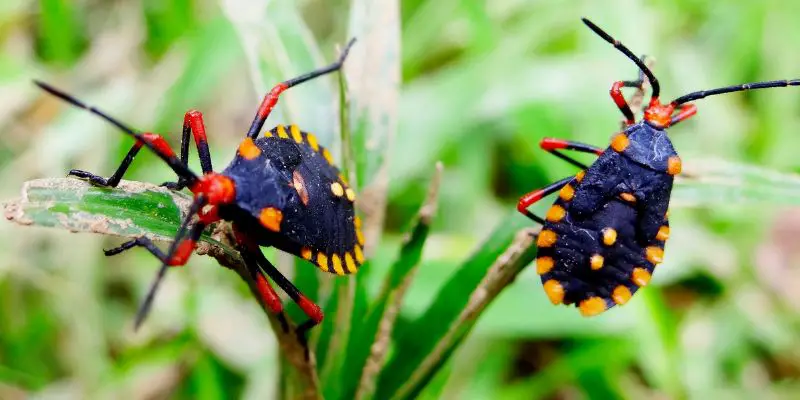
Cedar is not a universal insect repellent. It works well on a specific list of pests and does essentially nothing against others — in a couple of cases it’s actively unhelpful, since some wood-boring insects prefer softwoods like cedar for nesting.
| Insect | Cedar’s Effect | Why |
|---|---|---|
| Clothes moths (larvae) | Effective | Cedrol is toxic to larvae and eggs at close range |
| Carpet beetles | Effective | Same larvae-toxicity mechanism as clothes moths |
| Silverfish | Effective | Scent disrupts their ability to locate food sources |
| Ants, fleas, ticks | Effective (deterrent) | Strong scent masks pheromone trails |
| Cockroaches | Effective (deterrent) | Avoid concentrated cedar oil vapor |
| Mosquitoes | Partially effective | Scent is a mild deterrent, not a kill mechanism |
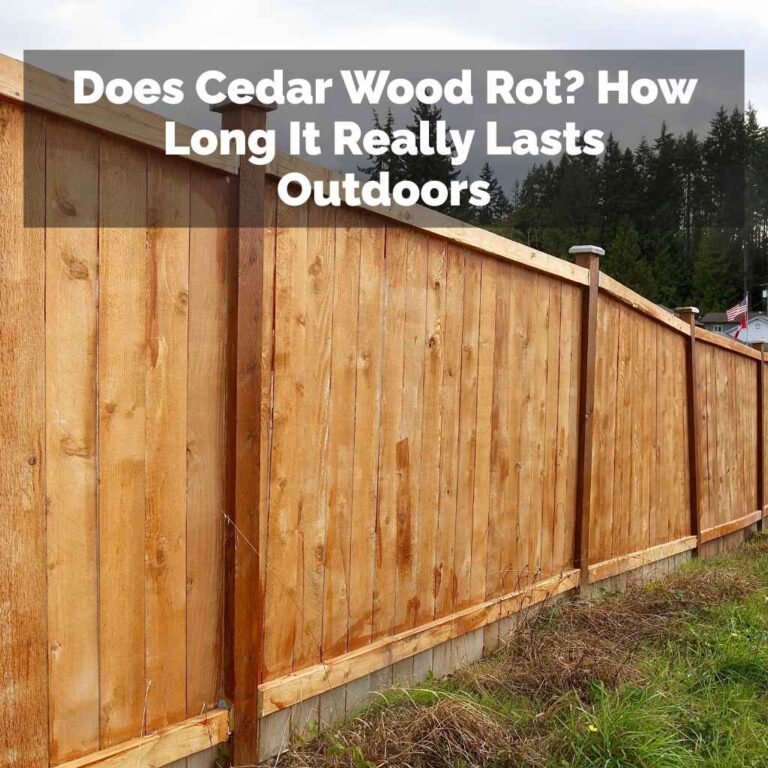
| Carpenter bees | Not effective | Actually prefer cedar’s soft, easy-to-bore grain |
| Wood-boring/bark beetles | Largely not effective | Target stressed cedar trees regardless of scent |
If your goal is protecting stored clothing or linens, cedar is genuinely useful — that’s the use case the research actually supports. If you’re trying to keep carpenter bees off a cedar deck or fence, cedar’s natural oils won’t help — see whether pressure-treated wood deters carpenter bees for an alternative. And if outdoor pest pressure (not stored-clothing moths) is the actual concern, our companion piece on what cedar attracts vs. repels covers the insects this article doesn’t.
Best Cedar Closet Pick
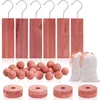
Homode Cedar Blocks for Clothes Storage, 40-Pack – $17.99
A mixed set of hang-ups, balls, sachets, and rings — the format that actually matters for the closet-vs-chest airtightness issue covered above, since you can concentrate blocks close to hanging clothes instead of relying on ambient air alone.
- Best for: stocking an entire closet across hangers, drawers, and shoe storage at once
- Why we picked it: premium aromatic red cedar with a resandable surface to refresh scent, matching the “sand to refresh” advice in this guide
- Main drawback: like all cedar products, scent and effectiveness fade over months and needs periodic sanding
Compare more cedar closet options
 Option 1 Dr. Killigan’s Cedarwood Planks, 10-Pack – $24.97
|
 Option 2 ESRICH Cedar Blocks with Hooks, 15-Pack – $9.99
|
 Option 3 Ceddera Cedar Hang Ups, 14-Pack – $28.95
|
As an Amazon Associate we earn from qualifying purchases.
How Long Does Cedar’s Bug-Repelling Effect Actually Last?
This is where most cedar marketing overstates things. A 2006 University of Arkansas study found cedar blocks effective at deterring clothes moths from laying eggs, and a 2008 University of Illinois study confirmed cedarwood oil is toxic to moth larvae — but both come with a shelf life. Research summarized by extension entomologists puts a sealed cedar chest at roughly three years of real protection before the oil has evaporated enough to stop working; cedar blocks and closets, which aren’t sealed, fall off faster than that.
📊 Cedar’s bug-repelling oils typically hold effective potency for 3–6 months of moderate exposure, dropping off faster with heat, humidity, or open air — a sealed cedar chest can stay protective for up to roughly 3 years before it needs refinishing. — Source: University of Maryland Extension, Clothes Moths
The fix is simple and often skipped: lightly sand the surface of cedar blocks, planks, or panels every few months. Sanding exposes fresh wood fibers and their oils, effectively resetting the clock. A few drops of pure cedarwood oil concentrate accomplish the same thing between sandings — see our guide on how cedar specifically helps with moths for a deeper look at the moth-only use case.
Does Cedar Work in a Regular Closet, or Only a Sealed Chest?
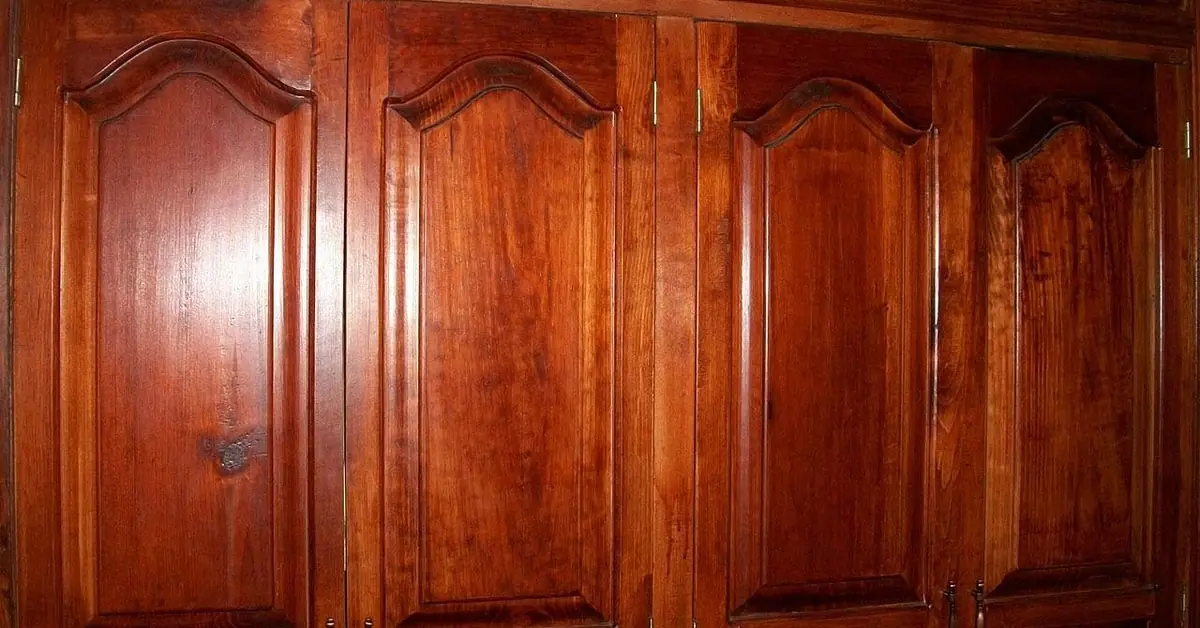
A sealed cedar chest and a cedar-lined closet are not the same tool, even though they’re marketed almost identically. In a chest, the lid traps cedar’s vapors at a high enough concentration to actually affect larvae and eggs. In an ordinary closet, air circulates freely, so vapor concentration stays low — enough to make the scent noticeable and to deter some adult insects from lingering, but not necessarily enough to reliably kill eggs or young larvae the way a sealed chest can.
“Cedar chests, blocks, or closets also provide protection” for stored woolens, though the standard extension advice still recommends cleaning garments before storage and using sealed containers as the primary defense.
Practically, that means a cedar-lined closet works best as ongoing prevention for clothes already free of moth eggs — not as a cure for an active infestation. If you already suspect an infestation, cedar alone isn’t the fix; combine it with washing or dry-cleaning affected garments first.
Frequently Asked Questions About Cedar and Bugs
What kind of bugs are repelled by cedar?
Cedar deters clothes moths, carpet beetles, silverfish, ants, fleas, ticks, and cockroaches through the scent of cedrol and thujone in its natural oils. It does not repel carpenter bees or most wood-boring beetles, which are unaffected by the scent and can still infest cedar.
How long does cedar repel bugs?
Cedar blocks and closets stay effective for roughly 3–6 months of typical exposure before the oils fade. A sealed cedar chest lasts longer, up to about 3 years, because the closed lid keeps oil vapor from dissipating as quickly. Sanding the surface every few months restores the scent and effectiveness in both cases.
What does the smell of cedar repel?
The scent primarily disrupts moths, ants, fleas, and silverfish by masking the pheromone trails they rely on to find food and egg-laying sites. It has little to no effect on carpenter bees or wood-boring beetles.
Does cedar keep ants away?
Yes, as a deterrent rather than a killer. Ants generally avoid areas with a strong concentration of cedar oil, which makes cedar mulch or cedar chips a mild ant deterrent around a home’s perimeter, though it won’t eliminate an existing colony.
Does cedar repel carpenter bees?
No. Carpenter bees are one of the few insects unaffected by cedar’s scent, and they actually prefer boring into cedar because it’s a soft, easy-to-tunnel softwood. If carpenter bees are the problem, cedar alone won’t solve it — you’ll need a dedicated deterrent or repair strategy.
Does cedar mulch repel bugs the same way as cedar wood blocks?
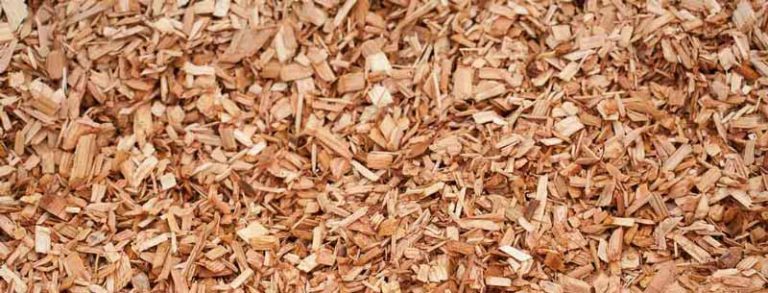
Cedar mulch contains the same oils but at a much lower, diluted concentration than solid cedar blocks, so its insect-deterring effect outdoors is weaker and fades faster, especially after rain washes surface oils away — see what cedar chips do to surrounding grass and soil before spreading them as mulch. Fleas specifically get their own deeper breakdown in does cedar wood kill fleas.
Conclusion
Cedar is a genuine, research-backed deterrent against clothes moths, carpet beetles, silverfish, ants, fleas, and cockroaches — but it’s not a universal bug repellent, and it does nothing against carpenter bees or most wood-boring beetles. Get the most out of it by using cedar close to what you’re protecting (hang-ups and blocks inside a closet, not just nearby), and sand the surface every few months to keep the oils working.