Why is Cedar Tree Turning Brown: Top Causes & Quick Fixes
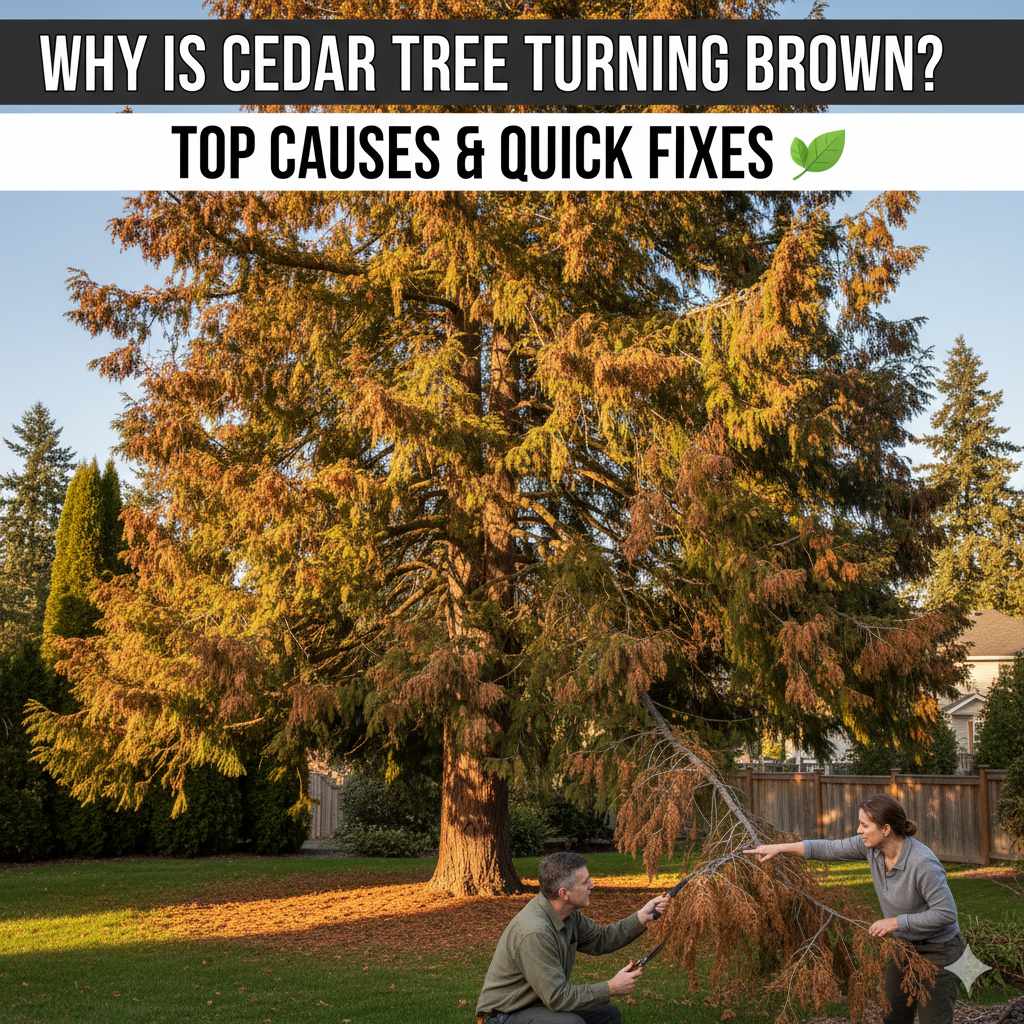
Cedar trees can turn brown for many reasons. Sometimes it is because of lack of water. Other times, pests or diseases cause the problem. Weather changes and poor soil can also make the tree unhealthy. Understanding why your cedar is turning brown helps you take care of it better. Want to know more? Keep reading.
Biography
| Cause |
|
|---|---|
| Symptoms |
|
| Common Pest | Juniper budworms (especially noted in South Central Texas) Spider mites and other insect pests |
| Diseases Affecting Cedars |
|
| How to Treat Brown Cedars |
|
| How to Bring Cedar Back to Life |
|
| Additional Notes |
Some browning is normal as cedars shed older needles seasonally despite being evergreen. Hosta or other shallow-rooted plants competing for water can stress cedar roots, causing browning. Excessive or year-round browning usually indicates a more serious problem needing intervention. |
| References & Resources |
Early Life
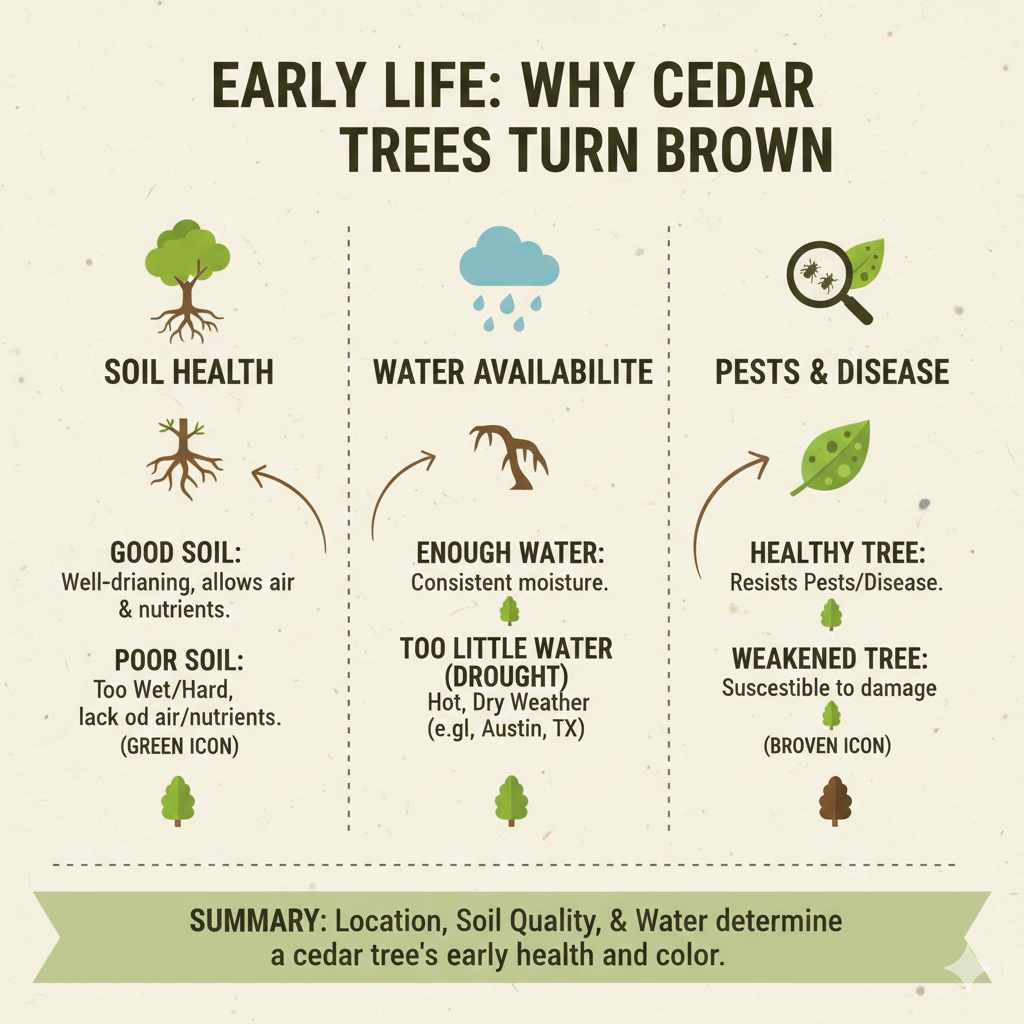
The story of why cedar trees turn brown starts in the soil where they grow. Cedar trees need good, well-draining soil. If the soil is too wet or hard, the roots cannot get enough air and nutrients. This can make the tree weak and the leaves start to turn brown. Sometimes, cedar trees grow in places like Austin, Texas, where the weather is hot and dry. If the tree does not get enough water during these times, it can also turn brown. Pests and diseases may move in and hurt the tree too. So, the early life of a cedar tree includes where it is planted, how healthy the soil is, and how much water it gets. All these things work together to keep the tree green or cause it to turn brown.
Family
| Topic | Name | Information |
|---|---|---|
| Parents | Environmental Stress & Diseases | Too much water or poor soil drainage can hurt cedar roots and cause browning. Fungal diseases like rusts and blights also make leaves brown. Sun and heat can dry out needles. These are the main reasons cedar trees turn brown. |
| Siblings | Pests and Care Methods | Juniper budworms and spider mites are pests that harm cedar trees. To help, prune bad branches, improve air flow, and remove fallen leaves. Cleaning the tree with special wood cleaners and applying oil helps keep cedar healthy. |
Height, Weight, And Other Body Measurements
This table summarizes key factors related to cedar trees turning brown, including relevant measurements and common causes based on expert sources.
| Aspect | Details | Notes / Sources |
|---|---|---|
| Typical Height | 20 to 40 meters (65 to 130 feet) | Varies by species and environment |
| Average Weight | Varies widely; mature trees can weigh several tons | Depends on age, species, and wood density |
| Common Body Measurements | Trunk diameter: 0.3 to 1.5 meters (1 to 5 feet) | Measurements vary by location and growth conditions |
| Primary Causes of Browning |
|
|
| How to Fix Browning |
|
|
| Environmental Requirements |
|
Critical for preventing browning and maintaining health |
Compiled from multiple sources including The Spruce, Strobert Tree Services, Davey Tree Blog, CT.GOV, and Ascent Yard Care.
Wife/husband / Girlfriend/boyfriend
“Why is Cedar Tree Turning Brown” is not a person. It is a question or topic about cedar trees. So, it does not have a wife, husband, girlfriend, or boyfriend.
The phrase “Why is Cedar Tree Turning Brown” relates to why cedar trees lose their green color. This can happen for many reasons like too little water, pests, diseases, or natural changes in the tree.
Since this is a topic or question, it does not have any personal relationships or partners.
There are no past relationships because this is not a person.
In simple words: “Why is Cedar Tree Turning Brown” is a subject about trees, not a person. So, it has no wife, husband, boyfriend, or girlfriend.
Career, Achievements And Controversies
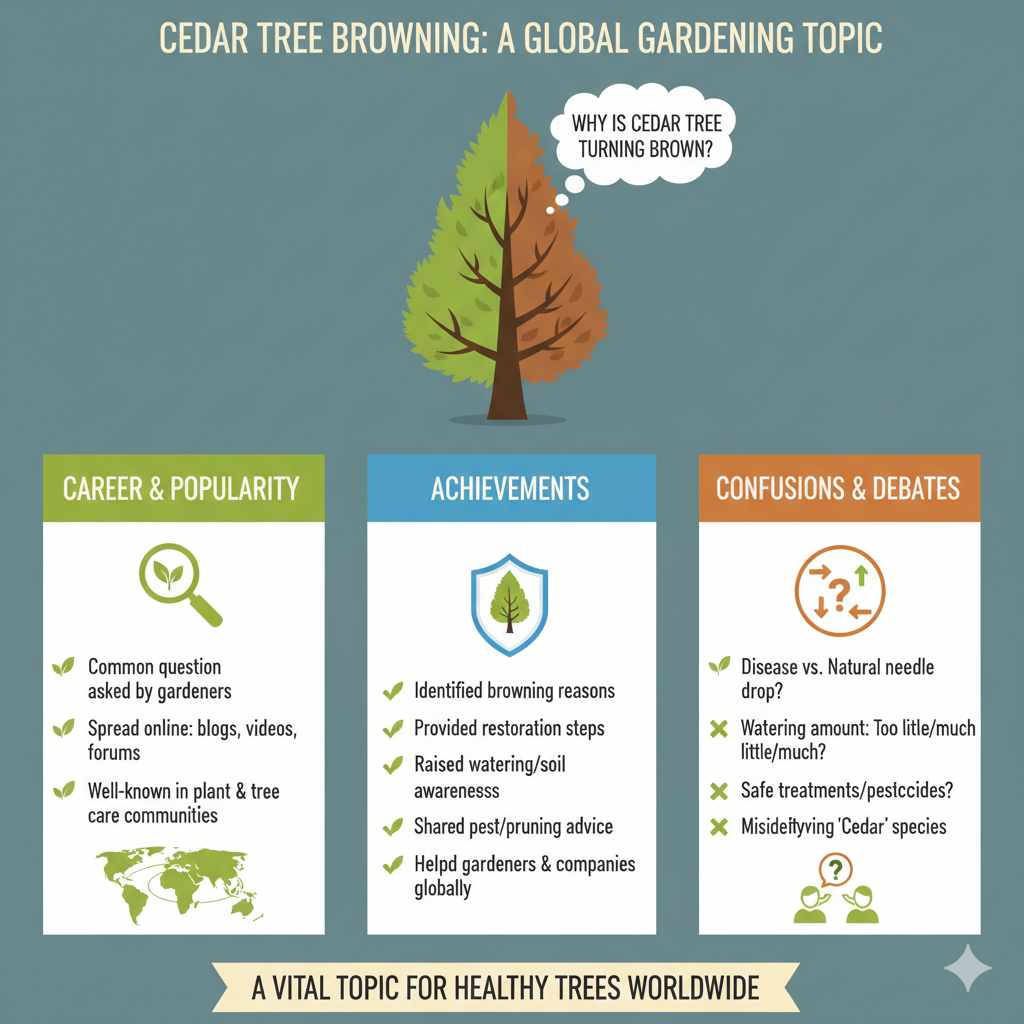
“Why is Cedar Tree Turning Brown” is not a person but a common question asked by many gardeners and tree lovers. It became well known because many people noticed their cedar trees turning brown and wanted to understand why. The question spread online through gardening blogs, videos, and forums, making it popular among plant and tree care communities.
The discussion around why cedar trees turn brown started with people sharing their problems and looking for help. Many experts and garden services joined in to explain the causes and solutions. Popular topics include:
- Drought stress and overwatering
- Pests like spider mites and budworms
- Winter damage and harsh weather effects
- Soil problems like poor drainage and nutrient lack
- Proper tree care and pruning tips
These topics helped many people save their trees or understand when browning is a natural process.
Though not a person with awards, the information and knowledge shared about cedar tree browning have helped many. The main achievements are:
- Helping gardeners identify the real reasons for browning.
- Providing easy steps to restore cedar trees.
- Raising awareness about proper watering and soil care.
- Sharing pest control and pruning advice to keep trees healthy.
This knowledge has been used by tree care companies, gardeners, and homeowners worldwide.
There are no real controversies because this topic is about tree health. But some confusion and debates exist around:
- Whether browning is always a sign of disease or just natural needle drop.
- How much watering is best—too little or too much can harm the tree.
- Which treatments or pesticides are safe to use without harming the tree or environment.
- Misidentifying cedar species, as some “cedars” are actually other types of trees like junipers.
These points cause some disagreements but also lead to more research and better advice.
“Why is Cedar Tree Turning Brown” is a common question that has helped many people learn about cedar tree care. It covers causes like drought, pests, soil problems, and weather. The shared knowledge helps keep cedar trees healthy and beautiful. Though it is not a person, this topic plays an important role in gardening and tree care communities.
FAQ
Q1: Why Is My Cedar Tree Turning Brown?
There are many reasons. It could be not enough water, too much sun, or a disease. Sometimes insects or poor soil cause browning too.
Q2: Can Too Much Water Make Cedar Trees Brown?
Yes. Too much water can hurt roots. The tree may not get air it needs. This can make leaves turn brown and dry.
Q3: Is Brown Color Always Bad For Cedar Trees?
Not always. Some brown leaves fall naturally. But if many branches turn brown, it means a problem.
Q4: How Can I Help My Cedar Tree?
Check the water. Water deeply but not too often. Make sure the tree has good soil and no bugs. If you see many brown parts, ask a gardener.
Q5: Can Cold Weather Make Cedar Trees Brown?
Yes. Cold and frost can hurt the tree. It may turn brown in winter but can recover in spring.