Mahogany Wood Density in Kg/M3, by Species
Mahogany wood density averages 590 kg/m3 for genuine Honduran mahogany (Swietenia macrophylla) — not the 600-900 kg/m3 range widely repeated online, which conflates different species and green-wood weights. Using the wrong figure throws off board-foot weight calculations by 20% or more. This guide covers verified density by species, how it compares to oak and pine, and how to calculate a real board’s weight.
Quick Answer
Genuine (Honduran) mahogany averages 590 kg/m3, Cuban mahogany 600 kg/m3, and African mahogany 545 kg/m3, based on The Wood Database’s oven-dry-to-12%-moisture figures. All three are lighter than red oak (700 kg/m3) and heavier than eastern white pine (400 kg/m3). Individual boards vary by roughly ±10% depending on moisture content and growth conditions.
What Is Mahogany Wood Density, Exactly?
Best Moisture Meter Pick
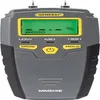
General Tools MMD4E Moisture Meter for Wood
A pin-type meter that reads 5-50% moisture in wood, letting you confirm whether a mahogany board is actually kiln-dried before you trust a weight calculation.
- Best for: Checking a board’s real moisture % before calculating its weight
- Why we picked it: Simple pin-type readout, wide 5-50% range covers green through kiln-dried lumber
- Main drawback: Pins leave small marks, so test on an offcut or hidden edge
Compare more moisture meter options
 Option 1 Klein Tools ET140 Pinless Meter
|
 Option 2 TopTes TS-630 Digital Meter
|
 Option 3 General Tools MMP100 Compact
|
As an Amazon Associate we earn from qualifying purchases.
Wood density is a measure of how much mass a given volume of wood contains, expressed in kilograms per cubic meter (kg/m3). It is reported at a standardized 12% moisture content so different species and sources can be compared fairly. Density is not the same measurement as Janka hardness, which measures resistance to denting rather than weight — a wood can be dense but relatively soft, or light but hard, though the two usually track together.
“Mahogany” is also not one species. Furniture-grade mahogany sold today is typically Honduran/genuine mahogany, Cuban mahogany, or African mahogany — three related but botanically distinct woods with different average densities. Generic “mahogany” density figures you see online (often a rounded 600-900 kg/m3) usually blur these together, which is why the number varies so much from site to site.
Real Mahogany Density by Species (Kg/M3)
The table below uses figures from The Wood Database, the standard reference most sawyers and engineers cite, rather than the rounded “600-900 kg/m3” range that gets copied across generic wood-fact sites.
| Species | Avg. Density (Kg/M3) | Lb/Ft3 | Specific Gravity (12% MC) | Janka Hardness |
|---|---|---|---|---|
| Honduran / genuine mahogany (S. macrophylla) | 590 | 36.8 | 0.59 | 900 lbf |
| Cuban / Caribbean mahogany (S. mahagoni) | 600 | 37.0 | 0.60 | 930 lbf |
| African mahogany (Khaya spp.) | 545 | 33.9 | 0.54 | 850 lbf |
African mahogany’s specific gravity varies more than the other two because “African mahogany” is a trade name covering four separate Khaya species — individual boards can range from a specific gravity of 0.52 up to 0.76 depending on which species and region the lumber came from. If you’re buying African mahogany for a load-bearing or weight-sensitive project, ask the supplier which Khaya species it is rather than relying on the group average.
How Mahogany Compares to Oak and Pine
| Wood | Density (Kg/M3) | Janka Hardness | Best For |
|---|---|---|---|
| Mahogany (avg. of 3 species) | ~578 | 850-930 lbf | Furniture, cabinetry, instruments |
| Red oak | 700 | 1,220 lbf | Flooring, structural furniture |
| Eastern white pine | 400 | 380 lbf | Millwork, construction framing |
Mahogany sits well below red oak in both density and hardness, which is part of why it machines more easily and takes finish so evenly — there’s less dense latewood fighting the cutting edge. It’s still roughly 45% denser than pine, so it holds screws and joinery far better than softwood framing lumber. For a full breakdown of where other species fall on this scale, see our types of wood guide.
Why Published Density Figures Vary So Much
Three factors explain most of the spread you’ll see between sources:
- Species conflation: “Mahogany” figures that look too high (800-900 kg/m3) are usually averaging in denser, unrelated woods sold under the same trade name, or citing green (undried) weight instead of the standard 12%-moisture figure.
- Moisture content: Green mahogany, fresh off the tree, can weigh 25-40% more than kiln-dried lumber at 12% moisture. Always check whether a quoted figure is green weight or dried weight before using it for a project calculation.
- Growth conditions and tree age: Slower-grown, older trees in nutrient-rich soil produce measurably denser wood than fast-grown plantation stock of the same species — individual board density commonly varies ±10% from the species average for this reason alone.
How to Calculate the Actual Weight of a Mahogany Board
Density lets you calculate a real board’s weight before you buy or ship it — useful for freight quotes, wall-mounted shelving load limits, or just knowing what you’re lifting.
- Measure the board in meters: Convert length, width, and thickness from inches/feet to meters (1 inch = 0.0254 m).
- Calculate volume: Multiply length × width × thickness to get cubic meters (m3).
- Multiply by species density: Multiply the volume by the average kg/m3 figure for your specific mahogany species from the table above.
- Adjust for moisture: If the lumber isn’t kiln-dried to 12% moisture, add 5-15% to the result for air-dried stock, or 25-40% for green/unseasoned wood.
📊 Worked example: An 8 ft × 12 in × 1 in board of Honduran mahogany (0.0189 m3) weighs about 11.1 kg (24.6 lb) kiln-dried. The same board in Cuban mahogany runs about 11.3 kg (25.0 lb); in African mahogany, about 10.3 kg (22.7 lb). — Source: The Wood Database density figures, calculated at 12% moisture content.
That 5-40% moisture swing only matters if you actually know your board’s moisture content. A basic wood moisture meter (below) confirms it in seconds, rather than guessing based on how heavy a board feels.
For other species or board sizes, our wood weight calculator runs this same math automatically — useful when you’re pricing out a project across multiple wood types.
What Mahogany’s Density Means for Woodworking
In the shop, mahogany’s moderate density (lighter than oak, heavier than pine) is one of the reasons it’s a favorite for furniture makers. In our experience machining it, mahogany cuts cleanly with sharp carbide blades and leaves very little tear-out even on interlocked grain — the tradeoff is that its open pores need a grain filler before a glass-smooth finish, something denser closed-pore woods like maple don’t require.
- Machining: Cuts and sands easily compared to oak or maple; use sharp tools to avoid fuzzing the interlocked grain.
- Fastening: Holds screws and nails well without splitting, thanks to its moderate density and straight grain.
- Stability: Resists warping and shrinking better than many hardwoods once properly dried, which is why it’s trusted for door and window frames.
- Weight in assemblies: A mahogany dining table will run noticeably lighter than the same design in solid oak — worth factoring in for pieces that need to be moved.
Common Mistakes When Estimating Mahogany’s Weight
- Using the generic 600-900 kg/m3 range for a precise calculation. That spread is too wide to be useful for freight or load calculations — use the species-specific figure instead.
- Forgetting moisture content. A “heavy” board might just be undried, not a denser species.
- Assuming all African mahogany is identical. The trade name covers four Khaya species with real density differences between them.
- Confusing density with hardness. A denser board isn’t automatically more dent-resistant — check the Janka number separately if durability is the concern, not just weight.
Frequently Asked Questions
What is the density of mahogany wood in kg/m3?
It depends on the species. Honduran (genuine) mahogany averages 590 kg/m3, Cuban mahogany averages 600 kg/m3, and African mahogany averages 545 kg/m3, all measured at 12% moisture content per The Wood Database. Individual boards can vary about ±10% from these averages.
Is mahogany heavier than oak?
No. Red oak averages about 700 kg/m3, which is roughly 15-20% denser than any of the three main mahogany species. Mahogany is lighter and generally easier to machine as a result.
How much does a mahogany board weigh?
An 8 ft × 12 in × 1 in board of kiln-dried Honduran mahogany weighs about 11.1 kg (24.6 lb). Multiply the board’s volume in cubic meters by 545-600 kg/m3 depending on species to estimate other sizes, or use our wood weight calculator.
Does moisture content change mahogany’s density?
Yes, significantly. Green (undried) mahogany can weigh 25-40% more than kiln-dried lumber at the standard 12% moisture reference point. Air-dried stock typically falls in between, around 5-15% heavier than kiln-dried.
Is mahogany a hardwood despite its lower density?
Yes. “Hardwood” refers to the tree type (broadleaf, deciduous or tropical) and grain structure, not density — mahogany is botanically a hardwood even though its density and Janka hardness fall below denser hardwoods like oak or hard maple.
Understanding mahogany’s real, species-specific density matters more than the rounded range most guides repeat — it’s the difference between an accurate weight estimate and one that’s off by 20% or more. For species identification and finishing, see our cedar vs mahogany comparison and our guide to wood hardness by species.
Sponsored / affiliate links. As an Amazon Associate I earn from qualifying purchases. I may earn additional commission from eligible campaigns.
 The Hardwood Edge Mahogany Hardwood Planks - 2-Pack Mahogany Wood for Unfinished Wood Crafts - 1/8’’ (3mm) 100% Pure Hardwood - Laser Engraving Blanks - Exotic Mahogany Planks for Crafts and Gifts
 The Hardwood Edge Mahogany Hardwood Planks - 4-Pack Mahogany Wood for Unfinished Wood Crafts - 1/8’’ (3mm) 100% Pure Hardwood - Laser Engraving Blanks - Exotic Mahogany Planks for Crafts and Gifts