5 Wood Vs 3 Hybrid Distance: Proven Best
Choosing between a 5-wood and a 3-hybrid for distance can be tough, but for most beginners seeking reliable, versatile performance, the 3-hybrid often offers a better blend of distance control and forgiveness. We’ll break down exactly why and show you how to test which club truly performs best for your swing.
Welcome to the workshop! If you’ve been golfing, you know that those longer shots off the fairway or tee box can feel tricky. We often get stuck wondering whether our 5-wood or that newer 3-hybrid will give us the perfect distance. It’s a common frustration, especially when you look at them sitting side-by-side in your bag. They look similar, but they act very differently when the club meets the ball. Don’t worry; this isn’t rocket science! As your mentor, my job is to simplify this choice so you can grab the right tool and focus on hitting great shots. We’ll explore the design differences and test them out together, step-by-step, so you can prove which one is truly best for your game.
Mastering Distance: 5 Wood Versus 3 Hybrid – Which Club Wins?
The debate between the fairway wood (specifically the 5-wood) and the hybrid (specifically the 3-hybrid) is one of the most frequent topics I hear about from golfers looking to fill that gap between their long irons and fairway woods. These two clubs occupy a similar yardage range, but their construction means they behave distinctly differently.
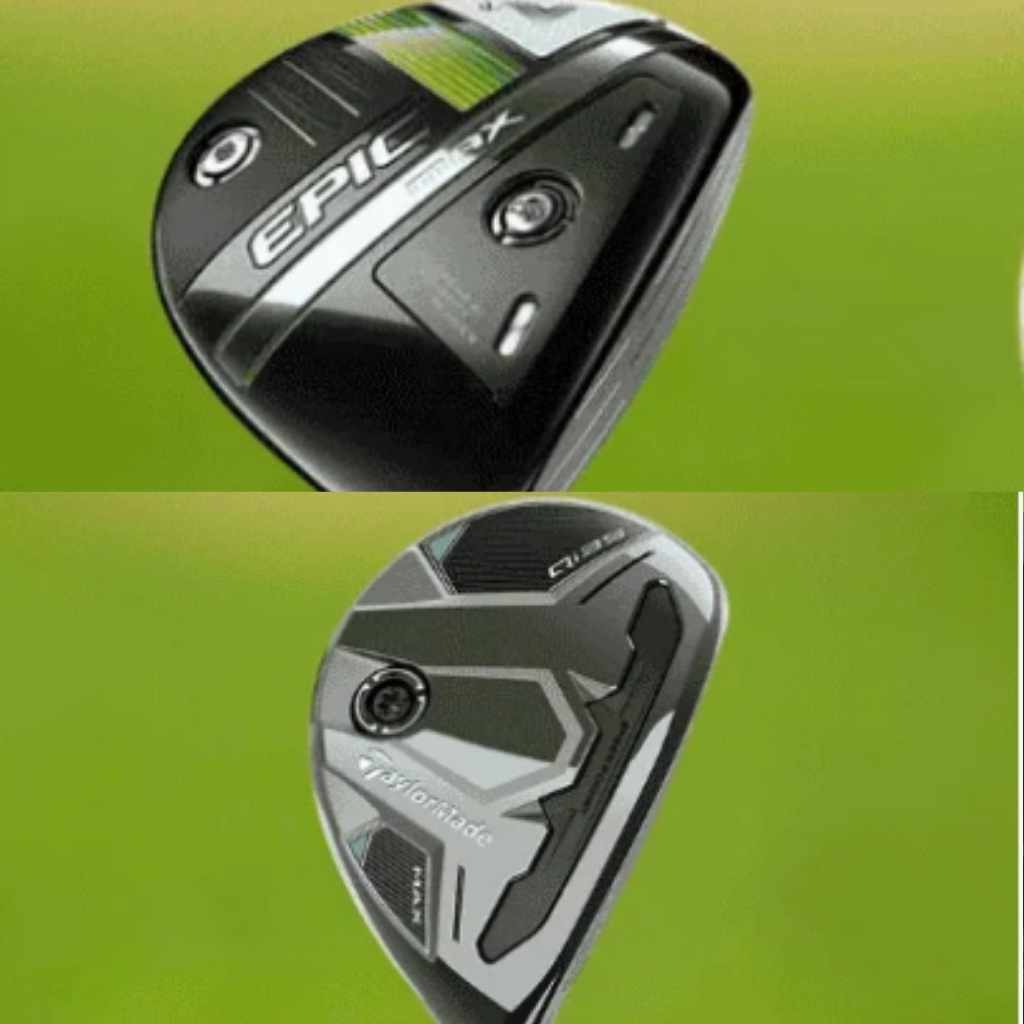
To make the right decision, you need to understand what each club promises. The 5-wood is a traditional, high-lofted fairway wood, designed for pure distance with a slight curve. The 3-hybrid takes cues from both fairway woods and irons, aiming for a blend of playability and forgiveness. Getting this right can shave strokes off your score and boost your confidence. We are going to dissect these clubs so you can make an informed choice that sticks.
Understanding Club Geometry: Why the Designs Matter
The actual performance difference between a 5-wood and a 3-hybrid comes down almost entirely to how they are built. Pay attention to these three key factors: the head shape, the sole width, and the shaft length. These elements dictate launch angle, trajectory, and forgiveness.
The 5-Wood: Distance Machine with a Larger Footprint
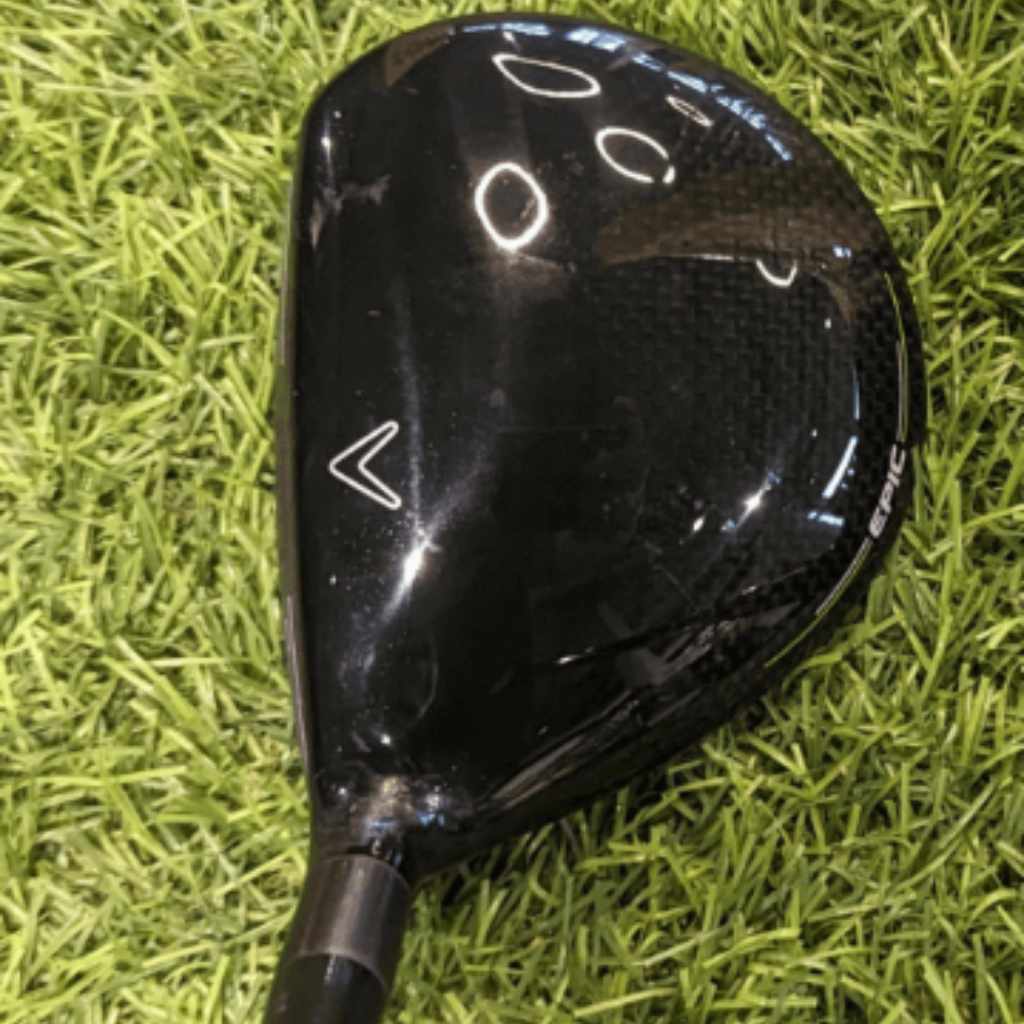
The 5-wood is essentially a smaller version of your driver or 3-wood. It has a larger, rounder head compared to a hybrid, which generally leads to a higher Moment of Inertia (MOI), meaning it resists twisting on off-center hits better than an iron, but sometimes less than a modern hybrid.
- Head Size: Larger and often deeper face. This offers a bigger visual target.
- Loft: Typically ranges from 18 to 19 degrees. This loft gets the ball airborne efficiently.
- Sole and Turf Interaction: The sole (the bottom of the club) is usually wider. This large footprint can sometimes cause the club to dig slightly into the ground during the swing, especially in thicker grass.
The primary goal of the 5-wood is raw, penetrating distance when struck perfectly. It shines when you have a clean lie on the fairway or when teeing off.
The 3-Hybrid: The Forgiving Iron/Wood Crossover
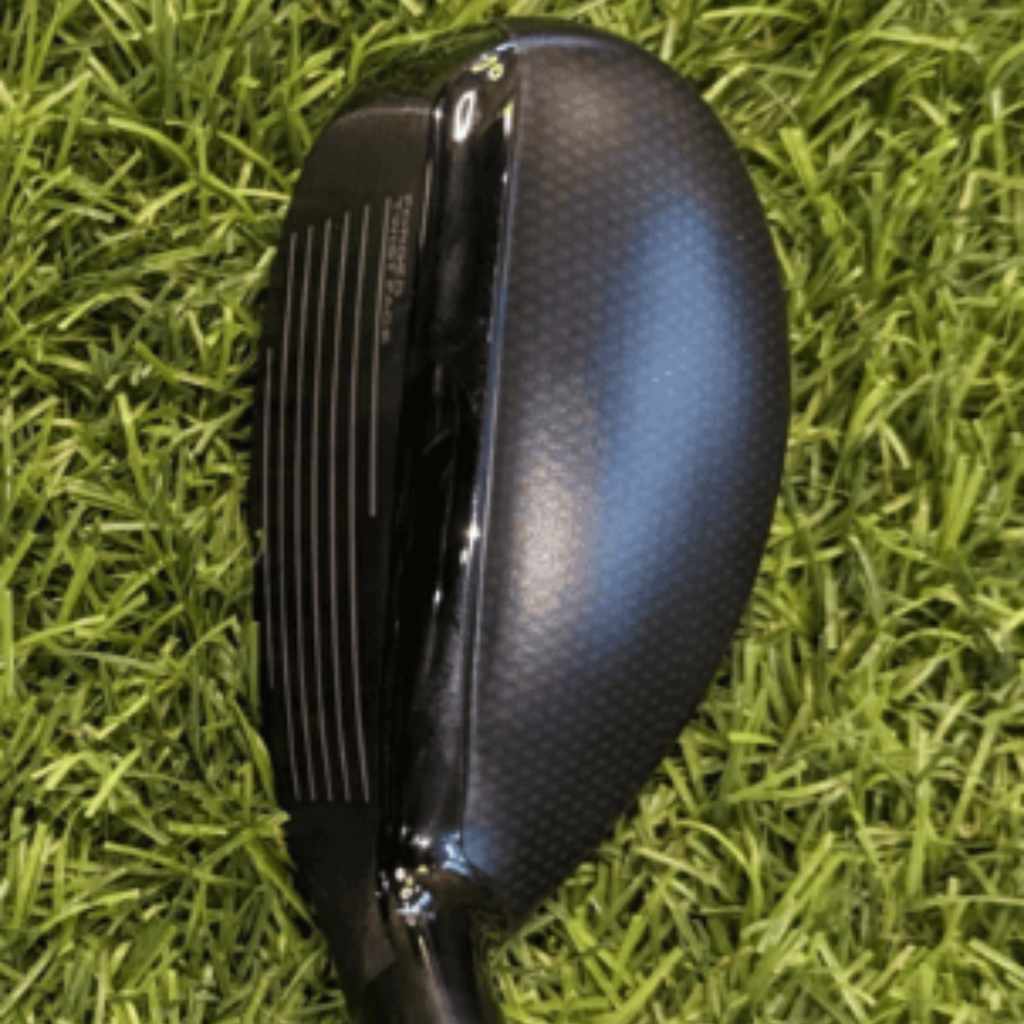
The hybrid was created to replace hard-to-hit, long irons (like the 3-iron). It combines the head size of a slightly larger iron with the low, deep center of gravity (CG) found in fairway woods. This combination is magic for many amateurs.
- Head Size: Smaller, more compact, and often sleeker than a 5-wood. It resembles a fairway wood that has been heavily shrunk.
- Loft: A 3-hybrid usually sits around 19 to 21 degrees, very similar to a 5-wood, but the shaft length can slightly alter the effective launch.
- Sole and Turf Interaction: This is where hybrids excel. The sole is narrower and often more rounded or cambered. This design allows the club to glide through the turf or rough much more easily than a wide-soled wood, reducing “chunked” shots.
The hybrid offers the best of both worlds: the trajectory control of an iron paired with the easy launching characteristics of a wood.
Shaft Length: A Hidden Distance Factor
Generally speaking, a 5-wood will have a slightly longer shaft than a comparable 3-hybrid. Longer shafts generate more clubhead speed, which usually means more distance. However, longer shafts are harder to control consistently. If you struggle with accuracy, a slightly shorter shaft (like on a hybrid) can immediately improve your ability to hit the middle of the face more often.
Comparing Key Metrics: 5 Wood vs 3 Hybrid Distance
When we talk about “5 wood vs 3 hybrid distance,” we are really comparing launch, spin, and forgiveness. While the bare-bones distance might be close, how you arrive at that distance is what separates them.
Let’s look at a typical comparison based on standard specifications for a mid-handicap golfer:
| Metric | Typical 5-Wood (19°) | Typical 3-Hybrid (19°-20°) | The Key Difference |
|---|---|---|---|
| Average Carry Distance | 205 – 215 yards | 200 – 210 yards | 5-Wood usually edges out slightly due to shaft length. |
| Launch Angle | Medium-High | Medium-High | Very similar, but hybrids can sometimes launch marginally lower off the fairway. |
| Spin Rate | Slightly Lower | Slightly Higher | Hybrids often impart a bit more spin, leading to better stopping power on the green. |
| Forgiveness (Off-Center Hits) | Good | Excellent | Hybrid’s smaller frame often feels more stable on mishits for many players. |
| Turf Interaction (Fairway/Rough) | Good from perfect lies | Excellent from almost anywhere | Hybrid cuts through rough better due to a narrower sole. |
As you can see, the raw distance potential often favors the marginally longer shaft of the 5-wood. However, if you are not hitting that 5-wood perfectly every time, the hybrid’s superior forgiveness means your average shot distance will be much closer, or even better with the hybrid, because you reduce the number of disastrous mishits.
When the 5-Wood Shines
You will generally see the 5-wood produce slightly more total distance when:
- You have a perfect, tight lie on the fairway.
- You are hitting it off a tee (where turf interaction isn’t a factor).
- Your swing speed is high enough to maximize distance gains from the longer shaft.
When the 3-Hybrid Takes the Lead
The hybrid becomes the clear winner when your situation demands control or when the lie is less than perfect:
- You need to hit an approach shot from the rough or secondary rough.
- You need a lower, more controlled flight under windy conditions.
- Accuracy and stopping power (spin) on the green are more important than squeezing out an extra 5 yards.
The Beginner’s Advantage: Why Forgiveness Matters Most
As a beginner or hobbyist, your swing consistency—the ability to strike the center of the face—is still developing. This is the crucial point when comparing these two clubs. A 5-wood has a wider face and a larger head, which sometimes makes it feel easier to hit, but its longer, slightly softer shaft can lead to more dispersion (shots going wide or offline).
The 3-hybrid, despite having a smaller frame, offers better control for several reasons that benefit all skill levels:
- Easier to Pure: Because the shaft is shorter, it is physically easier to square the clubface at impact, minimizing early release (“flipping”).
- Turf Engagement: The hybrid’s design lets you hit down slightly on the ball without digging. Trusting the club to glide through the grass reduces tension and leads to more solid contact.
- Confidence Builder: When a club looks manageable and produces predictable results, you swing with more freedom. The hybrid often looks less intimidating than a long, spoon-like fairway wood.
For consistent, usable yardage that saves strokes, the hybrid often outperforms the wood for players who aren’t tour professionals. You can find excellent information on the physics of club design on resources like the Engineering Stack Exchange concerning impact dynamics, which confirms that sole design dramatically affects turf interaction.
The Proof is in the Testing: How to Determine Your Best Club
No article, including this one, can definitively tell you which club is best for your hands and your swing. We must test them! This process should be done on the range or, ideally, on the course so you can see how they handle real-world lies.
Phase 1: Pre-Test Check (Loft and Lie Compatibility)
Before you even swing, check the specs. A 19-degree 5-wood and a 19-degree 3-hybrid are functionally very similar in loft. However, if you are comparing a 17-degree 5-wood to a 21-degree 3-hybrid, the wood will naturally travel farther. Ensure you are comparing apples to apples in terms of loft, as this is the biggest driver of raw distance.
Phase 2: The Fairway Test (The Ideal Scenario)
Place the ball on a perfectly flat, short-cut area of grass (like the first cut of rough or a shaved fairway mat).
- Hit 10 balls with your 5-wood, focusing on tempo and smooth acceleration.
- Mark the carry distance for each shot.
- Hit 10 balls with your 3-hybrid, using the same tempo.
- Mark the carry distance for each shot.
Analyze your results. Which club produced the tighter cluster of shots? Which one had the best average carry number?
Phase 3: The Stress Test (The Real World)
This is the most important test for real-game performance. Find a slightly challenging lie—perhaps just an inch of fluffy rough.
- Take your 5-wood and try to hit it solid. Notice if the wide sole catches the grass or if the club feels like it’s “skipping” off the top of the ball.
- Now, take your 3-hybrid. Use the same smooth swing. Feel how the narrower, curved sole seems to dig slightly less and maintain its speed through the turf.
If the hybrid allows you to maintain your swing speed and trajectory consistently from this tougher lie, it’s likely the more valuable club for your bag because it performs reliably under pressure.
Making the Final Bag Decision
Deciding which club stays in your bag often comes down to what you need the club to achieve most often. Is it a bailout club or a primary scoring club?
When to Confidently Choose the 5-Wood
You should confidently commit to the 5-wood if:
- Your primary miss is a slight fade or slice, and you need the larger head volume to help square the face.
- You primarily use this club off the tee on tight doglegs.
- You have a very sweeping swing type that naturally avoids digging.
- You need the absolute maximum distance possible on a good day.
When to Confidently Choose the 3-Hybrid
The 3-hybrid is the proven best choice for many golfers because:
- You struggle with consistent contact, and need stability on mishits.
- You frequently play from light to moderate rough.
- You prefer a more controlled, penetrating ball flight that stops quicker on the green.
- You prefer the feel and look of an iron head over a wood head.
Remember the goal: consistency equals lower scores. For most amateurs, the slightly shorter shaft and superior turf interaction of the hybrid win out in the long run, even if the 5-wood wins one out of ten perfect strikes.
Tool Check: Essential Gear for Fairway and Hybrid Fitting
To properly test and utilize these clubs, you need to ensure your setup is correct. Here are a few quick tips on what to look for in quality equipment relevant to these clubs:
It is highly recommended to get fitted, but if you are testing used clubs or starting out, be aware of these general features:
| Club Type | Key Shaft Feature to Check | Why It Matters (Beginner Focus) |
|---|---|---|
| 5-Wood | Total Length and Flex Profile | A shaft that isn’t too long (check fit charts provided by manufacturers like TaylorMade or Callaway) prevents massive hooks/slices caused by excessive clubhead speed at the bottom. |
| 3-Hybrid | Weight Distribution (Head vs. Grip) | Hybrids benefit from a slightly heavy head feel to help drive it down through the turf. If the head feels too light, you’ll struggle to maintain that penetrating trajectory. |
A great resource for understanding how shaft characteristics impact ball flight, which becomes more noticeable in longer clubs, can often be found through educational materials published by major golf equipment manufacturers. For instance, organizations adhering to standards set by the USGA emphasize equipment conformance, which includes shaft dynamics.
Frequently Asked Questions (FAQ) for Wood vs. Hybrid Beginners
Q1: Does a 5-wood always go farther than a 3-hybrid?
A: Not necessarily. If the clubs have the same loft (e.g., both 19 degrees), the 5-wood might travel slightly farther due to a potentially longer shaft. However, if you hit the hybrid purely and the 5-wood poorly, the hybrid will travel farther.
Q2: Can I use a 3-hybrid off the tee box?
A: Absolutely! Hybrids are fantastic off the tee, especially on tight holes where you need accuracy over maximum distance. They are much easier to control than a 3-wood.
Q3: What happens if my 5-wood spins too little?
A: Too little spin means the ball flies high and flies far, but it won’t stop quickly when it lands on the green. This is common if you hit the ball too high on the face or have a very fast swing speed.
Q4: Should I replace my 3-iron with a 3-hybrid?
A: This is the most common reason hybrids exist! Yes, almost every amateur player gains significant distance and forgiveness by switching a traditional 3-iron (which is difficult to hit) for a 3-hybrid that launches easier.
Q5: How do I stop chunking my 5-wood but not my hybrid?
A: Chunking (hitting the ground before the ball) often results from taking too big of a divot. The wide sole of the 5-wood digs in easily. Try to take smaller divots—or just a brushing action—with the wood, whereas the hybrid is designed to handle a small descending blow more forgivingly.
Q6: Is the 5-wood better in the fairway rough?
A: Generally, no. The hybrid is superior in the rough. Its narrower, rounded sole cuts through thicker grass more effectively without twisting the clubface as much as a wide-soled 5-wood tends to.
Conclusion: Trusting the Club That Works for You
We have unpacked the geometry, looked at the typical yardages, and, most importantly, discussed how these clubs behave when the turf isn’t perfect. The truth about 5 wood vs 3 hybrid distance is that while the 5-wood holds a slight theoretical edge in pure distance potential on pristine lies, the 3-hybrid offers superior control, forgiveness, and versatility across varying conditions.