7 Wood Distance Vs 4 Hybrid: Proven Best
For golfers asking about “7 wood distance vs 4 hybrid,” the 7-wood often provides more direct distance and forgiveness on longer shots, especially for beginners, while the 4-hybrid offers greater control and versatility for lower tee shots and approach play. Choosing the right club depends heavily on your swing speed and course conditions.
If you’ve ever stood on the tee box, scratching your head about which club to pull—that trusty 7-wood or that sleek 4-hybrid—you are not alone. For many of us learning the game, these two clubs look similar, hit the ball far, and often cause confusion. It feels like a crucial decision that separates the long-hitters from the scramblers!
Don’t worry, this choice doesn’t require an engineering degree. As someone who loves getting hands-on with tools, I see club selection the same way: find the right tool for the job. We’re going to break down exactly what the 7-wood and the 4-hybrid offer, focusing on distance, forgiveness, and when to confidently choose one over the other. Get ready to simplify your bag and start striking the ball better!
Understanding the Tools: What Are We Comparing?
Before we talk distance, let’s make sure we know what these two clubs are designed to do. Think of this like choosing between a handsaw and a circular saw—both cut wood, but they excel in different situations.
The 7-Wood: The Fairway Distance Machine
The 7-wood is essentially a low-lofted fairway wood. It has a larger, deeper clubhead than a space-saving hybrid. Its main jobs are:
- Carrying the ball a long way off the fairway or a favorable lie in the rough.
- Offering a higher launch angle than a 4-hybrid, helping the ball stop softer on the green.
- Providing excellent forgiveness due to its large sole and volume.
The 4-Hybrid: The Versatile Approach Club
The 4-hybrid is designed to bridge the gap between your long irons (like a 4-iron) and your fairway woods. Modern hybrids have replaced the dreaded long irons for most amateurs because they are far easier to hit consistently.
- It has a smaller, iron-like head profile, often preferred by players wanting better control.
- It launches the ball lower than a 7-wood, making it perfect for hitting under tree branches or into windy conditions.
- It excels at digging the ball out of thick rough or tricky lies where a longer wood might snag.
The Head-to-Head Showdown: 7 Wood Distance Vs 4 Hybrid
This is the moment we’ve been waiting for. When we talk raw yardage, which club wins the measurement contest? The answer isn’t always a straight line, but generally, one has the edge.
Distance Metrics Matter
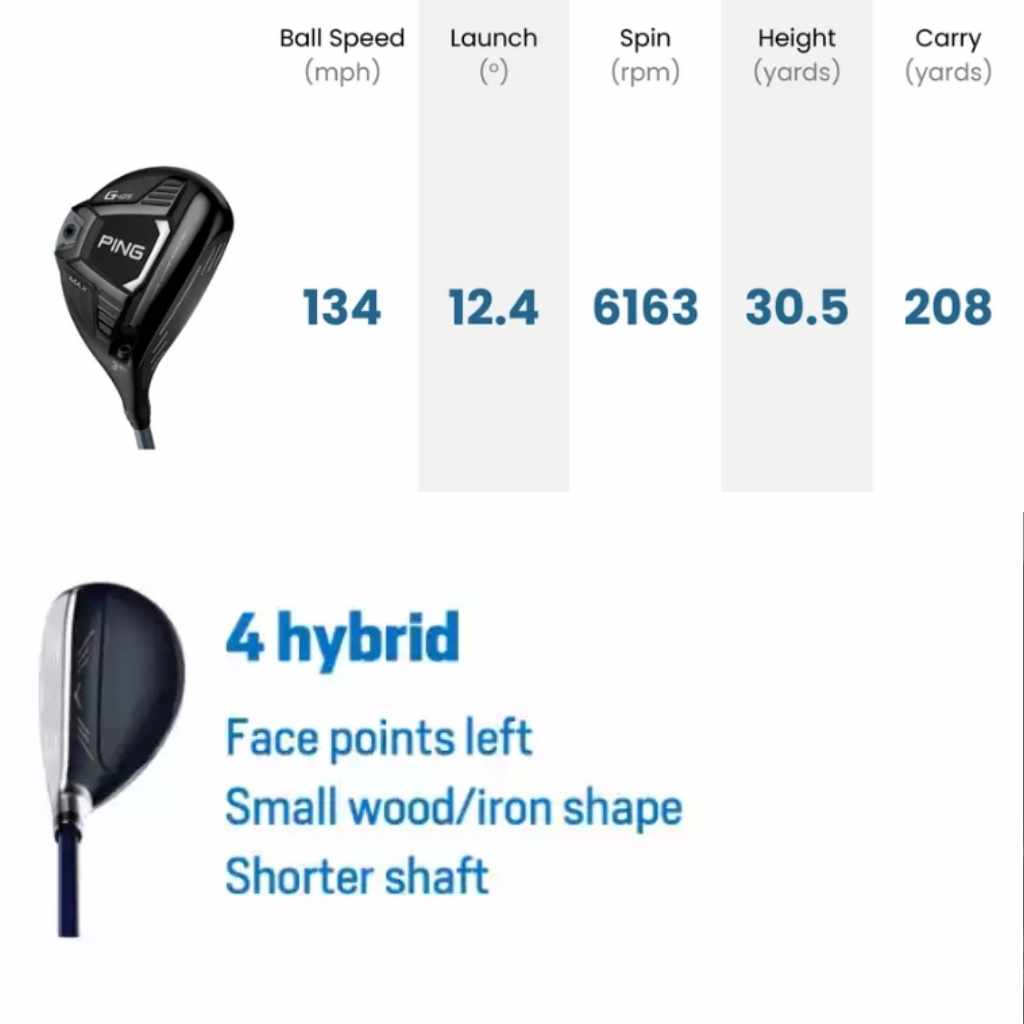
Generally, a standard 7-wood will produce more carry distance than a standard 4-hybrid for the average amateur golfer. Why? It comes down to loft and club length.
A typical 7-wood might have 21–23 degrees of loft, and it’s usually longer in shaft length than a 4-hybrid (which often sits around 23–25 degrees of loft, but on a shorter shaft). Longer shafts equal more speed, which equals more distance, assuming you can make solid contact.
However, distance isn’t just about sheer yardage. It’s about effective distance—getting the ball to the target safely.
Launch Angle and Spin
This is where the clubs diverge significantly. If you need to hit the ball high so it lands gently on a receptive green, the 7-wood is your friend. It launches higher and usually spins a bit more, helping it stop quicker.
The 4-hybrid keeps the ball lower. This lower trajectory is fantastic when:
- The course is experiencing high winds.
- You are hitting into a severe uphill hole where a high ball might stall.
- You need to keep the ball under the tree canopy (a situation where a 7-wood would likely get stuck).
Forgiveness Factor
For beginners, forgiveness is king. Hitting a badly struck shot that still travels a reasonable distance is a huge confidence booster. Both clubs are far more forgiving than their iron counterparts (the 3 or 4 iron), but the 7-wood usually wins here.
Why the 7-wood is often more forgiving:
- Larger clubface area makes finding the center easier.
- The wide, rounded sole glides through the grass better, reducing the chance of digging or “fat” shots common with hybrids hit off the turf.
| Feature | 7-Wood (Approx. Low Loft) | 4-Hybrid (Approx. Mid Loft) |
|---|---|---|
| Typical Loft Range | 21° – 23° | 23° – 25° |
| Typical Shaft Length | Longer (Fairly similar to a 5-iron) | Shorter (Closer to a 5-iron/6-iron length) |
| Primary Trajectory | Medium-High | Medium-Low |
| Forgiveness (Overall) | Higher (Especially off the deck) | High (But more shapeable) |
| Best Use Case | Max distance off the fairway or short par 5s | Controlling shots, tight lies, windy days |
When to Choose the 7-Wood: Maximizing Carry
As your woodworking mentor, I advise you to use the right tool for the required reach. If your primary goal is maximizing pure distance from the fairway, the 7-wood is often the clear choice, provided you can manage its slightly longer shaft.
Ideal Scenarios for the 7-Wood:
- Long Par 5 Approaches: When you need to cover 180-210 yards to reach the green, and you know the green isn’t rock hard, the 7-wood’s higher launch will get you there and allow the ball to stick.
- Tee Shots on Tight Par 4s: Some tight holes require placement rather than bombing it. When you need a controlled drive that stays low enough but clears hazards, the 7-wood can be a more forgiving alternative to a driver or 3-wood.
- Superior Turf Interaction: If you struggle with hybrids digging into the turf (a common issue when the hybrid shaft is too long for you), the wide sole of the 7-wood will naturally glide over grass better. This is similar to how a wide-base plane glides over wood better than a narrow one digs in.
Remember, better turf interaction leads to cleaner strikes. A clean strike with a lower-lofted club always beats a poor strike with a higher-lofted club.
When to Rely on the 4-Hybrid: Control and Versatility
The 4-hybrid’s strength isn’t necessarily sheer distance; it’s its adaptability. It allows you to play shots that a 7-wood simply cannot handle with the same consistency.
Ideal Scenarios for the 4-Hybrid:
- Difficult Rough: When you’re stuck deep in the rough, the smaller, more compact head of the hybrid cuts through thick grass much more effectively than the bulky head of a fairway wood. The wood tends to snag and twist, leading to misdirection.
- Windy Conditions: As mentioned, the lower flight path of the hybrid means the wind has less surface area to grab onto, leading to more predictable results. Control beats raw distance in the wind every time.
- Lying Low (Under Obstructions): Need to hit a shot under a low tree branch or scaffolding? The flatter face and lower launch characteristics of the hybrid make this necessary “stinger” or low bump-and-run shot much easier than with a 7-wood.
- Consistent Swing Plane: Many golfers find it easier to replicate the smooth, compact swing motion of an iron when hitting a hybrid. If you are more comfortable swinging an iron, the 4-hybrid will feel more natural.
For more general advice on optimizing your gear for course conditions, resources like the USGA (United States Golf Association) often provide excellent insights into club design and effective yardages, guiding players toward smart equipment choices.
Bridging the Gap: Shaft Flex and Swing Speed Analysis
We can’t discuss distance comparisons without talking about the engine powering the club: your body! Shaft flex is directly tied to your swing speed and fundamentally affects how far you will hit either club.
Understanding Your Speed
If you swing the club very fast (say, 105+ mph with a driver), you compress the shaft significantly. A shaft that is too soft (like a Regular when you need Stiff) will feel like trying to hammer a nail with a limp piece of wood—it wastes energy.
Here is a very simplified guide based on general driver swing speed averages:
| Driver Swing Speed (Estimated) | Recommended Shaft Flex for Distance | Primary Club Benefit |
|---|---|---|
| Under 75 mph | Ladies (L) or Senior (A) Flex | Maximizing launch and getting the ball airborne. |
| 75 – 90 mph | Regular (R) Flex | Good balance of forgiveness and moderate distance. |
| 90 – 105 mph | Stiff (S) Flex | Controlling the longer 7-wood shaft while maximizing hybrid stability. |
| 105+ mph | Extra Stiff (X) Flex | Controlling high speeds for maximum distance potential. |
The Beginner Takeaway: If you are swinging slower, the longer 7-wood shaft might give you more yardage, but only if the shaft is flexible enough (Senior or Regular) to help launch the ball high enough. If you have a faster swing, the shorter, more stable 4-hybrid shaft might actually give you more consistent distance because you can control the face angle better.
Practice Makes Perfect: Testing Both Clubs on the Range
Reading an article is great, but handling the tools yourself is essential. You wouldn’t build a cabinet without dry-fitting the joints, right? Apply the same principle here.
A Simple Testing Routine for Beginners
Head to the range or an indoor simulator and treat this like a specific project. You are measuring tool performance.
- Warm Up Both Clubs: Hit 10 balls with the 4-hybrid, focusing on getting solid center contact. Pay attention to how high the ball flies and how easily you hit the center of the face.
- Measure Hybrid Results: Jot down the average distance and observe the trajectory (high, low, or just right).
- Switch to the 7-Wood: Hit 10 balls with the 7-wood. Focus on a smooth tempo, letting the longer shaft do the work. Try to sweep the ball off the turf rather than trying to scoop it up.
- Compare the Data: Which club felt easier to control? Which club went farther on solid hits? Crucially, which club gave you a usable result on your worst swing?
For the everyday amateur, the club that produces the most repeatable, confidence-inspiring number is the winner, even if the other club occasionally flies 5 yards farther. Consistency is the real treasure in golf equipment.
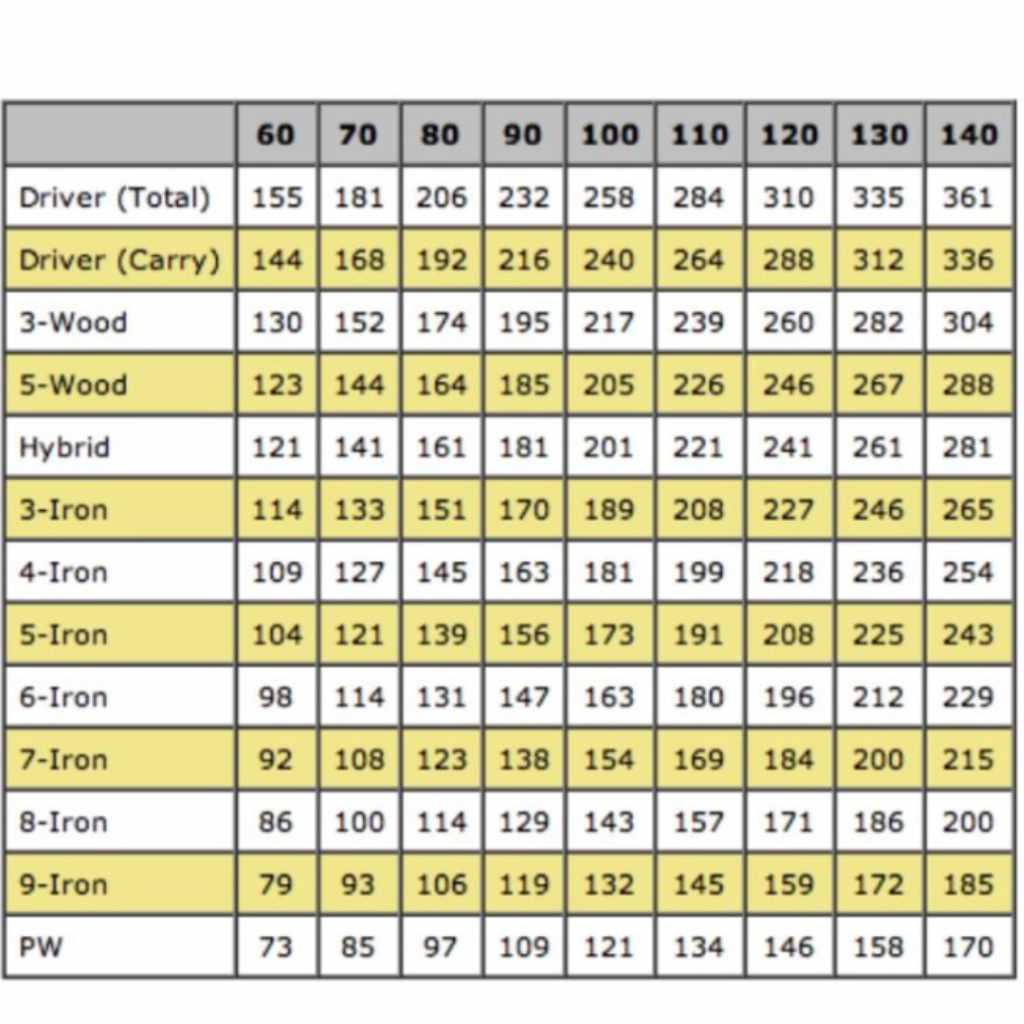
Club Loft and Distance Chart Comparison (Estimated Average Golfer)
To help visualize the typical yardage gaps, here is a guide based on average launch characteristics. Remember, these numbers are subjective and based on a smooth, mid-level swing speed.
| Club | Loft (Typical) | Average Carry Distance (Yards) | Primary Trajectory Goal |
|---|---|---|---|
| 3-Iron Equivalent (If you carry one) | 21° | 170 – 190 | Low flight, maximum roll |
| 4-Hybrid | 23° – 24° | 185 – 205 | Medium trajectory, controlled landing |
| 7-Wood | 21° – 22° | 195 – 215 | High trajectory, softer landing |
| 5-Iron Equivalent | 26° | 160 – 180 | Medium-high trajectory |
Fixing Common Beginner Mistakes with Fairway Woods and Hybrids
Many beginners switch to these easier-to-hit clubs but still use the wrong technique, which cancels out the club’s advantages. Think of these clubs as precision instruments; they work best when treated correctly.
Mistake 1: Swinging Too Hard
This is universal. When you try to generate maximum speed with a long club like the 7-wood, your body gets tense, and you likely start swinging “up” aggressively, leading to topping the ball or massive slices. The secret here is tempo.
The Fix: Focus on a smooth acceleration through impact. If you watch skilled players, their speed increases gradually. Concentrate on feeling the clubhead arrive at the bottom of the swing arc, not trying to launch it from the top.
Mistake 2: Incorrect Ball Position
This affects both clubs, but differently.
- For the 7-Wood (Fairway Wood): The ball should be positioned slightly forward of center, usually off the inside of your lead heel. You want to hit the ball on the upswing (or at the absolute bottom of the arc).
- For the 4-Hybrid: Because the head is smaller and more iron-like, the ball position should be closer to the center of your stance, allowing you to hit slightly down on the ball (a descending or level blow) to maximize compression.
Mistake 3: Forgetting the Spin Factor
A 7-wood might fly 10 yards farther in the air than your 4-hybrid, but if it lands on a firm, forward pin, it might roll 30 yards past the hole. The hybrid gives you the added backspin needed to stop the ball nearer the target.
When approaching greens, always ask: Do I need the ball to fly farther, or do I need the ball to stay where it lands?
If you need it to stay, favor the hybrid, even if it means leaving yourself slightly short.
FAQs for the Beginner Golfer: 7 Wood vs. 4 Hybrid
Q1: If I have a very slow swing speed, which club is truly easier to launch high?
A: Generally, the 7-wood will be easier to launch high. Its higher overall loft and larger, shallower face profile are specifically designed to get the ball airborne easily, even on sweeping contacts.
Q2: Can I use my 7-wood off the tee on a short par 3?
A: Yes, absolutely. If you struggle with your driver or 3-wood consistency, the large, forgiving head of the 7-wood makes it an excellent, safe option for short par 3s where distance control is more important than raw distance.
Q3: Should I replace my 4-iron with a 4-hybrid?
A: For nearly every beginner and intermediate golfer, the answer is yes. The 4-hybrid offers far more forgiveness and plays much easier than a traditional 4-iron, offering similar or better distance for most players. This is a highly recommended equipment upgrade.
Q4: How do I know if my 4-hybrid shaft is too stiff?
A: If you can’t get the ball past waist-high, or if you feel like you are swinging much faster than the ball is traveling, the shaft might be too stiff.