Walnut vs Maple Cutting Board: Which Is Best?
Maple is the better choice if you want maximum durability and a bright, classic look; walnut is the better choice if you want to be gentler on your knife edges and prefer a rich, dark grain. The two woods aren’t actually that different in how they perform – both are closed-grain hardwoods that resist bacteria and hold up for decades with the same basic care. What actually separates them is roughly 440 points of Janka hardness (maple at approximately 1,450 lbf versus walnut’s 1,010 lbf), and that gap shows up as harder-on-knives-but-tougher for maple, and gentler-on-knives-but-pricier for walnut.
Below is what that hardness difference actually means in your kitchen, plus one factor – how the board is built, not just what species it’s made from – that most comparisons skip entirely.
Walnut Cutting Boards: What You’re Actually Buying
Best Conditioner for Either Board
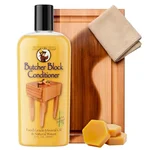 |
Howard Butcher Block Conditioner – $9.18 This is the monthly oiling step both walnut and maple boards need to stop drying out and cracking – works on either wood.
|
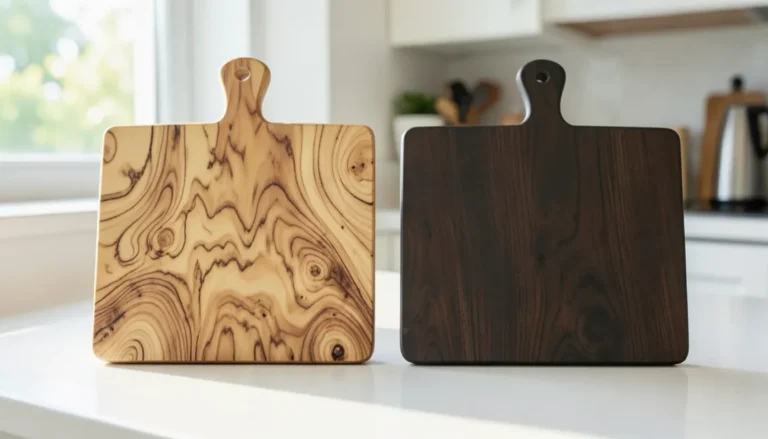
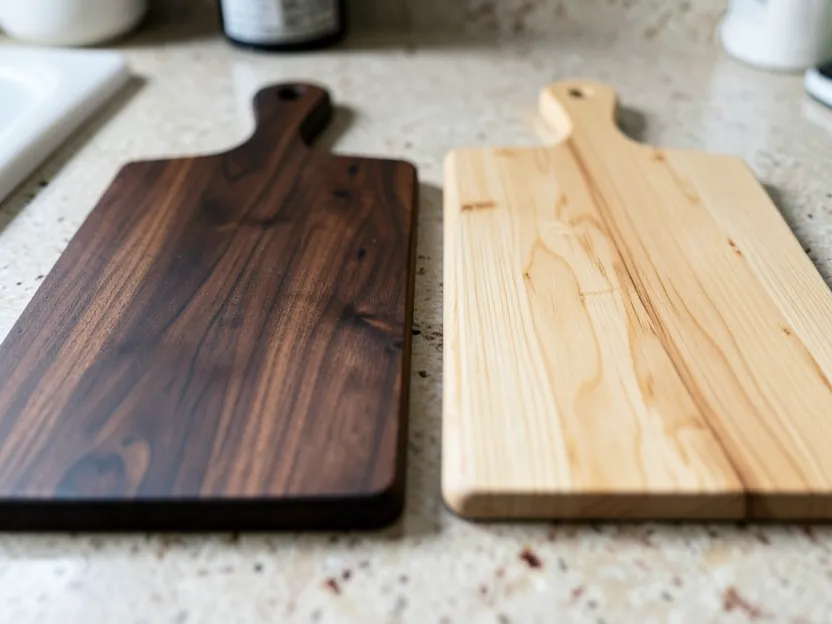
Walnut sits at around 1,010 lbf on the Janka hardness scale, which puts it in a comfortable middle ground – hard enough to survive years of daily chopping, but soft enough that it won’t chew through your knife edges the way harder woods can. That’s the real trade-off walnut is selling you: a board that’s kinder to your $150 chef’s knife in exchange for showing knife marks a little sooner than maple would. In practice those marks are hard to see anyway, because walnut’s dark brown-to-purplish heartwood and often wavy or curly grain do a good job of camouflaging both cut marks and minor stains.
Like other hardwoods, walnut contains natural oils and tannins that give it some inherent resistance to bacterial growth, though that’s a supporting factor at best – proper washing and drying still do most of the work. Care is straightforward: hand-wash with warm water and mild soap, never run it through a dishwasher (the heat and prolonged soaking will warp or crack it), dry it standing on its edge so both faces dry evenly, and apply food-grade mineral oil or a board conditioner roughly once a month, more often in a dry climate or if the surface starts looking dull.
The main downside is cost – walnut lumber typically runs noticeably more than maple because of demand and grain desirability, so a walnut board of the same size and construction quality will usually cost more than its maple equivalent. If you’re a professional who chops for hours on the same 6-inch patch of board every day, walnut’s relative softness will also show wear faster there than maple would, though that’s rarely a concern for home kitchens. For a deeper look at whether walnut holds up as a daily-use board, see our full walnut cutting board breakdown.
Maple Cutting Boards: What You’re Actually Buying
Sugar maple, the species almost universally used for cutting boards, tests at around 1,450 lbf on the Janka scale – a meaningful step up from walnut and one of the harder woods commonly sold for kitchen use. That hardness translates directly into resistance to gouging: maple shrugs off deep knife marks better than walnut, which is exactly why it’s the wood professional butcher blocks have been made from for over a century. Its fine, tight grain structure is also less porous than walnut’s, which means less opportunity for liquid and bacteria to soak into the surface between cleanings.
The trade-off is the flip side of walnut’s advantage: that same hardness is harder on your knife edges, meaning you’ll be sharpening slightly more often if you use a maple board daily with premium knives. Maple’s light, creamy color is also less forgiving cosmetically – beet juice, turmeric, and berry stains show up clearly and need to be wiped up promptly rather than left to set. Maple is typically the more budget-friendly option of the two, since the tree is more abundant in North American hardwood forests and the lumber costs less per board foot.
Care is identical to walnut: warm water and mild soap after use, no dishwasher, dry standing on edge, and a monthly coat of food-grade mineral oil or a butcher-block conditioner to keep the wood from drying out and cracking. If you’re trying to tell a maple board apart from a look-alike species before you buy, our guide to identifying maple wood covers the grain and color tells.
The Factor Most Comparisons Miss: How the Board Is Built
Species is only half the story. How the board is constructed – end-grain versus edge-grain (sometimes called long-grain) – changes durability more than walnut-versus-maple does on its own. An end-grain board is built from short blocks of wood turned so the fibers point straight up, like a butcher’s chopping block. When a knife strikes it, the fibers separate and spring back together afterward, which is why end-grain boards visibly “self-heal” from knife marks over time and are noticeably gentler on blade edges regardless of species. An edge-grain board is built from long strips glued face-to-face, with the fibers running horizontally; it’s cheaper to produce and still perfectly functional, but knife marks on an edge-grain board are permanent grooves rather than fibers that close back up.
In practical terms: an end-grain maple board can end up gentler on your knives day-to-day than an edge-grain walnut board, even though walnut is the softer species. If knife preservation is your top priority and you’re comparing two specific boards rather than just two woods, check the construction before you check the species. Building one yourself lets you control that construction choice directly – see our step-by-step guide to making a cutting board from wood for both methods.
Walnut vs. Maple: Side-by-Side Comparison
| Feature | Walnut | Maple |
|---|---|---|
| Janka Hardness | ~1,010 lbf | ~1,450 lbf |
| Color | Dark brown to purplish-brown | Light, creamy white |
| Grain | Straight, wavy, or curly; moderate porosity | Fine, tight, straight; low porosity |
| Knife-edge friendliness | Better – softer wood is gentler on blades | Good, but harder on edges over time |
| Resistance to knife marks | Moderate | Excellent |
| Stain visibility | Low – dark color hides marks | Higher – light color shows stains |
| Typical price | Higher | Lower |
| Maintenance | Monthly oiling, hand wash only | Monthly oiling, hand wash only |
Which One Should You Actually Buy?
If you’ve invested in a set of sharp Japanese or German chef’s knives and want to keep them that way with minimal sharpening, walnut is the more forgiving choice, and its dark tones hide the inevitable wear better over the years. If you do heavy daily prep – a lot of vegetables, meat, or repetitive chopping in the same spot – maple’s extra hardness will outlast walnut with less visible damage, and you’ll pay less for it up front. Neither wood has a hygiene advantage worth basing a decision on; both are closed-grain hardwoods, and how you clean and dry the board matters far more than which of the two you pick.
A lot of serious home cooks end up owning one of each: maple for the daily heavy-lifting prep board, walnut for delicate work, garnish, or serving where the knife-friendliness and looks both matter. Rotating between two boards also gives each one more time to dry out fully between uses, which extends the life of both. Curious how a third common option stacks up? See our take on acacia cutting board pros and cons.
Frequently Asked Questions
Question: Is walnut or maple better for antibacterial properties
Answer: Both are close-grained hardwoods that naturally resist bacteria better than soft, open-grained woods. Maple’s slightly tighter grain is marginally less porous, but proper washing and drying matter far more for hygiene than the species you choose.
Question: Which wood will keep my knives sharper longer
Answer: Walnut, because it’s the softer of the two woods (about 1,010 lbf versus maple’s 1,450 lbf on the Janka scale), meaning it’s less abrasive on a knife’s edge. An end-grain construction in either wood will preserve edges even better than switching species alone.
Question: Can I use dish soap on my walnut or maple cutting board
Answer: Yes. Mild dish soap and warm water are fine for both. Avoid harsh detergents, bleach, or abrasive scrubbers, and always dry the board completely right after washing rather than letting it air-dry flat.
Question: How often should I oil my cutting board
Answer: About once a month for both walnut and maple, or sooner if the surface starts looking dry, pale, or is absorbing water quickly. Food-grade mineral oil or a dedicated butcher-block conditioner both work well.
Question: Are walnut cutting boards more expensive than maple
Answer: Generally yes. Walnut lumber costs more due to demand for its color and grain, so a comparable walnut board typically costs more than the same size and construction in maple.
Bottom Line
Walnut and maple are both excellent, food-safe hardwoods for a cutting board, and the “right” one comes down to what you’re optimizing for: maple wins on raw durability and price, walnut wins on knife-friendliness and looks. If you want the best of both, check whether the board is end-grain or edge-grain before you check the species – construction affects how a board treats your knives just as much as the wood does.
Sponsored / affiliate links. As an Amazon Associate I earn from qualifying purchases. I may earn additional commission from eligible campaigns.