Black Walnut Tree vs. Walnut Tree: The Real Species Difference
Black walnut tree vs. walnut tree comes down to species: “black walnut” always means Juglans nigra, the North American native prized for dark, furniture-grade lumber, while a plain “walnut tree” almost always means the English or Persian walnut (Juglans regia) – the tree behind nearly every walnut you’ve ever bought in a grocery store, not the one behind your dining table.
If you’re standing over a board wondering whether you’ve got real black walnut or just “walnut,” you’re asking the right question – the two get lumped together constantly, but they’re genuinely different trees with different wood, different nuts, and different jobs in a shop or a kitchen. The confusion isn’t your fault. Lumber yards, seed catalogs, and even grocery store bins routinely say “walnut” without specifying which species, and the two trees look similar enough at a glance to fool most people.
Below we’ll walk through how to tell them apart by nut, leaf, bark, and wood, then get into two things most identification guides skip entirely: why the walnuts in your pantry almost certainly aren’t from a black walnut tree, and why planting one near a vegetable garden can quietly kill your tomatoes.
Black Walnut vs. Walnut Tree: The Species Basics
Best Wood ID Reference Book
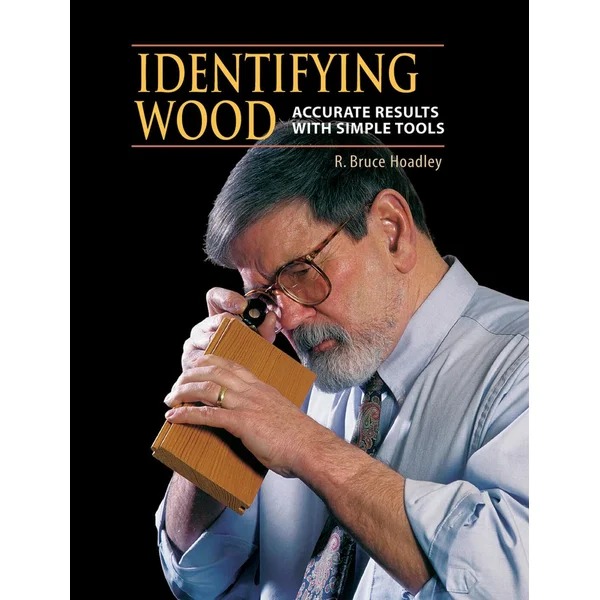 |
Identifying Wood: Accurate Results with Simple Tools – $26 Bruce Hoadley’s field-tested method for telling species like Black Walnut and English Walnut apart with just a hand lens and a knife – a natural next step after the checks above.
|
Both trees belong to the genus Juglans, which is why they get grouped together under one common name. But “Black Walnut” and “walnut” aren’t interchangeable labels for the same tree – they’re two separate species with different native ranges, different lumber values, and, as we’ll cover below, different roles as both a food crop and a garden hazard.
The Botanical Breakdown
- Black Walnut (Juglans nigra): Native to Eastern North America. This is the species furniture makers mean when they say “walnut” without qualification – the darker, harder, more expensive wood.
- English/Persian Walnut (Juglans regia): Native to a range stretching from the Balkans to the Himalayas, now cultivated commercially worldwide – primarily for its nuts, not its lumber.
Field Identification: Nuts, Leaves, Bark, and Twigs
To identify a standing tree or a fallen nut, check four things in order: the nut and its husk, the leaf structure, the bark pattern, and the twig/bud. Any one of these alone is a decent clue; two or three in agreement is a confident ID.
1. The Nut and Husk
The fruit is usually the fastest way to check, assuming the tree is fruiting. Both species produce a green husk, but the shape and how it ages are different.
Black Walnut (Juglans nigra)
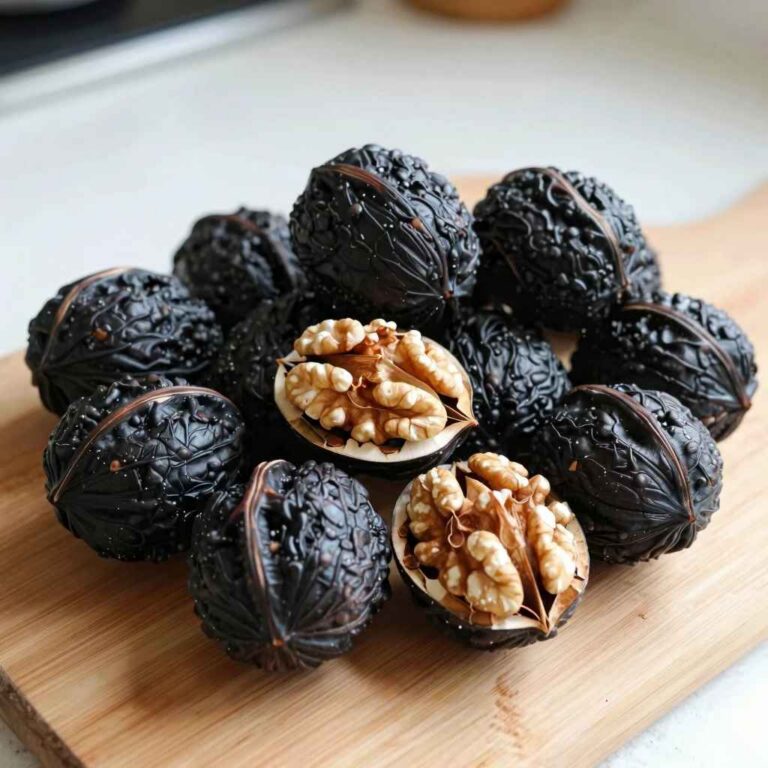
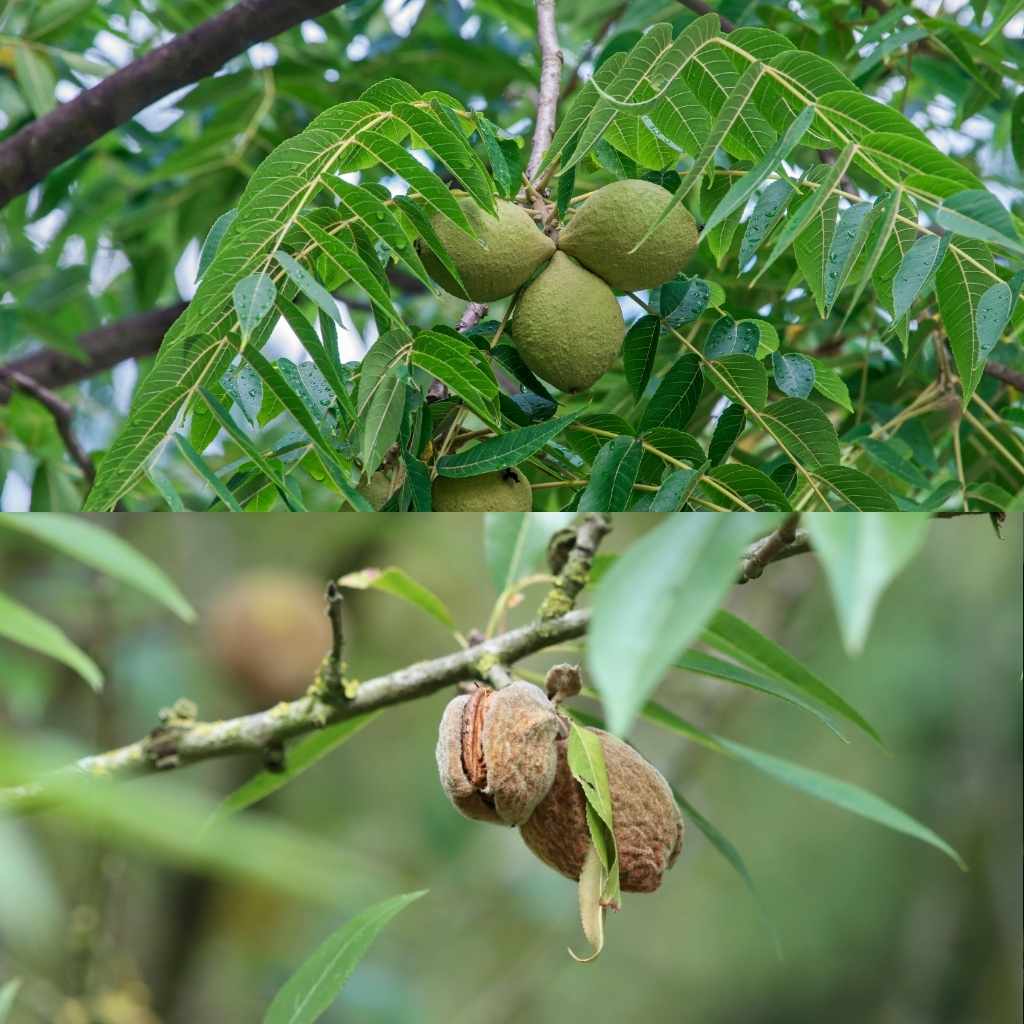
Nuts are nearly spherical and very hard-shelled. The husk is thick, deeply textured, and turns black as it ripens and drops – hence the name. It stains skin, clothing, and concrete a dark brown-black that takes days to wear off, so gloves are worth wearing before you touch a fallen one.
English/Persian Walnut (Juglans regia)
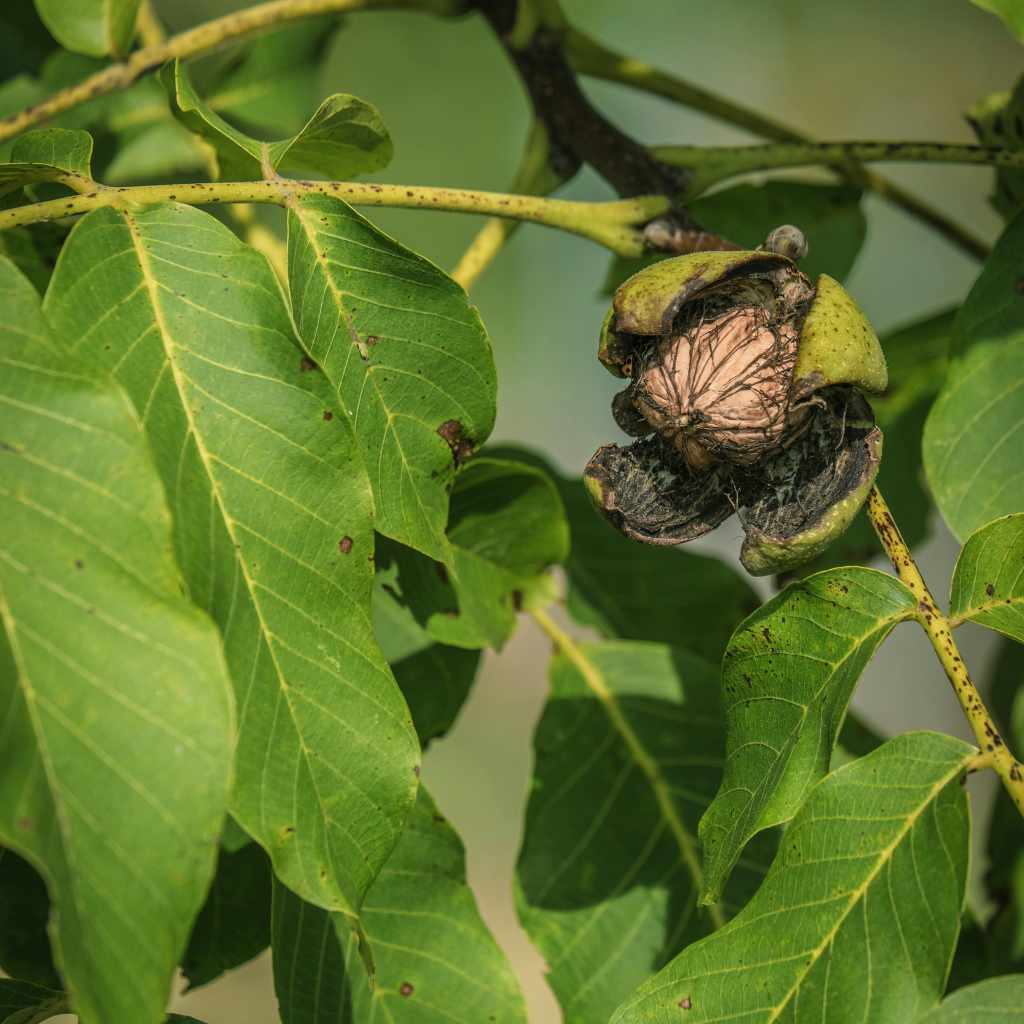
Nuts are more oval and thinner-shelled – this is the shell design that cracks easily in a handheld nutcracker, which is exactly why it’s the species grown commercially for eating. The husk is smoother and thinner, turning yellow-green to brown before splitting rather than blackening.
2. Leaf Structure: Counting Leaflets
Both trees have compound leaves – one stem holding several smaller leaflets – but the count is a reliable tell once the leaves are fully mature.
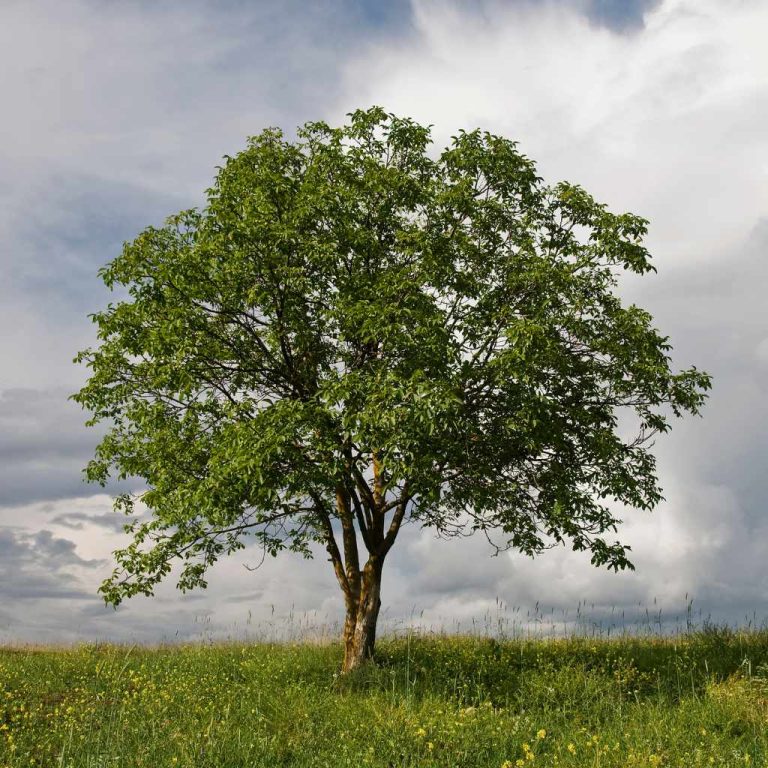
- Black Walnut: Odd-pinnate compound leaves with 15 to 23 leaflets. A large, uneven leaflet count points to Black Walnut.
- English Walnut: Fewer leaflets per leaf, typically 5 to 9.
Field note: check leaflet count in mid-summer once leaves are fully out – young spring growth can look deceptively similar between the two species.
3. Bark: Age Changes the Picture
Bark texture shifts as a tree matures, so factor in age before relying on this alone.
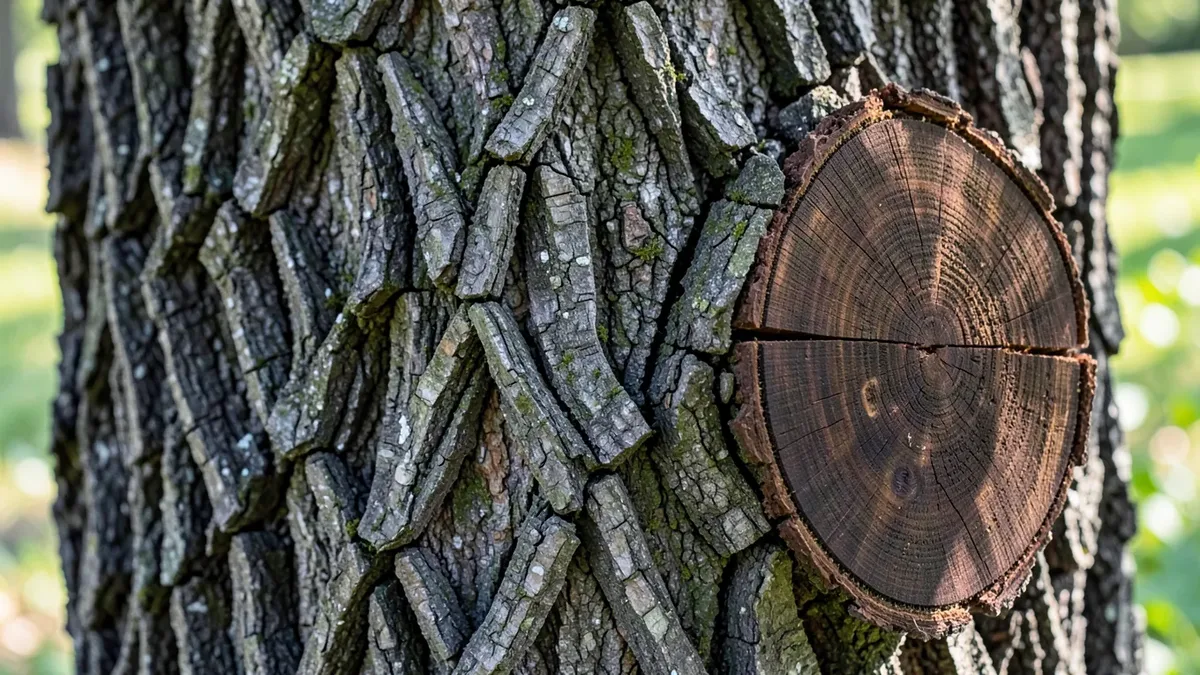
- Black Walnut bark: On mature trees, deeply furrowed into dark, diamond-shaped ridges – rugged, thick, and nearly black.
- English Walnut bark: Smoother when young, aging into a lighter gray with shallower, less dramatic interlacing ridges.
4. Buds and Twigs
- Terminal bud: Black Walnut has a noticeably large, fuzzy, slightly woolly tip bud.
- Twig color: Black Walnut twigs run paler tan to gray-brown; English Walnut twigs tend toward a darker, sometimes pinkish-brown.
Wood Identification: What the Sawdust Tells You
Once a tree is milled, the wood itself confirms the species – and this is the part that actually matters for pricing and finishing decisions.
Color and Grain
Black Walnut (Juglans nigra):
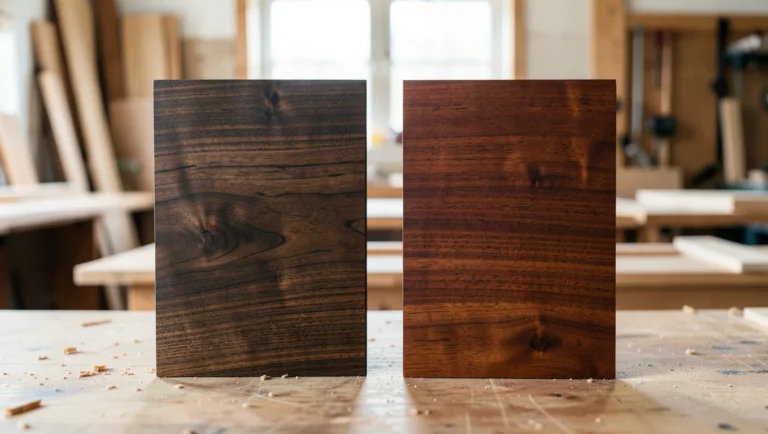
- Heartwood: Rich, dark chocolate-brown, often with purplish or reddish undertones – the color that drives its premium price at the lumber yard.
- Sapwood: Creamy white to pale yellow, in stark contrast to the heartwood – many suppliers steam the boards to blend the two.
- Grain: Generally straight, but frequently wavy or interlocked in ways that make striking figured panels.
English Walnut (Juglans regia):
- Heartwood: Noticeably lighter – tan to grayish-brown – without the deep saturation of J. nigra.
- Sapwood: Blends more gradually into the heartwood than Black Walnut’s sharp contrast.
- Grain: Often swirled and dramatic, which is why it’s a traditional choice for veneers and gunstocks, though mineral deposits can make it trickier to mill cleanly.
Density and Hardness
Janka hardness matters for anything that takes daily wear, like flooring or tabletops. Higher numbers mean harder wood.
| Wood Species | Average Janka Hardness (lbf) | General Use Notes |
|---|---|---|
| Black Walnut (J. nigra) | 1010 lbf | Fine furniture, carving, high-end veneers – strong shock resistance. |
| English Walnut (J. regia) | 1000–1125 lbf (varies by growing region) | Decorative veneers, instrument making, historically gunstocks. |
Raw hardness between the two is close – the real gap is color consistency and depth, which is why Black Walnut carries the premium even though English Walnut can be just as durable.
Shrinkage and Stability
When working with solid wood, stability matters for avoiding warping or cracking down the road. Both species dry reasonably well, but Black Walnut generally holds tighter dimensional stability once properly acclimated – a real plus for large panels or cabinet doors.
For technical wood-property data sheets, university extension programs like the Iowa State University Extension and Outreach publish detailed species comparisons worth bookmarking.
Why Most “Walnuts” You Buy at the Store Aren’t Black Walnut
Here’s the part most identification guides never mention: if you’ve ever bought a bag of walnuts at the grocery store, cracked one at Thanksgiving, or bought walnut-flavored anything, you were almost certainly eating English/Persian Walnut (Juglans regia), not Black Walnut – even though Black Walnut is the tree woodworkers actually chase for lumber.
The reason is practical, not a matter of taste. English Walnut’s shell is thin enough to crack with a standard handheld nutcracker and yields a large, intact half-nut kernel – ideal for commercial shelling equipment and for the whole-nut market. Black Walnut’s shell is dramatically thicker and harder, the kernel is smaller and more deeply lobed, and cracking one usually means a vise or a hammer, not a nutcracker. That makes Black Walnut commercially impractical to shell at scale, even though the meat inside has a noticeably stronger, richer, slightly more bitter flavor that some bakers specifically seek out.
So the two species have effectively split jobs in the market: Juglans regia dominates the food aisle, while Juglans nigra dominates the lumber yard. A tree can, and often does, do both – Black Walnut nuts are genuinely edible and are foraged and sold in specialty markets – it’s just a much smaller niche than the English Walnut nut industry.
The Juglone Factor: Why Black Walnut Trees Can Kill Nearby Plants
This is the other fact worth knowing before you plant, buy a lot with a mature black walnut on it, or mill one down for lumber: Black Walnut produces juglone, an allelopathic compound that’s toxic to many other plants growing nearby. It’s concentrated in the roots, buds, and nut hulls, with smaller amounts in the leaves and stems, and it leaches into the surrounding soil – especially from fallen leaves and the root zone, which can extend well past the tree’s canopy.
Plants known to be sensitive to juglone include tomatoes, peppers, eggplant, and potatoes (all in the nightshade family), along with apples, blueberries, and some rhododendrons and azaleas – affected plants typically show wilting, yellowing, and stunted growth, sometimes called “walnut wilt.” Plants that tolerate it fine nearby include most maples, oaks, cedar, and beans, according to extension research compiled by the Morton Arboretum.
English Walnut also contains juglone, but its allelopathic effects are far less documented and generally considered milder than Black Walnut’s – one more reason species ID matters before you decide where to plant a walnut tree or what to grow near one that’s already there. If you’re milling a felled Black Walnut, the sawdust and bark can carry residual juglone too, so it’s worth composting those separately rather than working them straight into a vegetable bed.
Why Knowing the Difference Matters for Your Workshop
Beyond botany, getting the ID right affects your wallet, your finishing schedule, and your safety gear.
1. Lumber Cost and Value
Where Black Walnut is native – the US Midwest and East – J. nigra commands a real premium over English Walnut. Buying lighter-colored “walnut” lumber that turns out to be J. regia at Black Walnut prices means paying more for a look you didn’t actually get.
2. Finishing and Staining
Chasing that deep chocolate look requires starting with true Black Walnut heartwood. Trying to stain lighter English Walnut to match can leave you with a muddy, inconsistent color, or force you into stains dark enough to bury the natural grain entirely.
3. Dust Safety
Both woods have a pleasant, distinctive smell when cut, but both also produce fine dust that should be treated like any hardwood dust hazard – wear a proper dust mask and check ventilation guidance from a source like the National Institute for Occupational Safety and Health (NIOSH) if you’re milling in volume.
Comparison Table Summary
A quick reference for your next lumber yard trip:
| Feature | Black Walnut (Juglans nigra) | English Walnut (Juglans regia) |
|---|---|---|
| Native region | Eastern North America | Balkans to Himalayas; cultivated worldwide |
| Primary commercial use | Furniture-grade lumber | Culinary nuts |
| Heartwood color | Deep chocolate brown, purplish undertones | Tan to grayish-brown, lighter tawny tones |
| Nut shape/husk | Round, thick husk that blackens | Oval, thinner husk that yellows/browns |
| Leaflets (typical) | 15 to 23 | 5 to 9 |
| Bark (mature) | Dark, deeply furrowed, diamond pattern | Lighter gray, shallow interlacing ridges |
| Juglone toxicity | Well-documented, significant | Present but much less studied/severe |
Practical Projects Best Suited for Each Wood Type
Once you know what you’re holding, here’s where each species earns its keep.
Black Walnut: The Heirloom Maker
- Fine furniture: Dining tables, dressers, and desks where the dark grain is meant to be the focal point.
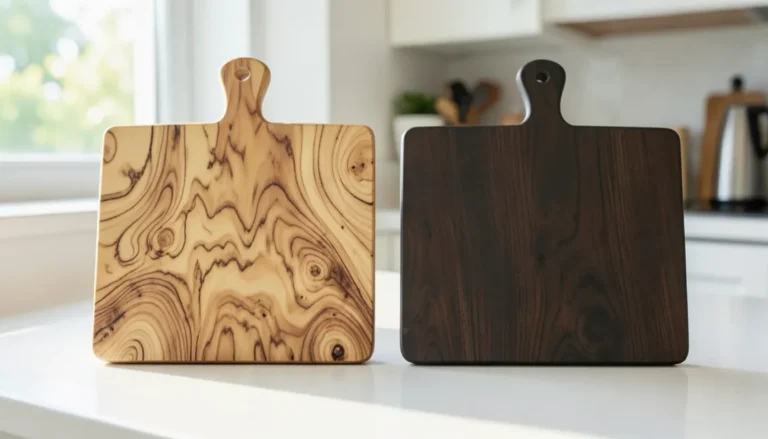
- Decorative items: Small boxes and cutting boards, though watch for mineral streaking near knots.
- Carving: Its stability and clean cutting make it a favorite for detailed sculptural work.
English Walnut: The Versatile Veneer
- Veneer work: Its swirling grain shines sliced thin over large panels, common in period furniture restoration.
- Instrument making: A traditional choice for backs and sides, prized for weight and acoustic properties.
- Everyday projects: Shelving and shop jigs, where you don’t need the darkest, priciest wood on hand.
Tips for the Beginner Woodworker Handling Walnut
Both species mill and finish well, but a few habits will save you frustration.
- Keep tools sharp: Walnut is hard on edges – dull blades and bits cause burning and tear-out.
- Watch for sapwood “steaming”: Sapwood next to heartwood can look gray or blotchy under certain finishes – test on scrap first.
- Sand progressively: Work up to 320 grit before oiling to bring out walnut’s natural chatoyance.
- Acclimate lumber: Let boards adjust to your shop’s humidity before cutting to avoid surprise warping.
Frequently Asked Questions (FAQ)
Q1: Can I tell Black Walnut from English Walnut lumber just by smell?
A: Often, yes. Both have a distinct, sweet, nutty smell when freshly cut, but Black Walnut typically has a richer, deeper, slightly spicier scent, while English Walnut’s is usually milder.
Q2: Is English Walnut good for outdoor projects?
A: Not particularly. Neither species is naturally rot-resistant like cedar or redwood. Outdoor use requires fully sealing every surface with a marine-grade finish and maintaining it regularly.
Q3: How long does it take for Black Walnut sapwood to darken?
A: Sapwood naturally ambers with UV exposure and air over months to years, but it rarely reaches true heartwood’s chocolate depth without dye or stain.
Q4: Is it worth digging up a walnut stump for the roots?
A: Often, yes for Black Walnut – crotch and root sections frequently contain the most highly figured, wavy grain and can sell for a premium per board foot. Just handle the root-zone soil carefully given the juglone concentration there.
Q5: Which walnut is the one sold in grocery stores?
A: English/Persian Walnut (Juglans regia). Its thinner shell and easier cracking make it the commercial standard. Black Walnuts (J. nigra) are edible with a stronger, more bitter flavor, but their much harder shell makes them impractical to shell at commercial scale.
Q6: Can a Black Walnut tree really hurt my garden?
A: Yes – its juglone can stunt or kill sensitive plants like tomatoes, peppers, and apples growing within its root zone. Tolerant plants like maples, oaks, and beans are safe to plant nearby instead.
Q7: Do I need special router bits for walnut?
A: No special bits are required, but carbide-tipped bits and shallower passes reduce friction burn on this dense wood and leave a cleaner edge.
Conclusion: Confidently Choosing Your Walnut
Telling Black Walnut from English Walnut moves you from guessing to knowing exactly what’s on your bench – and now you also know why the wood in your furniture and the nuts in your pantry usually come from two different trees, and why one of them needs a little distance from your vegetable garden.
Check the heartwood color, count the leaflets, look at the bark furrows, and you’ll have a confident ID before you ever pick up a saw. Keep your tools sharp, let your lumber acclimate, and enjoy working one of the best hardwoods either species has to offer.
Sponsored / affiliate links. As an Amazon Associate I earn from qualifying purchases. I may earn additional commission from eligible campaigns.