Acrylic Paint Ideas Easy: Stunning & Essential Projects
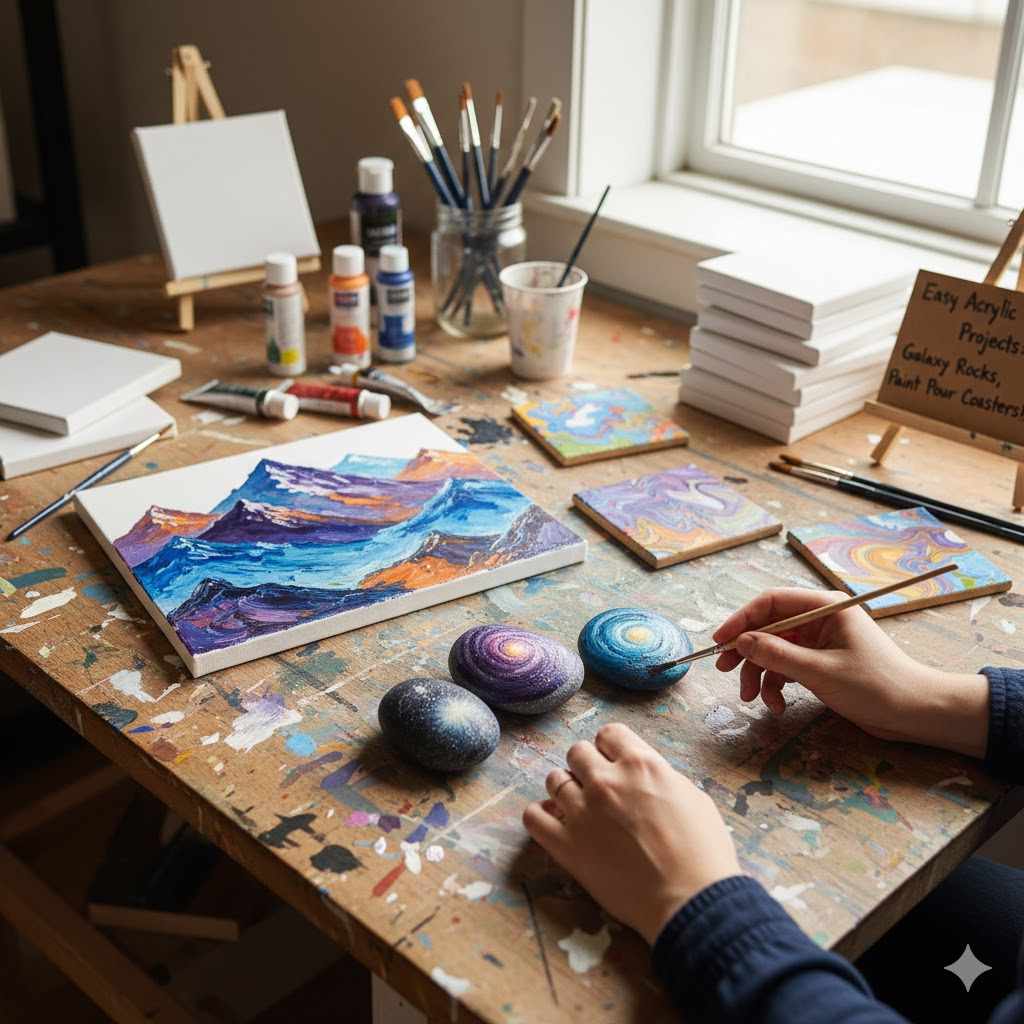
Easy acrylic paint ideas include creating simple geometric patterns with tape, painting vibrant sunset gradients, crafting beautiful abstract color blocks, and designing minimalist botanical leaves. These projects require basic techniques and are perfect for building confidence and exploring color without needing advanced drawing skills, making them ideal for any beginner.
Have you ever stared at a blank canvas and felt a mix of excitement and fear? You want to create something beautiful, but you don’t know where to start. It’s a feeling I know well, even from my woodworking days. A fresh piece of lumber and a blank canvas have a lot in common—they are both full of potential.
Many people think painting requires years of training, but that simply isn’t true. With acrylics, you have one of the most forgiving and versatile paints on your side. We’re going to walk through some stunning yet simple projects that anyone can do. Think of me as your friendly guide in this new craft, here to show you that creating art is accessible, fun, and incredibly rewarding.
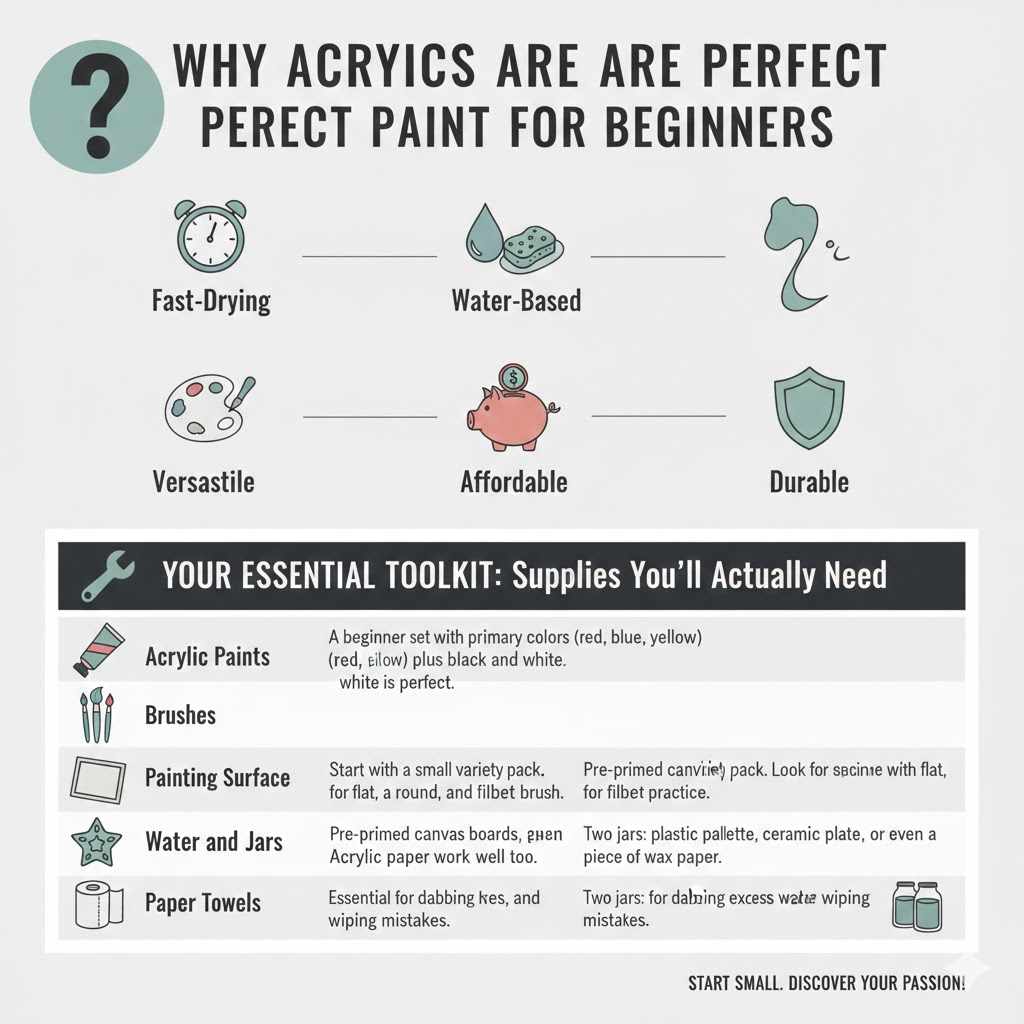
Why Acrylics are the Perfect Paint for Beginners
Before we grab our brushes, let’s talk about why acrylic paint is your best friend when you’re starting out. Unlike oils or watercolors, which have a steeper learning curve, acrylics are incredibly straightforward. They set you up for success right from the start.
- Fast-Drying: Acrylics dry quickly. This means you can layer colors without waiting for hours, which is great when you’re excited to see your creation come to life.
- Water-Based: Cleanup is a breeze! All you need is soap and water. You don’t have to deal with harsh chemicals or solvents like you do with oil paints.
- Versatile: You can thin acrylics with water to act like watercolors or use them thick, straight from the tube, for texture similar to oil paints.
- Affordable: A set of beginner acrylic paints is very budget-friendly, so you can experiment without worrying about wasting expensive materials.
- Durable: Once dry, acrylic paint is permanent and water-resistant. Your beautiful creations will last a long time.
Your Essential Toolkit: Supplies You’ll Actually Need
Walking into an art store can be overwhelming. There are endless options for everything. Don’t worry—you only need a few basics to get started. Here’s a simple list of what to grab. My advice is to start small and add to your collection as you discover what you love to paint.
| Item | What to Look For |
|---|---|
| Acrylic Paints | A beginner set with primary colors (red, blue, yellow) plus black and white is perfect. You can mix almost any color from these. |
| Brushes | Start with a small variety pack. Look for one with a flat brush (for large areas), a round brush (for details), and a filbert brush (a versatile oval shape). |
| Painting Surface | Pre-primed canvas boards are inexpensive and great for practice. Acrylic paper or even thick cardstock works well too. |
| Palette | A simple plastic palette, a ceramic plate, or even a piece of wax paper will do the job for mixing your colors. |
| Water and Jars | You’ll need two jars: one for rinsing brushes between colors and one for clean water to thin your paints. |
| Paper Towels | Essential for dabbing excess water off brushes and wiping up any little mistakes. |
Five Easy Projects to Get You Started
Now for the fun part! These projects are designed to teach you a core skill while leaving you with a piece of art you’ll be proud to display. Let’s get some paint on that canvas.
1. Abstract Color Blocking
This project is all about exploring color combinations and creating a balanced composition without worrying about painting anything “realistic.” It’s incredibly freeing and the results are always unique and modern.
- Choose Your Colors: Pick 3-4 colors that you love together. You can look for color palette inspiration online or just go with your gut.
- Mix Your Shades: On your palette, mix a little white with each color to create lighter tints. This gives you more variety to work with.
- Paint Your Shapes: Using a flat brush, paint solid blocks of color on your canvas. Let them touch, but try not to blend them yet. Vary the size and shape of the blocks. Some can be big, some small.
- Let It Dry and Refine: Once the first layer is dry, you can go back and add another coat to make the colors more vibrant or add smaller shapes on top. Don’t overthink it—just have fun with it!
2. The Perfect Sunset Gradient
Learning to blend colors smoothly is a key skill in painting. A sunset is the perfect subject because nature does all the hard work for you—the colors are already beautiful and forgiving.
- Prepare Your Colors: Squeeze out some yellow, orange, red, and a dark blue or purple onto your palette.
- Start at the Top: With a clean, slightly damp flat brush, paint a band of your darkest color (blue/purple) across the top of the canvas.
- Add the Next Color: Without cleaning your brush, pick up the next color (red) and paint a band right below the first one. Now, use your brush to gently blend the line where the two colors meet. Use back-and-forth strokes.
- Work Your Way Down: Continue this process, adding orange and then yellow. Blend each new color into the one above it. The key is to work quickly while the paint is still wet.
- Add a Simple Silhouette: Once your sunset is completely dry, you can use black paint and a small round brush to add a simple silhouette at the bottom, like a distant treeline or a few birds in the sky.
3. Crisp Geometric Patterns
If you love clean lines and modern design, this project is for you. It uses a simple tool to guarantee a professional-looking result: painter’s tape! This is like using a straight edge in woodworking—it ensures precision.
- Lay Your Foundation: Paint your entire canvas with a single base color. A light grey, white, or a muted pastel works great. Let it dry completely—this is very important!
- Create Your Design with Tape: Use painter’s tape to section off your canvas into triangles, squares, or random geometric shapes. Press the edges of the tape down firmly to prevent paint from bleeding underneath.
- Fill in the Shapes: Pick a few complementary colors and paint inside the taped-off sections. You can be creative here! Feel free to paint a different color in each section.
- The Big Reveal: While the paint is still slightly wet, carefully peel off the tape. Pull it away from the painted area at a 45-degree angle for the crispest lines. It’s so satisfying to see your perfect pattern emerge!
4. Forgiving Galaxy Painting
Galaxy paintings look complex, but they are surprisingly easy and fun to make. They rely on layering and a simple flicking technique that anyone can do. There’s no way to mess this one up!
- Create a Dark Background: Cover your entire canvas with black paint. While it’s still a little wet, dab on patches of dark blue and purple with a sponge or a crumpled paper towel. Blend them softly into the black.
- Add Nebulas: Using your sponge, dab on brighter colors like pink, light blue, or even a little yellow to create glowing “gas clouds.” The trick is to dab, not brush, to create a textured, cloudy look.
- Flick on the Stars: This is the best part. Dip an old toothbrush or a stiff-bristled brush into slightly watered-down white paint. Hold the brush a few inches from the canvas and run your thumb across the bristles to flick tiny white dots onto your painting. Voila—instant stars!
5. Minimalist Botanical Leaves
This project is great for practicing brush control and focusing on a single, elegant shape. A Monstera leaf or a simple fern is a perfect subject. It’s a wonderful way to bring a bit of nature into your home.
- Paint a Simple Background: A solid color background works best. Let it dry completely.
- Sketch Your Leaf (Optional): If you’re not comfortable drawing freehand, lightly sketch the outline of a large leaf with a pencil.
- Paint the Leaf: Use a medium round brush and a rich green color to fill in the shape of the leaf. Use long, confident strokes following the curve of the leaf.
- Add Detail: With a darker green or even black on a fine-tipped brush, add the central stem and a few simple veins. You can also mix a little yellow into your green to add a few highlights on the edges of the leaf to give it more dimension.
Core Techniques: Wet vs. Dry
Understanding how much water to use is fundamental. Let’s break down two common approaches. This knowledge will help you tackle any project with more confidence. Check out how Yale University describes the properties of acrylic paint to see how versatile it is.
| Technique | Description | Best For |
|---|---|---|
| Wet-on-Wet | Applying wet paint onto a wet surface or layering wet colors before they dry. You use a brush loaded with both paint and a bit of water. | Soft blends, gradients (like the sunset), and creating smooth transitions between colors. |
| Dry Brushing | Using a brush with a very small amount of paint and no water. You typically wipe most of the paint off onto a paper towel first. | Creating texture, rough edges, and highlights. Great for painting things like wood grain, clouds, or wispy grass. |
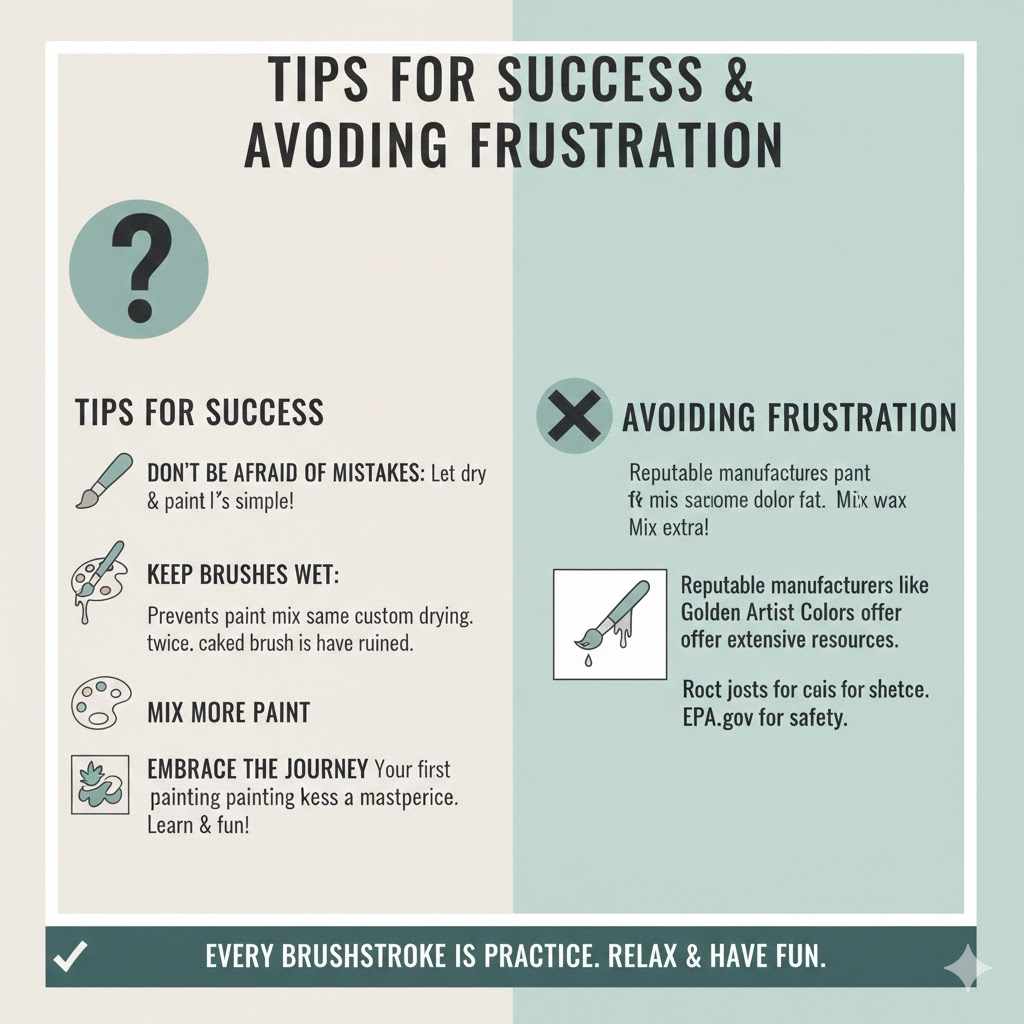
Tips for Success and Avoiding Frustration
Every craft has its learning curves. Think of these as friendly tips from someone who has made all the mistakes so you don’t have to.
- Don’t Be Afraid of Mistakes: One of the best things about acrylics is that you can fix anything. If you don’t like something, just let it dry and paint right over it. It’s that simple.
- Keep Your Brushes Wet: Acrylics dry fast, and that includes on your brushes. Keep the brushes you’re using in your water jar when you’re not holding them. A dry, paint-caked brush is a ruined brush.
- Mix More Paint Than You Think You Need: It can be very difficult to mix the exact same custom color twice. Always mix a little extra so you don’t run out halfway through a section.
- Embrace the Journey: Your first painting probably won’t be a masterpiece, and that’s completely okay! The goal is to learn, relax, and have fun. Every brushstroke is practice. Reputable manufacturers like Golden Artist Colors offer extensive resources on their paints, which can be helpful as you advance.
Frequently Asked Questions (FAQ)
Can I paint on paper with acrylics?
Yes, absolutely! Just make sure you use heavy-duty paper, like acrylic paper, watercolor paper, or thick cardstock. Thin printer paper will buckle and warp when it gets wet from the paint.
How do I fix a mistake in acrylic painting?
It’s easy! Wait for the mistake to dry completely. Because acrylic paint is opaque, you can simply paint right over the area you want to change. No one will ever know it was there.
Do I need to prime my canvas?
Most canvases you buy at a craft store come pre-primed with a material called gesso, so they are ready to paint on right away. If you are painting on a raw surface like wood or unprimed canvas, applying a coat or two of gesso first is a good idea. It gives you a smoother surface and helps the paint adhere better.
How do I clean my acrylic paint brushes?
Clean them immediately after you are done painting using mild soap and lukewarm water. Gently work the paint out of the bristles with your fingers, rinse until the water runs clear, and then reshape the brush head and lay it flat to dry. Never let acrylic paint dry on your brushes.
What are the most essential acrylic paint colors to start with?
A starter set should always include Titanium White, Mars Black, Cadmium Red, Ultramarine Blue, and Cadmium Yellow. With these five colors, you can mix an incredible range of other colors and shades.
How can I make my acrylic paint dry slower?
You can buy a product called an “acrylic retarder” or a “slow-dri medium” to mix with your paints. A simpler DIY method is to lightly mist your paints on the palette with water from a spray bottle as you work to keep them moist.
Is acrylic paint waterproof when dry?
Yes. Once acrylic paint has fully cured, it forms a durable, water-resistant film. This makes it permanent and suitable for painting on a wide variety of surfaces, from canvas to wood to fabric.
Conclusion
Stepping into the world of painting is about giving yourself permission to play and create. It’s not about achieving perfection on your first try; it’s about the joy of seeing colors mix, of making marks on a canvas, and of bringing something new into the world that is entirely yours.
The projects we’ve covered—from abstract blocks to vibrant galaxies—are just starting points. They are designed to build your skills and, more importantly, your confidence. Remember, just like in woodworking, the most important tool you have is your willingness to try. So grab a brush, squeeze out some color, and make something wonderful. The canvas is waiting.