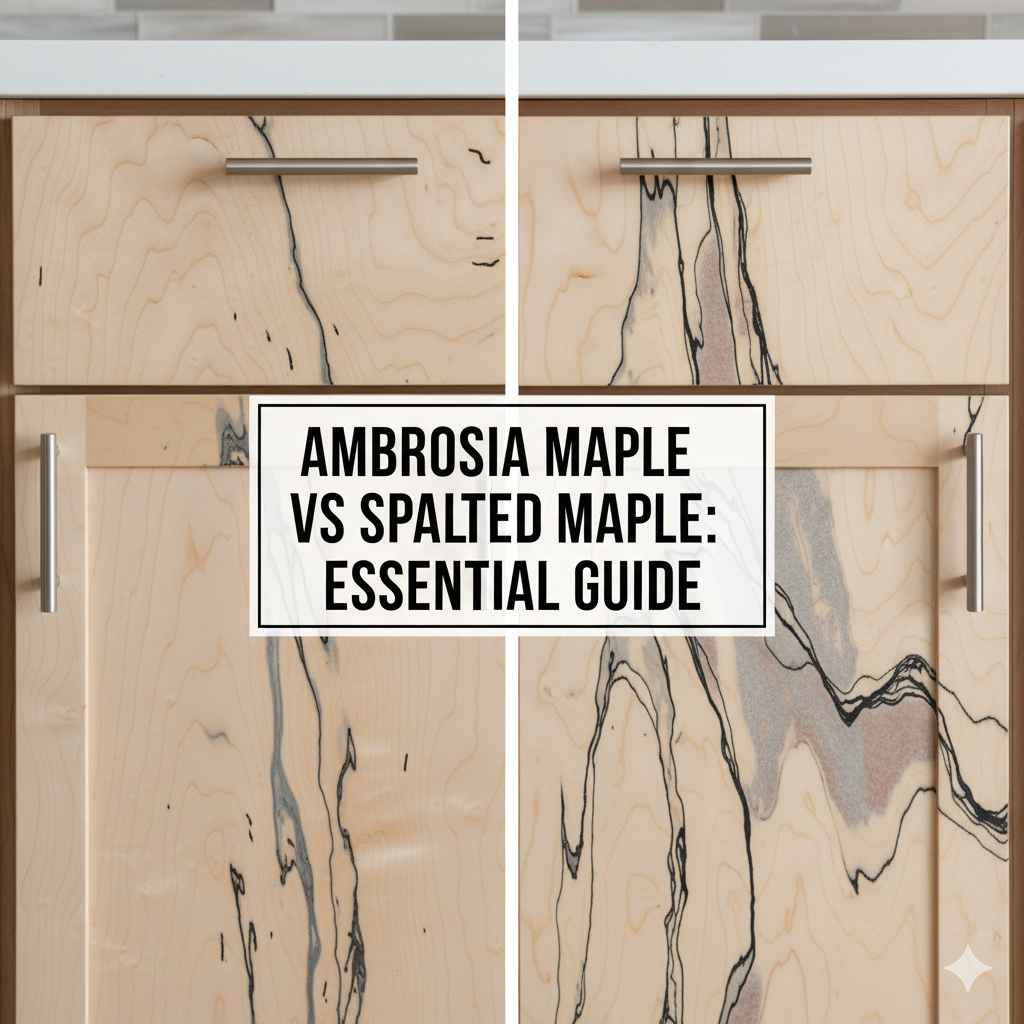
Ambrosia Maple Vs Spalted Maple: Essential Guide
Ambrosia maple and spalted maple are both visually stunning variations of maple wood, differing primarily in the cause and appearance of their unique markings. Ambrosia maple features scattered dark streaks (insect trails), while spalted maple displays intricate black and sometimes colored lines from fungal activity. Both offer beautiful aesthetics for woodworking projects.
Choosing the right lumber for your woodworking project can feel a bit overwhelming, especially when you start seeing woods with truly unique character. Maple is a fantastic wood to work with, known for its strength and smooth finish. But then you come across “ambrosia maple” and “spalted maple,” and it’s natural to wonder what makes them so special—and different! Don’t worry; it’s not as complicated as it might seem.
These aren’t separate species of maple, but rather special conditions that happen to the wood. Understanding these differences will help you pick the perfect piece for your next creation, whether it’s a table, a bowl, or a decorative accent. This guide will break down exactly what ambrosia maple and spalted maple are, how they form, and what makes them shine in different ways. Let’s clear up the confusion so you can confidently select the wood that will make your project pop!
Ambrosia Maple vs Spalted Maple: The Essential Guide
As a woodworker, I’ve seen firsthand how excited people get when they discover these unique wood types. Both ambrosia maple and spalted maple offer incredible beauty that can elevate any project from ordinary to extraordinary. But they achieve their striking looks through different natural processes, and knowing these distinctions is key to selecting the right material.
What is Ambrosia Maple?
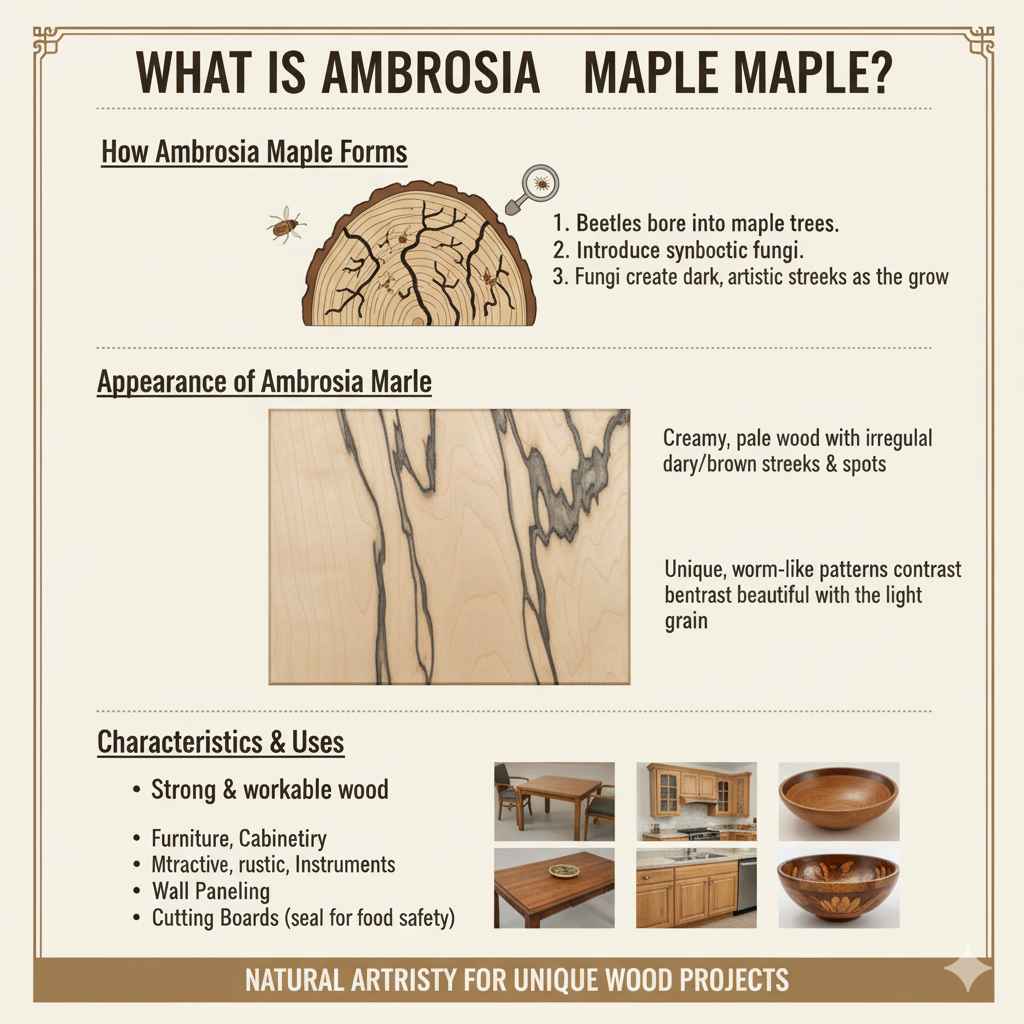
Ambrosia maple gets its name from the tiny ambrosia beetles that bore into the living maple tree. As these beetles tunnel through the wood, they introduce fungi that create the characteristic dark streaks and spots. These aren’t defects; they are natural markings!
How Ambrosia Maple Forms
The process begins when ambrosia beetles (a type of wood-boring insect) lay their eggs in maple trees, typically when the tree is still alive or very recently felled. The beetles carry a symbiotic fungus with them. As the larvae tunnel, they feed on this fungus. The fungus then stains the surrounding wood, creating the distinctive dark, irregular lines that we see.
Appearance of Ambrosia Maple
The markings in ambrosia maple are usually scattered, somewhat random, and vary in color from light gray to dark brown or black. They often appear as thin, worm-like trails or broader streaks. These lines contrast beautifully with the creamy, pale background of the maple wood itself. The patterns are unique to each piece, making every board one-of-a-kind.
Characteristics and Uses of Ambrosia Maple
Ambrosia maple is generally as strong and workable as regular hard or soft maple. The beetle galleries don’t significantly weaken the wood, especially for furniture or decorative items. Its attractive, natural markings make it highly sought after for:
- Furniture
- Cabinetry
- Decorative bowls and items
- Musical instruments
- Wall paneling
- Cutting boards (ensure proper sealing for food safety)
The key is that the wood is still structurally sound. The dark lines add a rustic, artistic flair without compromising its integrity for most applications. It takes finishes well, allowing the natural beauty of the grain and the ambrosia streaks to shine through.
What is Spalted Maple?
Spalted maple, on the other hand, is a result of fungal decay. This isn’t your typical rot; specific types of fungi, often introduced when a tree is felled and left to rest, create stunning patterns of dark lines and sometimes even colored zones within the wood. This process typically occurs in wood that has been kept under specific, often moist, conditions.
How Spalted Maple Forms
Spalting happens when a maple log or lumber is exposed to various fungi for a period. These fungi colonize the wood, feeding on its sugars. The most noticeable feature of spalting is the formation of “zone lines,” which are dark, delicate black lines that appear as the fungi compete for territory. Sometimes, other fungi can introduce subtle colors like yellow, purple, or pink.
The key to beautiful spalting is controlled decay. If left too long or under the wrong conditions, the wood can become too soft and unusable. A skilled woodworker or lumber producer knows how to stop the process at the right stage to preserve the wood’s strength while maximizing its aesthetic appeal. For more on wood decay and preservation, you can explore resources from organizations like the Forest Products Laboratory.
Appearance of Spalted Maple
Spalted maple is characterized by intricate, often delicate, black lines that form a network throughout the wood. These lines can be fine and web-like or form bolder patterns. Unlike ambrosia maple’s distinct trails, spalted maple’s lines are a result of fungal growth fronts meeting. In some cases, you might also see lighter colored areas or even soft hues of color interspersed within the dark lines, adding to its unique beauty.
Characteristics and Uses of Spalted Maple
Spalted maple is prized for its artistic, almost painterly, patterns. However, because it has undergone fungal activity, it can sometimes be softer or more brittle than un-spalted maple, especially in areas with heavy spalting. This means it’s often best suited for:
- Decorative items
- Accent pieces
- Veneers
- Small boxes
- Knife handles
- Musical instrument tops or backs
- Resin inlay projects where the delicate lines can be captured
For larger structural pieces, it’s crucial to assess the wood’s integrity. Often, spalted wood is stabilized with resin, especially for smaller items or where extreme durability is needed. This process fills any voids and hardens the wood, making it more robust.
Ambrosia Maple vs. Spalted Maple: Key Differences at a Glance
While both are stunning, the underlying cause and resulting patterns are quite distinct. Here’s a quick breakdown:
| Feature | Ambrosia Maple | Spalted Maple |
|---|---|---|
| Cause of Markings | Insect tunnels carrying symbiotic fungi | Fungal decay (various species) |
| Appearance of Markings | Scattered, irregular dark streaks, “wormhole” trails | Intricate, often delicate black lines that form networks; sometimes subtle colors |
| Pattern Formation | Direct result of beetle tunnels and fungal staining | Fungal growth fronts meeting, creating zone lines |
| Typical Strength/Integrity | Generally strong and structurally sound, similar to regular maple | Can be softer or more brittle in heavily affected areas; may require stabilization |
| Best For | Furniture, cabinetry, larger projects where its natural strength is utilized | Decorative items, smaller projects, veneers, resin inlays, accent pieces |
Choosing the Right Wood for Your Project
Selecting between ambrosia and spalted maple depends entirely on what you want to achieve with your project.
When to Choose Ambrosia Maple
Opt for ambrosia maple when you want a wood with striking, natural character that won’t compromise structural integrity. It’s a fantastic choice for:
- Furniture with a natural, rustic look: Think coffee tables, dining tables, bed frames. The streaks add visual interest without impacting load-bearing capabilities.
- Cabinetry and drawer fronts: It provides a warm, unique look that stands out from standard wood tones.
- Functional yet decorative items: Anything from shelves to picture frames can benefit from its distinctive pattern.
If your project involves a lot of carving or needs to withstand significant stress, ambrosia maple is often more forgiving due to its consistent hardness.
When to Choose Spalted Maple
Spalted maple is your go-to for projects where the visual artistry is paramount. It’s ideal for:
- Statement pieces: A spalted maple bowl or vase can be a stunning centerpiece.
- Small, exquisite crafts: Think intricate jewelry boxes, custom pens, or unique knife handles.
- Projects incorporating resin: The delicate lines are perfect for encapsulating in clear epoxy resin to create unique effects, such as on countertops or tabletops.
- Veneers for accents: Thin slices of spalted maple can be applied to larger pieces of stable wood to add a touch of dramatic flair.
Remember to assess the spalted wood carefully. If it feels too soft or crumbly, consider a wood stabilizer or choose a project where its delicacy won’t be an issue. For information on wood stabilization, you can check out guides on woodworking forums or manufacturer sites for epoxy products, like those from established resin suppliers.
Working with Ambrosia and Spalted Maple
Both types of special maple generally cut, sand, and finish well, but there are a few considerations:
Tooling
In general, both woods behave similarly to regular maple. However, the beetle galleries in ambrosia maple and the fungi lines in spalted maple can sometimes be slightly harder or softer than the surrounding wood. This means:
- Sharp Tools: Always use sharp blades for saws and routers to avoid tear-out, especially along darker lines.
- Sanding: Sand gradually. Start with a medium grit and work your way up to a fine grit. Gentle sanding is often better than aggressive sanding to preserve fine details, especially in spalted wood.
- Dust Collection: Use good dust collection. Wood dust is a health hazard, and these woods are no exception. For more on wood dust safety, refer to the Occupational Safety and Health Administration (OSHA) guidelines.
Finishing
The finish you choose can dramatically enhance the beauty of these woods:
- Clear Coats: A clear finish like polyurethane, lacquer, or a wipe-on poly will bring out the depth of the grain and the contrast of the markings.
- Oil Finishes: Natural oils (like Danish oil or tung oil) can give a more rustic, matte look that’s excellent for spalted wood.
- Epoxy Resin: For spalted wood, especially if it’s fragile, a clear epoxy resin pour is a fantastic way to stabilize it and create a durable, high-gloss surface that really makes the patterns pop.
- Dealing with Soft Spots: If you encounter soft spots in spalted maple, you might need to fill them with a wood filler or resin before applying your finish to ensure an even surface.
Always test your finish on a scrap piece of the same wood first to see how it interacts with the colors and patterns.
Where to Find Ambrosia and Spalted Maple
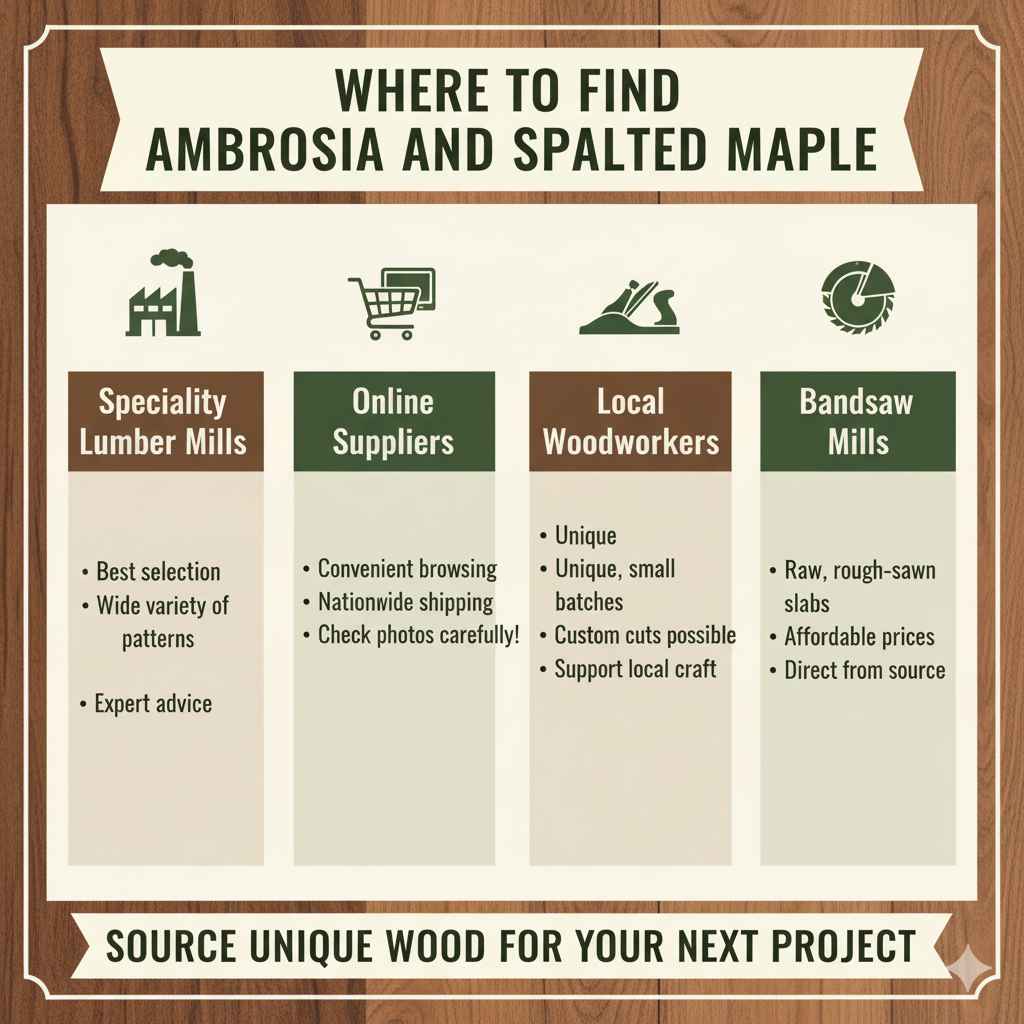
You can often find these unique woods at:
- Specialty Lumber Mills: These are the best places to find a good selection.
- Online Wood Suppliers: Many reputable online lumber yards carry both ambrosia and spalted maple. Be sure to check photos carefully as patterns vary wildly.
- Local Woodworkers and Bandsaw Mills: Sometimes, local craftspeople have access to interesting lumber.
When buying, look at the overall pattern and how it flows. Think about how it will fit into your specific project. It’s often sold by the board foot, and prices can vary based on the intensity and beauty of the markings.
Frequently Asked Questions (FAQ)
Is ambrosia maple strong enough for furniture?
Yes, ambrosia maple is generally as strong and stable as regular maple. The beetle tunnels are usually concentrated and don’t significantly weaken the wood for most furniture applications.
Is spalted maple safe to use for cutting boards?
While visually stunning, spalted maple’s fungal activity can make it less durable and more prone to microbial growth if not properly sealed. It is generally not recommended for direct food contact surfaces like cutting boards unless it’s extensively sealed with food-grade epoxy or resin, which adds significant labor and cost.
What is the difference between ambrosia and spalted maple?
Ambrosia maple markings are caused by beetle tunnels and fungi they carry, looking like scattered streaks. Spalted maple markings are caused by fungal decay, appearing as intricate, delicate black lines or networks throughout the wood.
Does spalting affect the price of maple?
Yes, heavily and beautifully spalted maple is often more expensive than standard maple because its unique aesthetic is highly sought after by artisans and designers. The more dramatic and well-defined the spalting, the higher the potential cost.
Can I create spalting myself?
Yes, it is possible to create spalting at home, but it requires careful control of moisture, temperature, and the introduction of specific fungi cultures. It’s a process that takes time and experimentation, and success isn’t guaranteed. Many prefer to buy wood that has already been expertly spalted to ensure quality and avoid potential structural issues.
Which is better for a beginner:
For a beginner, ambrosia maple might be slightly easier to work with. It tends to have more consistent structural integrity than heavily spalted maple, which can sometimes be brittle. Both require sharp tools and careful sanding, but ambrosia maple is less likely to present challenges related to wood softness.
How do I identify what kind of maple wood I have?
Look at the markings! If you see scattered, irregular streaks that seem to follow a tunnel path, it’s likely ambrosia maple. If you see delicate, intricate black lines forming a web-like pattern, it’s spalted maple.
Conclusion
Whether you’re drawn to the charming, scattered streaks of ambrosia maple or the artistic networks of spalted maple, you’re choosing a wood that brings incredible, natural beauty to your projects. Understanding the difference—that ambrosia is insect-driven and spalted is fungus-driven—helps you choose the right one for your needs. Ambrosia maple often offers more structural reliability for larger furniture, while spalted maple shines in decorative pieces where its striking patterns are the star.
Both woods require a bit of thoughtful handling, especially when it comes to cutting and finishing, ensuring your tools are sharp and your sanding is gradual. By embracing their unique characteristics and following these simple guidelines, you’ll find working with either of these special maples a rewarding experience. So, next time you’re at the lumberyard, don’t hesitate to pick up a board of ambrosia or spalted maple. Your next project will thank you for the distinctive touch!