Are There Maple Trees in Florida? Essential Guide
Yes, there are native maple trees in Florida! While not as common as in cooler climates, several species thrive in specific Florida environments, offering beautiful foliage and interesting characteristics perfect for curious gardeners and woodworkers alike. This guide demystifies which maples you can find and where.
You might be wondering, with Florida’s warm weather, can maple trees actually grow here? It’s a great question! Many of us picture vibrant red and orange maples blanketing the hillsides of New England in autumn. Florida’s landscape is quite different, of course. This can make it seem impossible for these iconic trees to take root in the Sunshine State. But nature is full of surprises! You absolutely can find maple trees flourishing in various parts of Florida. They adapt to the local conditions in fascinating ways. We’re going to explore which types of maples call Florida home, where they like to grow, and what makes them special. Get ready to discover the surprising presence of maples in Florida!
Maple Trees in Florida: A Surprising Reality
It’s true, Florida isn’t typically the first place that comes to mind when you think of maple trees. However, several native species have adapted beautifully to the state’s unique climate and diverse ecosystems. These Southern maples offer their own brand of charm, from subtle fall color to distinctive shapes and ecological benefits. Understanding their preferences is key to spotting them and appreciating their presence.
Why the Confusion?
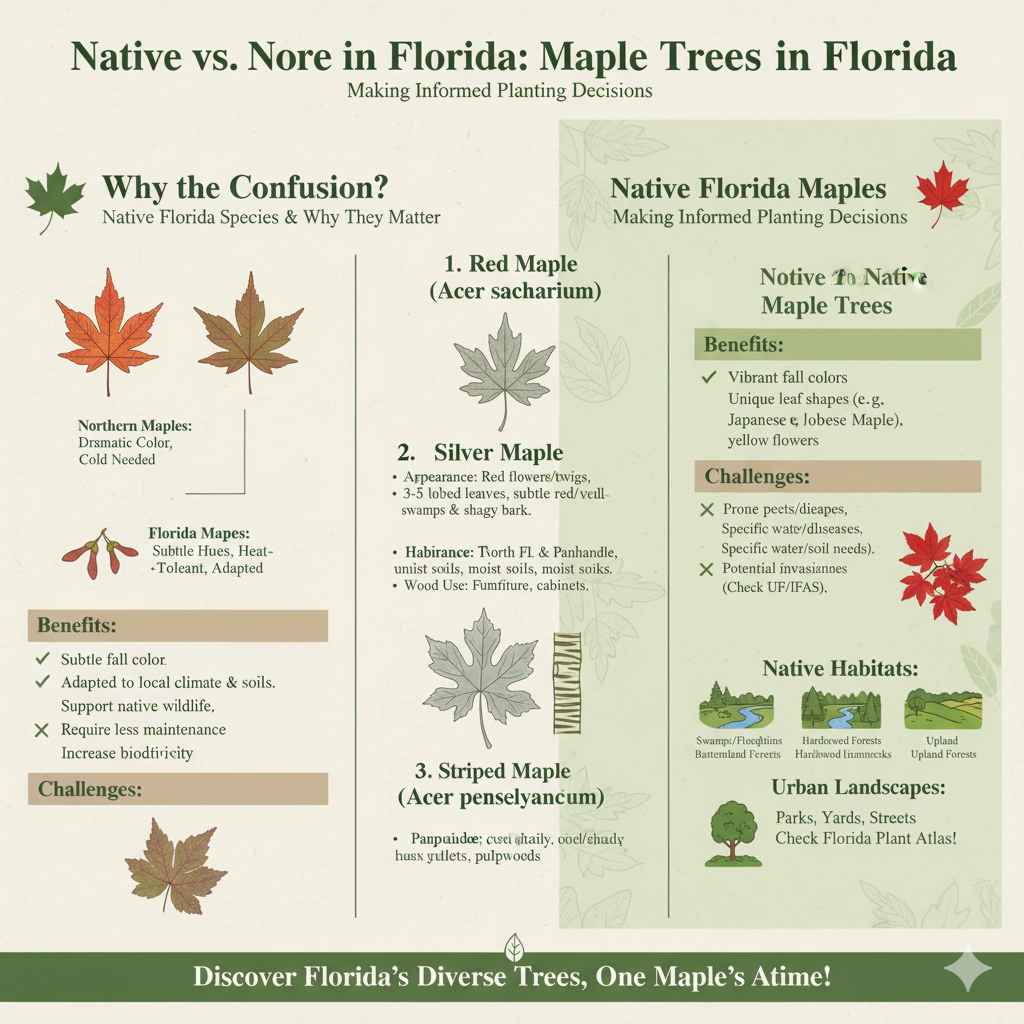
The confusion often stems from comparing Florida’s maples to their more famous Northern cousins. Sugar maples, for instance, which are the stars of commercial syrup production and dazzling autumn displays, require a distinct chilling period that most of Florida doesn’t provide. Florida maples are generally more heat-tolerant and adapt to wetter or sandy soils. Many of them won’t produce the fiery fall colors you might expect, but they still offer attractive foliage and are vital to their local habitats.
The Native Florida Maple Species
Florida is home to at least three distinct native species of maple trees. These aren’t the types that produce commercial quantities of syrup, but they are true maples, belonging to the Acer genus.
1. Red Maple (Acer rubrum)
Even though it’s called “red maple,” this tree is a bit of a chameleon in Florida. While it does have the potential for red fall color, it’s often more subtle here than in cooler states. You’ll find the Red Maple is quite adaptable, growing in a variety of soils, from moist swamps to drier uplands. It’s one of the most widespread native trees in the eastern United States, and Florida is no exception!
Appearance: Red Maple is known for its red flowers in early spring, red samaras (winged seeds), and often red twigs. Leaves are typically 3-5 lobed with serrated edges and turn a lovely red, yellow, or muted orange in the fall.
Habitat: Found throughout Florida, especially in mesic (moderately moist) to wet environments like swamps, floodplains, and along stream banks. They can also be found in drier, upland forests.
Wood Use: The wood is hard and medium-weight, sometimes called “soft maple” compared to sugar maple. It’s used for furniture, cabinets, and utility wood.
2. Silver Maple (Acer saccharinum)
The Silver Maple is another adaptable species that can be found in Florida. It’s a fast-growing tree, often found in wetter areas. Its name comes from the silvery-white undersides of its leaves, which flutter in the breeze, giving it a distinct shimmering effect.
Appearance: Easily recognized by its deeply lobed leaves that are deeply cut and have that distinctive silvery-white underside. The bark is smooth and gray on young trees, becoming rougher and shaggier with age.
Habitat: Prefers moist soils and is often found along rivers, streams, and in floodplains across North Florida and extending into the Panhandle.
Wood Use: Its wood is relatively soft and light, making it less desirable for fine furniture but still useful for crates, pallets, and pulpwood.
3. Striped Maple (Acer pensylvanicum)
Also known as the Moosewood or Whistlewood, the Striped Maple is a smaller, understory tree. It’s quite different from the larger Acer rubrum and Acer saccharinum. Its most striking feature is its bark, which has vertical white stripes on a dark green or black background, giving it a unique visual appeal.
Appearance: This is a slender tree with large, three-lobed leaves that resemble those of a grape. The bark on young trees is green with white stripes, maturing to darker colors with more prominent stripes. It produces greenish-yellow flowers in drooping clusters and red fruits.
Habitat: The Striped Maple is less common in Florida and is typically found in the cooler, moister environments of the Florida Panhandle, preferring shady, well-drained soils in hardwood forests. It thrives in less direct sunlight.
Wood Use: The wood is soft and not commercially significant but is sometimes used for small crafts or firewood.
Where to Find Maple Trees in Florida
You won’t find dense maple forests like you might further north. Instead, look for these trees as part of Florida’s diverse natural landscapes.
Native Habitats
Swamps and Floodplains: Red Maples are particularly fond of the wet conditions found in Florida’s numerous swamps and along its river systems.
Bottomland Forests: Along rivers and streams in North Florida and the Panhandle, you’ll often find Red and Silver Maples thriving in the rich, moist soils.
Hardwood Hammocks: These dense, shady woodlands, common in North and Central Florida, can be home to Striped Maples as an understory tree, alongside other shade-loving species.
Upland Forests: While preferring moisture, Red Maples can also tolerate the drier conditions found in some upland forests, especially if they receive summer rains.
Urban and Suburban Landscapes
Many Florida homeowners and municipalities plant maple trees in parks, yards, and along streets. While many of these might be native species, you may also find non-native cultivars of Acer that are bred for ornamental purposes. However, focusing on conservation efforts and native plant databases will guide you best for finding true Florida residents. The Florida Plant Atlas is an excellent resource to see distribution maps for native species.
Key Characteristics of Florida Maples
Let’s break down what makes these Southern maples distinct.
Leaf Shape and Fall Coloration
Leaves: Most Florida maples have palmately lobed leaves (meaning they radiate from a single point, like fingers from a palm). The number of lobes (usually 3 or 5) and the shape of the edges (serrated or smooth) are key identification features. Silver Maple has deeply dissected lobes, while Red Maple and Striped Maple have more distinct lobes.
Fall Color: This is where Florida maples can be a bit deceptive. While Red Maple can produce stunning reds, it’s often more of a yellow or reddish-brown here, and not all trees will show dramatic color. The timing can also vary with weather patterns, with cooler nights often enhancing the display. Striped Maple’s fall color is typically a muted yellow. Silver Maple also offers yellow fall hues.
Bark and Buds
Bark: Young Red and Silver Maples have smooth, gray bark. As they mature, Red Maple bark becomes darker and develops vertical fissures or ridges, while Silver Maple bark tends to become shaggier. Striped Maple is visually distinct with its green or black bark featuring prominent white vertical stripes, especially on younger branches.
Buds: Maple buds are typically pointed and can be reddish. Tiny Red Maple buds are distinct from the larger, lighter-colored buds of Silver Maple.
Fruit (Samaras)
All maples produce fruit called samaras, or “helicopters,” “whirligigs,” or “skydivers.” These are winged seeds that spin as they fall, aiding in wind dispersal. The size, color, and angle of the wings are helpful for identification. Red Maple samaras are usually bright red in the spring and early summer.
Identifying Florida Maple Trees: A Beginner’s Guide
As Md Meraj, I always emphasize the importance of clear, simple observation for any DIY or nature project. Identifying trees is no different! Here’s how you can start spotting maples in Florida.
Step-by-Step Identification Tips
1. Look at the Leaves: This is your first and most important clue. Are they lobed? How many lobes? Are the edges smooth or toothed? Remember the distinctive silvery underside of the Silver Maple.
2. Examine the Bark: Does it have vertical stripes? Is it smooth, ridged, or shaggy? The bark of a mature Red Maple is quite different from a young Silver Maple.
3. Observe the Twigs and Buds: Are the twigs red? Are the buds pointed and what color are they?
4. Note the Habitat: Is the tree in a swampy area, a dry forest, or a shady understory? This can give significant clues.
5. Check the Fruit (if present): The “helicopters” are a dead giveaway for a maple.
Tools for Identification (Optional but Helpful)
Magnifying Glass: For a closer look at leaf veins, bud scales, and bark texture.
Field Guide to Florida Trees: A good book with illustrations and descriptions is invaluable. Look for guides published by reputable sources like the University of Florida or experienced nature publishers.
Tree Identification Apps: While not always 100% accurate, many apps can offer suggestions based on photos you upload.
Florida Maple Wood: Uses and Characteristics
While not as famed for its timber as northern maples, Florida’s native maples still offer usable wood. As a woodworker, understanding your material is crucial for any project.
Comparison of Florida Maple Woods
| Wood Type | Relative Hardness (Janka) | Density | Color | Common Uses | Availability in Florida |
|---|---|---|---|---|---|
| Red Maple (Acer rubrum) | Medium (around 950 lbf) | Moderate | Light brown/reddish | Furniture, cabinets, flooring, utility items, smoking wood | Widely available |
| Silver Maple (Acer saccharinum) | Softer (around 880 lbf) | Lighter | Pale brown | Crates, pallets, pulpwood, some craft wood, turning blanks | Widely available |
| Striped Maple (Acer pensylvanicum) | Soft (significantly lower) | Very Light | Off-white/pale | Very limited use; small crafts if available, often overlooked | Less common, rare |
Note: Janka hardness is a measure of the force required to embed a 0.444-inch steel ball halfway into a wood sample. Higher numbers indicate harder wood.
Working with Florida Maple Wood
Red Maple: This is the most practical maple for woodworking in Florida. It machines well, takes finishes nicely, and is strong enough for many furniture projects. It can be a good alternative to northern hard maple for those working in southern locales.
Silver Maple: While softer, Silver Maple is still workable. It’s lighter and less dense, making it easier to cut and shape. It’s a good choice for items where extreme durability isn’t paramount, like decorative boxes or turning spindles.
Striped Maple: This wood is generally too soft and small-grained for significant woodworking projects. Its primary value is in its unique appearance as a small tree or for very niche craft applications.
Cultivating Maple Trees in Florida
Thinking of adding a maple to your yard? It’s possible, with the right species and location.
Choosing the Right Maple Species
Red Maple (Acer rubrum): This is your best bet for a native maple in most of Florida. Choose a cultivar noted for better fall color if that’s a priority, but be aware it will still be subtle. They are relatively adaptable to different soil types.
Mulberry Tree (Morus rubra): While not a maple, it offers similar leaf shapes and is native to Florida, often found in similar habitats. It’s a good alternative if you love the lobe shape.
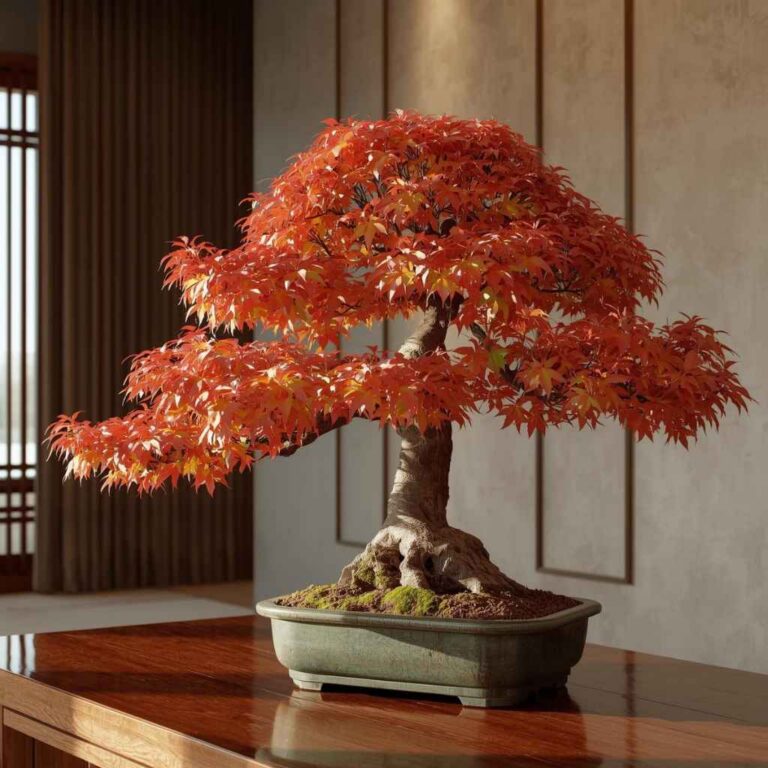
Consider Non-Native Options (with caution): Some non-native maples, like Japanese Maple cultivars (Acer palmatum), can do well in North Florida and parts of Central Florida if given proper shade and consistent moisture. However, they require more specific care and are not native to Florida’s ecosystems. It’s generally best to stick with natives where possible for ecological benefits. Always check the UF/IFAS Extension for recommendations for your specific region.
Planting and Care Tips
Location: Most Florida maples prefer full sun to partial shade. Red Maples can tolerate a range of conditions, from moist areas to drier uplands. Striped Maple needs significant shade.
Soil: They generally prefer well-drained soil. Avoid areas with constant waterlogging unless planting a Red Maple specifically for a swampy area. They are not overly finicky about soil pH.
Watering: Young trees need consistent watering to establish a strong root system. Once mature, they are relatively drought-tolerant but will perform best with adequate moisture, especially during dry spells.
Pruning: Prune to shape the tree, remove dead or crossing branches, and improve structure, especially when the tree is young. The best time is usually during the dormant season (late fall to early spring), though minor pruning can often be done in summer. Avoid excessive pruning, as this can stress the tree.
The Ecological Role of Florida Maples
Native trees are the backbone of local ecosystems. Even the less showy Florida maples play important roles.
Habitat and Food Source
Shelter: The dense foliage of maple trees provides shelter for birds and other wildlife.
Food: Birds and squirrels eat the seeds (samaras). The flowers in early spring can be a nectar source for early pollinators like bees. Invertebrates feed on the leaves and bark.
Soil Improvement and Erosion Control
Leaf Litter: Decaying maple leaves contribute organic matter to the soil, enriching it over time.
Root Systems: The extensive root systems help stabilize soil, preventing erosion, especially on slopes and along waterways.
Native vs. Non-Native Maple Trees in Florida
When making planting decisions or simply observing the landscape, it’s helpful to understand the difference.
Native Florida Maples
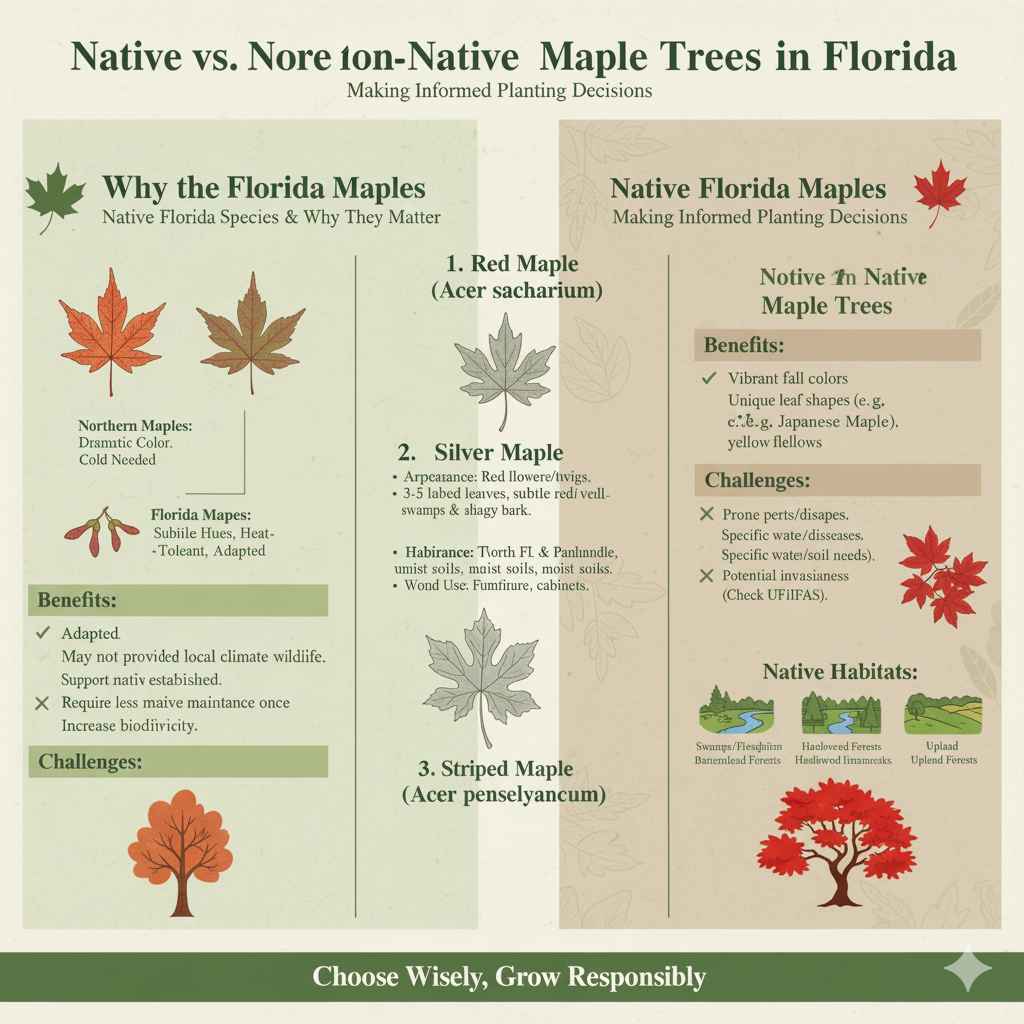
Benefits: Adapted to local climate and soils, support native wildlife, require less maintenance once established, contribute to the natural biodiversity of Florida.
Challenges: May not provide the dramatic fall colors or fast growth rates of some non-native species.
Non-Native Maple Trees
Benefits: Some cultivars offer superior ornamental features like intense fall color or unique leaf shapes (e.g., Japanese Maples).
Challenges: Can be susceptible to local pests and diseases, may require more water or specific soil conditions, can potentially become invasive if not chosen carefully. It’s important to consult resources like the UF/IFAS Assessment of Non-native Plants to understand their invasiveness potential.
Frequently Asked Questions About Maple Trees in Florida
Q1: Can I tap Florida maple trees for syrup?
A: While technically possible with Red Maple, it’s not practical for commercial syrup production in Florida. Maple syrup relies on the high sugar content of sap from species like Sugar Maple, which typically requires colder winters for sap to accumulate properly. Florida maples have lower sugar content and the warmer climate makes sap flow less predictable for tapping.
Q2: Do Florida maple trees have good fall color?
A: It varies. Red Maples can display reds and oranges, but often it’s more of a yellow or muted reddish-brown, especially in warmer years. Fall color in Florida is generally less vibrant than in northern states. Silver and Striped Maples typically offer yellow fall colors.
Q3: Are there any maple trees native to South Florida?
A: The Red Maple (Acer rubrum) is the most widespread native maple and can be found in scattered locations throughout South Florida, particularly in wetter areas and pine flatwoods. However, it’s less common than in North and Central Florida.
Q4: Is Silver Maple a good shade tree for Florida?
A: Silver Maple is a fast-growing shade tree and can be planted in Florida, especially in North Florida. However, it has a weaker wood structure than some other trees and can be prone to storm damage. Its shallow root system can also be invasive in lawns and near pavement. Consider its potential drawbacks.
Q5: How can I tell if a maple I see is native or planted?
A: Observing the context is key. If you see it in a natural setting like a swamp, floodplain, or hardwood hammock, it’s more likely to be native. If it’s in a manicured park, yard, or along a street, it was likely planted. Checking its location on a distribution map from resources like the Florida Plant Atlas can also help.
Q6: Are Japanese Maples (Acer palmatum) native to Florida?
A: No, Japanese Maples are not native to Florida. They originate from East Asia. However, many cultivars of Acer palmatum are popular ornamental trees and can be successfully grown in North and Central Florida with the right care, particularly providing afternoon shade and consistent moisture.