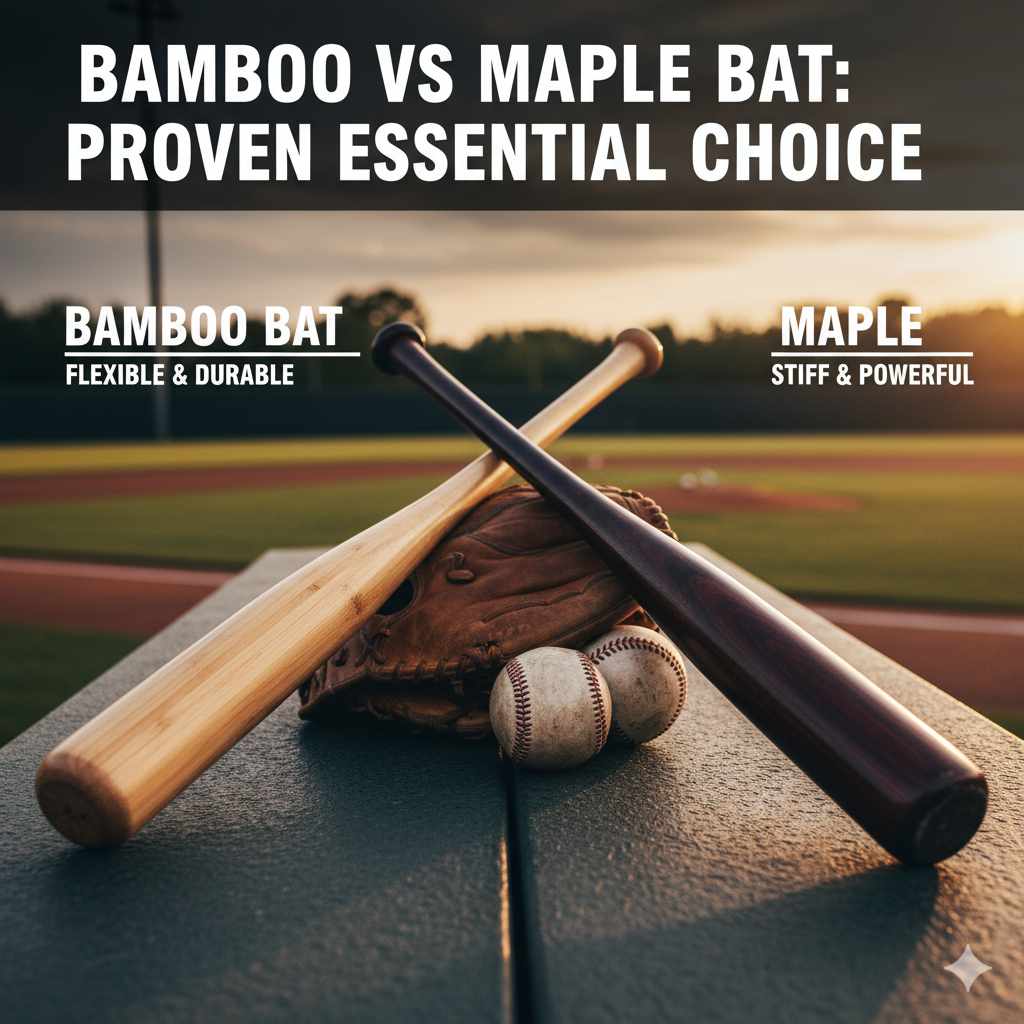
Bamboo Vs Maple Bat: Proven Essential Choice
Bamboo vs. Maple Bat: The Essential Choice for Your Swing
Choosing between a bamboo and a maple baseball bat can seem daunting, but understanding their core differences makes the choice simple. Maple bats offer dense, hard-hitting power with a predictable feel, ideal for experienced players. Bamboo bats provide remarkable durability and flexibility, often at a lower price point, making them a fantastic option for beginners and developing players. The best choice depends on your play style, experience, and budget.
Hey there, future sluggers and DIY enthusiasts! Md Meraj here. Ever stood in front of a wall of baseball bats, feeling a bit lost? You see different woods, different colors, and you just want to pick the one that feels right. Two popular choices that often come up are bamboo and maple bats. They sound similar, right? Both are strong woods. But how do they actually perform on the field? And which one is the better bet for you? It’s a common question, and a frustrating one if you just want to grab a bat and get swinging. Don’t worry, we’ll break it down. In this guide, we’ll explore the pros and cons of bamboo vs. maple bats, looking at what makes each unique. By the end, you’ll feel confident choosing the bat that best suits your game, whether you’re just starting out or looking to upgrade. Let’s get your swing sorted!
Understanding Wood Bats: A Quick Primer
Before we dive into the bamboo vs. maple debate, let’s quickly touch on why wood bats are special. Unlike metal bats, wood bats offer a real feel for the ball. They require a more precise swing, helping players develop better technique. Plus, there’s a classic charm to swinging a solid piece of wood. Different wood types have different characteristics, affecting everything from the bat’s strength and weight to how it sounds when you make contact.
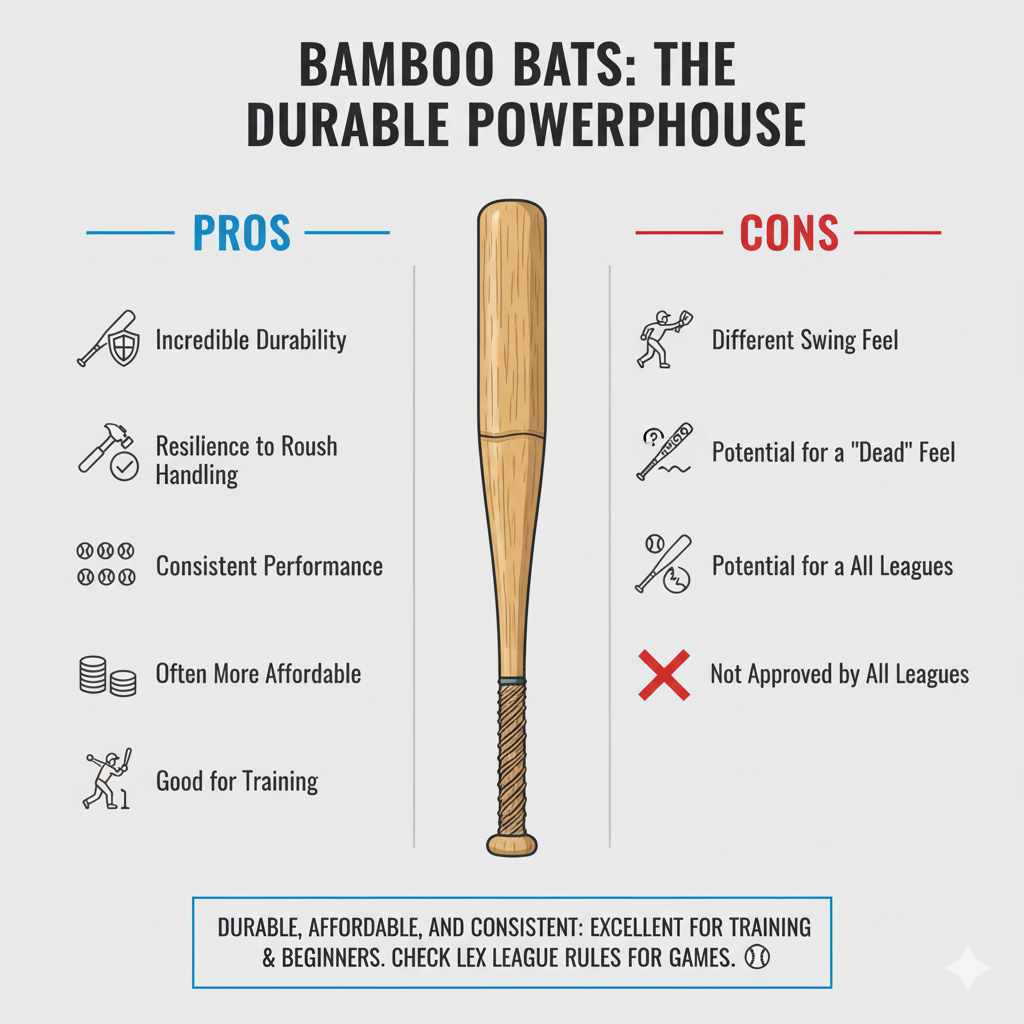
Bamboo Bats: The Durable Powerhouse
Bamboo might not be the first wood that comes to mind for baseball, but it’s a surprisingly strong contender. Think of it less as a single piece of wood and more like a bundle of straws, all fused together under heat and pressure. This unique construction gives bamboo bats their standout features.
Pros of Bamboo Bats:
- Incredible Durability: Bamboo is known for its natural strength and flexibility. This means a bamboo bat is less likely to break compared to traditional wood bats, even if it gets a little mis-hit. It can withstand more practice swings and games.
- Resilience to Rough Handling: Beginners might be a bit rougher with their equipment. Bamboo bats can take a bit more abuse than maple or ash, making them a safer bet for younger players or those still learning bat care.
- Consistent Performance: Because of its engineered structure, bamboo bats offer a consistent feel and performance over time. They tend to maintain their integrity longer.
- Often More Affordable: Many bamboo bats are priced more competitively than high-end maple bats, making them an excellent choice for budget-conscious players or those needing multiple bats for a team.
- Good for Training: Their durability and forgiving nature make them a popular choice for batting practice, helping players focus on their swing mechanics without worrying too much about breaking the bat.
Cons of Bamboo Bats:
- Different Swing Feel: Some players find that the feel of a bamboo bat is different from traditional hard woods. It can feel a bit stiffer or less “alive” on contact, which might affect the feedback a player gets.
- Potential for a “Dead” Feel: While durable, some bamboo bats can sometimes feel a bit less powerful on contact compared to a well-struck maple bat. The energy transfer might not be as efficient.
- Not Approved by All Leagues: While gaining popularity, not all professional or even some amateur leagues allow bamboo bats. It’s always good to check your league’s rules if you plan to use one in official games. You can find information on sporting goods regulations and standards through resources like the Sports Business Journal, which often covers equipment regulations.
Maple Bats: The Powerhouse of Tradition
Maple bats are a staple in professional baseball for a reason. This dense hardwood offers a fantastic combination of power, feel, and durability when handled correctly. A well-made maple bat is a hitter’s best friend.
Pros of Maple Bats:
- Exceptional Power and Pop: Maple is a very dense wood, which means it transfers energy very efficiently when it makes contact with the ball. This often results in a harder-hit ball with more “pop.”
- Hardness and Durability: Properly dried and manufactured maple bats are incredibly hard. This hardness contributes to their power and also means they can last a long time, resisting wear and tear from normal use.
- Predictable Feel: Maple provides a traditional feel that many experienced players prefer. It offers clear feedback when you hit the ball — a solid “thwack” when struck well, and a different feedback if the contact isn’t ideal.
- Wide Availability and Approval: Maple is a traditional wood bat material and is approved by virtually all baseball and softball leagues, from Little League to the pros. This makes them a safe bet for competitive play.
- Beautiful Finish: Maple wood often has a beautiful grain pattern that can be finished in various attractive ways, making the bat a pleasure to look at as well as to swing.
Cons of Maple Bats:
- Can Crack or Chip: While strong, maple wood is more susceptible to breaking, chipping, or flaking than bamboo, especially if it’s a mis-hit (off the end of the barrel or on the handle). This is due to its inherent stiffness.
- Less Forgiving: Maple bats are less forgiving of mishits. A ball hit too far out on the end of the barrel or too close to the handle will significantly reduce its effectiveness and can even cause the bat to fail.
- Requires Careful Handling: Maple bats need to be treated with care. You shouldn’t use them in cold weather (as the wood becomes brittle) or for practice on hard surfaces.
- Higher Cost for Premium Models: While basic maple bats can be affordable, high-quality, professional-grade maple bats can be quite expensive.
Bamboo vs. Maple Bat: Key Differences at a Glance
Let’s put it all on a table so you can see the differences side-by-side. This can really help when you’re making your decision.
| Feature | Bamboo Bat | Maple Bat |
|---|---|---|
| Durability | Excellent, highly resistant to breaking. | Good to Very Good, but can crack or chip on mishits. |
| Power / “Pop” | Good, but may feel less explosive on contact. | Excellent, known for strong energy transfer and “pop.” |
| Feel & Feedback | Can feel stiffer, less traditional feedback. | Traditional feel, clear feedback on contact. |
| Forgiveness for Mishits | More forgiving, less likely to break. | Less forgiving, mishits can lead to breakage. |
| Price Point | Generally more affordable. | Variable, premium models can be expensive. |
| League Approval | Varies, often not approved in higher leagues. | Universally approved in most leagues. |
| Maintenance/Care | Low maintenance. | Requires careful handling, avoid cold/hard surfaces. |
Who Should Choose Which Bat?
Okay, so you’ve seen the breakdown. Now, let’s figure out which bat fits your situation best. It’s not just about the material; it’s about your goals and how you play.
Choosing a Bamboo Bat: Perfect for These Players
- Beginners and Youth Players: If you’re just starting out in baseball or softball, a bamboo bat is often the best choice. Its durability means it can withstand accidental drops or minor impacts without breaking easily. This saves money and frustration. You can learn the fundamentals without worrying about damaging your equipment.
- Batting Practice and Training: Coaches and players often use bamboo bats for batting practice (BP). They can handle hundreds of swings day after day, making them a cost-effective and reliable tool for honing skills.
- Players on a Budget: If you need a solid bat but don’t want to spend a lot, bamboo bats offer great value for money. You get a functional, durable bat that performs well for many players.
- Players in Mixed-Use Scenarios: If your bat might be used for casual games, backyard fun, and serious practice alike, bamboo’s toughness is a big plus.
Choosing a Maple Bat: Ideal for These Players
- Developing and Intermediate Players: As you get more serious about your game, a maple bat can help you develop a better feel for hitting. The clear feedback from good and bad contact is invaluable for refining your swing.
- Serious Hitters and Competitors: If you’re playing in leagues where performance is key, and you’re confident in your swing mechanics, the superior “pop” and feel of a maple bat can give you an edge.
- Players Who Value Traditional Feel: Many older players and those who grew up playing with wood bats prefer the classic feel and sound of maple.
- Players Committed to Proper Bat Care: If you’re willing to take care of your bat – storing it properly, avoiding extreme temperatures, and practicing good swing habits – a maple bat can be a long-lasting and powerful asset.
- Check out resources on wood bat care from organizations like MLB.com to ensure you’re giving your bat the best treatment.
How to Choose the Right Size and Weight
Beyond the material, the size and weight of your bat are crucial. A bat that’s too heavy or too long will hinder your swing speed, while one that’s too light or too short might not provide enough power. Here’s a simple guide:
For Youth Players (Typically ages 5-12):
Start with a lighter and shorter bat. You want to be able to swing it comfortably with good speed. A common recommendation is to have the bat length be roughly the height of the player in inches, minus 10-15 inches for younger kids, and up to fewer inches for older kids. For weight, think about what feels manageable for 8-10 swings. Players in this age group often do well with bats that have a drop weight (length minus weight) of -8 to -10.
Example: A 50-inch tall player might use a 28-inch bat.
For Teenagers and Adult Players:
As you grow and get stronger, you can move to longer and heavier bats. The general adult rule of thumb is to choose a bat that’s about 2-4 inches shorter than your height. For weight, many adults prefer bats with a drop weight of -2 to -3, meaning a 33-inch bat might weigh 30 or 31 ounces. The most important thing is that you can accelerate the bat head through the hitting zone naturally.
How to Test: Hold the bat out in front of you with your arms extended. If you can only hold it for about 15-20 seconds before your arms start to shake uncontrollably, it’s likely too heavy for you.
The “Sweet Spot” and Bat Performance
Every bat has a “sweet spot”—the ideal place to make contact with the ball for maximum power and minimal sting. With wood bats, understanding this is key:
- Maple: Maple bats are known for having a relatively smaller sweet spot compared to some other wood types, but when you hit the ball squarely on it, the results are fantastic. A mishit off the end or near the handle will significantly reduce your hit’s effectiveness and can potentially damage the bat.
- Bamboo: Bamboo bats, due to their construction, can offer a slightly larger hitting surface and can be more forgiving if you don’t hit the ball perfectly in the center of the barrel. However, the “sweet spot” feel is often described as less pronounced or intense than with a top-grade maple bat.
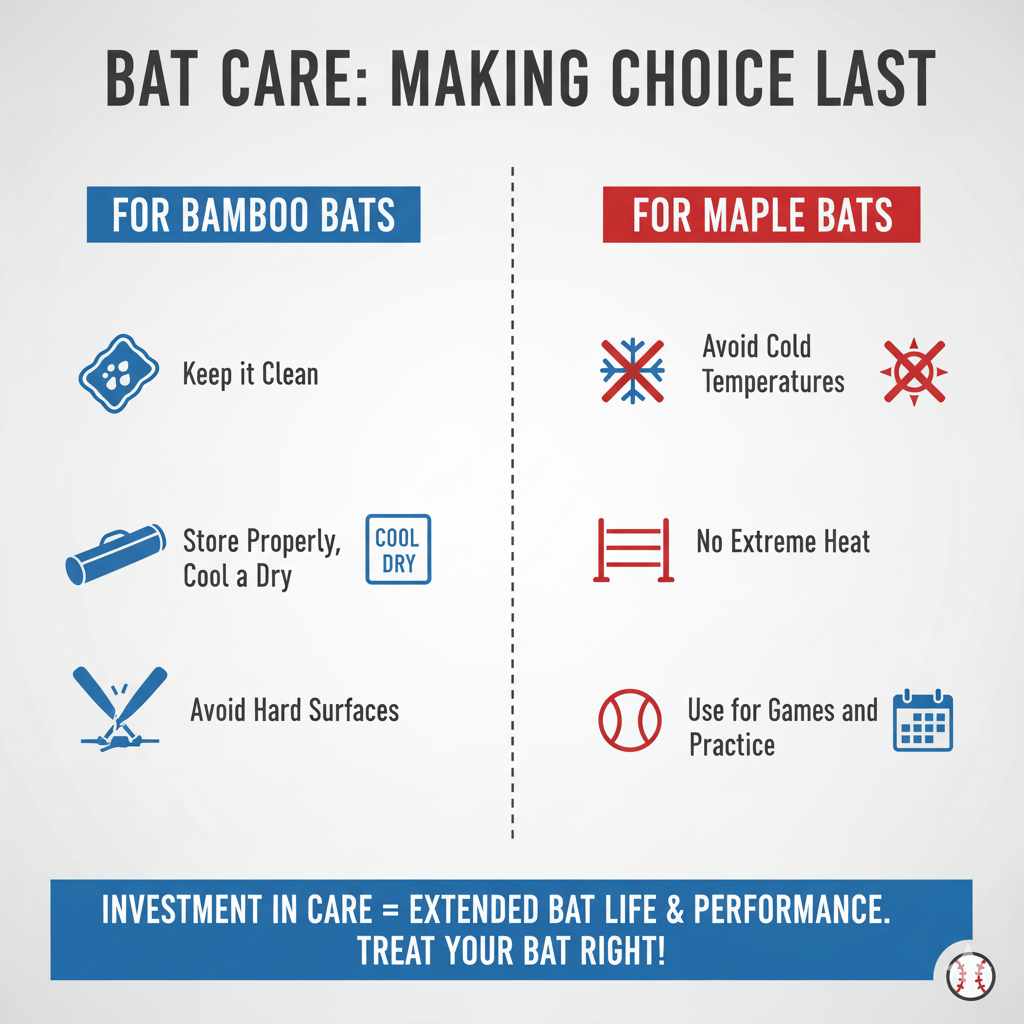
Bat Care: Making Your Choice Last
No matter which material you choose, taking care of your bat will make it last longer and perform better. This is where the DIY spirit can really shine!
For Bamboo Bats:
- Keep it Clean: Wipe down your bamboo bat with a slightly damp cloth after use to remove dirt and sweat.
- Store Properly: Keep it in a batting cage, a bat bag, or a cool, dry place. Avoid leaving it in extreme heat (like a hot car trunk) or extreme cold, though bamboo is more resilient than maple to temperature changes.
- Avoid Hard Surfaces: Try not to rest the barrel on concrete or asphalt, as repeated impacts can weaken the bamboo over time.
For Maple Bats:
- Avoid Cold Temperatures: Never use a maple bat in very cold weather (below freezing). The wood becomes brittle and much more prone to breaking.
- No Extreme Heat: Do not leave your maple bat in a hot car or direct sunlight for extended periods. This can dry out the wood and make it weaker.
- Proper Storage: Store bats upright or in a rack in a cool, dry environment. Bat bags are good for transport.
- Use for Games and Practice: It’s best to reserve your good maple bats for game use and use a separate, cheaper bat or a batting tee for heavy-duty practice and off-season training. This preserves its integrity for when it counts.
- For more on proper tool and material care, look to resources like This Old House for general woodworking material care principles that can be adapted.
Frequently Asked Questions About Bamboo vs. Maple Bats
Q1: Is a bamboo bat good for a beginner player?
Absolutely! Bamboo bats are excellent for beginners due to their superior durability. They are less likely to break, making them a more forgiving and cost-effective choice as you learn the game.
Q2: Can I use a bamboo bat in official games?
It depends on the league. Many youth leagues allow bamboo bats. However, some higher-level amateur or college leagues might not. Always check your league’s specific rules regarding equipment before a game.
Q3: Which bat is harder, bamboo or maple?
Maple is generally considered a harder wood than bamboo itself. However, the way bamboo bats are constructed (laminating many thin strips) makes them incredibly strong and resilient, often more so than a single piece of maple in terms of resisting breakage.
Q4: Does a bamboo bat feel different from a maple bat?
Yes, many players notice a difference. Maple bats often provide a more traditional feel and clearer feedback on contact. Bamboo bats can feel a bit stiffer and might not offer the same tactile response as maple.
Q5: Which bat will give me more “pop” or power?
Maple bats are typically known for generating more “pop” and driving the ball further due to the dense nature of the wood and its excellent energy transfer. However, proper technique with any bat is crucial for maximizing power.
Q6: Are bamboo bats better for the environment?
Bamboo is a highly sustainable resource that grows very quickly. This sustainability aspect is a significant advantage for bamboo as a material choice compared to traditional hardwoods.
Q7: How long do bamboo bats typically last compared to maple bats?
If handled similarly, a bamboo bat will generally last longer than a maple bat because it’s much more resistant to breaking from mishits or accidental damage. However, a maple bat, if cared for perfectly and struck only on the sweet spot, can also last a very long time.
Conclusion: Making Your Proven Essential Choice
So, there you have it! The world of baseball bats, demystified. When you’re weighing bamboo vs. maple bat, remember this: bamboo offers incredible durability, resilience, and value, making it a fantastic choice for beginners, training, and budget-conscious players. It’s a modern marvel in bat construction that can take a beating and keep performing. Maple, on the other hand, is the classic choice for a reason. Its density provides exceptional power and a satisfying, traditional feel that many experienced hitters crave. It demands a bit more care and precision but rewards you with thrilling performance.