Teak Wood Main Door Designs for Indian Homes (Vastu + Price)
A teak main door suits Indian homes because teak’s natural oils resist monsoon humidity, termites, and warping better than almost any other wood — but the price gap between plantation teak and true Burma teak can be 3-4x for the same size door. Vastu Shastra also has specific rules for the main door’s direction, size, and opening. This guide covers Vastu-friendly directions and sizing, how to tell teak grades apart before you buy, and how to protect a teak door through the rainy season.
Note: Insert your Affiliate Disclosure reusable block here.
Why Teak Is the Right Wood for an Indian Main Door
Best Teak Door Sealant Pick
Star Brite Premium Golden Teak Oil (16 oz)
A tung-oil-based sealer with UV absorbers, built for outdoor teak exposed to sun and weather.
- Best for: pre-monsoon annual sealing of an exterior teak door
- Why we picked it: UV absorbers matter for a main door that sits in direct sun most of the day
- Main drawback: needs reapplication yearly, not a permanent seal
Compare more teak sealant options
 Budget Pick Furniture Clinic Teak Oil (17 oz)
|
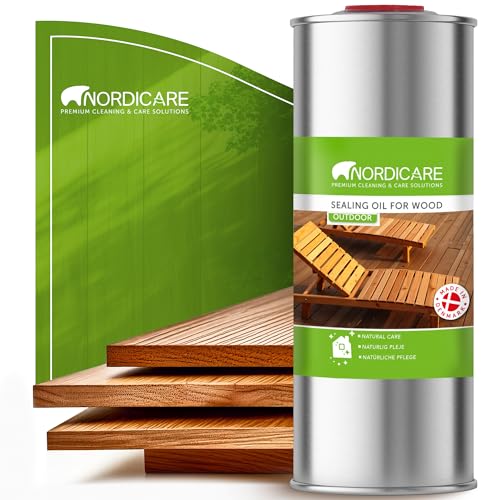
 Matte Finish Pick Nordicare Teak Oil (16.9 oz)
|
 Full Kit Pick Furniture Clinic Teak Care Kit
|
As an Amazon Associate we earn from qualifying purchases.
Teak has been used for doors on the Indian subcontinent for centuries — old havelis and temple entrances built with it are still standing because the wood’s high natural oil content shrugs off the moisture, termites, and temperature swings that a typical Indian climate throws at a front door. Teak doors were historically a mark of a well-built home, and that reputation still holds — a well-sourced teak door will outlast most of the house’s other fittings. For the full library of teak buying, care, and finishing guides, see our teak wood hub.
Two properties matter most for a main door specifically. It can resist water and pests without a heavy maintenance schedule, and it takes both deep hand-carving and clean modern lines equally well — so the same wood works for a heavily carved traditional design or a flush minimalist panel.
Vastu Shastra Guidelines for a Teak Main Door
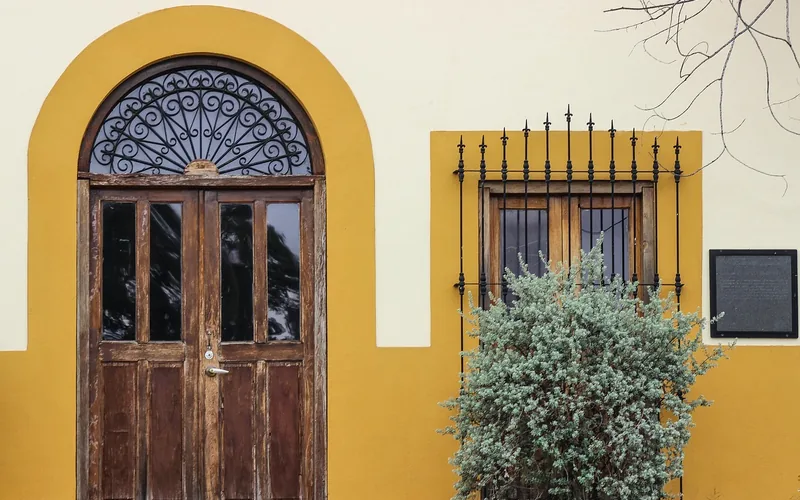
Most of the generic “main door design” roundups skip Vastu entirely, but it’s usually the first question an Indian homeowner asks before finalizing a design. Wood is considered the most Vastu-friendly main door material, and teak is the preferred wood within that category.
- Direction: a north-east or east-facing main door is considered the most auspicious, since these directions are believed to welcome morning light and positive energy first.
- Opening direction: the door should open inward, and swing in a clockwise direction as you enter — never outward.
- Prominence: the main door should be the largest door in the house — bigger and more detailed than any interior or bedroom door, so it visually stands out.
- Color: natural wood tones and white are both considered Vastu-approved; painting a teak door with a heavy black or dark finish is generally avoided.
📊 Standard main door size in Vastu-based Indian home design: 7 feet in height by 3 to 4 feet in width for a single door, or 5 to 6 feet total width for a double door in a larger home. — Source: Vastu Shastra residential design guidance
Plantation, Indian, or Burma Teak — Which Grade Should You Buy?
Not all “teak doors” sold in India are the same wood. The market splits into three grades, and the price difference between them is large enough that it’s worth knowing before you get a quote.
| Teak Grade | Approx. Price (7′ x 3’6″ door) | Best For |
|---|---|---|
| Plantation teak | ₹22,000 – ₹28,000 | Budget builds, rental properties, painted finishes |
| Indian teak | ₹42,000 – ₹56,000 | Most homeowners — balance of cost, grain, and durability |
| Burma teak (moderate carving) | ₹75,000 – ₹98,000 | Heritage-style homes, heavy carving, long-term investment |
Before signing a work order, ask the carpenter or showroom to specify the wood’s species, region of origin, and grade in writing. A door quoted as “Burma teak” is sometimes plantation teak with a Burma-level price attached — genuine Burma teak has a tighter, straighter grain, a distinctly oily feel to the touch, and a leathery smell that plantation teak lacks.
“Get the wood species, region, and grade written into the work order before the carpenter starts cutting — a verbal ‘Burma teak’ promise is worth nothing once the door is hung and painted.”
Protecting a Teak Main Door Through the Monsoon
Teak resists moisture better than most wood, but it is not waterproof — wood is hygroscopic, meaning it absorbs and releases moisture with the surrounding air. Above roughly 60% relative humidity, even teak can start to swell, stick in its frame, or develop surface mould if it was never sealed properly.
- Seal the edges, not just the face: the top and bottom edges of a door are frequently left as bare, unsealed wood by installers — those edges are exactly where monsoon humidity gets in first.
- Polish before the season starts, not during it: applying oil, PU, or melamine polish after the rains have already begun traps existing moisture inside the wood instead of keeping it out.
- Check the weatherstripping: a worn door seal at the base lets wind-driven rain reach the bottom edge, which is the first place a teak door usually starts to fail.
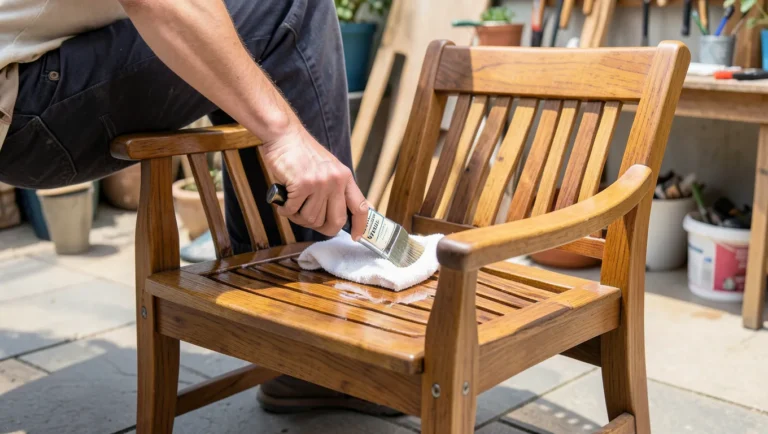
- Re-oil annually: a yearly coat of teak oil or sealant keeps the surface hydrophobic; skipping it for several years lets the wood dry out and become more prone to hairline cracking in the dry season that follows.
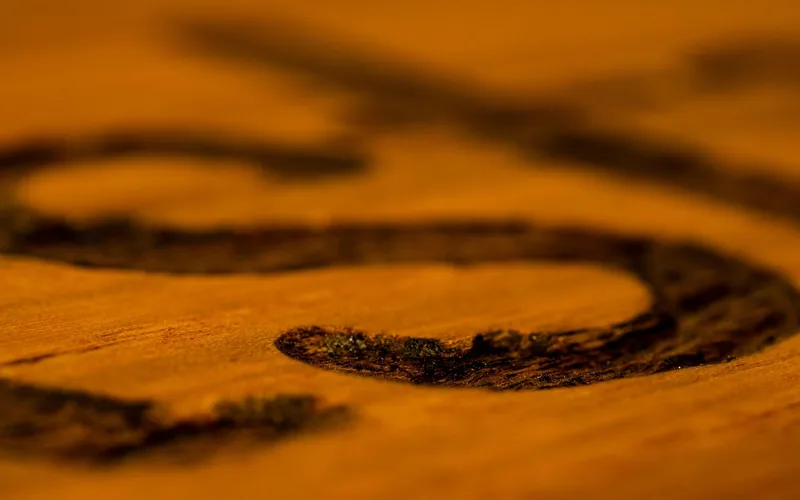
For the full step-by-step sealing process, see our guide on how to apply teak oil — the same technique applies to a door, just done vertically in place rather than on a workbench.
Traditional Teak Wood Door Designs
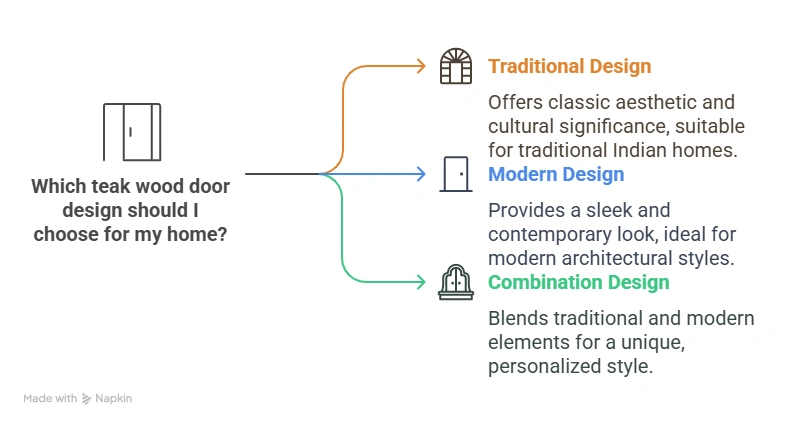
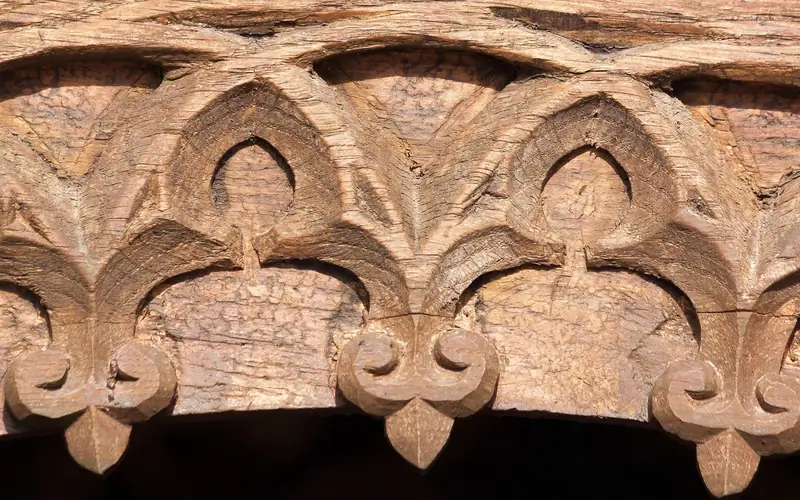
Traditional teak main doors are built around intricate hand carving — floral vines, geometric borders, and figures cut directly into the panel by an artisan rather than machine-routed. The peacock, India’s national bird, remains one of the most common carving motifs for a main door, alongside lotus and vine patterns that carry cultural or religious meaning for the household. These designs take longer to produce and cost more in labor than a flush panel, but they’re what gives an older-style home its “grand entrance” look.
Modern Teak Wood Door Designs
Modern teak doors trade carving for clean lines — a flush or lightly grooved panel, a single continuous grain pattern, and minimal hardware. Geometric fluted panels and framed-glass side lights are common in newer apartment and villa construction, since they let in light without sacrificing the security of solid wood. A double-door version, split down the center, is popular for wider entrances and pairs well with either style.
Fusion Designs and Custom Sizing
Fusion doors mix the two: a carved border framing a smooth center panel, or traditional motifs cut with cleaner, more geometric lines than a fully traditional design. It’s a common middle-ground choice for homeowners who want to keep some cultural detail without the full cost and carving time of an all-traditional door.
Because a teak door is built to order rather than bought off a shelf, it can be sized to fit the Vastu-recommended dimensions covered above rather than a standard hardware-store size — most carpenters and showrooms can match any height or width within reason.
Choosing Between Traditional and Modern for Your Home
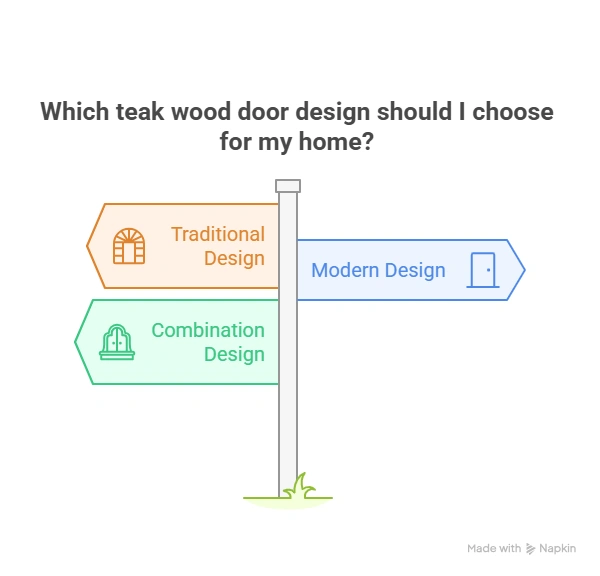
Match the door to the house, not just your personal taste. A heavily carved traditional door on a plain modern facade tends to look disconnected, and a flush minimalist door on an older haveli-style home can look out of place. Dark teak tones read as more formal and traditional; a lighter, natural teak finish reads as more contemporary. If you’re unsure, a fusion design is the safer middle ground.
Frequently Asked Questions
Which direction is best for a main door as per Vastu?
North-east or east-facing main doors are considered the most auspicious in Vastu Shastra, since these directions are believed to welcome morning light and positive energy into the home first.
What is the standard size of a main door in an Indian home?
The commonly recommended size is 7 feet in height by 3 to 4 feet in width for a single door, or 5 to 6 feet total width for a double door in a larger home. The main door should be the largest door in the house.
Is Burma teak really better than Indian or plantation teak?
Yes, for durability and grain quality — Burma teak has a tighter grain and higher natural oil content, which is why it costs roughly 3 to 4 times more than plantation teak for the same size door. Indian teak sits in between on both price and quality, and is the most common choice for homeowners who don’t need a heritage-grade door.
How much does a teak wood main door cost in India?
For a standard 7′ x 3’6″ door, expect roughly ₹22,000-28,000 for plantation teak, ₹42,000-56,000 for Indian teak, and ₹75,000-98,000 for Burma teak with moderate carving. Heavier carving, larger double-door sizes, and glass panels all add to the cost.
How do I protect a teak main door during monsoon?
Seal all four edges of the door, not just the front face, since bare edges are where humidity gets in first. Polish or oil the door before the rains start rather than during the season, and check that the door seal at the base is intact so wind-driven rain can’t reach the bottom edge.
Can a teak main door be painted white for Vastu?
Yes, white is considered a Vastu-approved color for a main door and is believed to bring prosperity and positive energy. Natural wood tones are also approved; heavy dark or black finishes are generally the ones to avoid.
Conclusion
A teak main door works for an Indian home because it handles the two things a front door has to survive here — monsoon humidity and years of daily use — better than most alternatives. Whether you go traditional, modern, or a fusion of both, get the wood grade confirmed in writing, size the door to the Vastu-recommended dimensions if that matters to your household, and seal it before the rains rather than after. For more teak wood door design ideas, browse our full entrance-door gallery.
Sponsored / affiliate links. As an Amazon Associate I earn from qualifying purchases. I may earn additional commission from eligible campaigns.