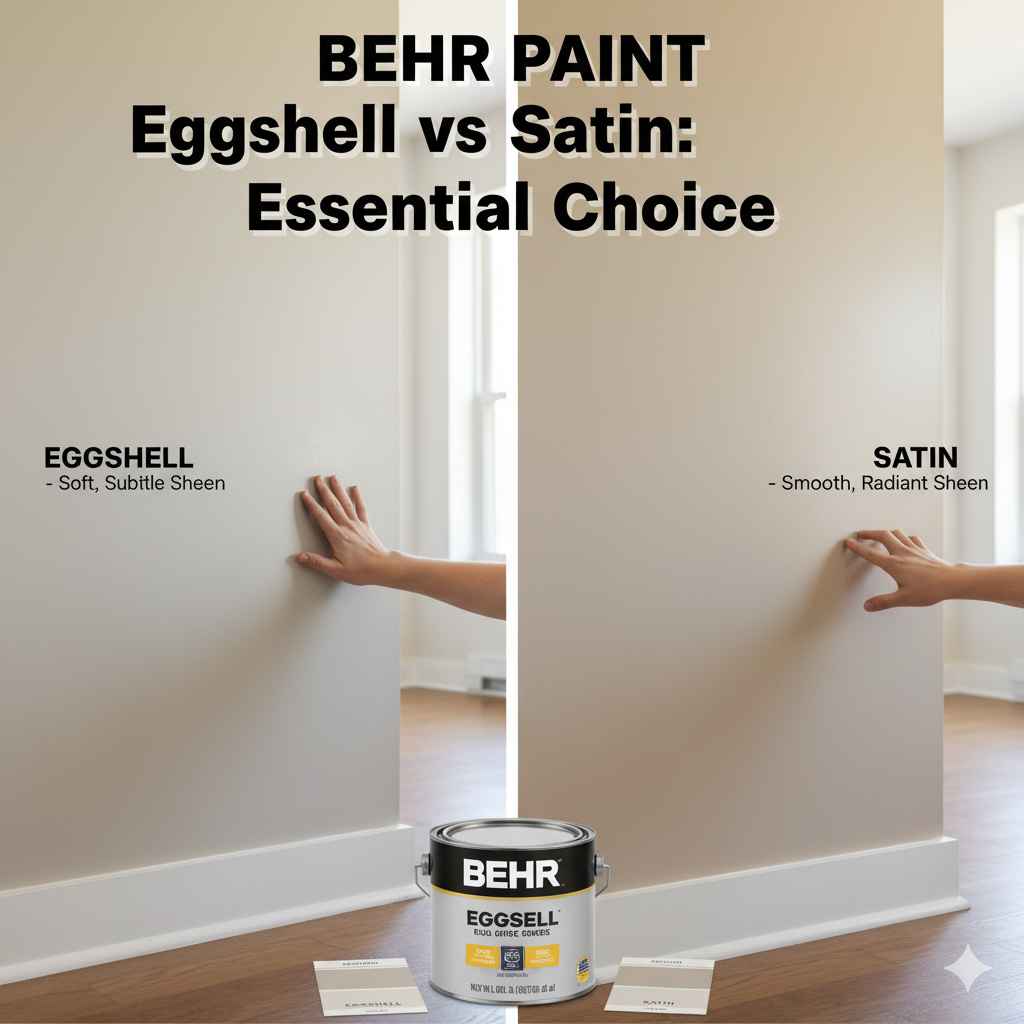
Behr Paint Eggshell vs Satin: Essential Choice
Choosing the right paint finish can seem tricky, but it’s important for a beautiful, lasting result. Behr eggshell and satin finishes are popular choices that offer different looks and benefits. This guide breaks down the key differences, helping you make the best decision for your home project with confidence. Let’s dive in!
When you’re starting a painting project, one of the first big decisions you’ll make is the type of paint finish. It’s not just about the color; the sheen level plays a huge role in how the paint looks, how it performs, and how easy it is to clean. For many DIYers, especially those venturing into painting for the first time, sorting through the options can feel overwhelming.
Two of the most common and versatile finishes from Behr, a trusted name in paint, are eggshell and satin. You’ve probably seen them on the shelves, maybe wondered about the subtle differences, and possibly felt a bit stuck on which one is right for your walls, trim, or furniture. Don’t worry, this is a common puzzle!
The good news is that understanding these two finishes is simpler than you might think. It’s all about knowing what each one offers in terms of durability, appearance, and application. With the right information, you can move beyond the confusion and select the perfect Behr paint finish to bring your vision to life.
This guide is here to break down Behr paint eggshell vs satin, making the choice clear and easy. We’ll explore their unique characteristics, where they shine best, and how to pick the winner for your specific needs. Get ready to paint with confidence!
Understanding Paint Finishes: Why Sheen Matters
Before we deep-dive into eggshell and satin, let’s quickly chat about why paint sheen (or finish) is such a big deal. Think of sheen as how much light a paint reflects. A low sheen means less reflection and a more matte look, while a high sheen means more reflection and a glossier appearance.
This reflection affects a few things:
Durability & Cleanability: Generally, higher sheens are tougher and easier to wipe down.
Appearance: Sheen impacts how the color looks and how imperfections on the surface are hidden or highlighted.
Intended Use: Different areas of your home benefit from different levels of durability and visual appeal.
Knowing this helps us understand why choosing between Behr eggshell and satin is more than just a minor detail – it can significantly impact the final look and longevity of your paint job.
Behr Paint Eggshell: A Gentle Glow
Behr’s Eggshell finish is a popular choice, and for good reason. It’s named after the gentle, non-glossy surface of a real eggshell. This finish offers a subtle, soft sheen that’s a step up from a completely flat paint but without the reflective glare of higher glosses.
Key Characteristics of Behr Eggshell:
Low Sheen: It has a very minimal sheen, typically around 5-10% gloss. This low reflectivity makes it excellent at hiding surface imperfections like minor cracks, bumps, or roller marks.
Soft Look: It provides a warm, inviting appearance that feels comfortable and less formal.
Good Washability: While not as scrubbable as higher sheens, eggshell paint can typically withstand gentle cleaning and wiping, making it suitable for moderately trafficked areas.
Versatility: It works well in a variety of rooms, including living rooms, bedrooms, and dining rooms.
Pros of Using Behr Eggshell:
Hides Imperfections: Its matte-like quality is fantastic for walls that aren’t perfectly smooth.
Soft Aesthetics: Creates a cozy and sophisticated atmosphere.
Good Balance: Offers a nice compromise between the flatness of matte and the washability of higher sheens.
Less Glare: Reduces light reflection, which is ideal for rooms with strong natural light or for those who dislike a shiny wall.
Cons of Using Behr Eggshell:
Not Highly Scrubbable: Heavy scrubbing can sometimes damage the finish or remove the color.
May Not Be Ideal for High-Moisture Areas: While better than flat, it’s not the best choice for bathrooms or kitchens where frequent washing and moisture resistance are top priorities.
Can Show Scuff Marks More: In very high-traffic areas, it might be more prone to showing scuffs than a satin finish.
Where to Use Behr Eggshell:
Given its characteristics, Behr Eggshell is an excellent choice for:
Living Rooms: For a welcoming, non-glare finish.
Bedrooms: To create a tranquil and soft atmosphere.
Hallways: Where moderate traffic occurs but intense scrubbing isn’t always needed.
Dining Rooms: For a touch of elegance without excessive shine.
Ceilings: Though Behr often recommends a specific ceiling paint, eggshell can work for a less reflective look on vertical surfaces.
Behr Paint Satin: A Smooth, Lustrous Finish
Behr Satin paint offers a bit more shine and durability than eggshell. It’s a popular mid-sheen option that bridges the gap between the subtle look of eggshell and the more reflective nature of semi-gloss. Its name suggests a smooth, sleek feel, and that’s exactly what it provides.
Key Characteristics of Behr Satin:
Moderate Sheen: It has a noticeable sheen, typically around 25-35% gloss. This creates a smooth, slightly reflective surface.
Durable Surface: Satin finishes are generally more robust and resistant to moisture and staining than eggshell.
Easy to Clean: This is where satin shines. Its smoother surface makes it easier to wipe down and clean, standing up well to frequent cleaning.
Subtle Luster: It adds a touch of sophisticated sheen without being overly flashy.
Pros of Using Behr Satin:
Excellent Durability: It’s tougher and more resistant to moisture and wear.
Great Washability: You can scrub away marks, scuffs, and stains more confidently.
Versatile for High-Traffic Areas: Perfect for hallways, kids’ rooms, and entryways.
Good for Kitchens & Bathrooms: Its moisture resistance makes it a good contender for these areas.
Enhances Color: The slight sheen can make colors appear richer and more vibrant.
Cons of Using Behr Satin:
Shows Imperfections More: The higher sheen can highlight uneven surfaces, dents, and roller marks, so good surface prep is crucial.
Can Be Too Shiny for Some: If you prefer a very muted look, satin might feel a bit too reflective.
Potential for Lap Marks: If not applied evenly, you might see “lap marks” where one brush stroke overlaps another.
Where to Use Behr Satin:
Behr Satin is highly versatile and works wonderfully in:
Kitchens: For easy cleaning and moisture resistance.
Bathrooms: To handle humidity and frequent wiping.
Kids’ Rooms: Where durability and washability are essential.
Hallways & Entryways: To withstand scuffs and traffic.
Trim & Doors: It’s a good option for trim and doors that need to be wiped down regularly.
High-Traffic Living Areas: Where durability is a priority.
Behr Paint Eggshell vs Satin: A Direct Comparison
Let’s break down the differences side-by-side. This table should help clarify where each finish excels.
| Feature | Behr Eggshell | Behr Satin |
|---|---|---|
| Sheen Level | Low (Subtle, soft glow) | Medium (Smooth, lustrous finish) |
| Durability | Moderate | High |
| Washability/Cleanability | Good, gentle wiping | Excellent, scrubbable |
| Hides Imperfections | Excellent | Fair to Good (can highlight them) |
| Best For | Living rooms, bedrooms, low-traffic walls | Kitchens, bathrooms, hallways, kids’ rooms, trim |
| Appearance | Soft, warm, matte-like | Slightly reflective, smooth, richer color |
| Moisture Resistance | Moderate | Good |
Factors to Consider When Choosing
To make your final decision between Behr eggshell and satin, think about these important questions:
Room Traffic and Use
High Traffic: Are you painting a busy hallway, a kid’s playroom, or an entryway? These areas see a lot of wear and tear. In such cases, the superior durability and washability of satin often make it the clear winner.
Low Traffic: For calmer spaces like bedrooms or formal living rooms where surfaces aren’t likely to be touched or scuffed often, eggshell offers a beautiful, soft look that’s more forgiving on wall imperfections.
Surface Condition
Smooth Walls: If your walls are in pristine condition, with no dents, cracks, or uneven patches, then either finish can work.
Imperfect Walls: If your walls have minor flaws, the lower sheen of eggshell is your best friend. It does a fantastic job of diffusing light, which helps to camouflage these imperfections. A higher sheen like satin will reflect light more, making those minor bumps and dings much more noticeable. This is a key differentiator in the Behr paint eggshell vs satin debate for many homeowners. For more on surface preparation, you can consult resources like This Old House.
Desired Aesthetic
Soft & Subtle: Do you prefer a cozy, understated look? Eggshell provides a velvety, matte-like appearance that feels warm and inviting. It’s less likely to cause glare in rooms with lots of natural light.
Slightly Polished: Do you want a finish that looks a bit richer and more refined, with a gentle gleam? Satin offers a smooth, elegant sheen that can make colors pop and add a touch of sophistication without being overly glossy.
Moisture and Cleaning Needs
Kitchens & Bathrooms: These humid environments require paint that can withstand moisture and is easy to clean. Satin is usually the preferred choice here due to its better resistance to moisture and its scrubbable nature. While Behr offers specific kitchen and bath paints, satin is a very capable finish for these rooms.
General Living Areas: For most other rooms, the cleaning needs are less demanding. Eggshell can handle gentle wiping, but if you anticipate frequent cleaning or know you’ll need to scrub away marks, satin is more practical.
Behr Paint Finishes on the Sheen Scale
It’s helpful to see where Behr eggshell and satin fit in the broader spectrum of paint finishes. Behr, like most paint brands, offers a range of sheens from ultra-matte to high-gloss. Here’s a typical order from least to most shiny:
1. Ultra-Matte/Flat: No sheen, excellent at hiding imperfections, but not washable.
2. Matte: Very low sheen, good at hiding imperfections, slightly more durable than flat.
3. Eggshell: Low sheen, soft look, good washability for most areas. This is where our focus begins in the Behr paint eggshell vs satin comparison.
4. Satin: Medium sheen, durable, very washable, a popular all-rounder.
5. Semi-Gloss: Higher sheen, very durable and washable, often used for trim and doors.
6. High-Gloss: Highest sheen, very durable and reflective, typically for accents or high-impact areas.
Understanding this scale helps you pinpoint eggshell and satin within Behr’s offerings.
Behr Paint Eggshell vs Satin: Can You Use Them Together?
Absolutely! It’s quite common and often recommended to use different sheens in different areas of your home, even within the same color. For instance, you might use:
Behr Eggshell on Walls: For a soft look in bedrooms and living rooms.
Behr Satin on Trim and Doors: For durability and a contrasting, slightly more polished detail.
Behr Satin in Kitchens & Bathrooms: For their functional benefits.
This approach allows you to leverage the strengths of each finish where they are most needed, creating a cohesive yet practical design for your entire home. Using the same color in different sheens can add subtle depth and visual interest without sacrificing functionality. It’s a great way to enhance the craftsmanship of your space.
Behr Paint Quality and Performance
When choosing between Behr paint eggshell and satin, it’s also worth noting that Behr is generally known for producing quality paint. Their products typically offer:
Good Coverage: Often requiring fewer coats for full color transformation.
Durability: Their formulations are designed to hold up well over time.
Color Accuracy: They are known for consistent and true-to-chip colors.
Whether you choose eggshell or satin, you’re likely to get a reliable product from Behr, but understanding the finish is still key to getting the look and performance you desire. The <a href=”https://www.epa.gov/greener- EPA’s guide on selecting environmentally preferable products can also be a good resource to consider when making paint choices that align with sustainability goals.
Step-by-Step: Making Your Choice
Here’s a simple process to help you decide:
1. Assess the Room: Consider its function and traffic level.
High-traffic, moisture-prone? –> Lean towards Satin.
Low-traffic, comfort focus? –> Lean towards Eggshell.
2. Inspect Your Walls: Look closely at their condition.
Perfectly smooth? –> Either works.
Slightly imperfect? –> Eggshell is more forgiving.
3. Define Your Style: What visual appeal are you going for?
Soft, matte look? –> Eggshell.
Subtle sheen, richer color? –> Satin.
4. Consider Cleaning: How much cleaning do you anticipate?
Frequent wiping/scrubbing needed? –> Satin.
* Gentle dusting is sufficient? –> Eggshell is fine.
5. Test if Possible: If you’re really on the fence, buy small sample cans of your desired color in both eggshell and satin. Paint a small swatch on your wall (or on a piece of drywall/poster board you can move around) and observe it in different lighting conditions throughout the day. This can be incredibly revealing.
By following these steps, the Behr paint eggshell vs satin decision becomes much clearer and tailored to your specific project needs.
Frequently Asked Questions About Behr Paint Eggshell vs Satin
Q1: Can I use Behr eggshell paint in a bathroom?
A1: While Behr eggshell can be used in bathrooms, it’s generally not the first choice for high-moisture environments. Its washability is good for gentle cleaning, but Behr Satin or a dedicated kitchen & bath paint would offer better resistance to moisture and a more durable, scrubbable surface for frequent cleaning.
Q2: Will Behr satin paint make my walls look too shiny?
A2: Behr Satin has a moderate sheen, which provides a smooth, lustrous finish. It’s not as shiny as semi-gloss or high-gloss paints. If you prefer a very matte look, eggshell would be a better option. However, for most applications, the sheen of satin is considered elegant and refined rather than overly shiny.
Q3: Which finish is better for hiding paint drips or roller marks?
A3: Behr Eggshell is significantly better at hiding imperfections like drips or roller marks due to its lower sheen. The matte-like quality diffuses light, making subtle surface unevenness less visible. Behr Satin, with its higher sheen, will reflect more light and can make such imperfections more apparent. Thorough surface preparation is key for both, but especially for satin.
Q4: Is Behr eggshell paint durable enough for a child’s room?
A4: For a child’s room, durability and washability are crucial! While eggshell is decent, Behr Satin is generally a more robust choice. It can withstand more vigorous scrubbing needed to remove crayon marks, fingerprints, and spills. Many DIYers opt for Behr Satin or even Semi-Gloss for kids’ rooms for this reason.
Q5: Can I paint over an eggshell finish with satin, or vice versa?
A5: Yes, you can generally paint over an eggshell finish with satin, and also over satin with eggshell. However, when painting a lower sheen over a higher sheen (e.g., eggshell over satin), you might need an extra coat for full coverage because the lower sheen is less reflective. Always ensure the surface is clean and properly prepared. For best results, light sanding of the existing sheen can help the new paint adhere better.
Q6: Which Behr finish is best for trim and doors?
A6: Behr Satin or Semi-Gloss are typically the best choices for trim and doors. These areas experience a lot of contact and scuffing, so their higher durability and superior washability are very beneficial. Satin offers a nice balance of sheen and durability, while Semi-Gloss provides even more toughness and a more reflective finish.