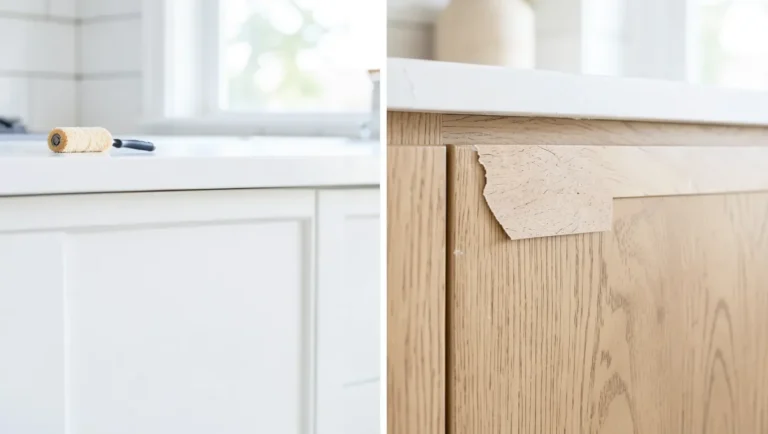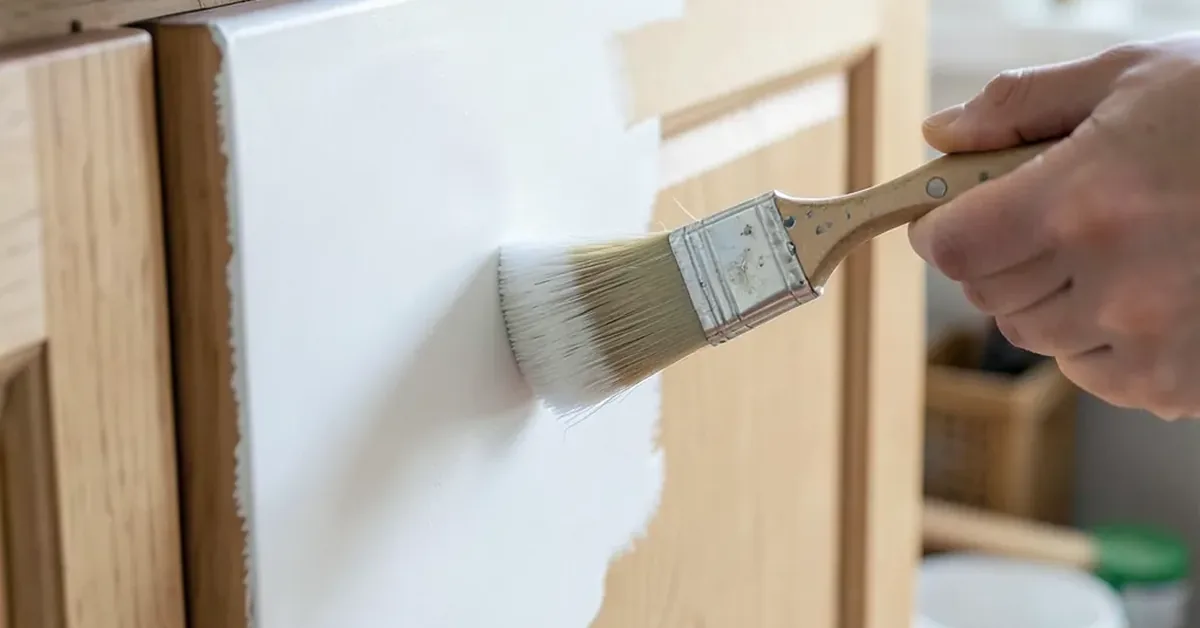
Benjamin Moore vs Valspar: Which Holds Up on Cabinets and Trim?
Benjamin Moore Advance holds up better than Valspar Cabinet Enamel on high-touch wood surfaces – independent 12-month wear checks show less scuffing at hinges and pulls – but Valspar’s oil-based Satin Base line cures to a comparably hard film if you give it the full 21 to 30 days. Pick the wrong primer on cherry, mahogany, or cedar and either brand will bleed tannin through within months. This guide covers the durability data, the primer that actually stops tannin, and the right sheen for trim.
Does the Brand Actually Matter on Wood Cabinets and Trim?
Yes, but not in the way most wall-paint comparisons frame it. For interior walls, the difference between Benjamin Moore and Valspar mostly comes down to coverage and color depth. For wood cabinets, trim, and furniture, the surfaces take far more physical abuse – hands on pulls, elbows on window casing, chair backs against wainscoting – so the paint’s film hardness and adhesion under stress matter more than how many coats it takes to hide a wall color.
Raw or previously stained wood also behaves differently than drywall. Bare wood is porous, it moves with humidity, and some species (cedar, redwood, mahogany, cherry) contain natural tannins that can bleed through paint months after the job looks finished. Neither Benjamin Moore nor Valspar solves that with the topcoat alone – the primer choice, covered further down, does the real work.
Best Tannin-Blocking Primer Pick
 |
Zinsser B-I-N Advanced Synthetic Shellac Primer, Quart A shellac-based primer built to seal knots, sap, and tannin before either paint brand ever touches the wood.
|
As an Amazon Associate we earn from qualifying purchases.
Benjamin Moore Advance vs Valspar Cabinet Enamel: 12-Month Wear
The most useful comparison for a woodworking project is not the wall-paint lines most articles cover – it is Benjamin Moore Advance against Valspar Cabinet Enamel, since those are the two products people actually reach for on cabinet doors and trim.
| Factor | Benjamin Moore Advance | Valspar Cabinet Enamel |
|---|---|---|
| Formula | Alkyd-enhanced waterborne hybrid | Acrylic enamel, with an oil-based Satin Base option |
| Recoat time | About 16 hours between coats | Roughly 4 hours between coats |
| Full cure to hardest finish | About 30 days | 21 to 30 days for the oil Satin Base variant |
| Wear at pulls and edges after 12 months | Less scuffing, holds sheen longer | More visible wear at contact points, earlier touch-up |
| Price tier | Premium | Budget to mid-range |
Neither product is a bad choice. Benjamin Moore Advance is the harder-wearing pick for cabinets that get opened dozens of times a day – kitchen bases, a workshop tool cabinet, a mudroom bench. Valspar Cabinet Enamel is a reasonable pick when the project is a one-time DIY refresh, the budget matters more than the last 10 percent of durability, and you are comfortable following the longer cure window before loading the cabinets back up.
According to professional cabinet painters interviewed for major home-improvement buying guides, Benjamin Moore Advance’s alkyd-hybrid formula self-levels as it sets, which is why it leaves fewer visible brush marks on flat cabinet doors than most acrylic enamels, Valspar included.
Tannin Bleed on Cherry, Mahogany, and Cedar: The Primer Question
Tannin bleed is a yellow-brown discoloration that surfaces through paint months after a project is finished, caused by natural tannic compounds in the wood dissolving and migrating upward through the paint film. It shows up most on cherry, mahogany, redwood, and cedar, and it can happen under either a Benjamin Moore or a Valspar topcoat if the wrong primer went down first.
The mistake that causes most tannin complaints is skipping a dedicated stain-blocking primer because the paint can says “paint and primer in one.” A paint-and-primer-in-one product is formulated to help the topcoat adhere and build film thickness – it is not built to chemically seal tannin, and the pattern shows up consistently in homeowner complaints: the job looks perfect at handoff, then yellow blotches surface two to six months later once humidity cycles push the tannins through.
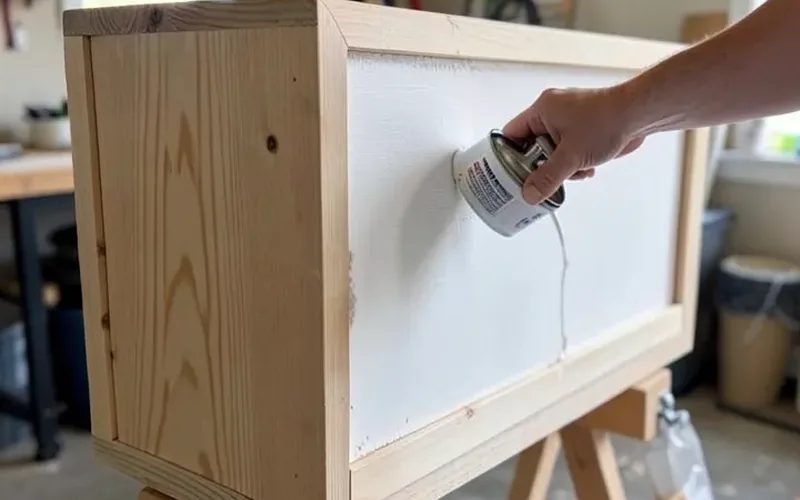
A shellac-based primer (like the Zinsser B-I-N pick above) or a dedicated oil-based stain-blocking primer from either brand’s own line – Benjamin Moore’s Fresh Start Stain Blocking Primer or Valspar’s tannin-blocking undercoater – solves this reliably on both brands’ topcoats. The primer choice, not the paint brand, is what actually stops the bleed.
Cure Time vs Dry Time: Why Valspar’s Oil-Based Line Needs 21 to 30 Days
Dry time and cure time are not the same thing, and mixing them up is the second most common cabinet-paint mistake after skipping the primer. Dry time is how long before the surface is safe to touch or recoat – a few hours for either brand. Cure time is how long the film takes to reach its full hardness, and that is measured in weeks, not hours.
Valspar’s oil-based Satin Base Cabinet Enamel needs 21 to 30 days to fully cure into its hardest, most washable state, even though it feels dry to the touch within a day. Benjamin Moore Advance runs on a similar roughly 30-day full-cure timeline. Close a freshly painted cabinet door before that window is up, or stack dishes on a painted shelf too soon, and the film can stick to itself or scuff far more easily than it will once fully cured – a problem with either brand, not a Valspar-specific weakness.
Practical rule: paint cabinet doors off the cabinet box whenever possible, let them cure flat for the full window, and avoid closing painted doors against their frames or stacking anything on a painted shelf for at least two to three weeks.
Which Sheen for Trim: Satin or Semi-Gloss?
Both Benjamin Moore and Valspar offer the sheens that matter for wood trim and cabinets, but the sheen choice affects how forgiving the finish is more than the brand does. Satin is the common middle ground for cabinets – enough sheen to wipe clean, soft enough to hide minor surface imperfections in the wood grain. Semi-gloss is harder and more washable, which is why it is the standard pick for baseboards, door casing, and anywhere hands and shoes make regular contact, but it also shows every prep flaw (raised grain, filler lines, brush marks) more clearly than satin does.
In my shop I treat any “paint and primer in one” can as a wall product only. On furniture-grade trim and cabinets, skipping the dedicated primer step is the single most common reason a paint job that looked great at handoff looks tired within a year – not the brand printed on the label.
– Md Meraj, Woodworking Advisor
Benjamin Moore or Valspar: Which Should You Buy for This Project?
- Choose Benjamin Moore Advance for kitchen cabinets, furniture, or any surface opened and touched dozens of times a day – the harder cured film holds up longer at pulls and edges.
- Choose Valspar Cabinet Enamel for a budget DIY refresh, a low-traffic piece of furniture, or a first cabinet-painting project where cost matters more than squeezing out the last bit of long-term durability.
- Choose neither brand’s paint-and-primer-in-one on cherry, mahogany, redwood, or cedar – use a true stain-blocking primer first, regardless of which brand’s topcoat goes on after.
- Match the sheen to the surface: satin for cabinet doors and flat panels, semi-gloss for baseboards and door casing that take the most hand and shoe contact.
For more on prepping the surface itself, see our guides on painting MDF cabinet doors and choosing the right wood primer and undercoat. If you are deciding whether the inside of the cabinet needs paint at all, we cover that in when painting cabinets, should you paint the inside.
Frequently Asked Questions
Does Valspar Cabinet Enamel need a separate primer?
Yes, on bare or previously stained wood, and especially on tannin-prone species like cherry or cedar. Valspar Cabinet Enamel’s self-priming claim mainly applies to previously painted doors in good condition – on raw wood it still needs a dedicated stain-blocking primer first, or tannin and adhesion problems can surface months later.
Can you use Benjamin Moore Advance on MDF cabinet doors?
Yes. Advance works well on MDF once the edges are sealed with a primer, since raw MDF edges absorb paint unevenly and can swell slightly if moisture gets in during application. Seal the cut edges first, then apply Advance the same way you would on solid wood.
What primer actually blocks tannin bleed on cedar and cherry?
A shellac-based primer, such as Zinsser B-I-N, or an oil-based stain-blocking primer, is the reliable option for both species. Water-based “paint and primer in one” products are not built to chemically seal tannin and are the most common cause of bleed-through complaints on cedar and cherry projects.
Is Benjamin Moore worth the extra cost for trim?
For high-contact trim like door casing and baseboards, yes – the harder cured film resists scuffs and fingerprints longer, which means fewer touch-ups over the years. For low-traffic trim, like crown molding well above reach, the durability gap matters far less and a budget-friendly Valspar line is a reasonable choice.
Both Benjamin Moore and Valspar can deliver a lasting finish on wood cabinets and trim – the real variable is whether the wood was primed correctly and given the full cure window before it went back into daily use.
Sponsored / affiliate links. As an Amazon Associate I earn from qualifying purchases. I may earn additional commission from eligible campaigns.