How to Paint a Metal Front Door Without Removing It
Yes, you can paint a metal front door without ever taking it off its hinges — the door itself doesn’t need to move, only the hardware and glass need to be protected while you work. The real risk isn’t the hinges, it’s rushing the prep: skipping degreasing, painting over active rust, or picking the wrong sheen for a steel or fiberglass-clad door will get you peeling within a season. Here’s the process that actually holds up, plus the specific mistakes that cause most DIY door jobs to fail early.
What You’ll Need Before You Start
Gather everything before you tape off the door — you want to work through primer and two coats in one open-door session, not leave a half-taped door exposed overnight. You’ll need 150-220 grit sandpaper, a degreasing cleaner (TSP substitute or dish soap and water works for most doors), painter’s tape, a bonding or rust-inhibitive primer if the door is bare metal or has rust spots, a 3-4 inch quality brush for panels and edges, a 3/8-inch synthetic roller for flat sections, and an exterior-rated door enamel.
Purpose-Built for Doors, No Removal Needed
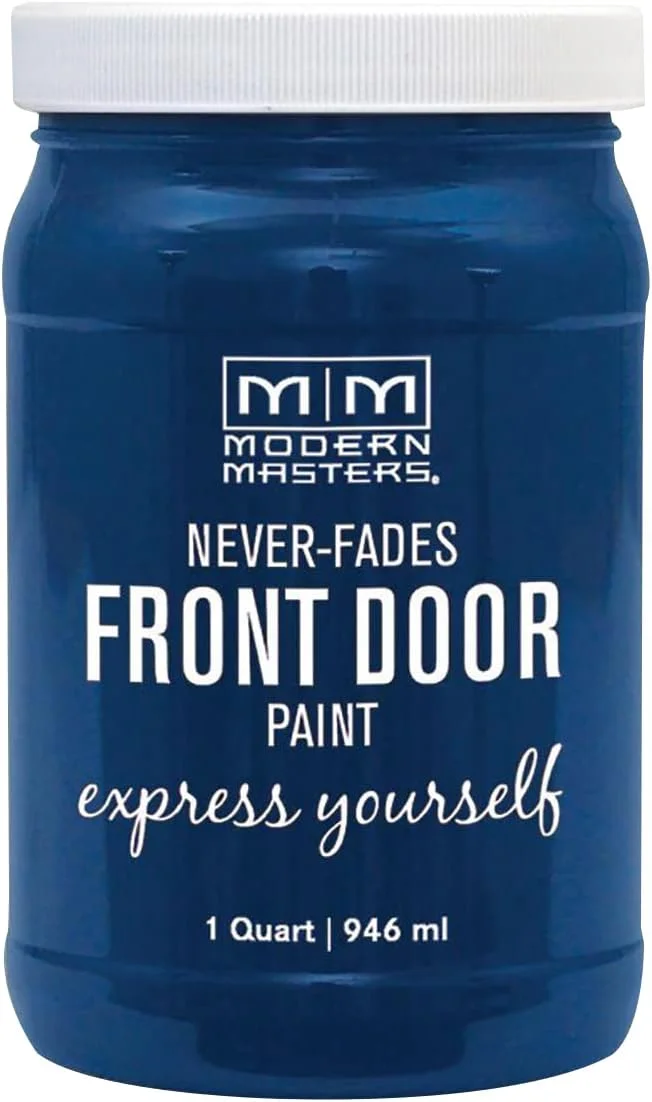 |
Modern Masters Front Door Paint – $44.99 Formulated specifically for doors and shutters and rated for both metal and wood — the label explicitly says the door doesn’t need to come off its hinges to paint it.
|
Prep the Door Without Taking It Off Its Hinges
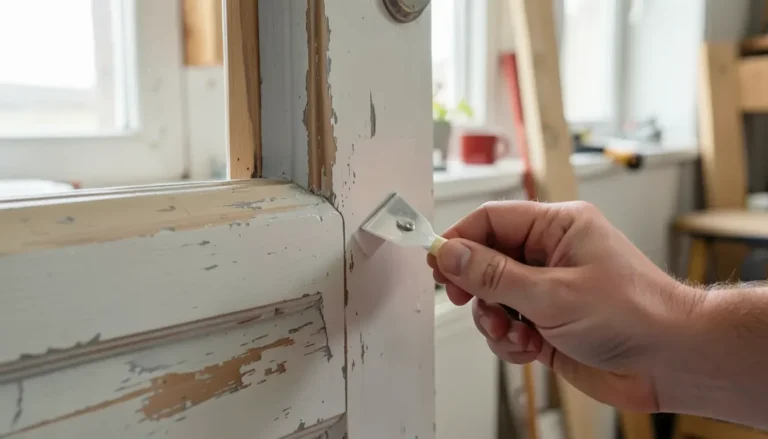
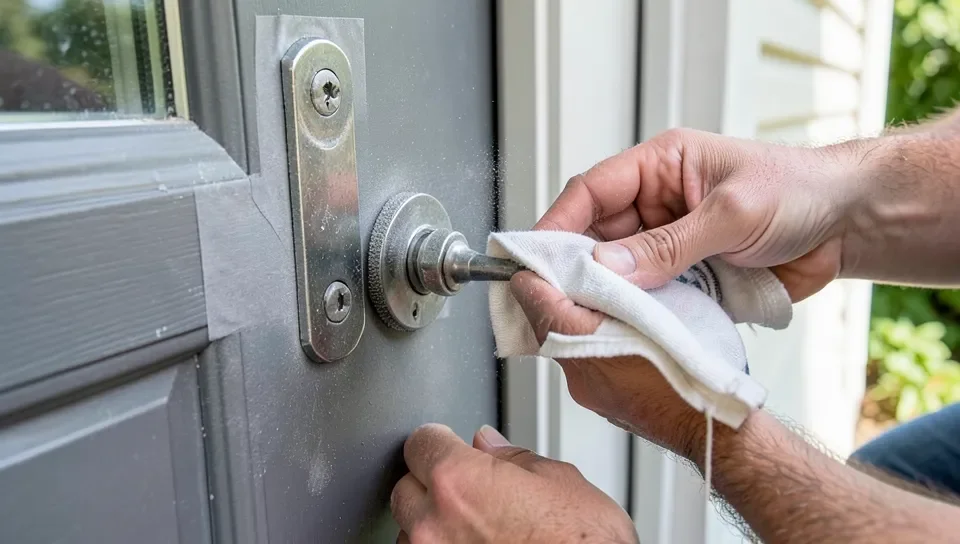
Start by washing the entire door with a degreaser or dish soap and water, then rinse and let it dry fully — skipping this step is the single biggest reason paint fails on metal doors, since body oils, cooking grease from a nearby kitchen exhaust, or years of pollen film all block adhesion even when the surface looks clean. Once dry, scuff the existing paint with 150-220 grit sandpaper just enough to knock down the gloss; you’re not trying to strip it back to bare metal, you’re giving the new coat something to grip.
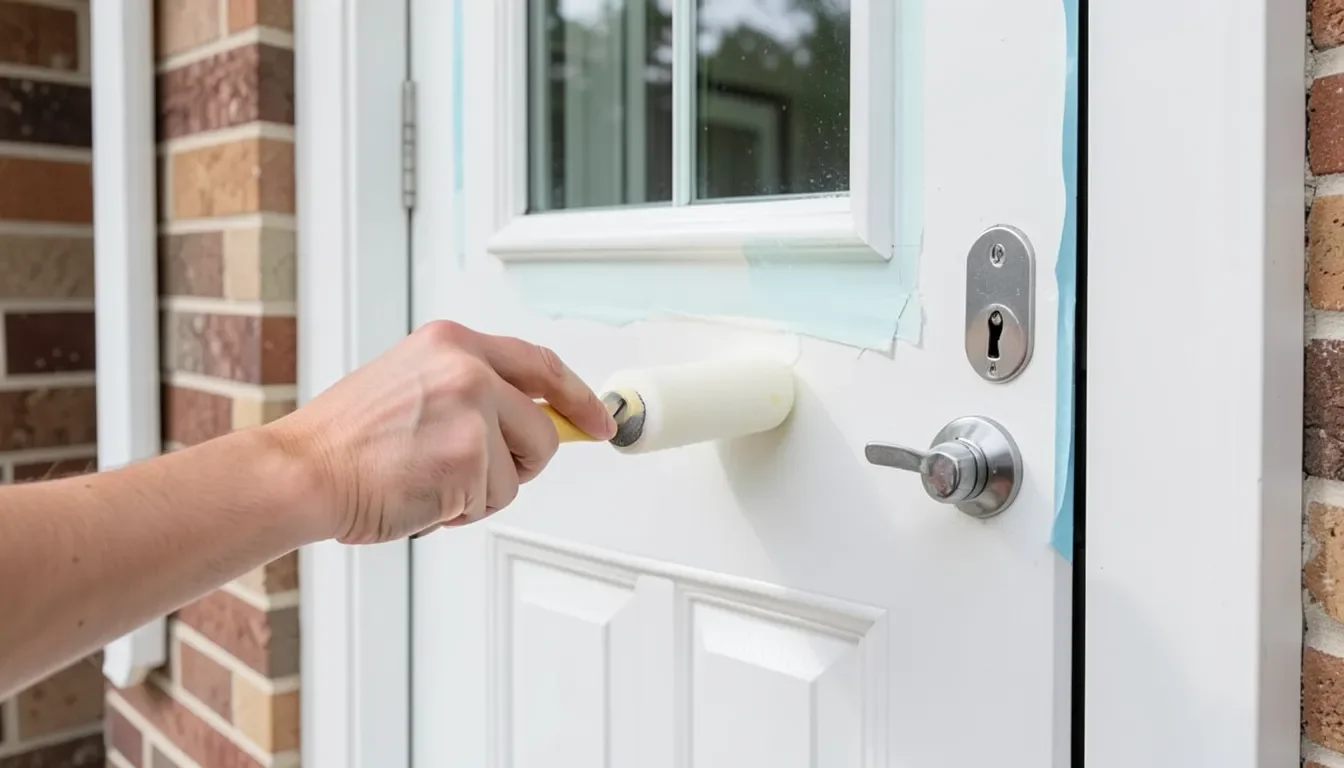
Tape off the glass, the weatherstripping, and the surrounding door frame. For the hardware, remove the deadbolt and door handle if you can do it in a few minutes — it gives a cleaner line than taping around it. If removing the lockset isn’t practical, mask it carefully with tape run right along the edge of each piece. Loose hinge screws are also worth checking now, since a door that shifts slightly while you’re painting the reveal can smear a wet edge; if the hinges feel sloppy, tighten them (or see our guide on fixing loose door hinge screws) before you start taping.
Priming: Bare Metal, Rust Spots, and Already-Painted Doors
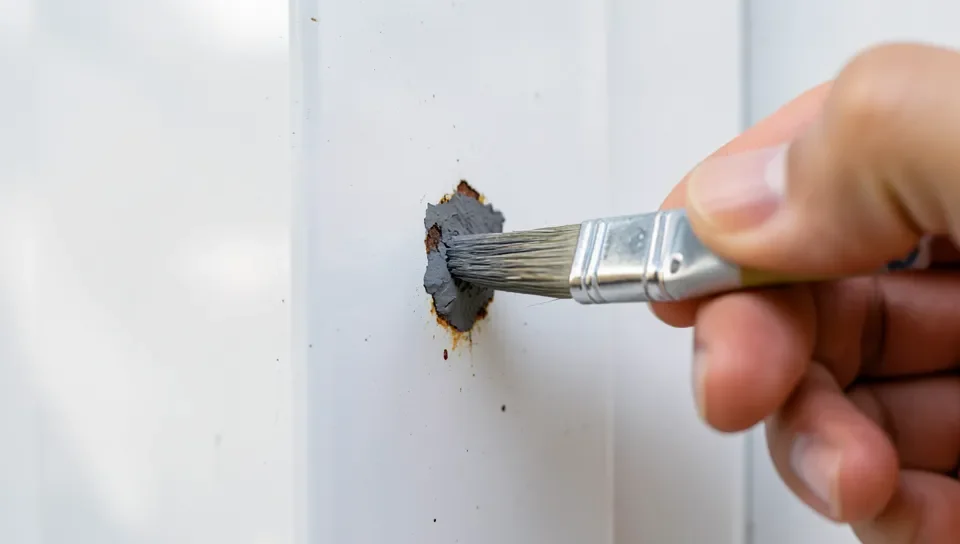
Whether you need primer at all depends on what’s underneath. A door that’s already painted and in good condition (no chalking, no rust, no bare spots) can usually go straight to a bonding topcoat without a separate primer step — this is one of the things that makes a dedicated door paint like the one above convenient over standard exterior enamel, which almost always wants a primer coat first. Bare steel, aluminum that’s oxidizing, or any spot where you can see rust needs different treatment. For small rust spots, sand down to solid metal, then brush on a rust-inhibitive or rust-converting primer — feathering it out an inch or two past the rusted area so there isn’t a hard ridge under the topcoat. Let it cure fully per the label before painting over it, since painting over a still-wet primer traps moisture and the rust can bleed back through within months.
If you’re working with a Jeld-Wen, Jen-Weld, or similar steel/fiberglass-composite entry door that’s factory pre-primed and has never been painted, treat it like bare metal: scuff-sand, degrease, and prime with a bonding primer rated for the substrate before the color coat. Skipping primer on factory-primed doors is a common shortcut that looks fine for a season, then fails at the edges first, since factory primer is meant to be top-coated, not left as a final finish outdoors long-term.
Choosing Paint — And the Real Reason Dark Colors Are Riskier on Metal Doors
For metal doors, look for an exterior enamel or a dedicated door paint that specifically lists metal as a compatible surface — water-based acrylic enamels have mostly replaced oil-based options for DIY use since they don’t yellow and clean up with water, though oil-based still has a slight edge on hardness for high-traffic commercial doors.
Here’s the part most painting guides skip: switching from a light color like white to a dark color such as deep green, black, or navy on a metal or fiberglass-composite door isn’t just a coverage question, it’s a heat question. Dark colors have a much lower Light Reflectance Value (LRV), which means the surface absorbs more solar heat. On a solid steel door this mostly just means the door gets hotter to the touch; on a fiberglass-composite door, several manufacturers (including major national brands) explicitly warn against certain very dark colors because the composite skin can expand enough on a sunny south-facing exposure to warp or delaminate over time. Before committing to a dark color, check your specific door’s paint-color guidance if it’s a manufactured fiberglass or composite unit — a steel door doesn’t have this warping risk, but it will need a genuinely heat-tolerant exterior formula rather than a generic interior enamel repurposed outdoors.
Painting Technique for a Clean, Streak-Free Finish
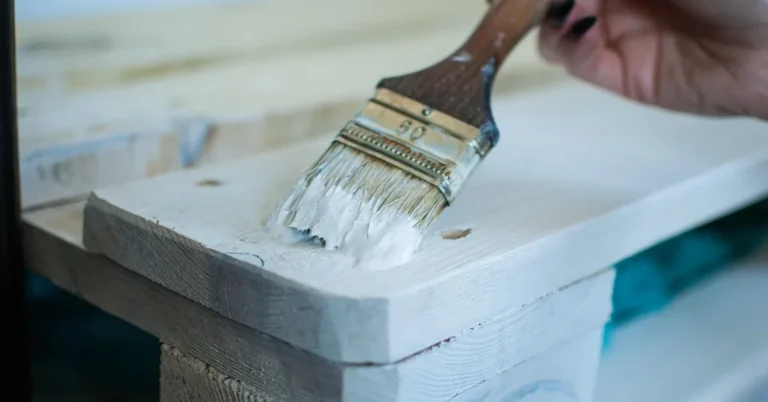
Work top to bottom and follow the door’s own construction. Paint the door edge and the hinge-side reveal first with a brush, since that’s the area most often forgotten and it’s visible when the door is open. If the door has raised panels, brush the recessed panel details first, then roll the flat stiles and rails — rolling last means any brush marks left in the panels get partially blended by the roller passes around them. Keep a wet edge: on a warm day, fast-drying door enamel can start to tack up in minutes, so work in sections rather than trying to do the whole door in one continuous pass. Two thin coats beat one thick one — a heavy coat sags and shows brush marks permanently once it skins over, while two thinner coats level out and dry evenly.
Drying and Cure Time — They’re Not the Same Thing
Most door enamels are dry to the touch within an hour, which is why manufacturers can advertise a same-day paint job. But dry-to-touch and fully cured are different: full cure, where the paint reaches its final hardness and won’t scuff or block (stick to itself when the door closes against the frame), typically takes several days to two weeks depending on temperature and humidity. Close the door gently and avoid slamming it or locking the deadbolt against fresh paint for at least a few days, even though it feels dry. Humidity slows cure time significantly — painting on a muggy day and closing the door the same evening is one of the more common ways people end up with the door sticking to the frame or leaving a paint imprint. If you’re not sure whether it’s fully cured, see our guide on how sun and temperature affect paint drying time for the general rules that apply here too.
Fixing Problems: Paint Not Sticking, and Why Turf Paint Isn’t the Answer
If paint is peeling or flaking off in sheets rather than wearing evenly, the cause is almost always contamination or skipped prep, not a bad can of paint — the usual culprits are unremoved surface oils, painting over active rust without treating it first, or applying a full topcoat over a primer that hadn’t cured. Sand back to a sound edge, re-clean, re-prime the exposed area, and feather the new paint into the old finish.
One product mismatch worth flagging directly: athletic turf paint (the kind used to mark lines on artificial grass or asphalt) is not a substitute for exterior door enamel. Turf paint is formulated as a thin, non-durable coating meant to wear off or be reapplied seasonally on a surface that isn’t touched by hands or exposed to a swinging door’s flexing and slamming — it has none of the flexibility, adhesion additives, or UV-stable resins a door finish needs, and it will chip and rub off within weeks on a door that gets daily contact.
Maintenance
Once painted, a metal door needs very little upkeep: rinse it occasionally to remove dust and pollen buildup, touch up chips at the edge or lockset promptly before bare metal has a chance to start rusting, and re-clean with mild soap rather than harsh solvents that can dull the sheen. A quality exterior enamel with UV-resistant, fade-resistant additives should hold its color for several years before it needs a full repaint.
Frequently Asked Questions
Can you paint over an already-painted metal door?
Yes, as long as the existing paint is sound (no peeling, chalking, or bare spots). Clean and scuff-sand the surface to give the new coat something to grip, then apply your topcoat directly — a separate primer usually isn’t needed over intact existing paint unless you’re changing from a very dark color to a very light one.
What kind of paint do you use on a metal front door?
Use an exterior-rated enamel labeled for metal surfaces, or a dedicated door paint. Water-based acrylic enamels are the standard DIY choice today since they don’t yellow and clean up easily, though the surface still needs a rust-inhibitive primer first if there’s any bare metal or rust exposed.
Can you paint a Jen-Weld or Jeld-Wen metal door?
Yes. These are factory-primed steel or fiberglass-composite doors, and they take paint the same way any comparable door does: scuff-sand, degrease, prime any bare or worn spots with a bonding primer, and topcoat with an exterior door enamel. If you’re switching to a much darker color on a fiberglass-composite model, check the manufacturer’s color guidance first, since some composite doors have heat-related warnings for very low-LRV colors.
Can you use turf paint on a metal door?
No. Turf paint is a thin, non-durable coating designed for artificial grass and asphalt line-marking, not a surface that gets daily hand contact and flexing from a swinging door. It lacks the adhesion and flexibility additives a real door enamel has and will chip and wear off within weeks.
Conclusion
A metal front door can be repainted in an afternoon without ever coming off its hinges — the work that actually determines whether it lasts happens before the first coat goes on: degreasing, scuff-sanding, and treating any rust properly. Pick a paint rated for the substrate, respect the difference between dry-to-touch and fully cured before you close the door on it, and skip anything not formulated as a real exterior door finish, turf paint included.
Sponsored / affiliate links. As an Amazon Associate I earn from qualifying purchases. I may earn additional commission from eligible campaigns.