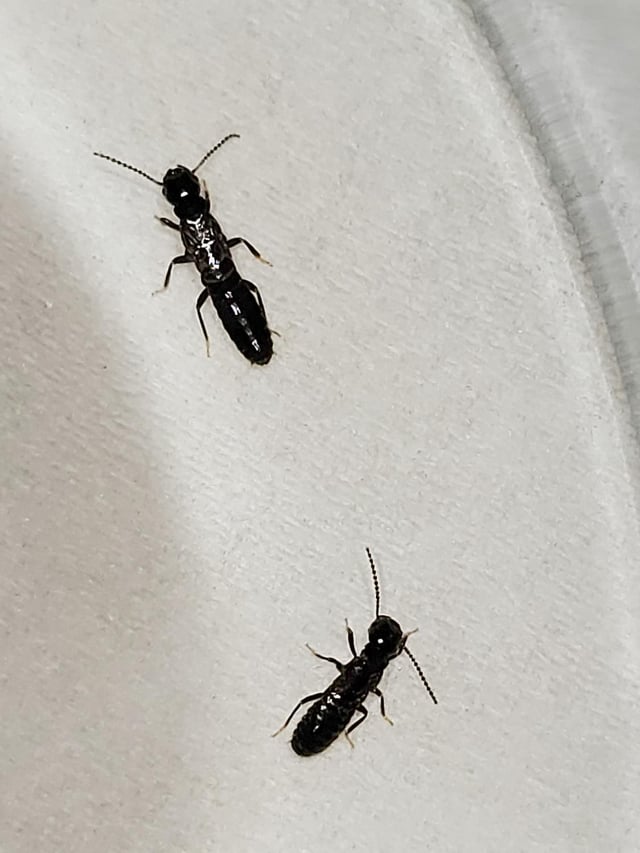
Black Wingless Termites: Identification, Prevention, and Control
Black wingless termites are fascinating yet often misunderstood insects. These tiny creatures can cause significant damage to wooden structures.
Termites, in general, are notorious for their wood-eating habits. Black wingless termites, however, are a bit different in appearance and behavior. Unlike their winged counterparts, these termites do not fly. They live in the soil or inside wood, creating tunnels and colonies.
Their presence can go unnoticed until the damage becomes severe. Understanding these termites is crucial for effective pest control. Knowing their habits and signs can help you protect your home. We will explore the world of black wingless termites, shedding light on their characteristics and how to manage them. Stay with us to learn more about these intriguing pests and how to keep them at bay.
Introduction To Black Wingless Termites
Black wingless termites are small, dark insects often found in moist wood. They play a significant role in breaking down dead trees and plants. While they are helpful in nature, they can also harm wooden structures in homes.
Termite Basics
Termites are social insects that live in colonies. Each colony has a queen, soldiers, and workers. Black wingless termites are usually the workers. They do most of the damage to wood. These termites are blind and use their sense of smell to navigate. They thrive in dark, damp environments.
Why Identification Matters
Identifying black wingless termites early can save your home from damage. Many people confuse them with ants. Proper identification helps in choosing the right treatment. Early action can prevent costly repairs. Call a pest control expert if you suspect an infestation.
Credit: www.reddit.com
Physical Characteristics
Black wingless termites are small insects with unique physical traits. These traits help in their identification and understanding their behavior. Let’s dive into their size, color, and distinctive features.
Size And Color
Black wingless termites are tiny. Adults measure around 3 to 4 millimeters in length. Their bodies are dark brown to black. This color helps them blend into their environments. It also aids in avoiding predators.
Distinctive Features
These termites lack wings, which is rare among termites. They have straight antennae and soft bodies. Their heads are large in comparison to their bodies. The jaws are strong, designed for chewing wood. These features make them efficient at breaking down cellulose.
Another distinctive feature is their segmented bodies. The body is divided into three parts: the head, thorax, and abdomen. Each part has specific functions crucial for their survival. Understanding these features can help in identifying and studying them.
Habitat And Behavior
Hey there! Ever wondered where black wingless termites hang out and what they do all day? Let’s dive into their world and explore their habitat and behavior. You’ll be amazed at how these tiny creatures live and interact with their surroundings.
Common Habitats
Black wingless termites are quite particular about where they live. They prefer environments that are dark, damp, and close to their food source. Here are some common places you might find them:
- Underneath wooden structures: Think of your house’s foundation or wooden decks. They love the wood and the moisture.
- In the soil: They often build tunnels in the ground, making it easier to reach their food sources without being exposed to predators.
- Inside dead trees: Fallen logs or stumps are perfect homes for these termites. They provide both shelter and food.
Feeding Patterns
Now, let’s talk about what they eat. Black wingless termites have a pretty straightforward diet. They mainly feed on cellulose, a substance found in wood, paper, and other plant materials. Here’s a quick rundown of their feeding habits:
- Wood: Their primary food source. They can chew through wooden beams, floors, and even furniture.
- Paper products: Termites also munch on paper, cardboard, and other similar materials.
- Plant debris: Dead leaves and other plant matter are also on their menu.
Unlike us, termites don’t need a varied diet. They stick to what they know and love: cellulose. This diet helps them survive and thrive in their chosen habitats.
In conclusion, black wingless termites are fascinating creatures with specific habitat preferences and feeding patterns. They love dark, damp places and thrive on a diet of wood and other cellulose-rich materials. Understanding their behavior can help us protect our homes and appreciate the complexity of their tiny world.
Signs Of Infestation
Not sure if you have black wingless termites at home? It’s important to know the signs. This can save you from big problems later. Let’s look at some easy-to-spot clues. It could help you catch an infestation early.
Visible Damage
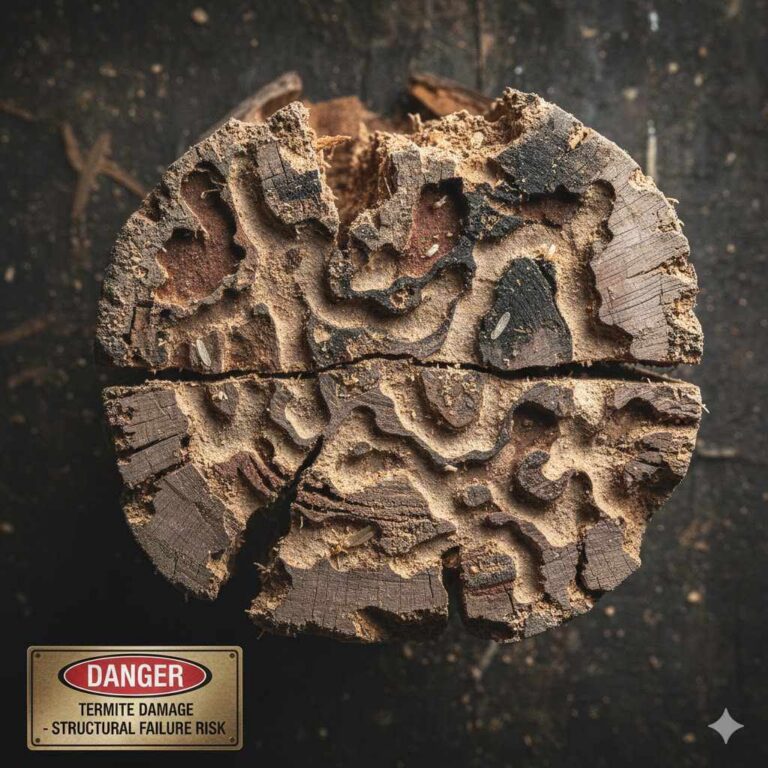
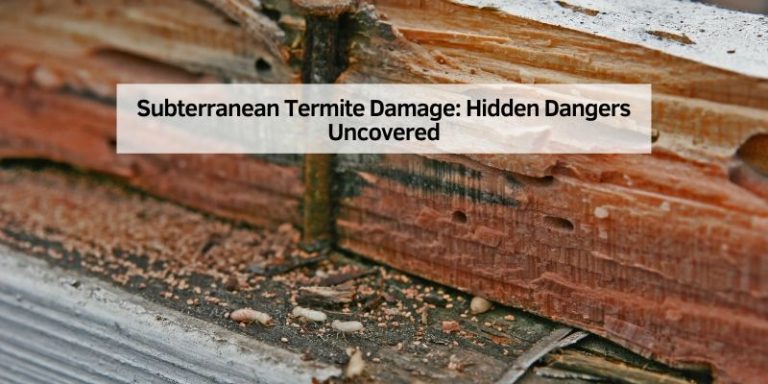
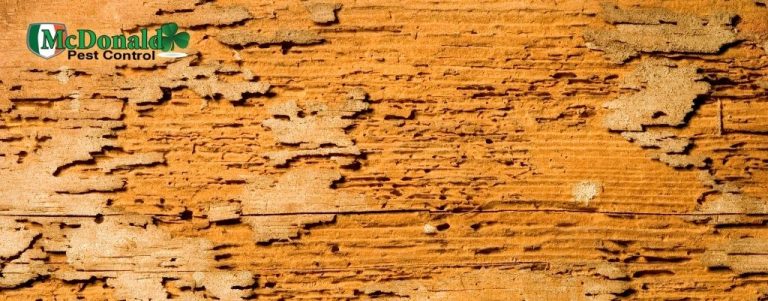
One of the first signs of a termite problem is visible damage. Termites love to eat wood. So, check for:
- Hollow-sounding wood: Tap on your wooden furniture or walls. If it sounds hollow, termites might be inside.
- Cracks in walls or floors: Small cracks can mean termites are chewing away behind the scenes.
- Wood dust or frass: This is termite droppings. It looks like tiny wood shavings or sawdust.
I remember finding small piles of wood dust near my kitchen cabinets. It was a clear sign that termites were feasting away.
Sound And Smell Indicators
Believe it or not, termites can make noise. And they have a smell. Here’s what to listen and sniff for:
- Clicking sounds: If you hear faint clicking sounds inside your walls, it might be termites. They make these sounds when they eat.
- Musty smell: Termites produce a musty odor. If your home starts to smell damp and moldy, termites could be the reason.
One evening, I heard faint clicking noises in my living room. I thought it was the wind. But it turned out to be termites munching away.
Knowing these signs can help you spot a termite problem early. This way, you can take action before it gets worse. Remember, it’s always better to be safe than sorry!
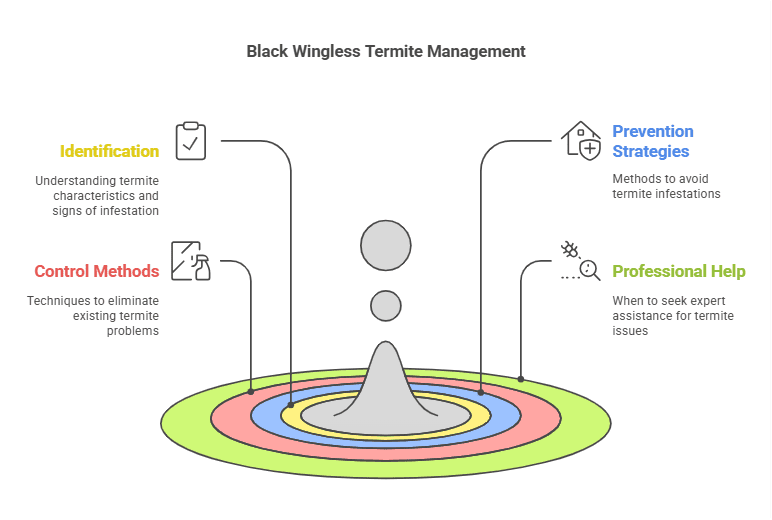
Inspection Techniques
Black wingless termites can cause significant damage to homes. Proper inspection techniques are crucial to identify infestations early. Early detection can save you from costly repairs and extensive damage. This section explores two main types of inspections: DIY and professional.
DIY Inspection
Conducting a DIY inspection requires careful observation. Start by checking for mud tubes around your home’s foundation. These tubes are a common sign of termite activity. Also, inspect wooden structures for hollow sounds. Tap on the wood with a screwdriver. If it sounds hollow, there might be termites inside.
Look for small piles of termite droppings. These droppings often resemble sawdust. They’re usually found near wooden structures. Also, check for discarded wings. Though black wingless termites don’t have wings, their discarded wings can still be present from a previous stage.
Professional Inspection
Hiring a professional ensures a thorough inspection. Professionals use specialized equipment to detect termite activity. They can identify signs that DIY inspections might miss. They also have the expertise to locate hidden infestations.
Professionals will inspect areas that are hard to reach. This includes crawl spaces and attics. They also use moisture meters and infrared cameras. These tools help detect termites inside walls. A professional inspection is more comprehensive and reliable.
Prevention Strategies
Black wingless termites can be a real headache if they invade your home. But don’t worry! There are some simple steps you can take to keep these pests at bay. Let’s dive into some easy-to-follow prevention strategies to help protect your home.
Home Maintenance Tips
Keeping your home in good shape is the first line of defense against termites. Think of it like maintaining your car. Regular check-ups can prevent major problems down the road.
- Fix Leaks: Check for leaky pipes or roofs. Termites love moisture.
- Seal Cracks: Inspect your home for any cracks in the foundation or walls. Seal them to block termite entry.
- Clean Gutters: Make sure your gutters are clear of debris. Clogged gutters can cause water to pool, attracting termites.
I remember once ignoring a small leak in my bathroom. A few months later, I found termites had made themselves at home. Lesson learned!
Environmental Modifications
Termites thrive in certain conditions. By changing the environment around your home, you can make it less inviting for these pests.
- Remove Wood Piles: Keep firewood and other wood materials away from your home’s foundation. Termites love to munch on wood.
- Trim Vegetation: Ensure that plants and trees are not touching your home. Overgrown branches can act as bridges for termites.
- Improve Drainage: Make sure water drains away from your home. Poor drainage can create moist conditions that attract termites.
Think of it like setting up a barrier. By making some changes, you can keep termites from getting too close.
By following these simple tips, you can keep black wingless termites out of your home. Remember, a little prevention goes a long way!
Control Methods
Black wingless termites can cause severe damage to wooden structures. Controlling these pests is essential to protect your home and belongings. There are various methods to manage and eradicate these termites. This section covers both chemical and non-chemical options.
Chemical Treatments
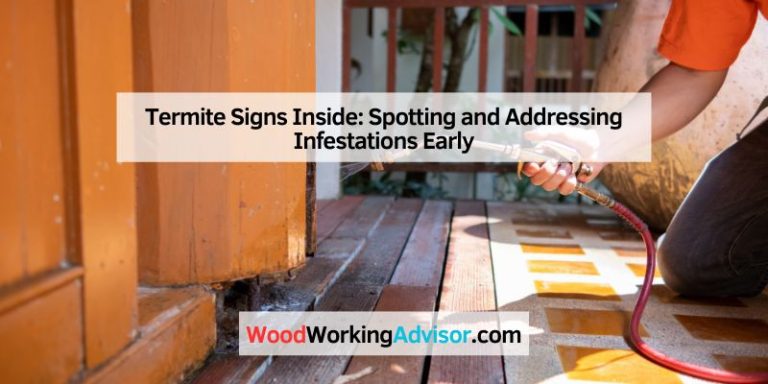
Chemical treatments are effective for controlling black wingless termites. Termiticides are a common choice. These chemicals create a barrier around your home. Termites cannot cross this barrier. Termites that contact the barrier die. Liquid termiticides are usually applied to the soil around the foundation. They can also be injected into the wood.
Bait stations are another chemical method. These stations contain a slow-acting poison. Termites take the bait back to their colony. This kills the entire colony over time. Bait stations are less invasive. They can be placed around your home without disturbing the soil.
Non-chemical Alternatives
Non-chemical methods are eco-friendly and safe for humans and pets. One common method is the use of physical barriers. Stainless steel mesh or sand can block termites from entering your home. These barriers are installed during construction.
Another non-chemical option is biological control. This involves using natural predators. Nematodes are tiny worms that eat termites. They can be applied to the soil. This method is safe and effective.
Heat treatments are also used. This method involves raising the temperature inside the home. Termites cannot survive high temperatures. This method kills termites without chemicals.
Finally, regular inspections and maintenance are vital. Check for signs of termite activity. Fix any leaks and remove wood debris. Keeping your home dry and clean helps prevent infestations.

Credit: www.reddit.com
When To Call A Professional
Black wingless termites can cause significant damage to your home. Knowing when to call a professional is crucial. This section will guide you through the steps to take. Let’s dive into how to assess the severity and choose the right expert.
Severity Assessment
First, inspect your home for signs of termites. Look for damaged wood, mud tubes, and droppings. These are clear indicators of an infestation. If you spot multiple signs, the problem might be severe.
Next, tap on wooden surfaces. Hollow sounds indicate termite damage inside the wood. This may require immediate professional attention. Also, check for termite wings near windows and doors. Even though black wingless termites do not have wings, their discarded wings can signal an active colony.
Observe the termite activity. High activity often means a larger colony. If you see many termites, it’s time to call an expert. A small, isolated incident might be manageable, but widespread damage needs professional help.
Choosing The Right Expert
Research local pest control companies. Look for those specializing in termite control. Ask for recommendations from friends or neighbors. Their experiences can guide you to reliable professionals.
Check online reviews and ratings. Customer feedback can reveal a lot about a company’s service quality. Ensure the company is licensed and insured. This protects you and ensures the company meets industry standards.
Ask about their treatment methods. Some may use chemicals, while others prefer eco-friendly options. Choose a method that suits your home’s needs. Request a detailed inspection and a clear treatment plan. This helps you understand the extent of the problem and the steps needed to resolve it.
Compare prices and services. Don’t just go for the cheapest option. Quality service is often worth the extra cost. Finally, ensure they offer a warranty. This guarantees that they will address any recurring issues without extra charges.
Long-term Monitoring
Long-term monitoring of black wingless termites ensures your property remains safe. Regular checks can prevent extensive damage. A proactive approach saves money and stress. Let’s explore key aspects of long-term monitoring.
Regular Inspections
Regular inspections are crucial. Schedule them every few months. Professional pest controllers can spot early signs. They know where termites hide. Early detection stops infestations from spreading.
Use a flashlight to check dark areas. Look for mud tubes or damaged wood. Pay attention to basements and attics. These areas are termite hotspots.
Maintenance Plans
Implementing maintenance plans can help. Create a checklist for upkeep tasks. Regularly clean your yard. Remove wood debris and fallen leaves. Keep gutters clear to avoid moisture buildup.
Seal cracks and holes in your home’s foundation. Fix any leaky pipes promptly. A dry environment is less attractive to termites. Consistent maintenance reduces the risk of infestations.

Credit: www.shutterstock.com
Frequently Asked Questions
What Does It Mean When You See Termites Without Wings?
Termites without wings are usually worker or soldier termites. They indicate an established colony nearby. Act quickly to address the infestation.
How Do You Get Rid Of Black-winged Termites?
To get rid of black-winged termites, remove wood debris, fix moisture issues, and use termite baits or chemical treatments. Consult a professional exterminator for severe infestations.
What Are The Black Winged Termites?
Black winged termites are reproductive termites. They swarm to establish new colonies, usually during the rainy season.
What To Do If You Find Termites Outside With Wings?
Spotting winged termites outdoors? Act quickly. Remove wood debris and moisture sources. Contact a pest control expert immediately.
Conclusion
Black wingless termites can cause significant damage to homes. Identifying them early is key. Regular inspections help prevent costly repairs. Keep your home safe by staying vigilant. Simple measures can protect your property. Call a professional if you suspect an infestation.
Act quickly to avoid further damage. Remember, prevention is always better than cure. Protect your investment and maintain peace of mind. Stay informed and proactive.