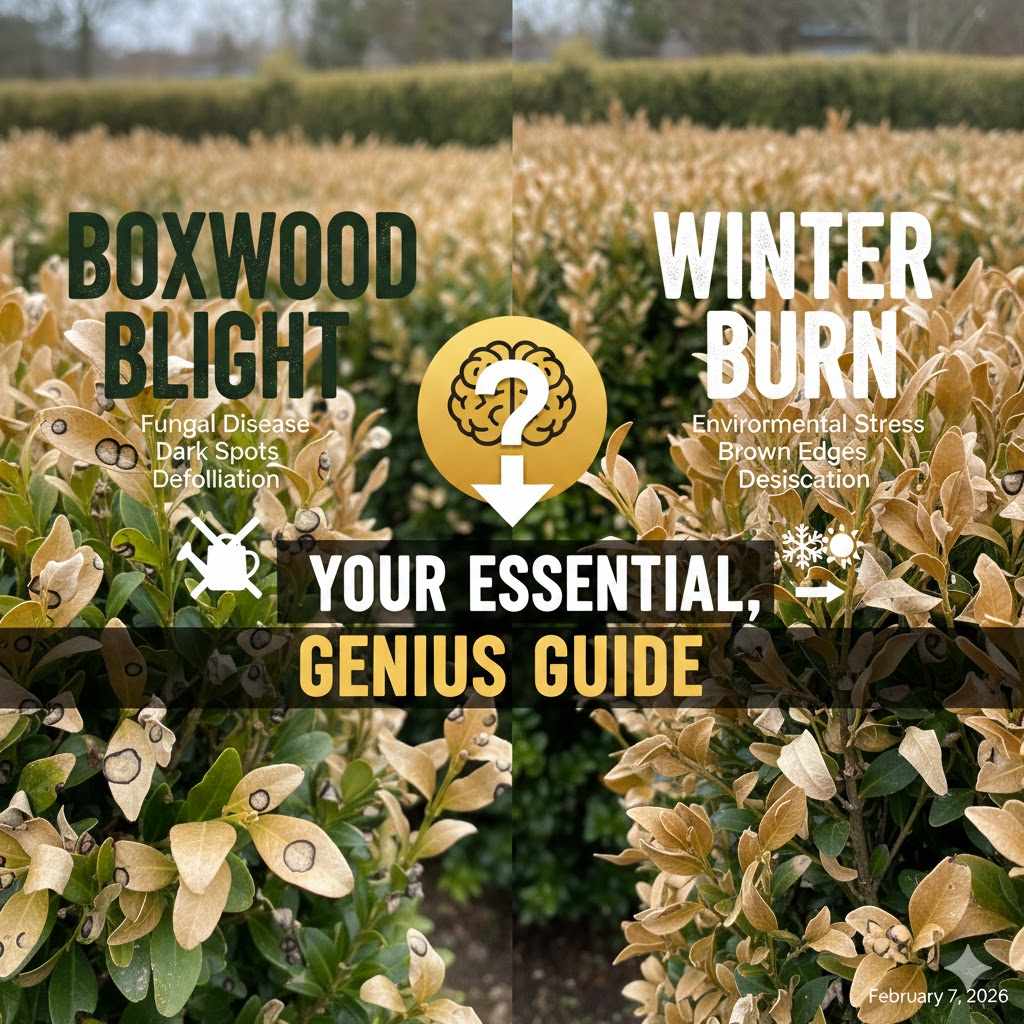
Boxwood Blight Vs Winter Burn: Your Essential, Genius Guide
The key difference between boxwood blight and winter burn is in the symptoms. Blight causes distinct dark leaf spots, black streaks on stems, and rapid leaf drop. Winter burn causes uniform yellowing or browning, typically on one side of the plant, and the leaves remain firmly attached. Blight is a fast-spreading fungal disease, while winter burn is weather-related dehydration.
There’s nothing more frustrating than seeing your beautiful, green boxwood hedges suddenly turn yellow or brown. It’s a common problem for homeowners, and your first thought might be, “What did I do wrong?” Don’t worry, you’re in the right place. Figuring out the cause can feel like detective work, but it usually comes down to two main suspects: boxwood blight or winter burn.
Telling them apart is the most important step to saving your shrubs. One is a serious disease needing immediate action, while the other is a seasonal injury that your plant can often recover from with a little care. In this guide, we’ll walk you through everything step-by-step. We’ll show you exactly what to look for, how to tell the difference, and how to create a solid plan to fix it. Let’s get your boxwoods back to looking their best.
What Is Boxwood Blight? A Closer Look at the Fungal Foe
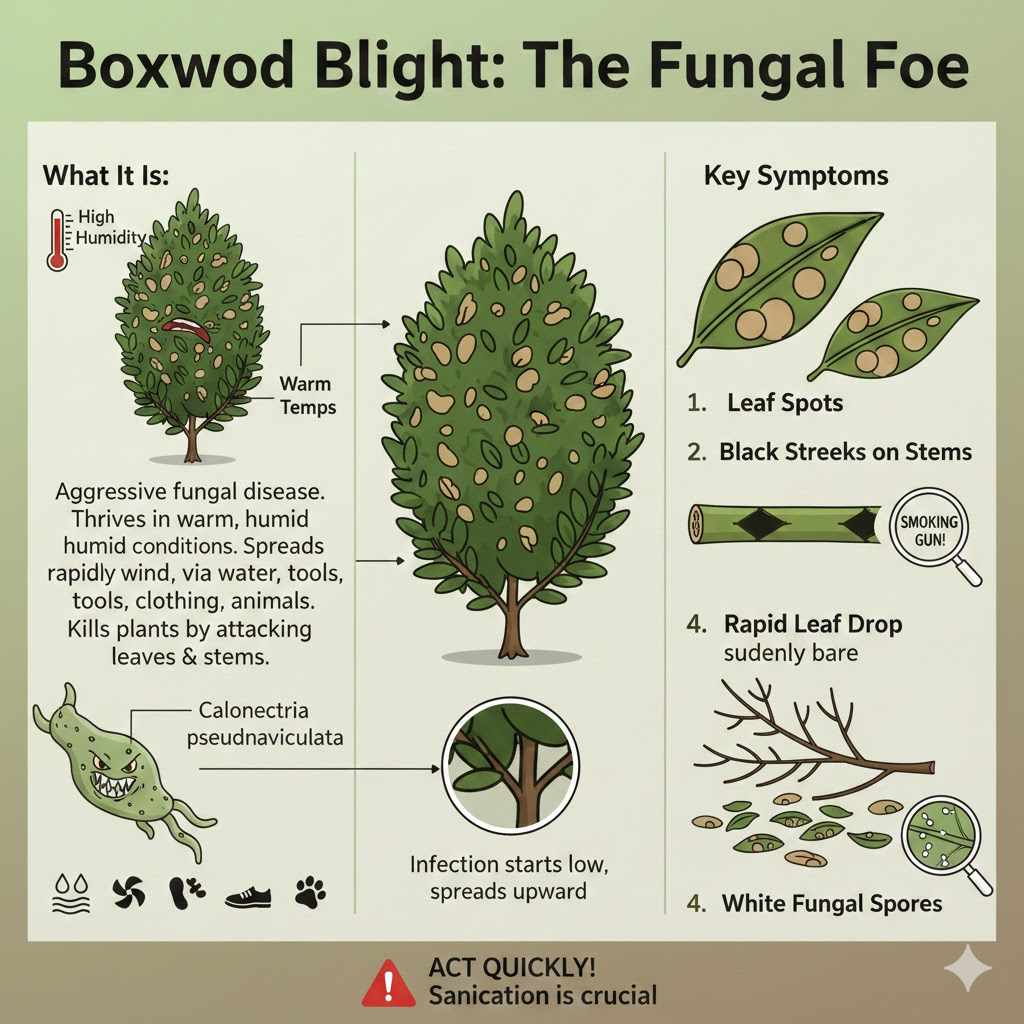
Think of boxwood blight as a very aggressive cold that your plant can catch. It’s a fungal disease caused by a nasty pathogen called Calonectria pseudonaviculata. This fungus loves warm and humid conditions, which is why you often see it flare up during wet summer months. It spreads incredibly fast and can devastate a hedge in a very short amount of time if you don’t act quickly.
Unlike some plant issues that just make a plant look bad, blight is a killer. The fungus attacks the leaves and stems, essentially cutting off the plant’s ability to live. Spores are easily spread by water splash, wind, contaminated tools, and even on clothing or animals. This is why sanitation is a huge part of dealing with it.
Key Symptoms of Boxwood Blight
To identify blight, you need to get up close and personal with your boxwoods. You’re looking for very specific clues that set it apart from other problems. Here’s your checklist:
- Leaf Spots: This is the first classic sign. You’ll see light or dark brown circular spots on the leaves, often with a darker border. As the disease progresses, these spots will grow larger and merge, eventually consuming the whole leaf.
- Black Streaks on Stems: This is the smoking gun for boxwood blight. Part the leaves and look closely at the young, green stems. You’ll find distinct, diamond-shaped, black or dark brown lesions or streaks. No other common boxwood issue causes this symptom, making it your most reliable clue.
- Rapid Leaf Drop: An infected boxwood will shed its leaves in a hurry. You might see perfectly healthy-looking branches suddenly become bare. The ground underneath the plant will be littered with fallen leaves. This rapid defoliation is a major sign of distress.
- White Fungal Spores: In very humid conditions, you might see tiny, white, fuzzy-looking spore structures on the underside of infected leaves. You may need a magnifying glass to spot them clearly.
The pattern of infection often starts low on the plant, closer to the moist ground, and spreads upward. It appears as random, spreading patches of death rather than a uniform pattern of discoloration.
What Is Winter Burn? Understanding Seasonal Damage
Winter burn, on the other hand, isn’t a disease at all. It’s an injury caused by weather—think of it like a plant’s version of getting chapped lips. It’s a type of desiccation, which is a fancy word for drying out. This happens during winter when the ground is frozen solid. The boxwood’s roots can’t suck up any water from the icy soil. At the same time, harsh winter sun and dry winds are pulling moisture out of the leaves. The plant is losing water but can’t replace it, so the leaves dry out and die.
This is a physiological problem, not a pathogenic one. It’s not contagious and won’t spread from plant to plant like a disease. The damage is done during the winter, but you often won’t notice it until the spring thaw when the discoloration becomes very obvious against new green growth.
Key Symptoms of Winter Burn
The signs of winter burn are very different from blight. The key here is uniformity and location. Here’s what you should be looking for:
- Uniform Discoloration: The affected leaves will turn a consistent yellow, orange, bronze, or brownish color. You won’t see the distinct circular spots that blight causes. The entire leaf, or large sections of the plant, will change color all at once.
- Leaves Stay Attached: This is a crucial difference. Unlike with blight, leaves damaged by winter burn tend to cling stubbornly to the branches for a long time. You can tug on them, and they won’t fall off easily.
- No Stem Streaks: If you check the stems, they will look perfectly healthy. There will be no black streaks or lesions. The damage is confined to the foliage.
- Directional Damage: Winter burn often has a clear pattern. The damage is typically worst on the side of the plant most exposed to the winter sun (usually the south or southwest side) and prevailing winds. The parts of the plant protected by snow, a fence, or another structure may remain perfectly green.
The damage from winter burn looks more like a spray-tan gone wrong—uniform in the affected areas—rather than the patchy, diseased look of blight.
The Ultimate Comparison: Boxwood Blight vs. Winter Burn at a Glance
Sometimes, seeing things side-by-side makes it all click. This table breaks down the essential differences between these two common boxwood problems. Keep this handy when you go out to inspect your plants.
| Feature | Boxwood Blight | Winter Burn |
|---|---|---|
| Primary Symptom | Circular leaf spots, starting brown and enlarging. | Uniform yellowing or browning of leaves. |
| Stem Appearance | Distinct black or dark brown streaks on green stems. | Stems remain healthy-looking and green or brown. No streaks. |
| Leaf Drop | Rapid and severe. Leaves fall off very easily. | Leaves remain firmly attached to the branch. |
| Pattern of Damage | Starts as random patches, often low on the plant, and spreads quickly. | Appears on sides exposed to sun and wind. May be uniform across a whole section. |
| Timing | Most active and visible during warm, humid weather (summer). | Damage occurs in winter but becomes most visible in early spring. |
| Cause | Fungal pathogen (Calonectria pseudonaviculata). It’s a disease. | Environmental stress (moisture loss when ground is frozen). It’s an injury. |
| Spread | Highly contagious. Spreads to other boxwoods via water, tools, and contact. | Not contagious. Will not spread from plant to plant. |
Your Step-by-Step Guide to Diagnosing Your Boxwoods
Alright, it’s time to put on your detective hat and head outside. Follow these steps methodically, and you’ll have your answer in no time. This is easier than it sounds!
- Step 1: Get Close and Inspect the Leaves. Don’t just look from your window. Kneel down and pick a few affected leaves from different parts of the shrub. Are you seeing distinct, round, tan spots with dark borders? Or is the entire leaf just faded to a uniform yellow or straw color? Spots point strongly to blight; uniform color points to winter burn.
- Step 2: Examine the Stems Carefully. This is the most important step. Gently part the branches in several areas, especially where the damage looks fresh. Look for young, green twigs. Do you see any long, dark, diamond-shaped streaks or lesions on them? If you see these black streaks, you can be almost 99% certain you are dealing with boxwood blight. If the stems look clean and healthy, winter burn is much more likely.
- Step 3: Do the “Shake Test.” Grab a branch that has discolored leaves and give it a gentle but firm shake. If leaves shower down like confetti, that’s a classic sign of blight. The fungus makes the leaves detach very easily. If the leaves hang on tight and you have to pull hard to get one off, you are likely looking at winter burn.
- Step 4: Consider the Timing. When did you first notice the problem? Did brown patches appear and spread rapidly during a hot, rainy spell in July? That’s blight season. Or did your entire hedge look a bit sad and yellow after the snow melted in March? That timing screams winter burn.
- Step 5: Analyze the Damage Pattern. Step back and look at the whole plant or hedge. Is the damage in random, sunken patches that seem to be getting bigger? That fits the profile of a spreading disease like blight. Or is the damage confined to the top of the hedge or the side that gets hit with the afternoon winter sun? That directional pattern is a hallmark of winter burn.
- Step 6: When in Doubt, Ask an Expert. If you’ve gone through these steps and are still unsure, don’t guess. The consequences of misdiagnosing blight are too severe. You can take a sealed plastic bag with a sample (including leaves and stems) to your local nursery or, even better, your county’s Cooperative Extension Service office. They have experts who can diagnose plant diseases with certainty, sometimes for free or a small fee.
The Action Plan: How to Manage Blight and Burn
Once you have a diagnosis, you need a plan. The treatment for blight and winter burn are completely different. Following the wrong plan won’t just be ineffective; it could make things worse.
If You Have Boxwood Blight: Take Immediate Action
Discovering you have boxwood blight is tough news, but acting decisively is key to preventing its spread. This is a time for aggressive measures.
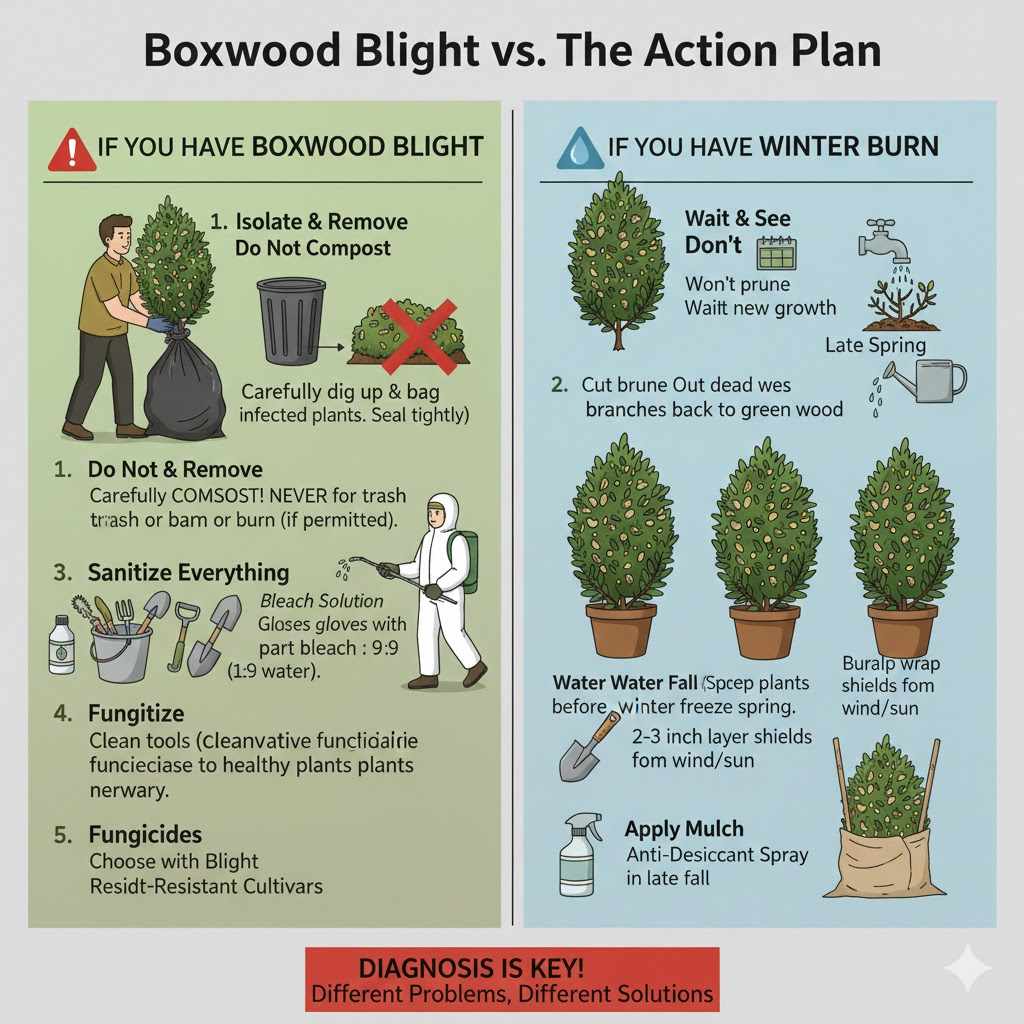
- Isolate and Remove: The first and most critical step is to carefully dig up and remove the infected plant(s). When you do this, try not to shake leaves onto nearby healthy plants. Place the entire plant directly into a heavy-duty contractor trash bag and seal it.
- Do Not Compost: Never, ever compost infected boxwood plants. The blight fungus can survive in compost piles and can re-infect your garden later. Your only options are to bag it for the trash or, if local regulations permit, burn it.
- Sanitize Everything: Blight spores are sticky and travel on everything. After handling infected plants, you must sanitize your tools (pruners, shovels, gloves), your shoes, and even the wheelbarrow. Use a solution of 1 part household bleach to 9 parts water. Let the tools soak for 10 minutes, then rinse and dry them to prevent rust.
- Consider Fungicides for Healthy Plants: For nearby boxwoods that aren’t showing symptoms, you can use a preventative fungicide. Look for products containing chlorothalonil or mancozeb. Follow the label instructions precisely. Note that fungicides are best for prevention; they will not cure an already infected plant.
- Choose Resistant Varieties: When you’re ready to replant, do not plant the same type of boxwood. Choose a blight-resistant cultivar. Researchers at organizations like the U.S. National Arboretum have worked to identify highly resistant varieties. Look for cultivars like ‘New Gen Independence’, ‘New Gen Freedom’, or ‘Green Beauty’.
If You Have Winter Burn: Focus on Recovery and Prevention
The good news about winter burn is that it’s often a cosmetic issue, and the plant can fully recover with a bit of TLC. The theme here is patience and protection.
- Wait and See: The biggest mistake people make is pruning too early. Wait until late spring when the new growth has fully emerged. This will show you exactly which branches are truly dead and which were just discolored but are now sprouting new leaves.
- Prune Out the Dead: Once you can see the new growth, take a clean, sharp pair of pruners and cut out any branches that are brown, brittle, and show no signs of life. Cut back to a point where you see healthy, green wood. This improves the look of the plant and encourages new growth.
- Water Well in Spring: Give your recovering boxwoods a good, deep drink of water once the ground has thawed. This will help them rehydrate after a long, dry winter.
- Plan for Next Winter: The best treatment for winter burn is prevention.
- Water Deeply in the Fall: Make sure your boxwoods go into winter well-hydrated. Give them a final deep watering in the late fall, just before the ground freezes.
- Apply Mulch: A 2-3 inch layer of wood mulch around the base of the plants will help insulate the soil, retain moisture, and protect the roots.
- Use Anti-Desiccant Sprays: In late fall, you can spray an anti-desiccant (also called an anti-transpirant) on the foliage. This adds a waxy coating that helps seal in moisture and protect against harsh winds.
- Create a Barrier: For highly exposed plants, you can create a physical barrier. Hammer stakes into the ground around the plant and wrap burlap around them, leaving the top open for air and light. This creates a simple but effective shield against wind and sun.
Frequently Asked Questions (FAQ)
Can boxwoods recover from boxwood blight?
Unfortunately, recovery from an established boxwood blight infection is extremely rare. The disease is aggressive and damages the plant’s vascular system. The best and safest course of action for the health of your other plants is to remove and destroy the infected shrub to prevent the disease from spreading.
Can boxwoods recover from winter burn?
Yes, absolutely! In most cases, winter burn damage is superficial. With patience and proper care—waiting until late spring and then pruning out any truly dead branches—most boxwoods will push out new growth and recover beautifully over the season.
How can I prevent boxwood blight in the first place?
Prevention is key. First, plant blight-resistant varieties. Second, ensure good air circulation by not planting them too close together. Third, water at the base of the plant using a soaker hose instead of overhead sprinklers, as wet leaves encourage fungal growth. Finally, always clean your pruning tools between plants.
When is the right time to prune boxwoods with winter burn?
Do not prune in early spring. You must wait until late spring or even early summer, after the new season’s growth has fully emerged. This allows you to clearly see which stems are dead and which ones are alive and producing new leaves, preventing you from accidentally cutting off living parts of the plant.
Is boxwood blight contagious to my other garden plants?
Boxwood blight is primarily a disease of plants in the box family. It most severely affects Boxwood (Buxus species), but can also infect Japanese Spurge (Pachysandra terminalis) and Sweet Box (Sarcococca species). It is generally not a threat to other common garden plants like roses, hydrangeas, or hostas.
Does a heavy blanket of snow protect boxwoods from winter burn?
Yes, it does! Snow is an excellent insulator. Any parts of your boxwood that are covered by a consistent layer of snow are protected from the harsh, drying effects of winter wind and sun. This is why you sometimes see winter burn damage only on the parts of a shrub that stuck out above the snow line.
What do the black streaks on boxwood stems definitively mean?
Those distinct, diamond-shaped black streaks on the green stems are the most reliable, tell-tale symptom of boxwood blight. If you see this specific sign, you can be highly confident that you are dealing with the disease and should take immediate action to remove the plant.
Conclusion: Confidence in Your Garden
Figuring out what’s wrong with your plants can feel overwhelming, but as you can see, distinguishing between boxwood blight and winter burn is a straightforward process when you know what to look for. It all comes down to careful observation. By checking the leaves for spots versus uniform color, inspecting the stems for tell-tale black streaks, and testing how easily the leaves fall off, you have all the information you need to make the right call.
Remember, a correct diagnosis is your most powerful tool. It transforms you from a worried homeowner into a confident caretaker. If it’s blight, you now have a clear, immediate action plan to protect the rest of your garden. If it’s winter burn, you have the patience and knowledge to help your boxwoods recover and to prevent the problem next year. You’ve got this. With a little attention to detail, you can tackle any challenge your garden throws at you and keep your landscape healthy and beautiful for years to come.