Lie-Nielsen vs Veritas: Which Hand Plane Brand Wins?
Lie-Nielsen and Veritas both make hand planes that cost more than a decent benchtop power tool, and woodworkers argue about which one deserves that money in forums, YouTube comments, and shop talk every week. The short answer: they are not the same plane with a different badge. Lie-Nielsen reproduces and refines classic Bedrock-pattern Stanley designs in ductile iron and bronze. Veritas, the house brand of Canadian retailer Lee Valley, starts from a similar Stanley-style body but is willing to redesign the mechanics, most visibly with a Norris-style combined depth-and-lateral adjuster that Lie-Nielsen does not use.
That one design decision explains most of the real differences people report: how the plane feels to adjust, how it holds up under repeated fine-tuning, and even how it resells years later. Below is what actually separates the two brands, plus a lower-cost Bedrock-style plane worth trying first if you are not ready to spend Lie-Nielsen or Veritas money yet.
What Actually Separates Lie-Nielsen From Veritas
Best Bedrock-Style Alternative Pick
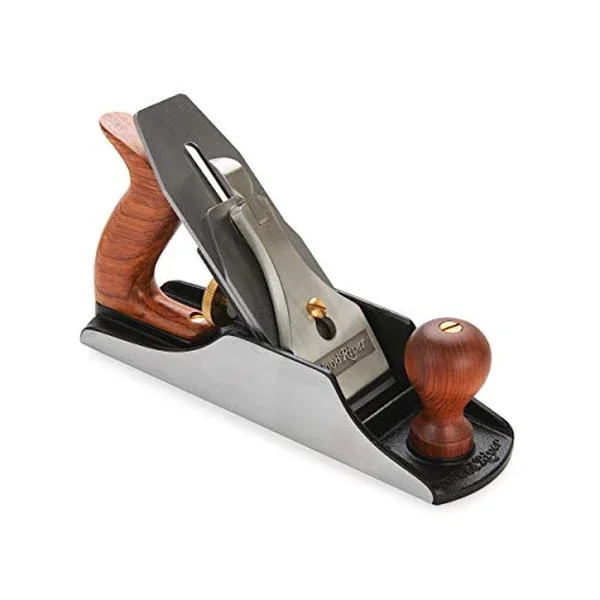 |
WoodRiver #4-1/2 Smoothing Plane – $272.98 A Bedrock-pattern smoothing plane that lets you try the same ductile-iron-and-machined-frog formula Lie-Nielsen builds on, before spending Lie-Nielsen or Veritas money.
|
A common myth in beginner forums is that Lie-Nielsen and Veritas are interchangeable premium options that only differ in price. They are not. The two companies start from opposite design philosophies, and that shows up the moment you pick up a plane from each brand.
Lie-Nielsen’s Classic Reproduction Approach
Lie-Nielsen Toolworks has built planes in Warren, Maine since 1981, and the company’s whole identity is rooted in faithfully reproducing and refining the best Stanley Bedrock-pattern designs from the early twentieth century. The bodies are ductile iron, the lever caps and other small hardware are often bronze, and the machining tolerances are tight enough that most Lie-Nielsen planes need little to no tuning out of the box. The adjustment mechanism itself, the depth wheel and lateral lever, follows the traditional Stanley/Bedrock layout almost unchanged. That is a deliberate choice, not an oversight: Lie-Nielsen’s reputation is built on getting the classic formula right rather than reinventing it.
Veritas’s Modern Engineering Approach
Veritas, made by Lee Valley Tools in Ottawa, Canada, treats the classic Stanley-pattern body as a starting point rather than a template to preserve exactly. The most visible example is the adjuster: most Veritas bench and block planes use a Norris-style mechanism that combines depth and lateral adjustment into a single knurled knob, instead of the separate depth wheel and lateral lever Stanley and Lie-Nielsen both use. Many Veritas bevel-up planes also add an adjustable mouth, letting you open or close the throat for coarse versus fine shavings without swapping the frog. Veritas planes are generally positioned somewhat below comparable Lie-Nielsen models on price, which fits the brand’s broader identity: genuinely high-quality tools engineered for function first, with less emphasis on preserving a specific historical form.
Materials and Craftsmanship
Both brands use ductile iron for their plane bodies rather than the more brittle gray iron found in vintage Stanley planes and most budget planes today. Ductile iron can flex slightly under stress instead of cracking, which matters if a plane is ever dropped on a concrete shop floor. Lie-Nielsen leans further into traditional materials with bronze lever caps and hardware on many models, which resists corrosion and wears in with a warm patina over years of use. Veritas tends to use stainless steel or black-oxide-finished steel for its hardware instead of bronze, which is more about modern manufacturing efficiency than nostalgia.
Machining quality is where both brands genuinely earn the premium price. Soles are ground flat, frogs seat squarely against the body, and blades are thick enough to resist chatter, the faint vibration line a thin, cheap blade leaves in a cut. On a $30 hardware-store plane you can expect to spend an evening flattening the sole and tuning the frog before it cuts well. On a Lie-Nielsen or Veritas plane, that prep work is mostly already done at the factory.
The Adjustment Mechanism Difference
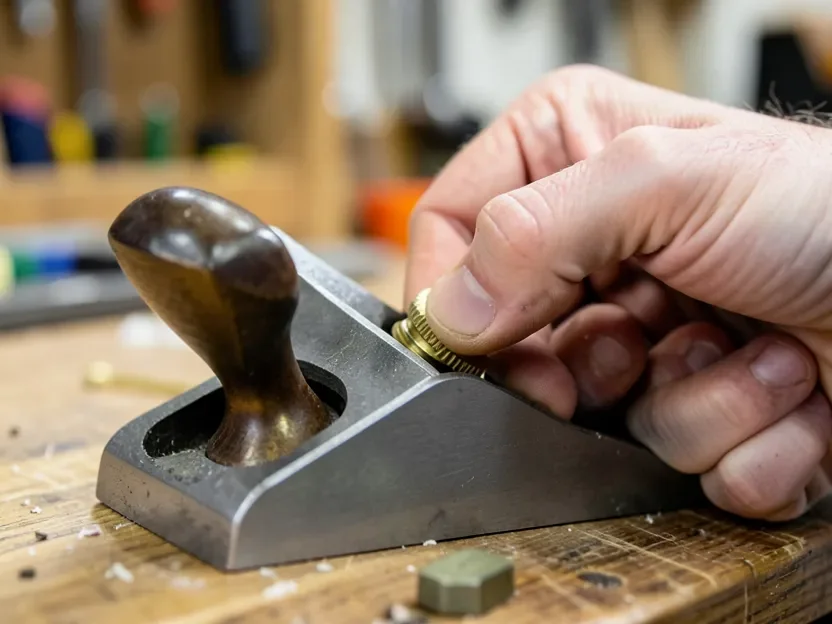
This is the detail that most comparison articles skip, and it is the single biggest functional difference between the two brands. Lie-Nielsen’s separate depth wheel and lateral lever are familiar to anyone who has used a vintage Stanley plane, and the two controls never interact with each other. Veritas’s Norris-style adjuster combines both functions into one knob, which is genuinely faster to set once you learn it, since fewer motions get you to a dialed-in cut. The tradeoff, reported consistently in long-running woodworking forum threads, is that a Norris-style adjuster can occasionally shift out of lateral alignment if you crank the depth aggressively, so you sometimes have to re-check the lateral setting after a big depth change. Neither mechanism is objectively better; they reward different habits. If you already think in terms of “set depth, then set lateral” as two separate steps, Lie-Nielsen’s layout will feel instantly familiar. If you would rather make one adjustment and get back to planing, Veritas’s system saves real time once you are used to it.
Price and Resale Value
Exact pricing shifts often enough that quoting model-by-model numbers goes stale fast, but the brand-level positioning has held steady for years: Veritas planes are generally priced somewhat below the equivalent Lie-Nielsen model, often by a meaningful margin on bench planes. Lie-Nielsen’s official site lists its No. 4-1/2 smoothing plane, one of its most popular bench planes, with a base price in the low $300s before options like an extra blade or a high-angle frog, and that general price range is representative of where a mid-size Lie-Nielsen bench plane sits.
Resale is where Lie-Nielsen has an especially strong reputation. Used Lie-Nielsen planes in good condition routinely sell for a large share of their original price on secondhand woodworking marketplaces, closer to how a well-kept collectible behaves than a typical used tool. Veritas planes also hold value well compared to mass-market tools, but woodworking forum consensus consistently ranks Lie-Nielsen slightly ahead on resale specifically, likely tied to its narrower, more collector-oriented catalog.
Which Premium Hand Plane Brand Should You Choose
Neither brand is the wrong answer. Both are made to tolerances far tighter than anything you will find at a home center, and either one will outperform a stock hardware-store plane for the rest of your woodworking life. The choice comes down to how you like to work.
- Choose Lie-Nielsen if: you want the classic Stanley/Bedrock feel and adjustment layout, you care about resale value, or you are drawn to bronze hardware and a plane that reads as a long-term investment piece.
- Choose Veritas if: you want the fastest possible depth-and-lateral adjustment, you like the flexibility of an adjustable mouth on bevel-up models, or you want comparable machining quality at a somewhat lower price point.
- Not ready for either price tag yet: a well-reviewed Bedrock-style plane like the one below is a legitimate way to learn what tight machining and a ductile iron body actually feel like before you commit to Lie-Nielsen or Veritas money.
Whichever plane you end up with, technique still does most of the work. A premium plane with a dull blade will tear out wood just as badly as a cheap one, so if you are still building fundamentals, our guide on flattening wood with a hand plane is worth reading alongside whichever brand you pick.
Frequently Asked Questions
Why are Lie-Nielsen and Veritas planes so expensive?
Both brands use ductile iron bodies and premium hardware, machined to tolerances tight enough that most planes need little tuning out of the box. That machining time, plus small production runs compared to mass-market tool brands, is most of what you are paying for.
What is the main design difference between Lie-Nielsen and Veritas?
Lie-Nielsen reproduces the classic Stanley Bedrock-pattern adjustment layout, a separate depth wheel and lateral lever. Veritas replaces that with a Norris-style adjuster that combines depth and lateral control into one knob, and adds an adjustable mouth on many bevel-up models.
Is a Lie-Nielsen or Veritas plane better for a beginner?
Both are approachable, but Veritas’s Norris-style adjuster and adjustable mouth are often described as slightly easier to dial in without prior plane experience. Lie-Nielsen’s traditional layout has a small learning curve if you have never used a Stanley-pattern plane before, though neither is genuinely difficult.
Do Veritas planes hold their resale value as well as Lie-Nielsen?
Both hold value far better than mass-market tools, but Lie-Nielsen has the stronger reputation for resale specifically, with used examples in good condition often selling for a large share of their original price.
Can I get a similar experience without paying Lie-Nielsen or Veritas prices?
Bedrock-style planes from brands like WoodRiver use the same ductile iron body and fully machined frog concept at a lower price, though they typically need a bit more of your own fine-tuning out of the box than a Lie-Nielsen or Veritas plane does.
Conclusion
Lie-Nielsen and Veritas both make genuinely excellent hand planes, and the choice between them is really a choice between two design philosophies: faithful reproduction of a proven classic versus practical re-engineering of that same classic. Pick Lie-Nielsen for the traditional feel and strong resale value, pick Veritas for the faster Norris-style adjustment and somewhat friendlier price, or start with a Bedrock-style plane like the WoodRiver above if you want to learn what tight machining feels like before spending premium-brand money.
Sponsored / affiliate links. As an Amazon Associate I earn from qualifying purchases. I may earn additional commission from eligible campaigns.