Bur Oak vs White Oak: Uncovering Distinct Tree Traits
Figuring out the differences between trees like the Bur Oak vs White Oak: Key Differences can be tricky when you’re starting out. They look pretty similar, and that can make it hard to tell them apart! Don’t worry, though. This post will break down the key differences in a simple, step-by-step way. We’ll explore everything from their leaves to their acorns, making it easy to spot the difference. Get ready to learn how to tell these two popular oak trees apart!
Leaves and Their Unique Features
One of the easiest ways to tell the difference between a Bur Oak and a White Oak is by looking at their leaves. Leaves are like fingerprints for trees; each type has its own special shape and features. Learning about the leaves helps us to identify the trees in the park or the woods with ease. Both tree species have distinct leaf patterns that make identification straightforward. The shape and size of the leaves are good clues. Leaf edges and their lobes are also important details.
Bur Oak Leaf Characteristics
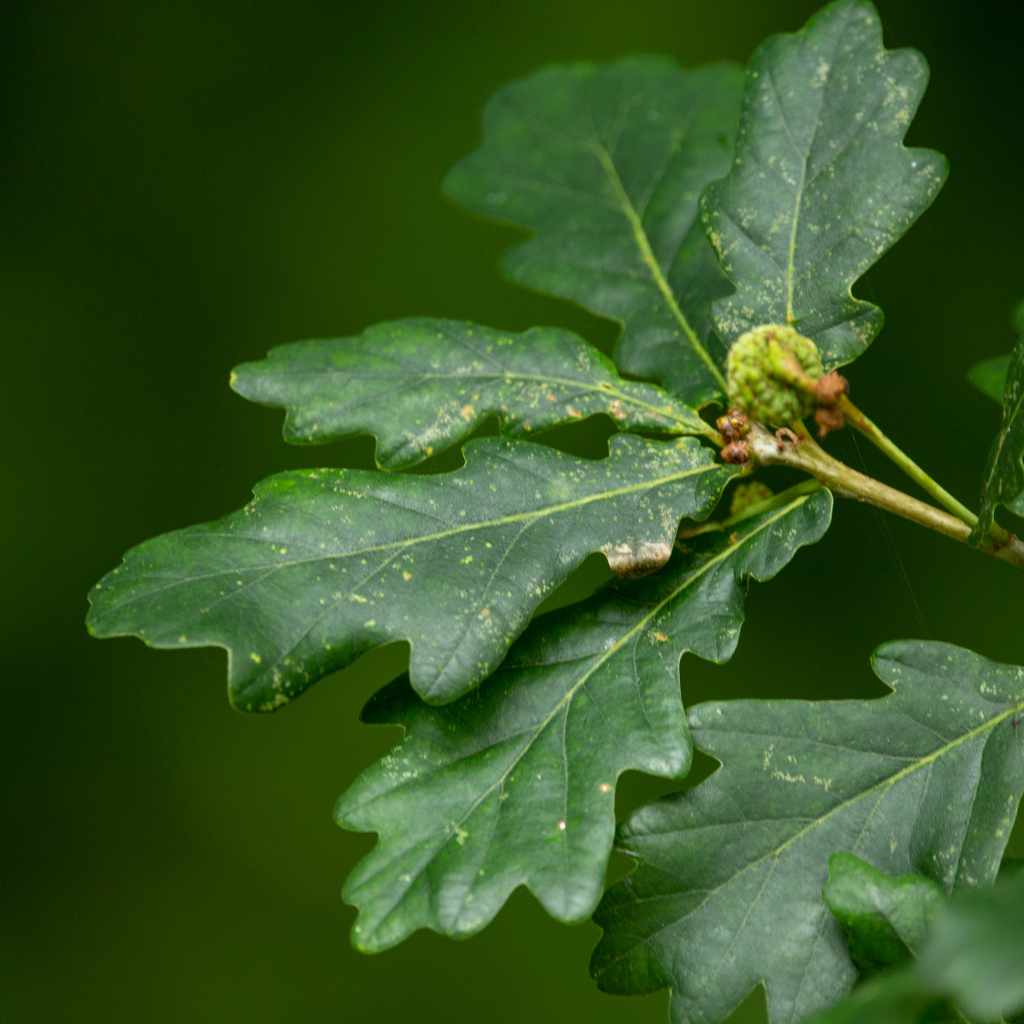
Bur Oak leaves are big and bold. They usually measure around 4 to 8 inches long and wide. The shape of the leaves is a distinctive oval. The leaves are known for their deep lobes. The top half of the leaf typically has many deep, irregular lobes, while the bottom half has fewer, more rounded lobes. These lobes give the leaf a unique, almost “fluffy” appearance. The leaves are a dark green color during the growing season and turn yellow-brown in the fall.
- Size: Generally, the leaves are larger than those of the White Oak.
- Shape: The leaves feature a distinctive oval shape.
- Lobes: The lobes on Bur Oak leaves are deep and irregular.
- Color: The leaf color is dark green in summer and turns yellow-brown in the fall.
The differences in the leaves also offer clues on the environments where these trees thrive. The structure of leaves, including their surface area and the arrangement of their veins, influences their ability to capture sunlight for photosynthesis. This in turn affects how well each tree grows in various conditions. The Bur Oak’s larger leaves, with their unique lobing patterns, aid it to gather light in different ways than a White Oak, potentially giving it an edge in certain climates.
White Oak Leaf Characteristics
White Oak leaves are similar in size to those of the Bur Oak, usually measuring between 5 to 9 inches long. Their shape is also oval, but they have a more rounded lobe shape. The leaves have shallow, rounded lobes along their edges. These lobes give the leaves a more gentle appearance compared to the Bur Oak’s dramatic lobes. During the growing season, the leaves are a lighter green, which turns to a reddish-brown or purple in the fall. This contrast in leaf shape and color is helpful to distinguish White Oak from Bur Oak.
- Size: Typically similar in size to Bur Oak leaves.
- Shape: Oval, but with more rounded edges.
- Lobes: The lobes are more rounded and shallow.
- Color: They appear light green in the summer and turn reddish-brown or purple in the fall.
The leaf characteristics also give hints about the tree’s water requirements. Trees with smaller leaves, like those of some other oak species, might conserve water better in drier climates. Leaf characteristics such as the thickness, the presence of hairs, and the arrangement of stomata on the leaf surface all affect the efficiency of water usage. Analyzing these features helps in predicting the tree’s resilience to drought.
Examining Acorns and Their Differences
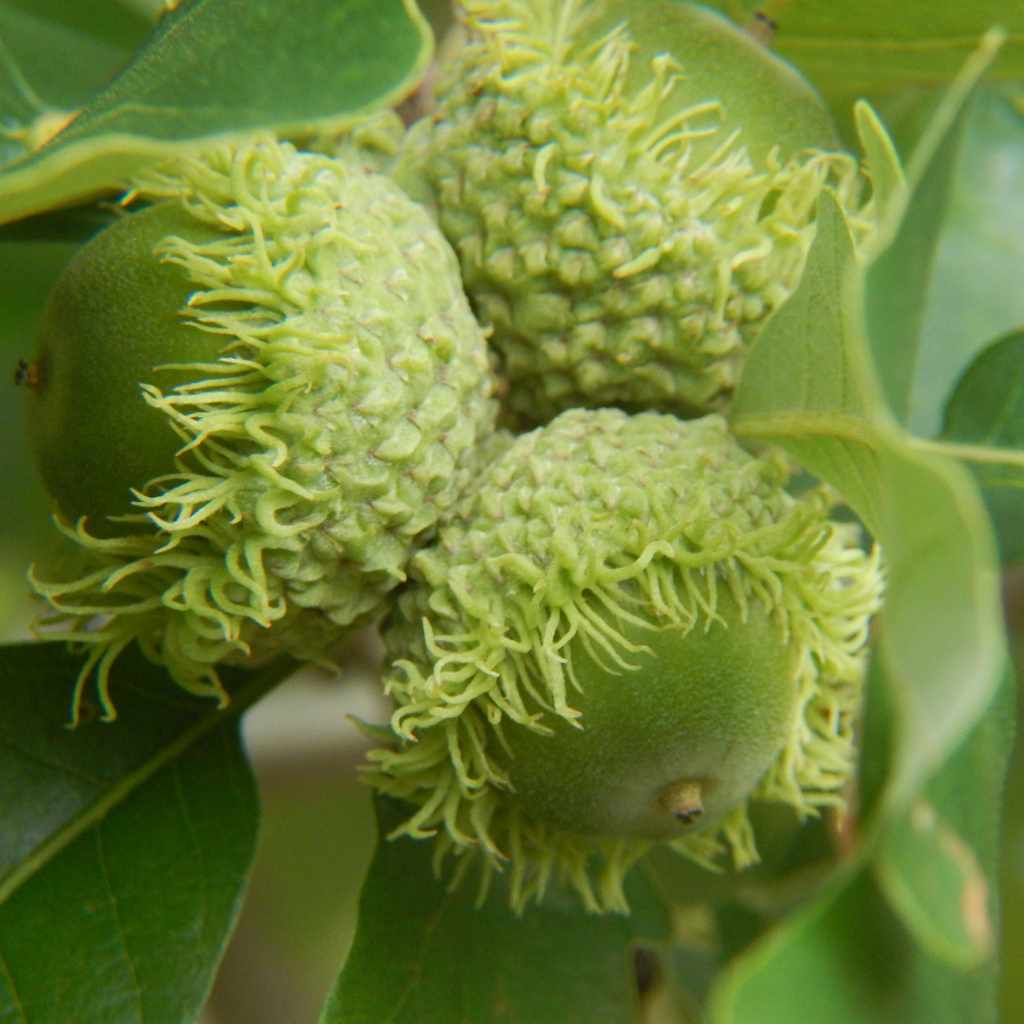
Acorns are like seeds for oak trees. Each type of oak has its own unique acorn style. Checking out the acorns is another key to telling Bur Oaks and White Oaks apart. The size, shape, and even how the acorn sits in its cap can all help with identification. Examining the acorns offers a look into each tree’s reproductive strategy. Acorns also show us about each tree’s environment and the kind of animals that rely on them for food. It’s interesting to see how the features of an acorn influence how it disperses and germinates.
Bur Oak Acorn Details
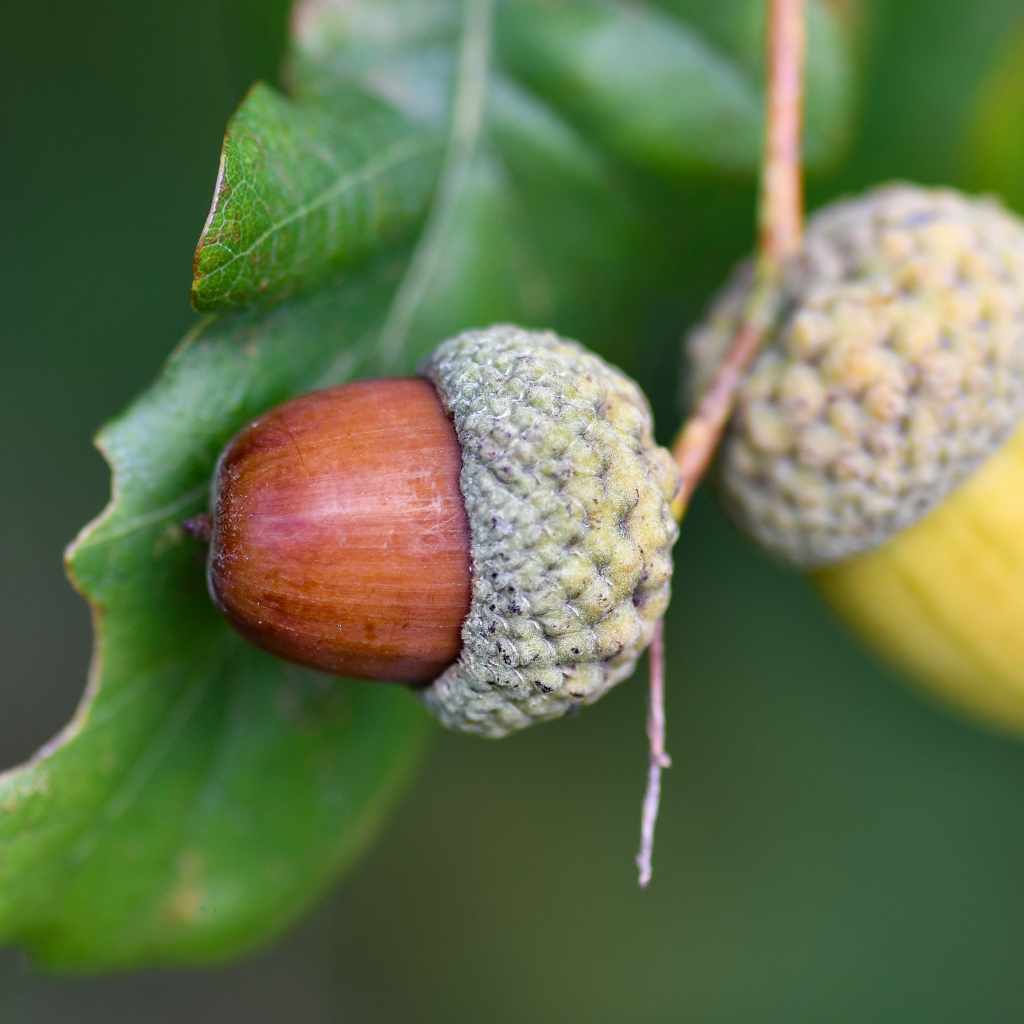
Bur Oak acorns are known for their impressive size. They are among the biggest acorns you will see, often measuring 1 to 2 inches long. They are easily recognizable due to the cap, which almost completely covers the acorn, fringing the nut. The cap has a fuzzy, fringed edge that resembles a bur, hence the tree’s name. The acorns are a light brown color. The size and shape of the acorns influence their role in the local ecosystem, impacting the animals that eat them. The hard shells on these acorns help them survive the winter and spread by animals that bury them.
- Size: Often quite large, typically 1 to 2 inches long.
- Cap: The cap almost completely covers the acorn, with a fringed edge.
- Color: The acorns usually have a light brown color.
- Weight: They are heavier than White Oak acorns.
The unique features of Bur Oak acorns affect how the trees spread and grow. The fringed cap might help the acorns float in water, which helps dispersal. The size of the acorn also offers a nutritional advantage to the tree as it has more energy stored in the form of starch and fats that provide fuel for the seedling’s first months of development. This allows the Bur Oak to gain a head start in competing for light and resources.
White Oak Acorn Details
White Oak acorns are smaller compared to those of the Bur Oak, typically about 0.75 to 1 inch long. The acorn caps cover only a small portion of the acorn, usually about one-quarter to one-third. The caps are warty and have a less fringed look. The acorns are a medium brown color. Acorn size and shape contribute to how the tree reproduces. Acorns also contribute to the local ecosystem, playing a role in the local food web, with various animals relying on them. The cap structure influences their dispersal and successful germination.
- Size: Smaller than Bur Oak acorns, typically about 0.75 to 1 inch long.
- Cap: The cap covers a smaller portion of the acorn, about one-quarter to one-third.
- Color: The acorns appear a medium brown color.
- Taste: White Oak acorns are usually less bitter.
The details of White Oak acorns also show their adaptation to their environment. The acorns, which are relatively smaller, are generally sweeter and less bitter. The White Oak acorns are more accessible to seed-eating animals. The cap’s structure plays a role in how they are spread and in the rate of germination. White Oak acorns, due to their sweeter taste, also have the potential to be consumed rapidly by animals that aids in dispersal and also survival.
Examining the Bark of the Trees
The bark on a tree is like its skin. It shields the tree from the elements and helps it to survive for many years. Bark provides a protective layer and a unique appearance that helps us distinguish between tree species. Seeing the differences in the bark helps with identifying both trees. Observing bark offers insight into the tree’s history, from its age to the conditions it has faced. Bark also shows how the tree reacts to environmental challenges.
Bur Oak Bark Characteristics
Bur Oak bark is thick and deeply furrowed. It features rough ridges, and it often has a grayish-brown color. The bark is especially thick on older trees. These deep furrows and ridges create a blocky appearance. This provides strong protection. The texture of the bark is a key way to identify it even from a distance. The patterns of the bark also provide habitat for insects, which support the broader forest ecosystem.
- Texture: Thick and deeply furrowed.
- Color: Typically grayish-brown.
- Ridges: Rough and blocky.
- Protection: Offers protection against fire and injury.
The bark characteristics of the Bur Oak contribute to the tree’s ability to survive. The thick bark acts as a defense against fire. This is especially useful in regions where wildfires happen often. The bark’s texture also helps the tree deal with different weather conditions. For example, the ridges and furrows can help with moisture retention and prevent water loss. This makes the Bur Oak more adaptive to a range of environments.
White Oak Bark Characteristics
White Oak bark is lighter in color compared to the Bur Oak. It is also deeply furrowed but is usually less rough. The bark has a grayish-white to light gray color. The ridges are smoother and more continuous. The pattern of the bark is an important clue for identifying White Oak, even when leaves or acorns are missing. The appearance of the bark also reflects the tree’s health and the conditions it grows in. The bark contributes to the tree’s survival in several ways, and the texture affects water and heat transfer.
- Texture: Deeply furrowed but less rough than Bur Oak.
- Color: Grayish-white to light gray.
- Ridges: Smoother and more continuous.
- Appearance: A lighter appearance makes the tree easier to spot.
The bark’s features are related to the White Oak’s adaptation. The color of the bark helps the tree reflect sunlight. The lighter bark of the White Oak does not absorb heat as much as the darker bark of the Bur Oak. This can be beneficial in certain climates. The texture and structure of the bark also influence how the tree regulates its internal temperature and deals with changes in weather. It can affect the survival of the tree.
Habitat and Growing Environment
Knowing where these trees like to grow is another way to tell them apart. Each tree has its preferred conditions. Learning about habitat means you can better understand where you’re likely to find these trees. The places a tree grows offer clues about what the tree needs to survive. Differences in habitat also influence the ecosystem. Both tree species have different preferences for soil, sunlight, and moisture, which help define the types of places where you are more likely to find them.
Bur Oak Habitat
Bur Oaks prefer a range of habitats but often grow in open areas. They handle sunlight well. They do well in areas with well-drained soil. You often find them along riverbanks and in prairie environments. They are known for their tolerance of drier conditions. The Bur Oak’s ability to live in different environments gives it an advantage. The growth of Bur Oaks shows how they have adapted to their surrounding environment and its benefits.
- Sunlight: Prefers full sun.
- Soil: Well-drained soil.
- Moisture: Tolerant of drier conditions.
- Habitat: Prairies and open woodlands.
The Bur Oak’s preference for certain growing conditions shapes its role in the ecosystem. Its tolerance for drier conditions helps it grow in areas where other trees might struggle. The fact that it attracts a wide array of insects and animals shows it provides shelter and food resources. The Bur Oak helps in maintaining the health of the local habitat by providing a stable food source and habitat.
White Oak Habitat
White Oaks prefer moist, well-drained soil. They grow in a range of environments but do well in areas with plenty of sunlight. You will often find them in mixed hardwood forests. White Oaks grow best where they receive partial shade. They are less tolerant of dry conditions than the Bur Oak. The habitat of the White Oak affects its survival and its interactions with the environment. The growing conditions also contribute to its longevity.
- Sunlight: Can handle partial shade.
- Soil: Moist, well-drained soil.
- Moisture: Needs more moisture than Bur Oaks.
- Habitat: Mixed hardwood forests.
The White Oak’s preference for specific growing conditions affects its ecological role. It offers shade and shelter and helps with soil stabilization. The tree supports a variety of wildlife. White Oaks also play a role in promoting biodiversity within the forest by providing a unique habitat. The tree’s preference for moist, well-drained soil also shapes the structure and composition of the forest community.
Comparison Table
Here’s a table that summarizes the key differences between Bur Oak and White Oak, making it easier to compare the traits we’ve discussed:
| Feature | Bur Oak | White Oak |
|---|---|---|
| Leaf Shape | Oval with deep lobes | Oval with rounded lobes |
| Acorn Size | Large, with fringed cap | Smaller, cap covers less of acorn |
| Bark Appearance | Thick, deeply furrowed, grayish-brown | Lighter, less rough, grayish-white |
| Habitat | Open areas, tolerates drier conditions | Moist, well-drained soil, partial shade |
The table helps you to quickly tell these two tree species apart. Comparing these features makes identification much easier. You can use this table as a handy guide.
Frequently Asked Questions
Question: How can I tell the difference between Bur Oak and White Oak leaves quickly?
Answer: Look at the lobes. Bur Oak leaves have deep, irregular lobes, while White Oak leaves have more rounded, shallow lobes.
Question: What do the acorns of Bur Oaks look like?
Answer: Bur Oak acorns are large, with a cap that covers most of the acorn and has a fringed edge.
Question: Is White Oak bark different from Bur Oak bark?
Answer: Yes, White Oak bark is typically lighter in color and less rough compared to the darker and more deeply furrowed bark of the Bur Oak.
Question: What kind of habitat do Bur Oaks prefer?
Answer: Bur Oaks often like open areas with well-drained soil and can tolerate drier conditions.
Question: How do the habitats of White Oaks compare to Bur Oaks?
Answer: White Oaks prefer moist, well-drained soil and thrive in mixed hardwood forests with partial shade.
Final Thoughts
Knowing the Bur Oak vs White Oak: Key Differences helps you explore the natural world. Remember that Bur Oaks have large acorns with fringed caps, while White Oaks have smaller acorns with caps that cover less of the nut. The bark of a Bur Oak is thick and deeply furrowed, and the White Oak has a lighter color and a smoother texture. Bur Oaks enjoy open areas and are fine with drier conditions, whereas White Oaks prefer moister environments and partial shade. By keeping these differences in mind, you can become better at identifying these trees and enjoying your time outdoors. Keep exploring, keep observing, and you will become more skilled at identifying trees!