American Chestnut vs Chestnut Oak: Not Even the Same Family
American Chestnut and Chestnut Oak share a name but nothing else that matters: American Chestnut (Castanea dentata) is a nearly extinct species whose “lumber” today is almost always reclaimed wood salvaged from century-old barns, prized for its rich reddish-brown color and soft, easy workability. Chestnut Oak (Quercus montana) is a true, plentiful oak with roughly double the hardness, sold new at any hardwood dealer, and built for flooring, cabinetry, and furniture that has to survive daily use.
If you searched for one wood and found the other, you’re not alone – these two get confused constantly, and the confusion is understandable. Both names trace back to the same story: colonists noticed the two trees’ leaves looked alike and borrowed one name for both. But only one of them is an actual chestnut. The other is a full-blooded oak that just happens to have chestnut-shaped leaves. Below is what each wood actually is, where the numbers on hardness and rot-resistance actually come from, and which one you can realistically buy for your next project. Let’s figure out which wood is the right fit for you.
American Chestnut vs Chestnut Oak: What’s the Real Difference?
The short version: they’re not related in any way that matters to a woodworker. American Chestnut belongs to the genus Castanea; Chestnut Oak belongs to Quercus, the actual oak genus. They do sit in the same plant family (Fagaceae, the beech family – more on that below), but so do beeches, and nobody confuses beech with oak. The name collision comes entirely from the leaves, not the wood, the tree shape, or the nuts.
Essential Tool For Salvaged Chestnut
 |
JKUSS Handheld Metal Detector Wand – $24.99 Since real American Chestnut lumber almost always comes from salvaged barns and old buildings, this wand scans a board for buried nails and staples before it ever meets a blade.
|
American Chestnut (Castanea dentata)
Before 1900, American Chestnut was one of the most important trees in the eastern U.S. forest – a fast-growing giant valued for straight, rot-resistant lumber and for feeding entire regional economies on its nut crop. Then chestnut blight, a fungus (Cryphonectria parasitica) accidentally imported on Asian nursery stock, arrived around 1904 and spread through the population with no natural resistance to stop it. Within about 40 years it had killed an estimated 3 billion trees and functionally wiped the species out as a mature forest tree. It isn’t gone – blighted root systems keep sending up shoots that survive a few years before the fungus finds them again – but it hasn’t grown to harvestable size in most of its former range in over 80 years.
Key Characteristics of American Chestnut Wood:
- Appearance: Reddish-brown heartwood with a straight, open grain – often compared to walnut for its color, though it’s lighter and less dense.
- Hardness: Around 540 lbf on the Janka scale – softer than most furniture-grade hardwoods, roughly in the same range as soft maple or black cherry.
- Durability: High natural rot resistance from tannins in the heartwood, which is exactly why so much of it survived 80-100 years in barn framing and fence posts.
- Workability: Easy to cut, plane, and glue with hand or power tools – but see the note on salvaged wood below before you run any of it through a planer.
- Availability today: Essentially none as new-growth lumber. What’s sold as “Chestnut” is reclaimed – de-nailed, kiln-dried boards pulled from barns, factories, or old flooring, often marketed as “wormy chestnut” for the small worm/beetle-track holes typical of salvaged stock.
- Realistic uses today: Small furniture accents, picture frames, box lids, flooring repairs matched to existing wormy-chestnut floors, and restoration work – not full sheet goods or large one-piece slabs, since salvaged boards are usually narrow and already worked once.
Chestnut Oak (Quercus montana)
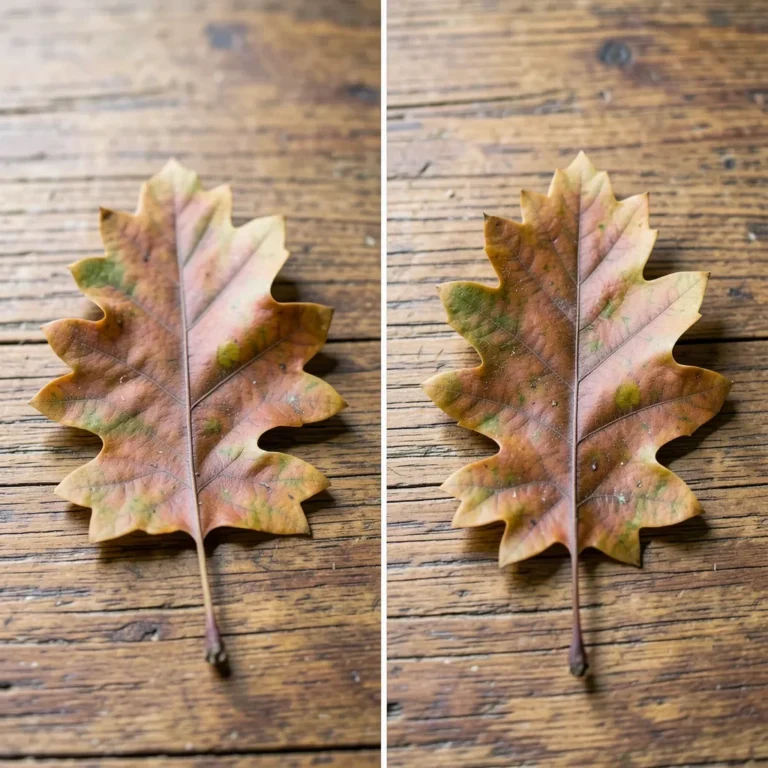
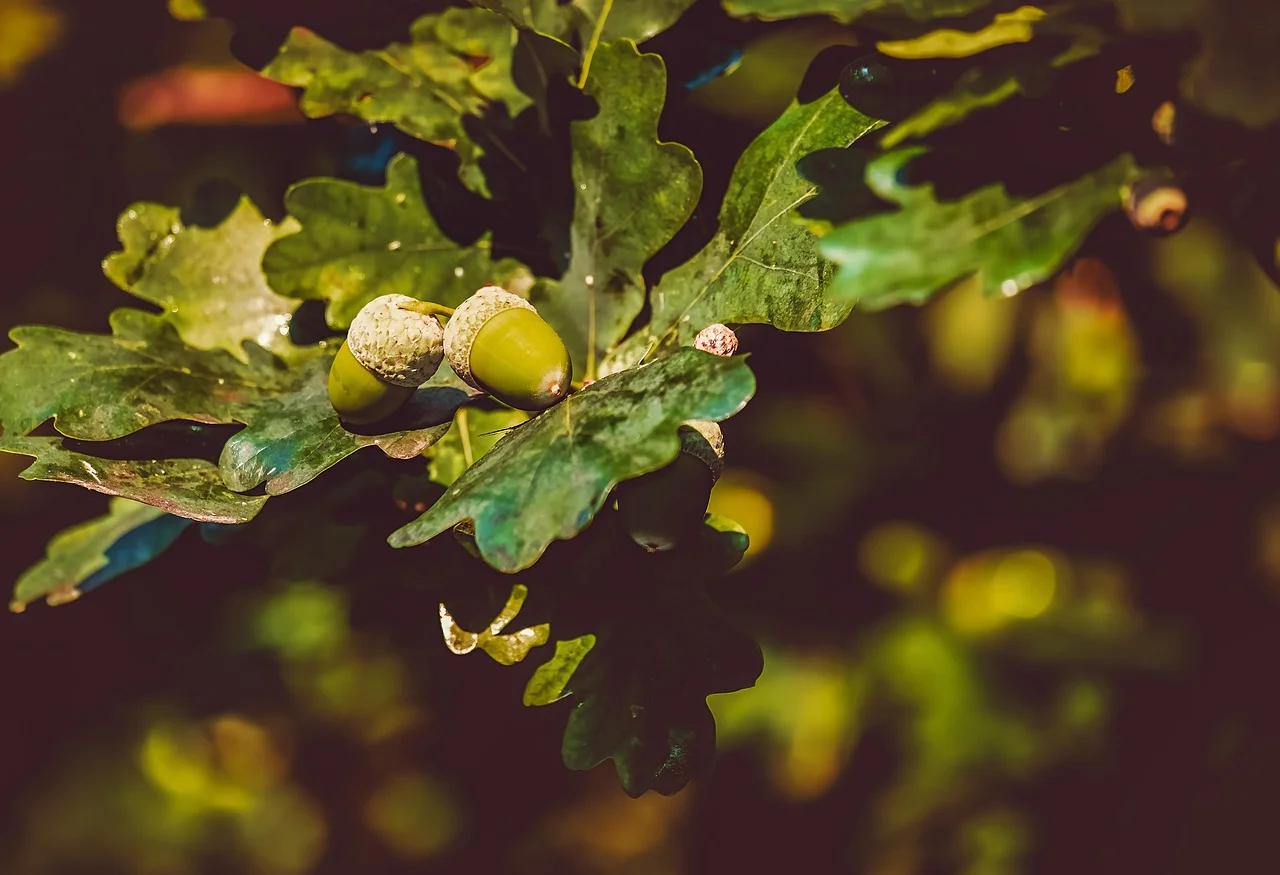
Chestnut Oak has none of that scarcity. It’s a true oak in the white oak group, also sold and referred to as Rock Oak, Rock Chestnut Oak, Basket Oak, or Tanbark Oak (a name that comes from its historical use – the thick, tannin-rich bark was once stripped and used commercially to tan leather). It grows on dry, rocky ridgelines up and down the Appalachians and is common enough that it shows up at ordinary hardwood dealers, not just specialty salvage yards. The “Chestnut” in its name is borrowed entirely from its leaves – the shape and toothed edge resemble American Chestnut leaves closely enough that early settlers used the same word for both.
Key Characteristics of Chestnut Oak Wood:
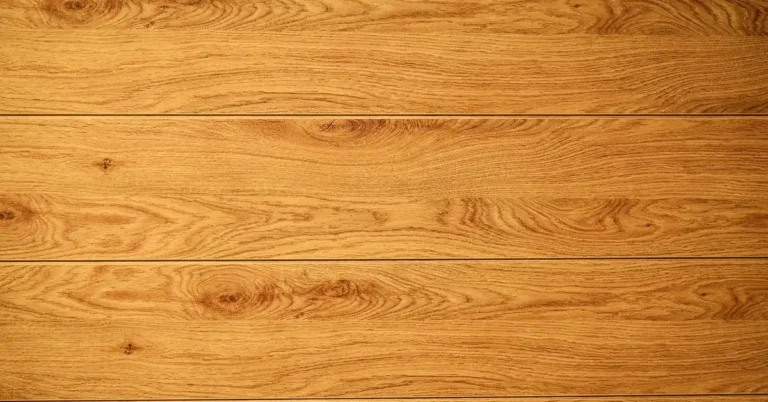
- Appearance: Light to medium brown with occasional reddish or grayish streaks; coarser, more open grain than American Chestnut, with the ray fleck figure typical of oaks when quartersawn.
- Hardness: About 1,130 lbf on the Janka scale – roughly double American Chestnut’s hardness and close to White Oak, which it’s grouped with botanically.
- Durability: Moderately decay-resistant – better than most oaks but still not in the same league as the tannin-dense American Chestnut heartwood.
- Workability: Takes more effort than Chestnut – open pores mean you’ll want a grain filler for a smooth finish, and its hardness dulls blades faster.
- Availability: Widely available, moderately priced, and sold as new-cut lumber – no salvage-hunting required.
- Uses: Flooring, cabinetry, stair treads, furniture, and general construction where strength and wear resistance matter more than rarity or color.
One detail worth being precise about: both trees are in the family Fagaceae (the beech family), which also includes true beeches. Being in the same family just means they’re distant botanical cousins – it doesn’t make Chestnut Oak “part of the oak family” as opposed to Chestnut being in some other family, and it doesn’t mean the two woods behave similarly in the shop. Genus is what actually predicts how a wood works, finishes, and holds up, and there the two species have nothing in common. You can read more about the blight and ongoing restoration research from The American Chestnut Foundation.
Side-by-Side Comparison
Here’s every number a woodworker actually needs to decide between them, in one table.
| Feature | American Chestnut (Castanea dentata) | Chestnut Oak (Quercus montana) |
|---|---|---|
| Genus | Castanea (true chestnut) | Quercus (true oak) |
| Shared family | Fagaceae (beech family) – same family, different genus | |
| Color | Rich reddish-brown | Light to medium brown, sometimes reddish/grayish |
| Grain texture | Straight, relatively fine | Coarser, open grain typical of oak |
| Janka hardness | ~540 lbf | ~1,130 lbf |
| Rot resistance | Excellent (high tannin content) | Moderate |
| Workability | Easy | Moderately difficult (hard, open-pored) |
| New-lumber availability | None – salvaged/reclaimed only | Widely available |
| Typical cost | High (reclaimed-lumber pricing) | Moderate |
| Primary uses | Small furniture, accents, restoration matching | Flooring, cabinetry, furniture, construction |
Janka hardness is measured as the force needed to embed a steel ball halfway into the wood – the higher the number, the more resistant the wood is to dents and wear. At roughly double the hardness, Chestnut Oak will hold up to foot traffic and daily knocks far better than Chestnut, which is one reason genuine Chestnut floors from the early 1900s are usually found worn smooth rather than pristine.
Why the Name Confusion? Leaves and History
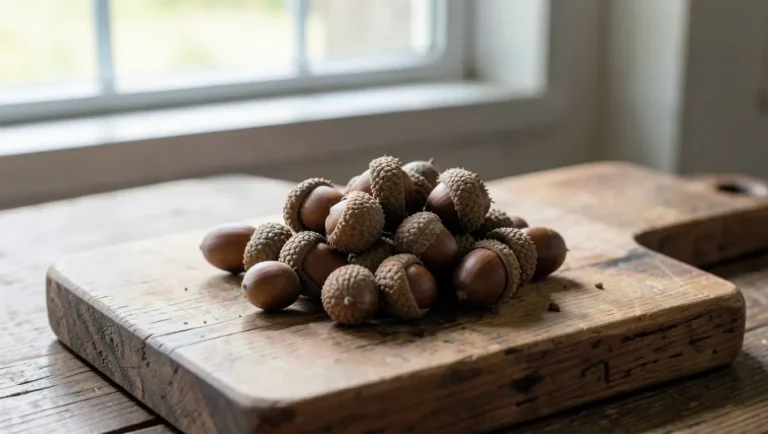
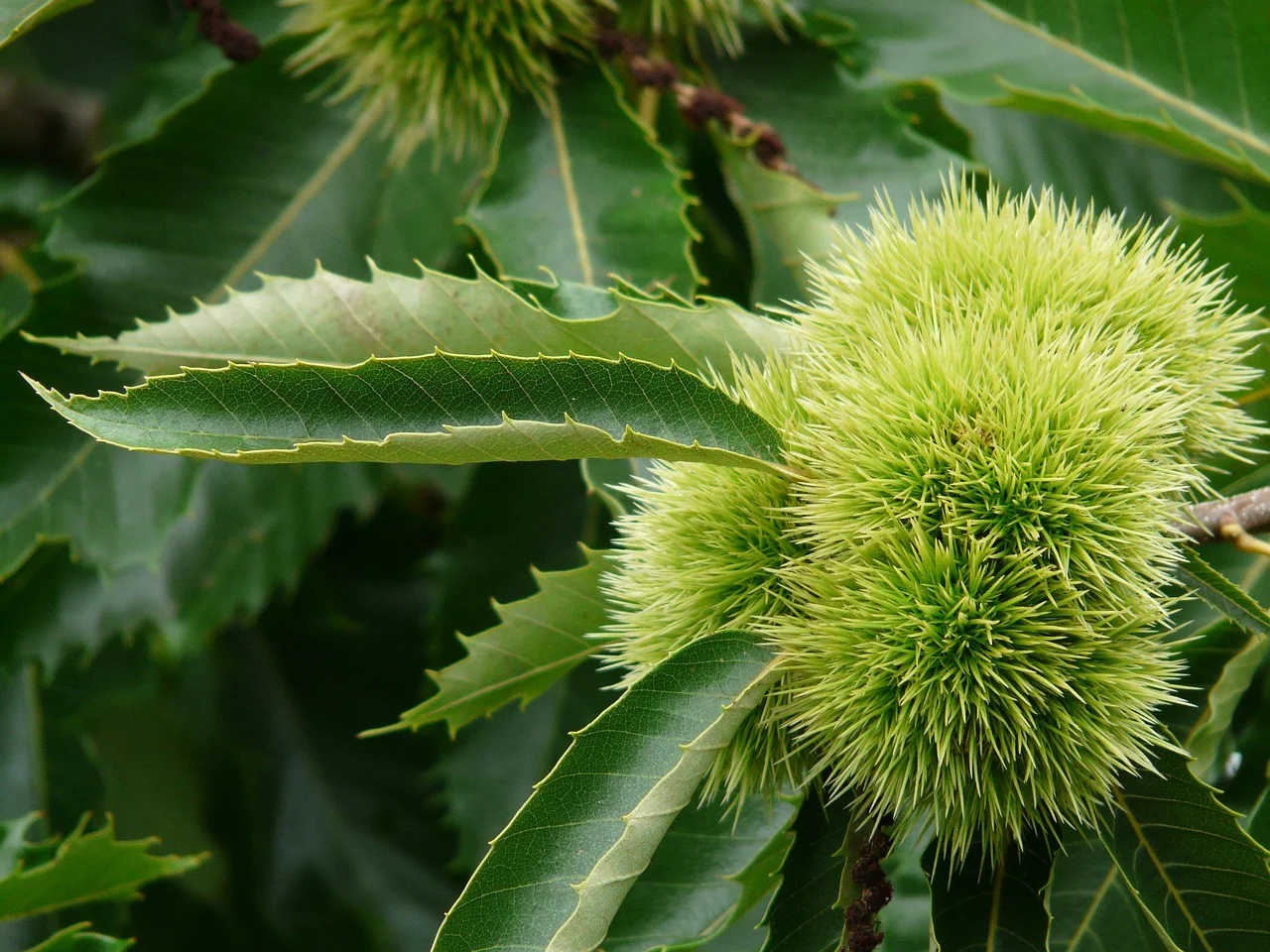
The confusion isn’t random – it’s baked into how these trees got their English names. Both have simple, elongated leaves with sharply toothed edges that look similar at a glance, especially to someone cataloguing an unfamiliar forest. American Chestnut earned its name honestly: it produces sweet, edible nuts inside a spiky burr, just like the European chestnuts colonists already knew. Chestnut Oak earned its name secondhand – its leaves resembled Chestnut’s closely enough that it got labeled a “chestnut” too, even though its acorns and growth habit are pure oak.
The Near-Extinction of the American Chestnut
Before the blight, American Chestnut may have made up as much as one in every four trees in parts of the Appalachian forest canopy. It was called the “redwood of the East” for its size, and its annual nut crop fed everything from wild turkey and black bear to entire mountain communities’ hogs and household economies. The fungus that ended that arrived from Asian chestnut stock, which had co-evolved resistance the American species never had. Once established, it girdled trees at the bark and killed everything above ground within a few years, and an estimated 3 billion mature trees died in roughly four decades. You can read more about the blight and current restoration breeding efforts on the National Park Service’s chestnut blight page.
Choosing the Right Wood for Your Project
In practice, this decision usually makes itself once you know what’s actually for sale.
When to Consider American Chestnut
Because it’s reclaimed rather than freshly milled, American Chestnut makes sense for a narrow set of projects:
- Restoration and matching repairs: Patching or extending an existing wormy-chestnut floor or piece where a new species would visibly clash.
- Small accent pieces: Picture frames, boxes, inlays, or panels where a small board goes a long way and the historical story adds value.
- Heirloom furniture: One-off pieces where color and provenance matter more than getting matched, wide, defect-free stock.
Important note on salvaged wood: Any board sold as “American Chestnut” today came out of a structure, not a sawmill. Before you cut it, inspect for cupping, warping, and old insect damage, and assume there’s hidden metal – square nails, staples, and fence wire are routinely found buried in barn-salvaged lumber and will destroy a blade (or worse) if you hit one at speed. A handheld metal detector wand run over every board before milling, like the one above, is a five-minute step that prevents a very bad one.
When to Choose Chestnut Oak
For nearly everything else, Chestnut Oak is the practical choice:
- Flooring: Its hardness holds up to daily foot traffic far better than Chestnut.
- Cabinetry and furniture: Sturdy, attractive grain that finishes well once pores are filled.
- Stair treads and handrails: Wear resistance matters most exactly where hands and feet make constant contact.
- General construction: Framing, paneling, and utility pieces where strength matters more than showroom looks.
- Outdoor projects, with sealing: Moderately rot-resistant – fine for garden furniture or fence rails if properly finished and maintained, though genuine Chestnut (or cedar) would outlast it untreated.
Working with Chestnut Oak: Tips for Beginners
Since Chestnut Oak is the one you’ll actually be buying new, here’s how to get good results with it.
Safety First
- Wear safety glasses – oak’s hard, open grain throws more debris than softer woods.
- Use hearing protection on power tools; oak’s density means more motor strain and noise on cuts.
- Keep sharp blades on hand – a dull blade on hard oak is more likely to bind or kick back than the same blade on a softwood.
Milling and Cutting
Chestnut Oak’s hardness dulls blades faster than most domestic hardwoods, so start with a sharp, quality ripping blade for a table saw and a crosscut blade or miter saw for crosscuts. Its open, sometimes irregular grain is prone to tear-out on a jointer or planer, so take shallower passes than you would on a straighter-grained wood.
Joining Techniques
Because oak’s tannic acid reacts with iron, standard steel fasteners can leave dark blue-black stains around the head over time – use stainless steel or coated screws for anything visible. Chestnut Oak glues well but its open grain drinks more adhesive than a fine-grained wood, so apply a bit extra. For mechanical strength, stainless screws, dowels, or pocket hole joinery all work well; traditional mortise-and-tenon or dovetail joints hold up beautifully but take more effort to cut given the wood’s hardness.
Finishing
- Fill the pores: For a smooth tabletop or cabinet surface, apply a grain filler (tinted or natural) and wipe it off before sealing.
- Stain: Chestnut Oak takes stain well; a pre-stain conditioner helps even out color across mixed grain patterns.
- Topcoat: Polyurethane, lacquer, or paste wax all provide durable protection; avoid water-based finishes over unsealed oak if you want to prevent tannin bleed-through with certain stain colors.
Pros and Cons at a Glance
American Chestnut
Pros:
- Rich, distinctive color and historical significance.
- Excellent natural rot resistance.
- Easy to work by hand or machine.
Cons:
- No new-growth lumber exists – salvaged only.
- Expensive and inconsistent in size/quality.
- Requires metal-detection before milling.
Chestnut Oak
Pros:
- Widely available as new lumber, moderate cost.
- Twice the hardness of American Chestnut – durable under daily use.
- Good for a broad range of structural and furniture projects.
Cons:
- Harder to work – dulls blades faster.
- Open, coarse grain needs filling for a smooth finish.
- Less rot-resistant than genuine Chestnut.
Frequently Asked Questions
Can I easily buy American Chestnut lumber for my projects?
No. There is no commercial supply of new-growth American Chestnut lumber – the species was functionally wiped out by chestnut blight in the early 1900s. What’s available is reclaimed “wormy chestnut,” salvaged from old barns, factories, or flooring, and it’s priced and sourced more like an antique than ordinary lumber.
Why is American Chestnut so rare?
Chestnut blight, a fungal disease introduced from Asia in the early 20th century, killed an estimated 3 billion mature trees over about 40 years and left the species unable to reach harvestable size in most of its former range.
Is Chestnut Oak the same as White Oak or Red Oak?
No. Chestnut Oak (Quercus montana) is its own species, grouped botanically with the white oaks. It shares some working properties with White Oak but has its own bark, leaf shape, and growing range.
How hard is Chestnut Oak compared to American Chestnut?
Chestnut Oak measures about 1,130 lbf on the Janka hardness scale versus roughly 540 lbf for American Chestnut – more than double, which is why Chestnut Oak is the better choice for flooring and other high-wear surfaces.
Can I use Chestnut Oak outdoors?
Yes, with proper sealing and maintenance. It’s moderately rot-resistant but not in the same class as naturally durable species like cedar or genuine Chestnut, so avoid direct ground contact and reseal periodically.
Why do steel nails and screws leave dark stains in Chestnut Oak?
Like most oaks, Chestnut Oak is high in tannic acid, which reacts with iron to form dark blue-black stains around the fastener over time. Stainless steel or coated fasteners avoid the problem entirely.
Conclusion
For nearly every practical project, Chestnut Oak is the wood you’ll actually be buying: available, moderately priced, and durable enough for floors, cabinets, and furniture that have to earn their keep. American Chestnut is a different kind of purchase entirely – a piece of forestry history you buy by the salvaged board, not the board foot, reserved for restoration work and small accent pieces where its story and color are the point.
Know which one you’re actually looking at before you buy: check the genus, not just the name on the price tag, and if you do end up with real reclaimed Chestnut, run a metal detector over it before it ever sees a blade.
Sponsored / affiliate links. As an Amazon Associate I earn from qualifying purchases. I may earn additional commission from eligible campaigns.