Can I Paint Over Stained Deck? Genius, Essential Steps
Yes, you can absolutely paint over a stained deck, and it’s a brilliant way to give it a fresh look and stronger protection. The key to a beautiful, long-lasting finish isn’t the paint itself—it’s the preparation. Thorough cleaning, light sanding, and using the right primer will guarantee your paint adheres perfectly and won’t peel.
Hello, friend! I’m Md Meraj, and today we’re tackling a question I hear all the time in the workshop: “Can I just paint over my old, stained deck?” Maybe your stain is looking faded, patchy, or you’re just ready for a complete color change. It feels like a big job, but I’m here to tell you that it’s not only possible—it’s one of the most satisfying DIY projects you can do.
You don’t need to be a professional to get a professional-looking result. A little bit of know-how and the right steps are all it takes. Forget the confusion and worry. We’re going to walk through this together, step by step, and turn that tired deck into a beautiful outdoor space you can be proud of. Let’s get started!
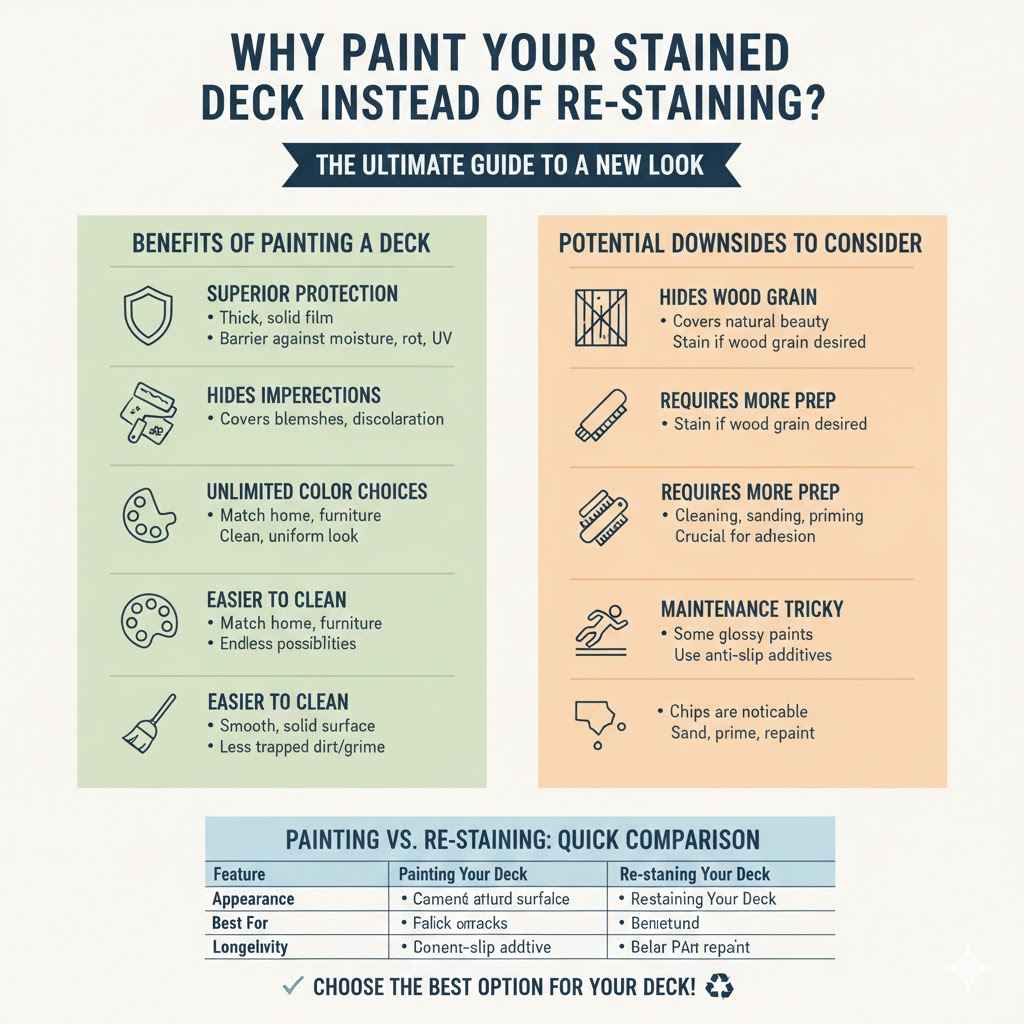
Why Paint Your Stained Deck Instead of Re-staining?
Before we grab our brushes, it’s smart to understand why painting might be the best choice for you. Both painting and staining have their perks, but painting offers some unique advantages, especially for an older deck.
The Benefits of Painting a Deck
Painting is more than just a color choice; it’s a practical solution for many common deck problems. Here’s why it’s often a great move:
- Superior Protection: Paint creates a thick, solid film on the surface of the wood. This film provides a powerful barrier against moisture, rot, and damaging UV rays. A quality deck paint can often offer more robust protection than a transparent or semi-transparent stain.
- Hides Imperfections: Got an older deck with stains, discoloration, or lots of patched areas? Paint is your best friend. Its opaque coverage completely hides old blemishes, giving your deck a clean, uniform look that stain just can’t achieve.
- Unlimited Color Choices: While stains offer beautiful, earthy tones, paint opens up a world of color. You can match your deck to your house trim, garden furniture, or any other element of your outdoor decor. The creative possibilities are endless!
- Easier to Clean: The smooth, solid surface of a painted deck is generally easier to sweep and wash down than the more porous surface of a stained deck. Dirt and grime have fewer places to get trapped.
Potential Downsides to Consider
Of course, no solution is perfect. It’s only fair to look at the other side of the coin. Keep these points in mind:
- Hides Wood Grain: If you love the natural beauty and grain of your wood, paint will cover it completely. If this is a deal-breaker, re-staining with a semi-transparent product might be a better option for you.
- Requires More Prep: You can’t just slap paint onto an old stained deck and hope for the best. Proper preparation—cleaning, sanding, and priming—is absolutely critical. If you skip these steps, your paint will almost certainly peel and chip.
- Can Be Slippery When Wet: Some glossy paints can create a slick surface. To avoid this, be sure to choose a paint specifically formulated for decks, many of which include anti-slip additives.
- Maintenance Can Be Tricky: While durable, if a painted deck does chip or peel, the repair can be more noticeable than fixing a worn spot on a stained deck. You’ll need to sand the area, prime, and repaint to blend it in.
Painting vs. Re-staining: A Quick Comparison
To make it even clearer, here’s a simple table to help you decide which path is right for your deck.
| Feature | Painting Your Deck | Re-staining Your Deck |
|---|---|---|
| Appearance | Opaque, uniform color. Hides all wood grain. | Transparent or semi-transparent. Enhances wood grain. |
| Protection | Excellent. Forms a thick protective film on the surface. | Good. Soaks into the wood to repel water. |
| Best For | Older, weathered decks with imperfections. Or for a complete color change. | Newer decks or decks where you want to showcase the natural wood. |
| Preparation | Intensive. Requires cleaning, sanding, and priming for success. | Moderate. Requires cleaning and often a light sanding. |
| Longevity | Can last 5-10 years if prepped and applied correctly. | Typically needs re-coating every 2-4 years. |
First Things First: Identify Your Existing Deck Stain
Okay, you’ve decided to paint. Fantastic! Now for the most important pre-painting step: figuring out what kind of stain is already on your deck. Why does this matter so much? Because oil and water don’t mix! Putting a water-based primer over an oil-based stain without proper prep is a recipe for peeling paint. Don’t worry, this is easy to figure out.
Is it Oil-Based or Water-Based? The Simple Test
Here’s a quick way to play detective. You only need a rag and some rubbing alcohol (isopropyl alcohol works great).
- Find an out-of-the-way spot on your deck, like under a railing or in a corner.
- Pour a small amount of rubbing alcohol onto your clean rag.
- Rub the stained area firmly for about 15-20 seconds.
- Now, look at your rag.
- If stain color has transferred onto the rag, you have a water-based stain.
- If little to no color comes off, you have an oil-based stain.
Knowing this will help you choose the correct primer later on. Generally, you’ll want to use an oil-based primer over an old oil-based stain to ensure the best adhesion and block any tannins from bleeding through.
Gather Your Tools and Materials
Having everything you need on hand before you start makes the entire project go smoother. Think of it as setting up your workshop for success. Here’s a handy checklist:
For Cleaning and Prep:
- Stiff-bristled brush or push broom
- Garden hose with a spray nozzle (or a pressure washer on a low setting)
- Deck cleaner solution
- Bucket
- Scraper or 5-in-1 tool (for any peeling areas)
- Orbital sander or a sanding pole
- Medium-grit sandpaper (80 to 120-grit is perfect)
- Wood filler (for cracks or holes)
- Painter’s tape
- Plastic sheeting or drop cloths
For Painting:
- High-quality exterior primer (choose based on your stain type)
- High-quality exterior porch and floor paint
- Paint tray and liners
- Paint roller with an extension pole
- Paintbrushes (a 2-3 inch angled brush is great for details)
- Paint stirrer sticks
For Safety:
- Safety glasses or goggles
- Gloves
- Dust mask (especially for sanding)
- Knee pads (your knees will thank you!)
The Genius Step-by-Step Guide to Painting Your Stained Deck
Alright, this is where the magic happens. We’ll break this down into simple, manageable steps. Take your time with each one. Remember, great results come from great preparation!
Step 1: Clear the Deck and Protect Your Surroundings
First, remove everything from your deck—grills, furniture, planters, everything. This gives you a blank canvas to work with. Use your push broom to sweep away any loose dirt, leaves, and cobwebs.
Next, protect anything you don’t want paint on. Use painter’s tape and plastic sheeting to cover siding, railings you aren’t painting, doors, and any nearby plants. A little time spent here saves a lot of cleanup later.
Step 2: Inspect and Repair Any Damage
With the deck cleared, now is the perfect time for a quick inspection. Walk around and look for:
- Popped Nails or Screws: Hammer them back down or replace them with longer deck screws.
- Loose or Warped Boards: Secure them firmly in place. If a board is badly warped or split, it’s best to replace it now.
- Rotten Wood: Poke any suspicious-looking spots with a screwdriver. If it feels soft and spongy, the wood is rotten and must be replaced. Paint can’t fix rot.
- Cracks and Holes: Use a quality exterior wood filler to patch any significant cracks or holes. Follow the product’s instructions for application and drying time.
Step 3: The Deep Clean (This is Non-Negotiable!)
You cannot paint over dirt, mildew, or algae. The paint simply won’t stick. A thorough cleaning is the most critical step for a lasting paint job.
- Mix Your Cleaner: Follow the directions on your chosen deck cleaner. Most mix with water in a bucket.
- Wet the Deck: Lightly spray the entire deck surface with your garden hose.
- Scrub, Scrub, Scrub: Apply the cleaner and use your stiff-bristled brush to scrub the deck boards. Work in small sections, making sure to get into the gaps between boards. This will remove ground-in dirt and any mildew. The Forest Products Laboratory, a division of the U.S. Forest Service, confirms that removing contaminants is essential for finishing longevity.
- Rinse Thoroughly: Rinse the deck completely with your hose, washing away all the cleaner and lifted grime.
- Let it Dry Completely: This is very important. Your deck must be bone dry before you move on to sanding or priming. Depending on the weather, this can take 24 to 48 hours. Patience is key here!
Step 4: To Strip or Just to Sand?
Once the deck is dry, you need to deal with the old stain finish. Your goal is to create a slightly rough, porous surface for the primer to grab onto.
Deciding whether to use a chemical stripper or just sand depends on the condition of your old stain.
| Situation | Recommended Action | Why? |
|---|---|---|
| Old stain is peeling, flaking, or very thick (like a solid stain). | Use a Chemical Stripper first, then sand. | A stripper is the most effective way to remove a failing, thick coating. Sanding alone would take forever and use a lot of sandpaper. |
| Old stain is worn, faded, and thin (like a transparent stain). | Just Sand. | There’s no need to strip if the stain is already thin. A good sanding will be enough to scuff up the surface and remove any remaining loose stain. |
If you need to sand: Use an orbital sander with 80-grit sandpaper for the main surfaces. This is much faster than sanding by hand. Use a sanding block or paper for railings and corners. You don’t need to remove every trace of the old stain. You are just aiming to scuff the surface and remove any loose wood fibers. Once you’re done, sweep and then vacuum the entire deck to remove all the dust.
Step 5: Prime for Ultimate Success
Skipping primer is the #1 mistake people make when painting a deck. Primer does two crucial jobs: it helps the paint adhere to the wood and it blocks stains and wood tannins from bleeding through and discoloring your topcoat. It’s the secret sauce for a professional finish.
Choosing Your Primer:
- If you had an oil-based stain: It is highly recommended to use a stain-blocking, oil-based exterior primer. This provides the best adhesion and is essential for blocking bleed-through from knots and old stain.
- If you had a water-based stain: You can use a high-quality acrylic (water-based) exterior primer.
Applying the Primer:
- Stir the primer thoroughly.
- Using your angled brush, “cut in” around the edges of the deck, railings, and any other areas the roller can’t reach.
- Use your roller with an extension pole to apply a thin, even coat to the deck boards. Work in long, smooth strokes.
- Let the primer dry completely according to the manufacturer’s instructions. This is usually several hours. Don’t rush it!
Step 6: Finally, Time to Paint!
The moment you’ve been waiting for! All your hard prep work is about to pay off.
Choose the Right Paint: Make sure you buy a high-quality paint specifically labeled as “Porch & Floor Paint” or “Deck Paint.” These are formulated to withstand foot traffic and harsh weather. For guidance on product selection, major paint manufacturers like Sherwin-Williams offer specific product lines designed for this purpose.
Application Tips for a Flawless Finish:
- Check the Weather: Don’t paint in direct, hot sunlight or if rain is in the forecast. An overcast, mild day is perfect.
- Start with the Details: Just like with the primer, use your brush to paint railings, stairs, and edges first.
- Roll the Deck Boards: Use your roller to apply the paint to the main surface. To avoid painting yourself into a corner, start at the side of the house and work your way toward the stairs.
- Apply Thin Coats: Two thin coats of paint are always better than one thick coat. A thick coat takes longer to cure and is more likely to peel.
- Respect the Drying Times: Let the first coat dry completely before applying the second. Check the paint can for the recommended “re-coat” time. After the final coat, allow the paint to cure fully before moving furniture back onto the deck—this can take up to 72 hours.
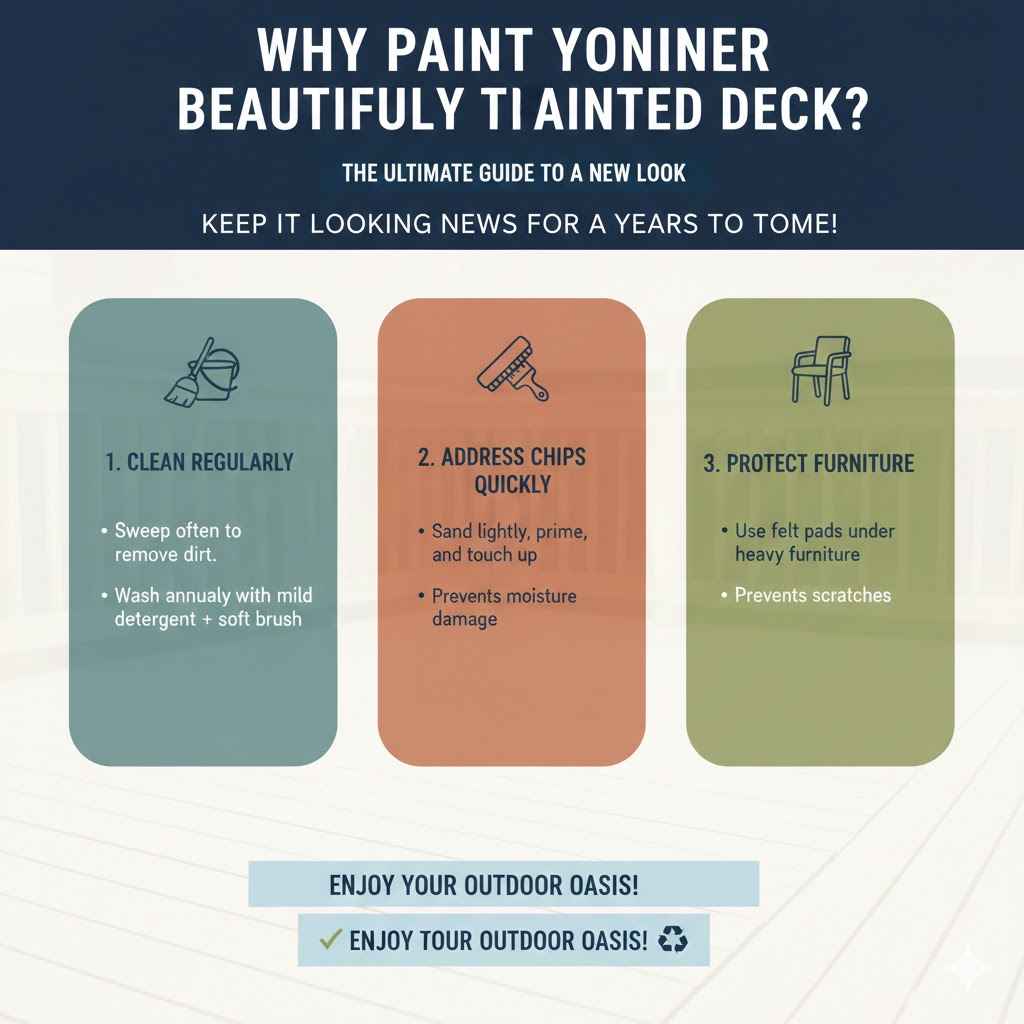
Maintaining Your Beautifully Painted Deck
Congratulations! You’ve transformed your deck. Now, a little bit of simple maintenance will keep it looking great for years to come.
- Clean it Regularly: Sweep the deck often to prevent dirt buildup. Wash it at least once a year with a mild detergent and a soft brush.
- Address Chips Quickly: If you notice a chip or scratch, touch it up right away. Sand the small area lightly, prime it, and apply a dab of your topcoat paint. This prevents moisture from getting under the paint film.
- Use Furniture Pads: Place felt pads under the legs of heavy furniture to prevent scratching the paint surface.
Frequently Asked Questions (FAQ)
What is the best paint to use on a deck?
The best paint is a high-quality acrylic latex paint specifically formulated for porches, floors, or decks. These paints are designed to be durable, resist scuffing, and hold up against weather and foot traffic. Look for products that offer mildew resistance and UV protection.
Do I really have to sand the deck before painting?
Yes, sanding is a crucial step you shouldn’t skip. You don’t need to sand the deck down to bare wood, but you do need to scuff the entire surface. This light sanding removes any loose wood fibers and creates a slightly rough texture that helps the primer and paint grip firmly, preventing peeling down the road.
How long will a painted deck last?
With proper preparation and high-quality materials, a painted deck can last for many years, often 5 to 10 years before needing a complete recoat. The longevity depends on factors like your local climate, the amount of foot traffic, and how well you maintain it.
Can I paint over a deck that has peeling stain?
No, you should never paint directly over peeling stain. The new paint will only adhere to the loose stain, which will eventually flake off, taking your new paint with it. You must scrape and sand away all the peeling and flaking areas until you have a solid surface before you begin priming and painting.
Can I use a pressure washer to clean my deck before painting?
Yes, you can use a pressure washer, but with great care. Use a low-pressure setting (under 1500 PSI) and a fan tip, and keep the nozzle at least a foot away from the wood. Too much pressure can gouge the wood and damage the fibers, causing it to look fuzzy. A garden hose and a stiff brush is often a safer choice for beginners.
What happens if I use water-based primer on an oil-based stain?
If you apply a water-based (latex/acrylic) primer directly onto an unprepared oil-based stain, it will likely have poor adhesion. The primer may not bond properly, leading to peeling, bubbling, or chipping of the paint in a very short time. If you have an oil-based stain, it’s safest to use an oil-based or a specialized “stain-blocking” or “adhesion” primer.
Do I need two coats of paint on my deck?
Absolutely. Two coats are always recommended. The first coat acts as the base, and the second coat provides full color coverage, added durability, and a much more even and professional-looking finish. Don’t be tempted to stop after just one coat!
Your Deck, Reimagined
There you have it. Painting over your stained deck isn’t just possible—it’s a powerful way to completely revitalize your outdoor living space. It might seem like a lot of steps, but each one is simple and straightforward. By taking the time to clean, repair, sand, and prime, you are building a foundation for a beautiful finish that will protect your deck and bring you joy for years.
So roll up your sleeves, put on some music, and get started. This is a project you can absolutely do yourself. The feeling of satisfaction you’ll get when you step back and look at your gorgeous, freshly painted deck is something no amount of money can buy. Happy painting!